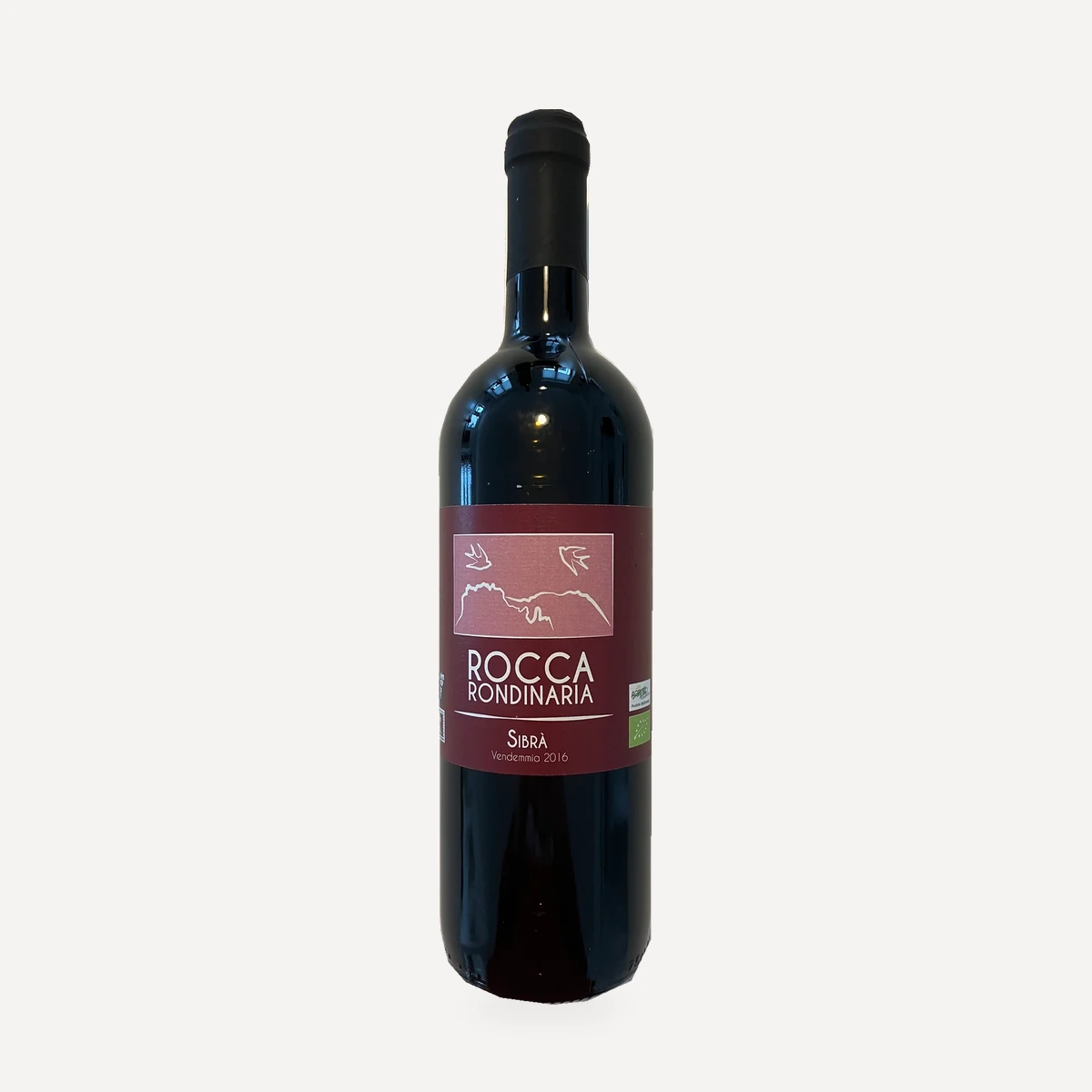
Storia
Historical setting and the Rocca Rondinaria name
The estate’s identity is closely connected to the Castello di Rocca Grimalda, which occupies a commanding and readily defensible position above the broad Orba Valley. Its circular watchtower dates from the beginning of the 13th century. Over the centuries the castle and feudal holding passed through prominent families, including the Malaspina and Grimaldi families.
The name Rocca Rondinaria draws on an old tradition from the Ovada area. Local legend placed a large Roman city called Rondinaria near the Orba and Piota rivers, where thousands of enslaved people supposedly gathered gold from the river sands. Although the location of this legendary settlement was disputed, a charter dated 1347 associated the name with Rocca Grimalda.
Andrea Grimaldi later invoked the 1347 charter and the chronicle of Sangiorgio during proceedings to obtain imperial status for the Rocca Grimalda fief. He prevailed, and an imperial diploma issued by Charles VI on 7 July 1722 described Rocca Grimalda as the place anciently called Rocca Rondinaria or Valle Orbarum and recognized it as an immediate fief of the Holy Roman Empire.
Foundation of the family farm
Rocca Rondinaria began as a family agricultural enterprise in 2004. Its original base comprised about 12 hectares in the Apennine hills of Valle Scrivia. Early activities included breeding horses and small farmyard animals, haymaking and experimental cultivation of specialist crops such as saffron.
Lucesio, Giovanna and their children subsequently took over vineyards near the Castello di Rocca Grimalda in Monferrato. Their project joined the castle’s longstanding agricultural identity with the practical knowledge preserved by local winegrowers. The objective was to revive and enhance local wine production on a small scale.
Recovery of historic vineyards
The family concentrated on rescuing old peasant vineyards that had been abandoned and overtaken by woodland. These sites retained mixed plant material and other features associated with the biodiversity of traditional small farms. Production developed around two named Dolcetto crus, Trionzo and Bernarda/Vallegrande.
A new Dolcetto di Ovada planting was established at Bernarda/Vallegrande in 2012 to complete the contour of the hill. It used material from different massal selections, including the old Dolcetto biotype known as Nibiò. Barbera, Timorasso and Moscato were subsequently added to the varieties cultivated by the family.
Organic and biodynamic development
The vineyards obtained organic certification in 2012. The Italian-language account dates equivalent certification of the cellar to 2014. Biodynamic work in both vineyard and cellar subsequently received product certification under the Agribiodinamica/AGRIBIO mark.
The castle cellar
Winemaking was established in the lower levels of the Castello di Rocca Grimalda. The semi-subterranean location naturally maintains stable temperature and humidity. The production approach developed around minimal handling, natural alcoholic fermentation, extended contact with fine lees, old or slow-release wooden vessels, long bottle maturation, work aligned with the cosmic calendar and bottling without filtration. One traditional cuvée revived foot treading and fermentation with the stems, followed by long maturation.
Recent diversification
The range expanded beyond Dolcetto to include Barbera del Monferrato and Timorasso-based Monferrato Bianco, as well as a rosé from indigenous red grapes. In 2021, the family marked the arrival of its seventh grandchild with the numbered, celebratory Settenipoti bottling.
Terroir
Rocca Rondinaria’s vineyards lie in the hills around Rocca Grimalda, with the principal documented sites at approximately 300 metres above sea level. Orientations range from south and southwest to south-southeast. The south- and southeast-facing slopes at Bernarda/Vallegrande are intended to provide ample sunlight, while the Barbera vineyards are reached daily by breezes arriving from the sea.
The soils are repeatedly described as pale or white and based on calcareous marl and tuff. A broader description identifies sandy marl sediments, local sandy veins of fine loamy material and larger blocks of sedimentary rock. The soils contain little clay and drain freely.
The castle cellar forms part of the production environment. Its position in the lower, semi-subterranean levels of the Castello di Rocca Grimalda provides naturally stable temperature and humidity for fermentation and maturation.
Vinificazione
The vineyard project is based on the recovery of old vigne contadine, or peasant vineyards. These were conceived as family-scale agricultural microcosms rather than monocultures: remote plots traditionally included a shed for tools, small quantities of marginal grapes for the table or sweet festive wines, fruit trees, reeds and willows used for tying vines, medicinal herbs and ornamental plants. This diversity combined practical self-sufficiency with a complex landscape of interacting functions.
Rocca Rondinaria preserves that model by reclaiming historic vineyards from invading woodland and retaining mixed plant material and old vines. New Dolcetto plantings use several massal selections rather than a single uniform clone. The Bernarda/Vallegrande planting includes the old Nibiò biotype, while the historic Trionzo plot retains Dolcetto with a small proportion of Ciliegiolo.
Field practices include limited tractor use, no summer trimming of the vine tops, soil aeration, organic fertilization through green manure and biodynamic preparations. Work is coordinated with cosmic calendars. Grapes are harvested manually into baskets or small crates.
Technical records document deliberately restricted yields across individual parcels and vintages, generally from below 30 to approximately 50 quintals per hectare. The vineyards have held organic certification since 2012, and vineyard and cellar production also carry biodynamic certification under the Agribiodinamica/AGRIBIO mark.
Winemaking takes place in the lower levels of the Castello di Rocca Grimalda. This semi-subterranean cellar maintains naturally stable temperature and humidity.
Intervention is kept limited to accompany the character of each vintage. Alcoholic fermentations are spontaneous and use indigenous yeasts; several documented lots ferment without active temperature control. Depending on the fruit and intended expression, maceration ranges from one night for rosé to extended extraction for red wines. Cellar work includes gentle or progressively reduced pumpovers, occasional bâtonnage and extended contact with fine lees.
Traditional methods remain part of the cellar’s repertoire. The ripest grapes from different vineyard exposures may be harvested last, foot-trodden and fermented reductively with their stems. That ancestral-style process uses approximately 15–20 days of maceration with light pumpovers, followed by pressing, transfers through large or previously used wooden vessels, several rackings and long bottle maturation.
Maturation vessels include stainless steel, large casks, old tonneaux and second- or third-use barriques. Documented examples range from entirely stainless-steel maturation to 6–14 months in used wood, sometimes followed by 16 months in steel or 18 months in bottle. Long bottle ageing is used where the structure of the wine requires it.
The cellar follows the cosmic calendar and does not filter its wines before bottling. Published analyses for multiple bottlings also document low total sulphur levels, though additions and exact protocols are not described as a single estate-wide rule.
Filosofia
Rocca Rondinaria treats landscape as an inseparable part of wine. Its central idea is that wine should express the energies and characteristics of a specific terroir, the conditions of the vintage and the sensitivity of the grower.
The family’s model comes from the traditional peasant vineyard: a small, efficient agricultural microcosm designed to meet family needs without exhausting its surroundings. Such a vineyard was observed and tended as a complex living organism rather than treated as an isolated crop. The family seeks to carry this relationship with place into its wines.
Respect and dialogue with nature guide work in both vineyard and cellar. This is expressed through biodiversity, recovery of old sites, restricted mechanization, green manure, biodynamic treatments, manual harvest, natural fermentation and minimal cellar handling. Tradition is retained where it remains meaningful—particularly foot treading, stem inclusion, old wooden vessels and patient bottle ageing—while new plantings and a wider range of local varieties support the continuing development of the farm.
Vini
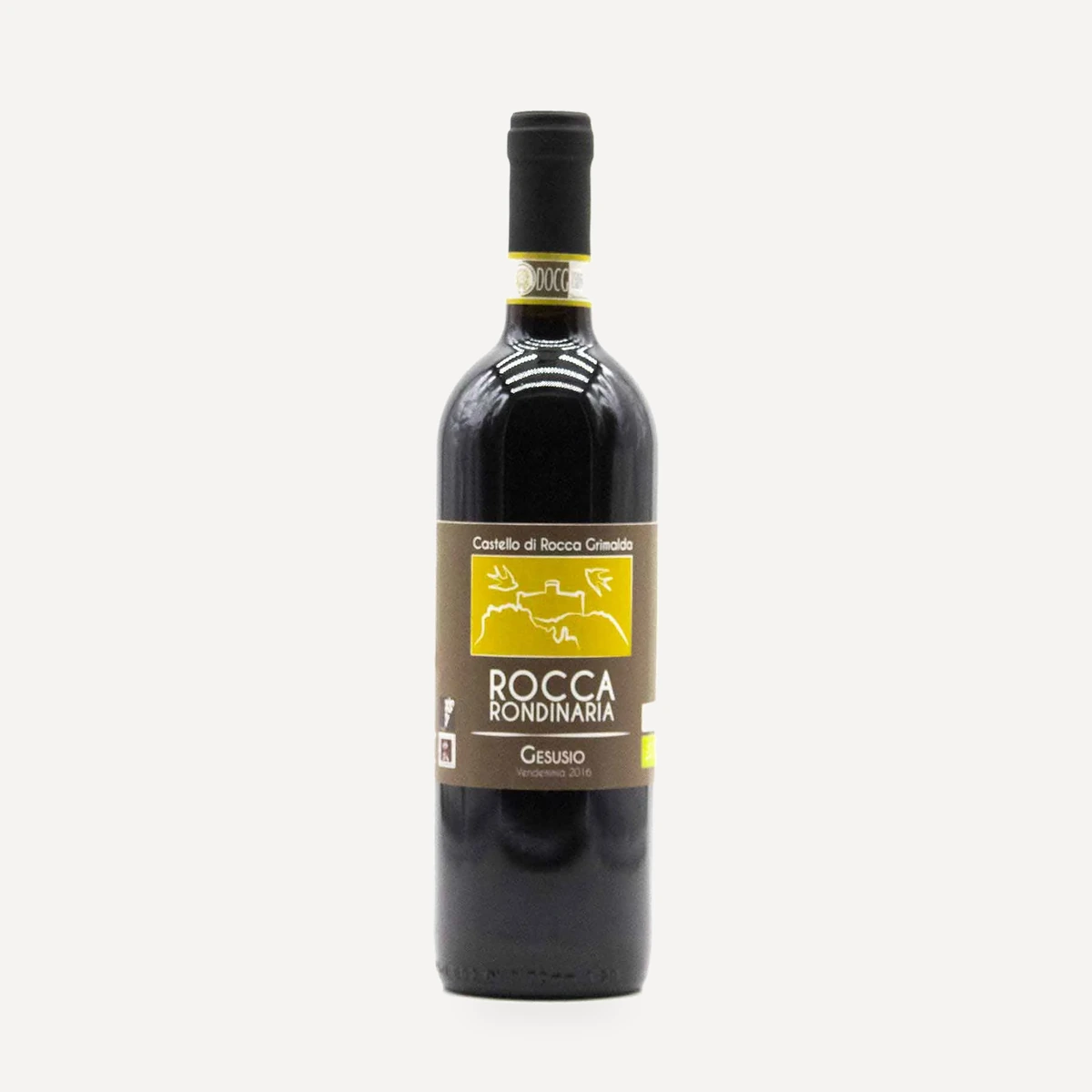
Gesusio Ovada DOCG – Dolcetto di Ovada Superiore
Retrò vino rosso
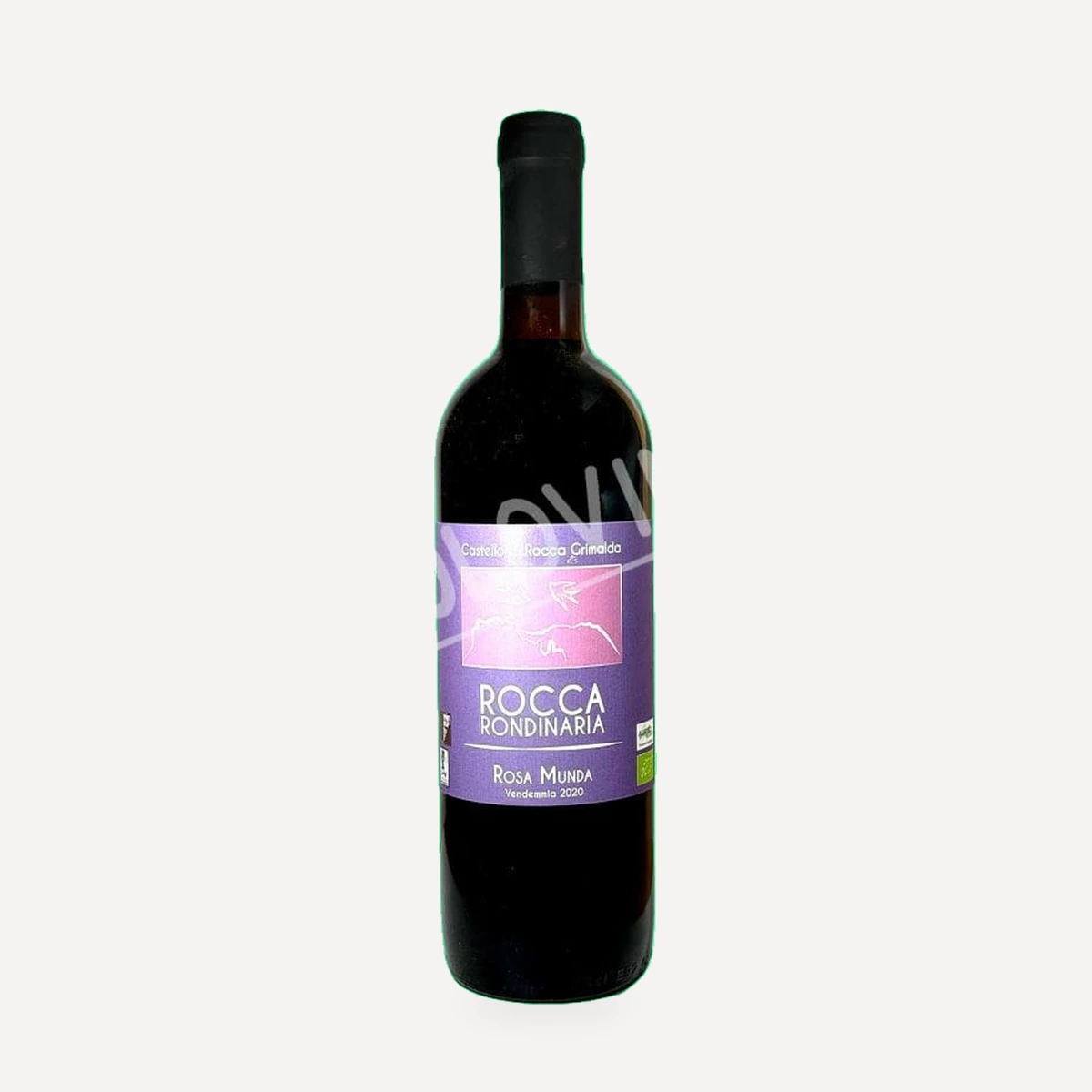
Rosa Munda Barbera del Monferrato DOC