Storia
Foundation in 1989
Ronco dei Tassi began in 1989, when Fabio Coser and his wife Daniela purchased an estate of approximately 9 ha in Cormòns, in the heart of the Collio Goriziano. Around 4 ha were already planted with vines. The property lay between approximately 140 and 200 metres above sea level, beside the protected Parco Naturale di Plessiva, whose spontaneous vegetation and undisturbed wildlife formed the environmental setting of the new family estate.
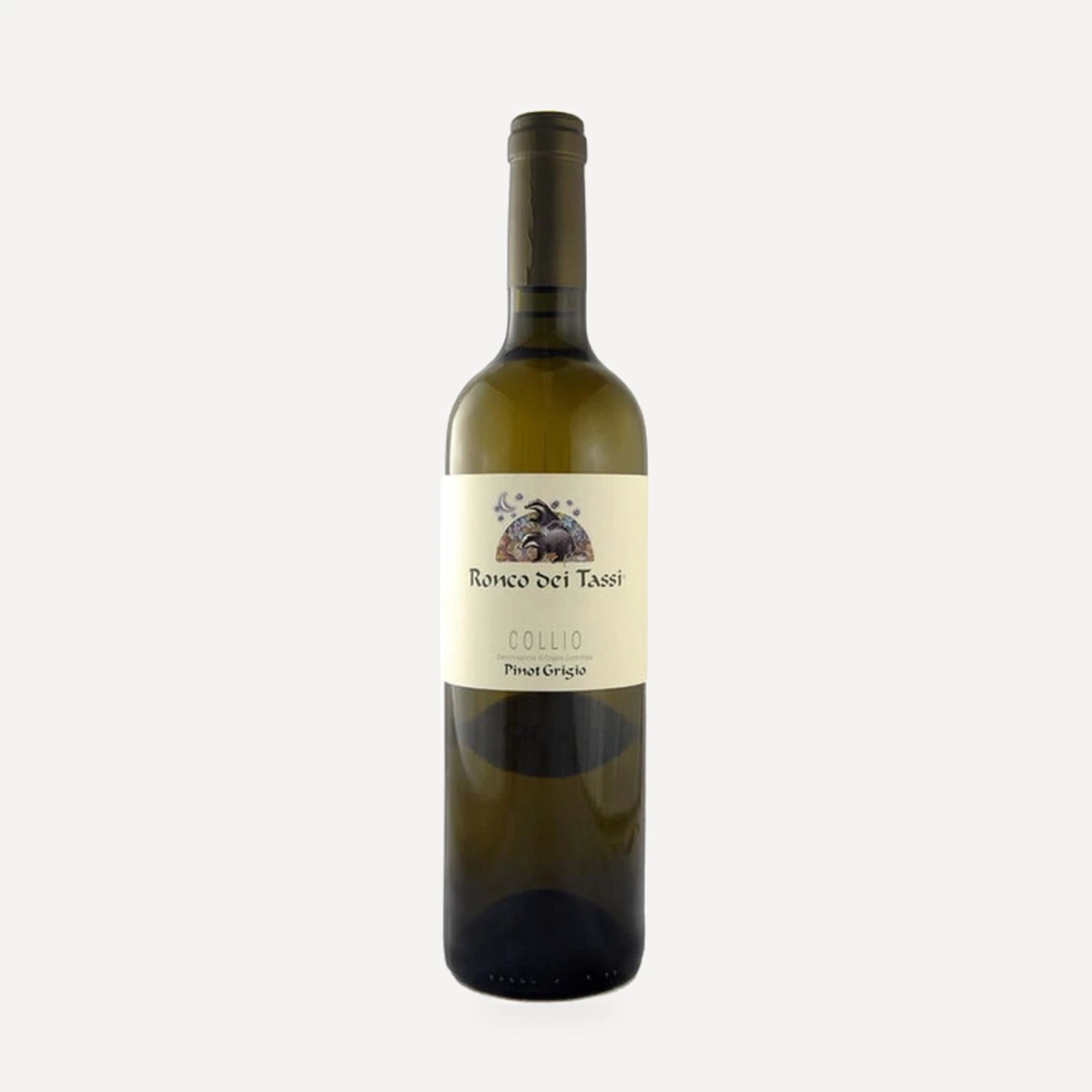
The name joined two defining features of the property. The terraced, well-exposed vineyards were locally called ronchi, while colonies of badgers—tassi in Italian—regularly appeared as the grapes ripened and fed on the sweetest bunches.
The first vineyards and wines
The Fosarin vineyard was the first vineyard acquired by the family. Its first recorded vintage was 1990, the same year as the first vintages of the estate's Friulano and Pinot Grigio. Sauvignon followed with its first vintage in 1992 and Cjarandon in 1994.
The range continued to develop with Picolit in 2002, Ribolla Gialla in 2003 and Malvasia in 2004. These wines were associated with individually named vineyard areas on Monte Quarin and the hills around Cormòns: Montona, Quarin, Volparia, Cjarandon and Fosarin.
Growth of the estate
The original property expanded substantially while remaining under family ownership. An earlier description recorded more than 30 ha, including more than 18 ha of vines and woodland on the remainder. A later account places the estate at more than 50 ha, with 23 ha under vine and the rest principally forested. This balance between cultivated slopes and woodland became central to the family's model of eco-sustainable viticulture and biodiversity protection.
Fabio and Daniela's sons, Matteo and Enrico, joined the business. The transfer of responsibility developed gradually rather than through an abrupt change of control. Enrico took direct responsibility for the stages and operations of vinification during harvest, worked with Fabio on the final blends, and also managed commercial activity in Italy and abroad. Matteo likewise joined the family enterprise and now carries its work forward alongside Enrico and their parents.
Family Collection
From the 2019 vintages, the family began reserving selected white wines for extended maturation and bottling them only in years considered particularly successful. The project was presented as the Collezione di Famiglia in 2021. Its purpose was to demonstrate the capacity of Collio white wines to develop over time. The collection initially centred on Malvasia, Pinot Bianco and Pinot Grigio; Madame Sauvignon 2021 was subsequently created as a one-off reserve from an especially successful vintage.
The second generation
By 2024, the progressive generational transition was publicly embodied by Enrico Coser's work across production, blending and commerce. His approach was shaped by growing up in the wine business, accompanying his parents on professional travel, learning from contacts with Italian and international cellars and their oenologists, and testing ideas in both production and sales with Fabio's support. The family's underlying direction remained focused on respecting the fruit and its place of origin, expressing varietal and territorial identity, and combining scientific knowledge, culture and technique rather than following changing stylistic fashions.
Terroir
Ronco dei Tassi is based at Località Montona on Monte Quarin, above Cormòns in the Collio Goriziano. The original estate occupies elevations of approximately 140–200 metres above sea level and borders the Parco Naturale di Plessiva, a protected area rich in spontaneous flora and wild fauna.
The vineyards occupy well-exposed terraces locally known as ronchi. Individual sites detailed within the estate range from 150 to 200 metres above sea level, with exposures facing east, south-east, south or combinations of south and south-east.
The hills are of Eocene origin and are predominantly composed of marl and sandstone. Some vineyard descriptions further characterise the soils as poor in organic matter but rich in mineral salts. Proximity to the sea, surrounding woodland and the resulting favourable microclimate are associated with the character of the local white varieties.
Woodland surrounds and separates the cultivated land. More than half of the estate remains wooded under the latest area figures, maintaining habitat and biodiversity around the vineyard slopes. Badgers are a conspicuous part of this fauna and visit the property when the grapes ripen, feeding on especially sweet bunches.
Vinificazione
The estate follows an eco-sustainable approach based on close attention to cultivation and vine-training systems. Vineyard development is monitored through frequent qualitative inspections, including visual assessment, and quantitative analytical controls. The aim is to bring healthy fruit to the cellar with the lowest possible environmental impact while retaining varietal character and the identity of the place.
The cultivated slopes are maintained within a larger wooded estate. With 23 ha of vineyard in a property exceeding 50 ha, the remaining forest supports spontaneous flora, wildlife and broader biodiversity beside the Parco Naturale di Plessiva. The family treats the relationship between vineyard and woodland as a practical basis for sustainable agriculture and the long-term protection of the territory.
Harvesting is carried out by hand for the selection vineyards explicitly described, including Fosarin and the parcels used for the Collezione di Famiglia. The estate's general approach emphasises qualitative and quantitative crop control rather than a single standard yield: detailed parcels range from approximately 1.2 to 1.8 kg per vine, while selection sites are recorded at about 60–70 quintals per hectare.
Production begins with rigorous qualitative and quantitative monitoring in the vineyard so that sound, healthy grapes arrive at the cellar. The guiding objective is to transform this fruit as simply and naturally as possible, retaining both varietal character and the qualities associated with its place of origin.
Enrico Coser personally oversees the phases and cellar operations of vinification during harvest. Final blending decisions are made together with Fabio Coser. Their production philosophy combines scientific knowledge, technical control and accumulated family experience while avoiding stylistic changes made solely in response to fashion.
The Collezione di Famiglia adds a selective, long-ageing dimension to the cellar's work. These wines are bottled only from years the family considers especially successful and receive prolonged maturation to demonstrate the ability of Collio white wines to evolve. Cellar techniques documented across these selections include hand harvesting, soft pneumatic pressing, static must settling, temperature-controlled fermentation, fermentation or maturation in 225-litre barriques and 500-litre tonneaux, and extended contact with fine lees. Because these regimes vary by selected variety and vintage, they do not constitute a single formula for every estate wine.
Filosofia
Ronco dei Tassi defines its work through respect for the territory and for the grapes grown there. Its objective is to preserve the identity of each variety while allowing the character of the vineyard environment to remain perceptible in the finished wine. Close vineyard control is intended to make cellar transformation as simple and natural as possible.
For the Coser family, quality depends on both technical rigour and continuity of values. Enrico characterises the family's approach as an oenology grounded in science, culture and technique. The estate seeks elegance and precision without adapting its wines to passing fashions or pursuing alternative cellar styles merely because they are commercially current.
Environmental responsibility is tied to the physical structure of the property. Vineyards occupy less than half of an estate otherwise dominated by woodland, and the family regards this relationship between vines and forest as essential to eco-sustainable cultivation, biodiversity and the future of the Collio landscape.
The Collezione di Famiglia expresses a complementary belief in the longevity of Collio whites. Only selected years are bottled for this range, and maturation is deliberately prolonged. The gradual passage from Fabio and Daniela to Matteo and Enrico is intended to preserve these principles while allowing the second generation to experiment, combine tradition with innovation and assume increasing responsibility.
Vini