Storia
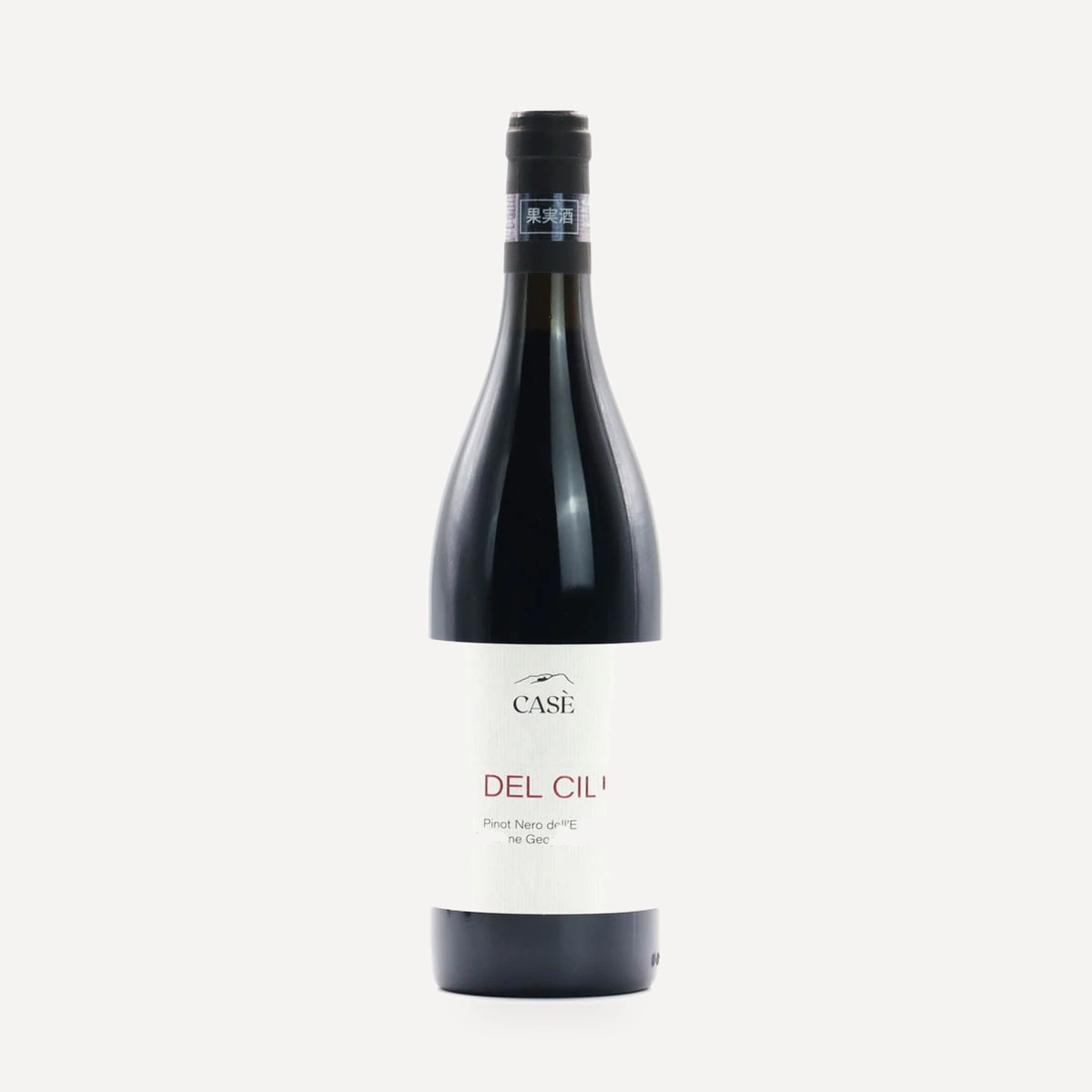
1997: Pinot Nero planting
Pinot Nero was planted in 1997. It is the exception within a vineyard collection otherwise devoted to varieties identified with Val Trebbia, including Barbera, Bonarda, Malvasia di Candia, Ortrugo and Marsanne.
1998: Foundation of Casè
Alberto Anguissola founded Casè in 1998 on the hills of Val Trebbia. The project grew from his passion for winegrowing, winemaking and agriculture, with the objective of recovering older flavours and continuing the local wine tradition.
Present approach
Casè now produces natural wines intended to convey both their territory and the conditions of each vintage. Environmental care and the avoidance of industrial additives extend from the vineyard through the cellar. Traditional viticulture, spontaneous fermentation, skin maceration and maturation in steel or older concrete tanks form the core of production, while Pinot Nero may also mature in small oak vessels.
Terroir
Casè is based at Casal Pozzino, on the hills above Travo in Val Trebbia. The locality lies in a climatic transition zone between the continental conditions of the plain and the Tyrrhenian influence arriving from nearby Liguria. Summer temperatures are cooler than on the valley floor, while winter breezes reduce the danger of severe frost.
The vineyards stand between 400 metres and almost 600 metres above sea level. Their soils combine clay and limestone, with the proportion of limestone increasing toward the hilltop ridge. Vines near the ridge consequently produce less fruit, but the grapes are more concentrated and develop characteristic mineral qualities.
The broader landscape is formed by narrow valleys cut by the Trebbia and its tributary, the Aveto, through the Apennine ridge separating Piacenza and Genoa. Viticulture has deep historical roots in the area: Roman-period wine vessels have been found locally, and surviving documents record the standing of Piacenza wine production during the Middle Ages.
Vinificazione
Casè holds organic certification but defines its work more broadly through traditional viticulture and care across the entire life cycle of the wine, from establishing new vineyards to harvest and bottling.
Industrial fertilizers and chemical herbicides are excluded. Plant protection relies exclusively on methods drawn from local tradition. The objective is to cultivate healthy vines capable of resisting pests and sustaining themselves through the vineyard environment.
Harvesting is performed by hand. Selection takes place directly on the vine: the best bunches are retained, while unripe or damaged fruit is discarded. The selected grapes are placed in small containers so that they are not crushed under their own weight during collection and transport.
Fermentations begin spontaneously and rely exclusively on indigenous yeasts. External sugars and chemical additives are not introduced; the Italian-language description additionally specifies that sulphites are not added. Naturally present sulphite levels are described as exceptionally low.
The wines undergo neither clarification nor filtration. Alcoholic fermentation is completed with the grapes in contact with their skins, including for white wines. This method continues an older local practice and is intended to intensify flavour while reinforcing the wine’s character.
Maturation generally takes place in stainless steel. Some wines use traditional concrete tanks dating from the 1950s through the 1970s, while Pinot Nero may mature in small oak vessels.
Filosofia
Casè’s philosophy rests on four principles: health, tradition, diversity and enjoyment. These principles apply throughout the wine’s complete life cycle, including new vineyard establishment, vine care, harvest, fermentation, maturation and bottling.
The estate treats organic or biodynamic labels as incomplete descriptions of a wine. Its position is that these certification systems primarily regulate synthetic chemical use in the vineyard and do not encompass every intervention available during winemaking. Although Casè has obtained organic certification, formal classification is secondary to careful production and the continuation of traditional viticultural practices.
The wines are intended to preserve the organoleptic character of the grapes and to express both place and vintage. Variation from one year to another is therefore treated as an integral part of their identity rather than something to be standardized.
Vini