Storia
Nineteenth-century beginnings
The family’s agricultural and winemaking story began in the first half of the nineteenth century. The year 1874 is treated as the birth of Speri Viticoltori: a barrel from that year remains in the cellar beside the family home and documents that the family was already making wine.
From 1885 onward, Carlo Speri (1827–1915) acquired plots of arable land planted with vines, mulberry trees and other crops in San Pietro in Cariano. These purchases established the agricultural base from which the business developed. Notebooks belonging to Carlo and his son Benedetto record sales of wine to private customers and businesses in 1898.
Formal recognition and succession
In 1908, Benedetto Speri received a silver medal at an exhibition of agricultural and industrial products in Rome. In 1911, the business Speri Carlo e figlio was registered with the Verona Chamber of Commerce for the wine trade in Pedemonte, a hamlet of San Pietro in Cariano.
Carlo died in 1915, whereupon Benedetto became his sole heir. In 1933, Benedetto’s son Sante purchased the Monte Sant’Urbano estate in Fumane. At acquisition it comprised about 12 hectares, together with a farmhouse, cellar and drying loft on a difficult-to-work hillside between approximately 280 and 350 metres. The estate subsequently expanded to about 22 hectares.
Post-war development
Between the 1940s and 1950s, under Sante Speri, the first bottles of Speri Recioto reached prominent dining tables in Verona. The family began terracing Monte Sant’Urbano during the 1950s, making the steep property easier to cultivate while seeking higher-quality grapes.
Exports to Switzerland were underway by 1950. In 1951, Benedetto transferred the properties to Sante, who thereafter ran the estate independently. Sante and his wife Ester raised six children: Omero, Giuseppe, Benedetto, Eliseo, Carlo and Marisa. Four sons—Giuseppe, Benedetto, Eliseo and Carlo—continued the business.
The first Speri Amarone vintage was produced in 1958, placing the family among the early producers of the style. In 1962, the four brothers built the present cellar. Its capacity was considered excessive at a time when Amarone and the need for a purpose-built ageing facility were not yet widely understood.
In 1967, Sante transferred the family properties in Fumane and San Pietro in Cariano to Giuseppe, Benedetto, Carlo and Eliseo. The following year brought the first production rules and DOC recognition for Valpolicella.
Export growth and the emergence of crus
After years of activity in European markets, Speri began overseas exports to the United States in 1971. Distribution subsequently expanded internationally, eventually reaching more than 60 countries.
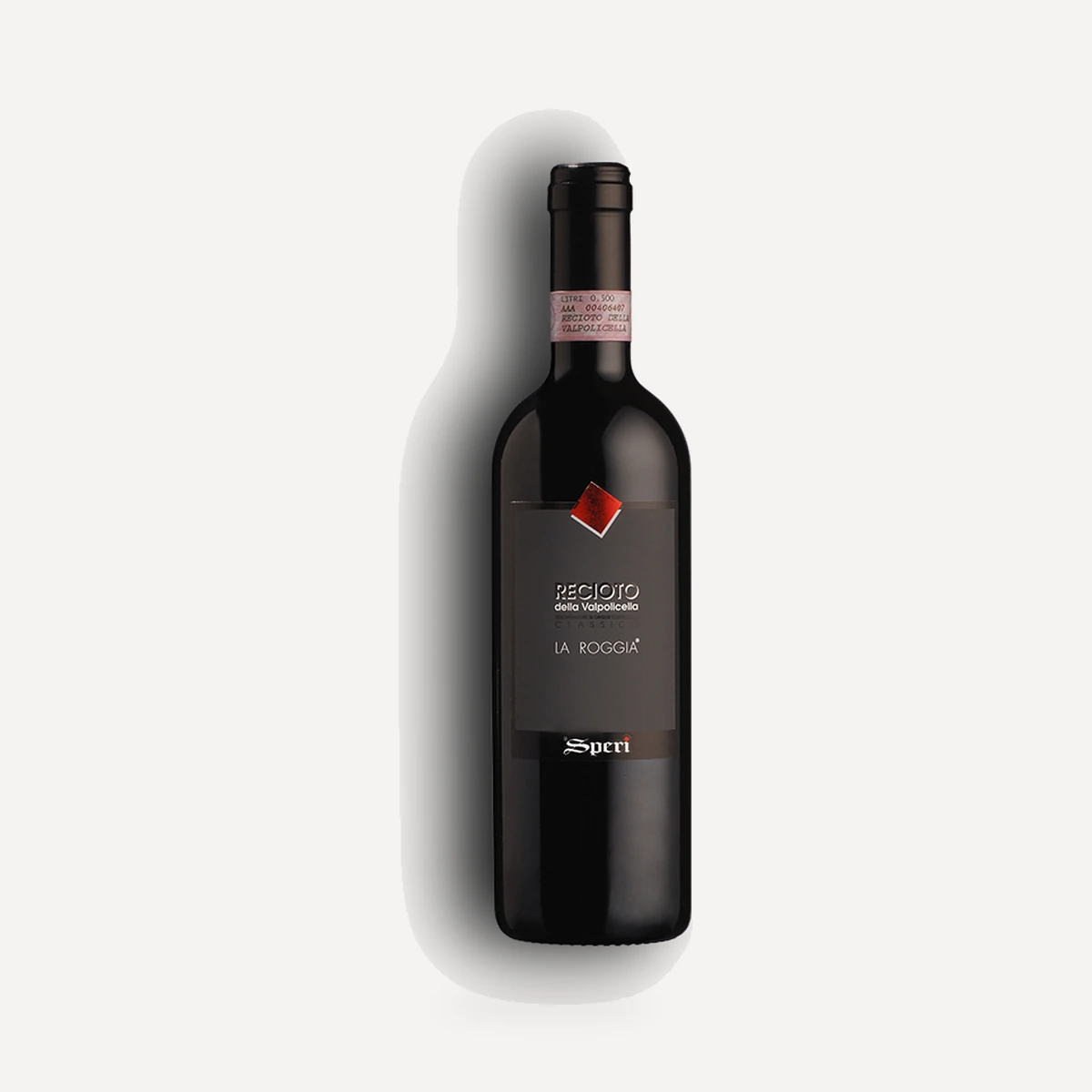
In the 1970s, the family began vinifying grapes from individual plots separately to preserve their distinct identities. The first formally identified family cru followed in 1974: Amarone Classico Vigneto Monte Sant’Urbano. This approach later encompassed Valpolicella Classico Superiore Sant’Urbano and Recioto Classico La Roggia, each bearing the name of its vineyard of origin.
Between 1976 and 1989, the next generation progressively joined the four brothers: first Alberto, son of Giuseppe, followed by Giampietro and Giampaolo, sons of Eliseo. After several years of trials, 1983 saw the first vintage of Valpolicella Classico Superiore Sant’Urbano, made with a short drying period for fruit from Monte Sant’Urbano.
Appellation work and vineyard innovation
Carlo Speri served as president of the Consorzio Tutela Vini Valpolicella from 1984 to 1993. During his mandate, a Presidential Decree dated 27 December 1990 approved important changes to the Valpolicella DOC rules. Amarone della Valpolicella gained an autonomous identity rather than continuing to be defined as the dry version of Recioto della Valpolicella.
Following years of vineyard observation and trials, Speri introduced the open inclined pergoletta in 1996. The design inclined the metal support carrying the shoots and opened the centre of the canopy, improving sunlight interception and ventilation around the bunches. Often called the Pergoletta Speri, it subsequently became widely adopted on Valpolicella hillsides.
Three generations and the organic transition
Between 2000 and 2014, Luca, Chiara and Laura—the children of Carlo—joined at different times, as did Giuseppe, Alberto’s son and the first representative of the seventh generation in the core team. The family management group consequently comprised eight members across the fifth, sixth and seventh generations.
The formal path toward organic production began in 2004. Synthetic products were replaced with natural vineyard treatments, herbicides were abandoned, and organic management was later extended to the cellar. Following the conversion period, 100% of production was certified organic from the 2015 harvest.
From 2013 to 2018, the cellar was renovated and enlarged, particularly in the vinification and maturation areas. The project created larger, more functional spaces and climatic conditions suited to ageing wine in both barrel and bottle.
Sustainability and continued expansion
Speri obtained Equalitas Sustainability Certification from CSQA in 2021, covering environmental, social and economic performance, including biodiversity, ethical responsibility and resource management.
In 2022, the family launched Bees for Biodiversity with Hybla. Seven bee colonies were installed in the organic vineyards to support pollination, ecological balance and biodiversity regeneration. The same year, Speri obtained the voluntary Biodiversity Friend certification.
In 2025, the family completed the acquisition of a new hillside estate in a strategically important part of Valpolicella Classica. The purchase continued the long-standing policy of expanding only within the historic production zone.
In 2026, Luca Speri was elected president of Famiglie Storiche, the association of thirteen historic Valpolicella estates founded in 2009. His appointment continued the work of his father Carlo, who had helped establish the association and promoted collective protection of Amarone and Valpolicella identity.
Terroir
Valpolicella Classica
The winery and vineyards lie in the historic Valpolicella Classica zone northwest of Verona. The area consists of parallel valleys extending into the southern foothills of the Lessinia plateau and includes Marano, Fumane, Sant’Ambrogio, San Pietro in Cariano and Negrar. The Lessini mountains shelter the zone, while nearby Lake Garda moderates temperatures and contributes to a mild vine-growing climate. The wider Valpolicella area is bounded by the Lessini mountains to the north, the Veronese plain to the south, Soave to the east and the Adige river to the west.
Speri’s vineyards occupy sites in San Pietro in Cariano, Fumane and Negrar, from approximately 120 to 350 metres. The principal hillside property, Monte Sant’Urbano, rises above Fumane. La Roggia occupies the southeastern slope of Monte Sausto at about 160 metres.
Terraces and mesoclimates
Hillside vineyards are arranged on dry-stone terraces known locally as marogne. The walls slow runoff, improve slope stability and absorb solar heat during the colder season. Their cavities provide shelter for insects and form an important habitat within the vineyard ecosystem.
Three natural, well-ventilated grape-drying lofts stand in hill or foothill positions. The principal loft is at Monte Sant’Urbano, approximately 300 metres above sea level, where a dry mesoclimate and airflow facilitate long natural drying.
Soils
Three principal soil groups have been identified across the holdings:
- AA1, present at Brolo di Villa Giona, developed on fluvioglacial fans and terraces with traces of former watercourses. Gravel and sand form very to extremely calcareous, moderately deep and highly gravelly profiles. Decarbonation, clay accumulation and reddening produce Skeletic Luvisols, sometimes with deeper carbonate accumulation.
- AR2, present at La Roverina, Lenguin and the vineyards around the winery, developed on fans and terraces formed by pre-Alpine streams. Mixed gravel and fine material produce slightly to extremely calcareous, moderately deep to deep, gravelly soils classified as Calcaric-Fluvic Cambisols and Calcaric-Skeletic Fluvisols.
- LB2, characteristic of Monte Sant’Urbano, occurs on gently sloping plateaux and long ridges bounded by short, steep scarps over calcarenite. Profiles range from thin, rocky and fully decarbonated Leptic Luvisols with deeper clay accumulation to moderately deep, gravelly Calcaric Cambisols on the slopes.
All analysed vineyards have alkaline soils. The 2021 analyses found particularly high active limestone at Sant’Urbano and in both sectors of La Roverina. Reported values include pH 8.3 and 15% active limestone at Sant’Urbano, pH 8.1 and 5.7% at Villa Giona, pH 8.1 and 11.2% at Rebecco, and pH 8.2 and 9.7% at La Roverina. Organic matter was respectively 3.19%, 3.91%, 4.6% and 3.83%.
Vinificazione
The family cultivates estate-owned vineyards and vinifies only its own fruit. Its declared priority is to build wine quality in the vineyard by preserving soil fertility, maintaining indigenous clones and conserving historic local varieties at risk of disappearance.
The formal organic transition began in 2004. Synthetic products and herbicides were eliminated, and the organic regime was subsequently extended from the vineyards to cellar operations. Following conversion, the entire production became certified organic from the 2015 harvest.
Permanent grass cover is maintained across the vineyard surface to protect organic matter. Speri also developed a site-specific herbaceous seed mix called the Sant’Urbano mixture, selected in relation to local soils, climate and position. Pruning residues are composted so that part of the vineyard biomass returns to the soil.
Vine diseases are managed with products permitted under organic rules. Treatments described include bark-based preparations against downy mildew, sulphur against powdery mildew, and algae-based products against botrytis and other rots. Grapevine moth, the principal insect pest identified in the vineyards, is controlled through sexual-confusion mating disruption.
The 2024 nutrition programme, prepared with agronomist Cecilia Adami, employed permitted organic products including a foliar treatment intended to support uniform budburst and natural resistance; manure-based organic fertiliser; biostimulants for abiotic stress and plant defences; inputs supporting vine-specific microbiota; foliar products for vigour and iron or manganese deficiencies; silicon and iron to improve stress tolerance; and an inactive Saccharomyces cerevisiae preparation to reinforce natural vine defences.
The traditional Pergola Veronese was modified after prolonged field trials. The resulting open inclined pergoletta tilts the supporting metal arm and leaves the canopy centre open, increasing sunlight and airflow around the bunches. Hillside vineyards remain supported by marogne dry-stone terraces, which reduce erosion and runoff while providing heat storage and insect habitat.
Biodiversity work includes conserving minor indigenous grapes, maintaining permanent cover, protecting semi-natural areas and installing beehives. The Bees for Biodiversity project, launched with Hybla in 2022, placed seven colonies in the organic vineyards, including locations at Sant’Urbano and La Roverina near woodland. The estate obtained Biodiversity Friend certification that year.
Harvesting for the range is carried out by hand. Fruit destined for drying is selected bunch by bunch, with preference for loose clusters capable of remaining healthy during extended natural appassimento.
Speri controls the complete chain from estate vineyard to bottle. The present cellar was constructed in 1962 with unusually generous capacity for a period when Amarone and long maturation were not yet broadly established. Between 2013 and 2018, the vinification and maturation spaces were enlarged and reorganised to provide more functional working areas and stable climatic conditions for barrel and bottle ageing. Later investment included a bottling line designed to move wine carefully and protect its integrity.
The production philosophy centres on five traditional Valpolicella wines and separate vinification of identified vineyard parcels. Separate parcel work began in the 1970s and produced the Sant’Urbano and La Roggia crus.
For dried-grape production, bunches are harvested manually and graded for loose cluster structure and soundness. Speri operates three naturally ventilated drying lofts in hill and foothill positions. The main loft lies within Monte Sant’Urbano at about 300 m. Grapes continue to dry on well-spaced traditional arele made from wood and bamboo. Amarone is omitted in unfavourable harvests and is released at least twelve months later than the earliest date allowed by its production rules.
Cellar practices represented across the range include temperature-controlled fermentation and skin maceration in stainless steel, complete alcoholic and malolactic fermentation where required, maturation in stainless steel and glass-lined cement, and ageing in French or Slavonian oak of different capacities. The house’s Ripasso method is deliberately restrictive: Valpolicella is passed once over an equal quantity of Amarone pomace and refermented. Production remains entirely certified organic.
Filosofia
Speri’s guiding ideas are continuity, family teamwork and fidelity to Valpolicella Classica. Three generations share responsibility for the full process, with specialist roles in agronomy, oenology, administration, sales, communications and certification.
The family describes its aim as producing wines that are “always the same and always different”: recognisably consistent in identity and style, yet responsive to each harvest and vineyard. The five-wine range deliberately avoids passing fashions and concentrates on classic DOC and DOCG expressions. Elegance, territorial definition and stylistic continuity are prioritised over expansion into unrelated styles.
Quality is treated as beginning in the vineyard. This principle underlies exclusive use of estate fruit, conservation of local varieties, separate parcel vinification, the redesign of the pergola system, selective drying and the decision not to make Amarone in unsuitable years.
Environmental responsibility is framed as stewardship rather than a single certification. Organic farming, permanent grassing, composting, biodiversity protection, renewable-energy investment and reduced-impact cellar work sit alongside Equalitas commitments to worker welfare, training, ethical responsibility, measurable management and fair dealings with suppliers.
The family also places value on collective action. Carlo Speri’s work with the Valpolicella consortium and Famiglie Storiche, followed by Luca Speri’s presidency of Famiglie Storiche, reflects a stated belief that producers should work together to protect the identities of Amarone, Valpolicella and their territory.
Vini
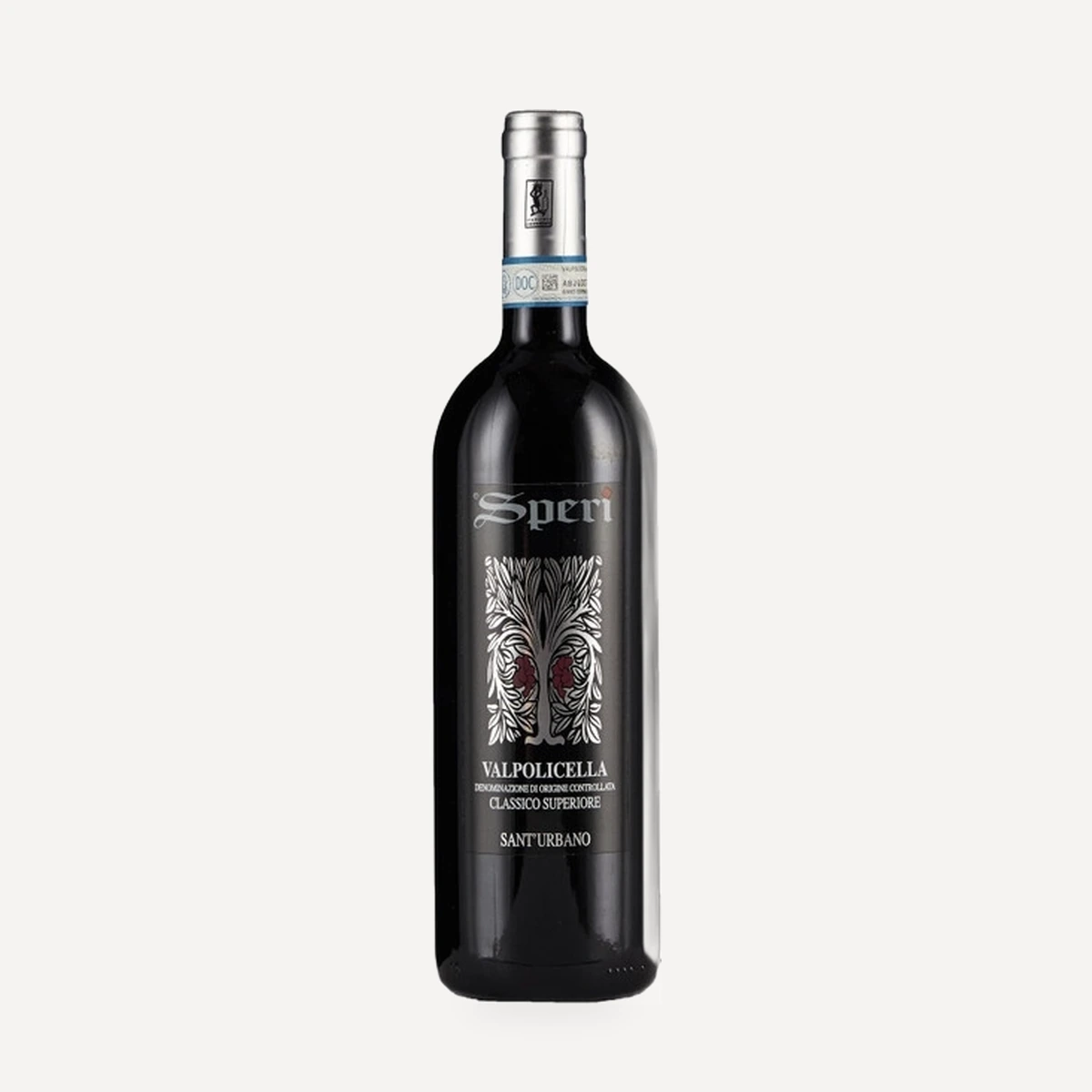
Valpolicella Classico Superiore Sant’Urbano
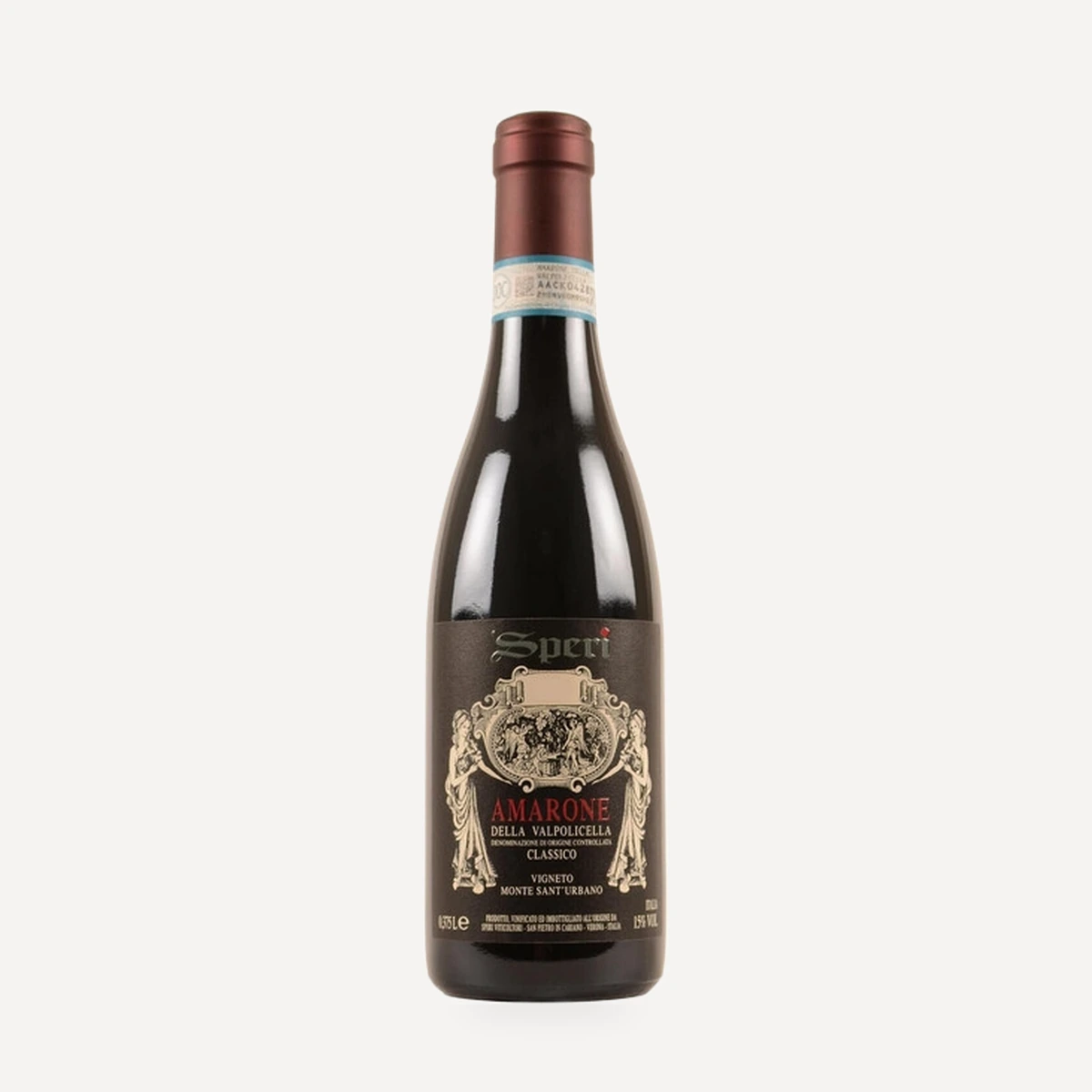
Amarone della Valpolicella Classico Sant’Urbano
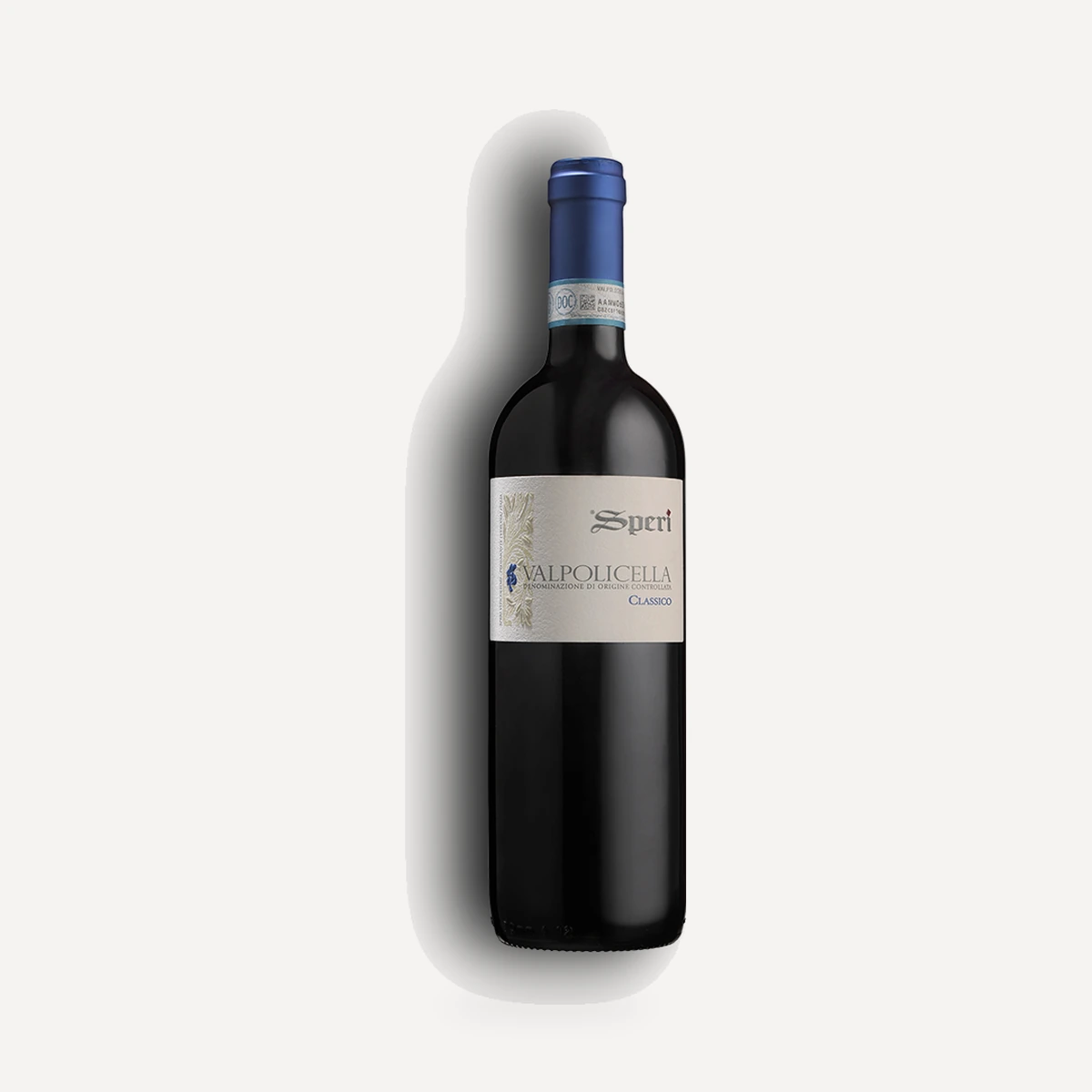
Valpolicella Classico
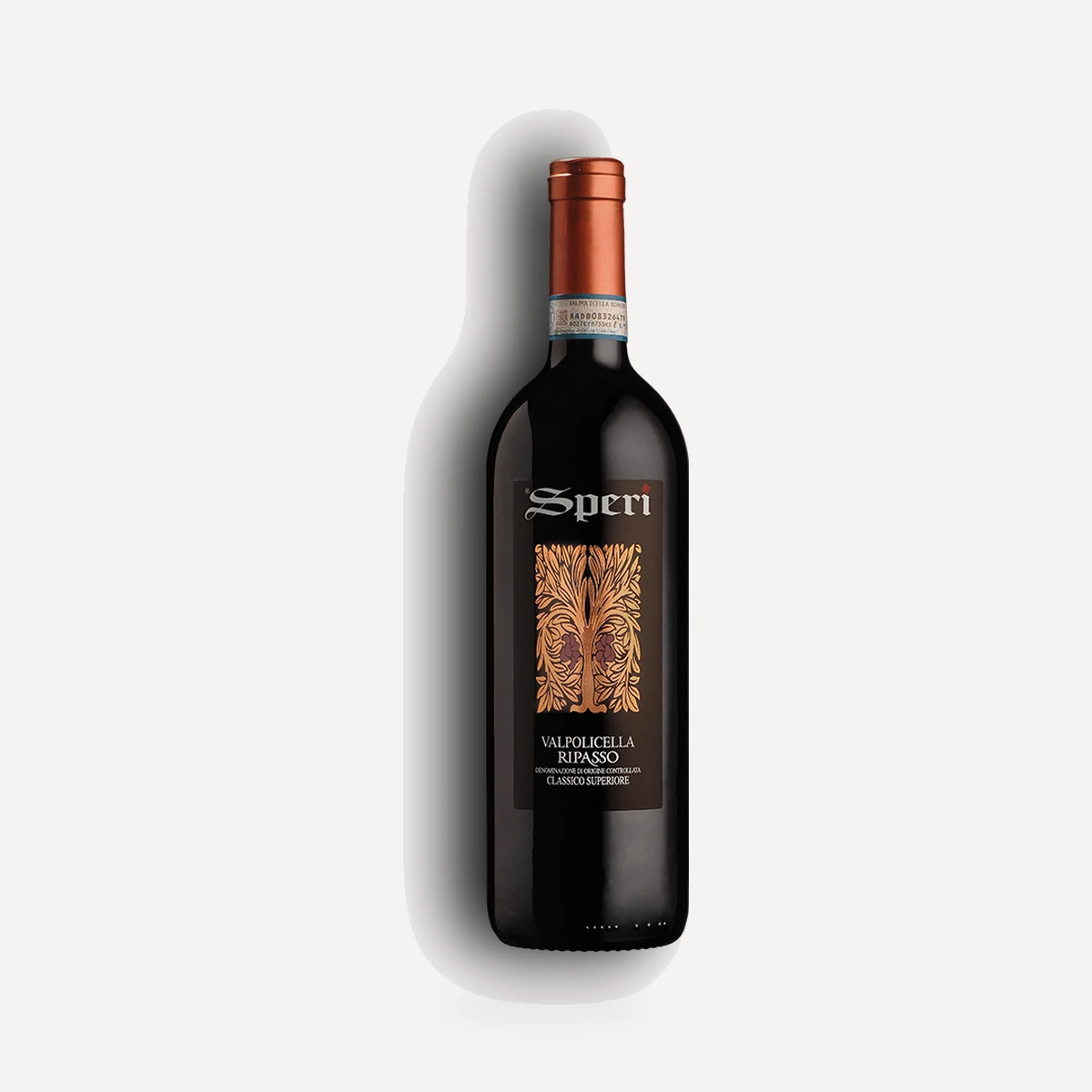
Valpolicella Ripasso Classico Superiore