Storia
Family roots
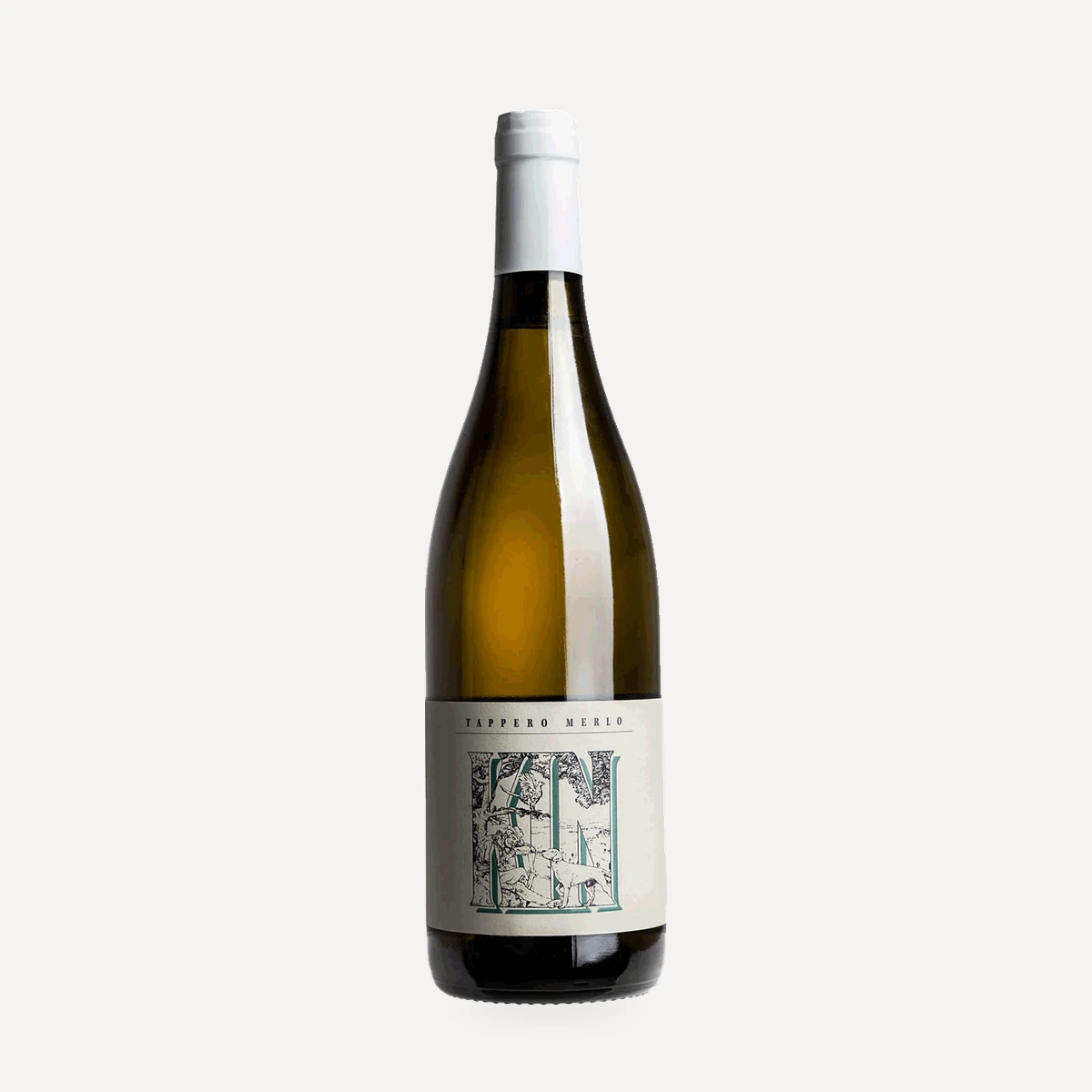
The Tappero Merlo family cultivated vineyards in Canavese for generations. Domenico Tappero Merlo’s grandfather, also named Domenico and known as KIN, was an old-fashioned grower whose life followed the rhythms of vineyard and cellar. He was remembered as a hunter, a patient observer and a man for whom no activity mattered more than his wine. His grandson inherited his attachment to Erbaluce, attention to detail and respect for nature.
From technology back to the land
The present Domenico Tappero Merlo spent more than twenty years in his first entrepreneurial career within the technologically innovative environment that developed around Ivrea. Between 1950 and 1970, the area had become an international centre of electronics, culminating in Olivetti’s P101 in 1965.
By the turn of the twenty-first century, Domenico was witnessing the abandonment of local vineyards and the collapse of ancient terraces. In 2001, he left his previous path and returned to the land and the vineyards cultivated by his family. His project placed his grandfather’s wine and the ancient Erbaluce variety at its centre. Its stated purpose was to restore inherited artisanal knowledge, protect Canavese’s cultural identity and express the people, Alpine minerals and austere glacial soils of the Ivrea Morainic Amphitheatre through wine.
Reworking inherited practices
The new project did not simply reproduce traditional practice. The customary pergola was replaced by Guyot training, with ten fruiting buds and a target of approximately 1.5 kg of grapes per vine. Chemical weed control was rejected to protect the soil’s microflora and microfauna. In the cellar, spontaneous fermentation with indigenous yeasts, maturation in large oak vessels and extended bottle ageing became central to an approach focused on structured white wines capable of ageing. The principal wines are normally held for about 40 months after harvest before release.
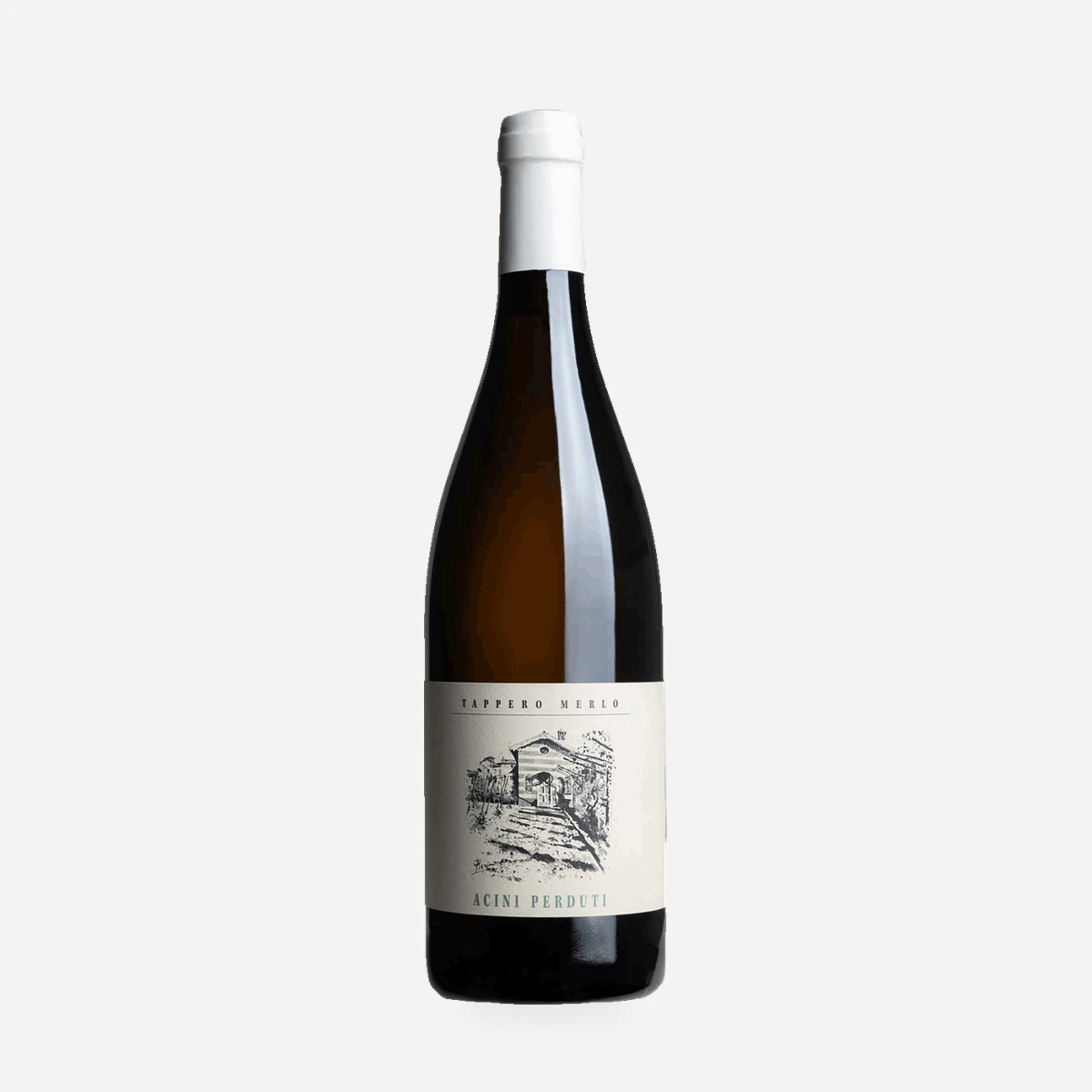
A vineyard associated with Acini Perduti was planted in 2014 with a mixture of old native white varieties. The project drew inspiration from Giovanni Battista Croce’s 1606 treatise on the wines and grapes of the hills around Turin, using it as a guide for recovering a grape type that had disappeared from Canavese.
Vigna del Belvedere
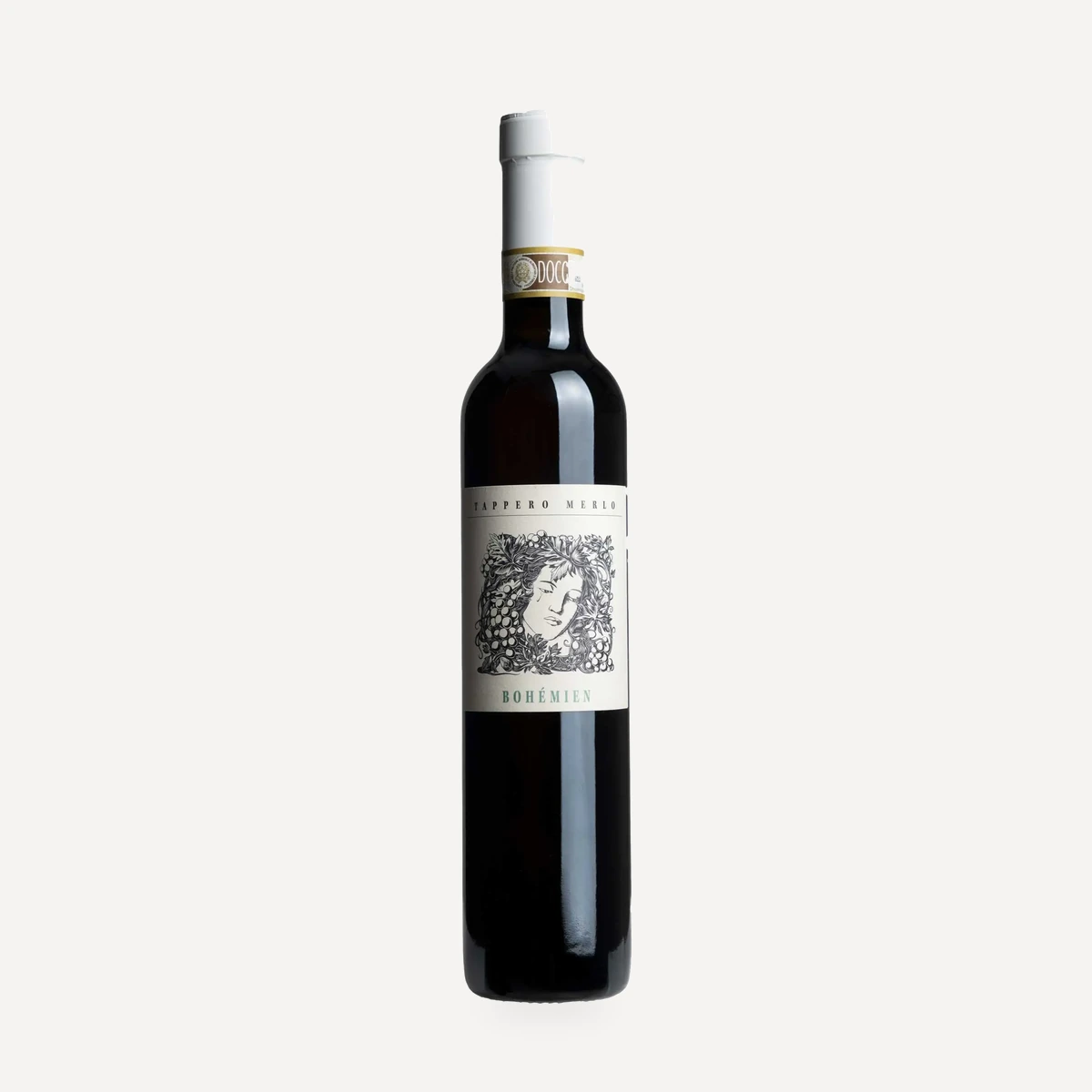
Vigna del Belvedere has a history distinct from the modern estate. It formerly belonged to the Castle of Loranzè and passed to the Giacosa family during the eighteenth century. That family produced the poet and librettist Giuseppe Giacosa, known as Pin, who collaborated on Puccini’s La Bohème, Tosca and Madama Butterfly and was an admirer of Caluso Passito.
The hill had already been devoted to vines for centuries. It is now planted entirely with Erbaluce and serves as Tappero Merlo’s venue for vineyard visits, tastings and events. Its historic Villino once received travellers visiting the castle. The vineyard has been included among the historic parks and gardens of the Province of Turin and among the botanical sites presented by Italian Botanical Heritage.
Recovering other regional traditions
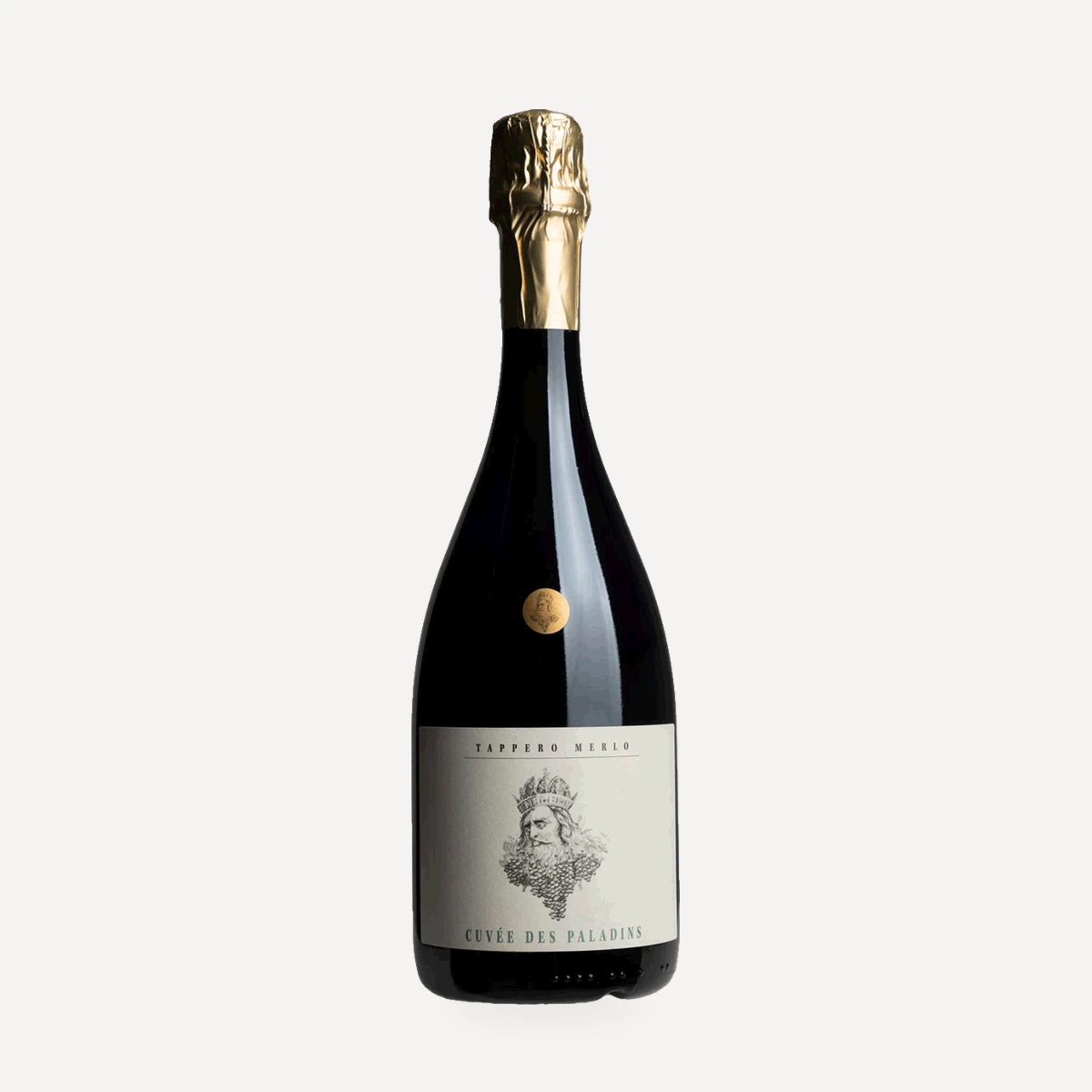
Tappero Merlo’s work also encompasses historical Canavese sparkling-wine and passito traditions. The Cuvée des Paladins name recalls Charlemagne’s twelve paladins and the agrarian renewal attributed to his reign. Its historical background refers to an old local custom of making small quantities of sparkling wine for family celebrations by adding sugar, fresh must or passito to restart fermentation in bottle; some versions were scented with peach leaves.
Archemisia grew from the friendship between Domenico Tappero Merlo and Anna Simioni. Simioni is the great-great-granddaughter of Carolina Fasoli of Asti, who created a handwritten vermouth recipe at the end of the nineteenth century. The surviving formula specified a generous white wine and a cloth bag of herbs and spices suspended in the middle of a barrel for 15–20 days. Tappero Merlo revived the formula using KIN Erbaluce di Caluso DOCG as its wine base.
Terroir
The vineyards cover approximately 3 hectares on the inner slopes of the Ivrea Morainic Amphitheatre, within Parella, Colleretto Giacosa, Loranzè and Piverone. They occupy some of the amphitheatre’s youngest moraines, formed about 10,000 years ago.
Individual sites lie on the beds of ancient landslides and on small terraces built from glacial deposits. The Piverone vines stand along the shore of the former lake that occupied the amphitheatre’s inner plain after the Balteo glacier melted. Vigna del Belvedere forms a panoramic balcony over the amphitheatre, with a 360-degree view that includes Castel Rosso.
The soils were created from material abraded from the flanks of the Valle d’Aosta Alps and transported by the glacier. They are exceptionally poor in organic matter and contain erratic boulders, rock fragments, stones and sand. They are strongly acidic and retain very little water, forcing roots to descend deeply in search of a more stable supply.
Across the technically described vineyards, soil composition is approximately 80% sand, 15% silt and 5% clay, while documented elevations are roughly 296–350 metres above sea level. The estate links the preservation of soil microflora and microfauna with the vines’ ability to assimilate the abundant mineral compounds found in these glacial deposits.
Vinificazione
Tappero Merlo describes its vineyard management as an effort to reinterpret older Canavese agronomy in a modern form. The customary pergola has been replaced by Guyot, normally pruned to ten fruiting buds. A target yield of approximately 1.5 kg per vine is intended to promote uniform bunch development across the vineyard. Erbaluce and Malvasia Moscata are both vigorous varieties with sterile basal buds, one reason for the chosen Guyot system.
No chemical herbicides are used. The objective is to protect soil microflora and microfauna so that mineral compounds remain available to the vines. Targeted green manure combines legumes, grasses and Asteraceae to improve the organic structure and fertility of the strongly acidic soils.
Treatments are designed for low environmental impact. They employ plant extracts derived from alfalfa, brown algae, beet, aloe vera, yucca, propolis, chestnut and sweet-orange essential oil, together with selected bacteria and yeasts, trace elements, foliar biostimulants and cow’s milk. Copper and sulphur use is reduced.
Spontaneous vegetation and native fauna are encouraged as components of the vineyard ecosystem. Earthworms, cockchafers, bees and beetles are identified among the organisms contributing to its balance. Organic fertilizer is produced on the property through heap composting and applied with mycorrhizae and root biostimulants.
Pheromone-based mating disruption is used against grape moths, while bait traps are employed for wasps and hornets. New rooted vines derive from propagation material selected directly from mother plants in the estate’s vineyards. These vineyards function as certified source fields, and a trusted nursery grafts the material onto site-specific rootstocks.
Harvesting is manual in the technically documented vineyards. Grapes intended for natural drying receive particularly strict vineyard selection: the bunches must be small and loose enough to dehydrate evenly. At Vigna del Belvedere, management excludes systemic products, fertilizers, pesticides and insecticides, and the vineyard is undergoing organic certification.
Tappero Merlo’s principal objective is to make white wines capable of extended ageing and of expressing the glacial landscape of the Ivrea Morainic Amphitheatre. The general cellar approach combines spontaneous fermentations with indigenous yeasts, maturation in large oak vessels and long bottle ageing. Core releases may remain at the estate for approximately 40 months after harvest.
The cellar works with stainless steel, 500-litre tonneaux, large 20 hl oak barrels, exhausted barriques and tonneaux, concrete vats and bottles as successive fermentation or maturation environments. Fermentation may begin in temperature-controlled steel and finish in oak. Ageing on fine lees includes weekly bâtonnage. Concrete is used for several months of natural settling before careful clarification and filtration.
Traditional-method sparkling production divides the initial fermentation between steel and exhausted oak. After several months of rest, a pied-de-cuve is prepared in the spring following harvest to initiate bottle refermentation under controlled temperature. Lees ageing can extend to at least 60 months, followed by riddling on pupitres, spring disgorgement and several additional months of rest.
Passito production begins with the early hand harvest of small, loose bunches selected in the vineyard. The grapes dehydrate naturally in ventilated attics until mid-March. During the cool, humid winter, part of the fruit may develop Botrytis cinerea. The dried berries are softly pressed around mid-March; their concentrated must ferments slowly in oak and matures for at least three years in oak barrels of different capacities before extended bottle ageing.
For the recovered native-white blend, fermentation takes place with indigenous yeasts in a 500-litre tonneau. The wine remains on fine lees in the same vessel for about twelve months with weekly bâtonnage, followed by non-invasive clarification and filtration and a shorter period in bottle.
Filosofia
Domenico Tappero Merlo’s philosophy treats protection of inherited land and knowledge as a responsibility to earlier generations. His return to the vineyard was motivated by the abandonment of Canavese sites and the collapse of historic terraces, and by a desire to restore artisanal skill and communicate the region’s cultural identity through Erbaluce.
The aim is to produce white wines that can age, carry the imprint of the Ivrea Morainic Amphitheatre and express minerals transported from the Valle d’Aosta Alps by the Balteo glacier. Wine is understood not simply as a drink but as a changing cultural medium through which the place, its people and the character of its rural community can be approached.
Environmental work is founded on integration with natural relationships rather than on certification as an end in itself. Loyalty to the land, authenticity and typicity are presented as the desired outcomes. Historical agronomic practices are continually researched, recovered and adapted rather than reproduced mechanically.
The model inherited from Domenico “KIN” Tappero Merlo emphasizes patient observation, close attention to detail, simple gestures and deep respect for nature. Tastings follow the same cultural outlook: they are conceived as narratives of Canavese history and tradition, including wines from like-minded local producers, rather than as purely academic sensory exercises.
Vini
Bohémien
Cuvée des Paladins
Kin