Storia
Conception in the early 2000s
Tenuta Mara arose in the early 2000s on the hills linking Rimini’s inland country to the Adriatic coast. Entrepreneur Giordano Emendatori conceived the project with the ambition of creating something outside established regional conventions. The location lay in a coastal corner of Romagna that had not yet developed a clearly defined wine identity.
Leonardo Pironi was involved before the enterprise formally existed and became its vineyard and cellar leader. Together, Emendatori and Pironi developed the property as an interconnected system shaped by biodynamic principles, combining vineyards, cellar, people, art, music and the surrounding landscape.
Giordano named the estate for his wife, Mara Emendatori. He also dedicated its central wine, MaraMia—literally suggesting “my Mara”—to her. Their partnership had lasted 51 years when described, encompassing the family’s early difficulties, sacrifices and later achievements.
Building the vineyard
The estate assembled its vineyards progressively, year after year, around the property. The resulting 11 ha vineyard forms a relatively homogeneous block, predominantly oriented southwest with a smaller northeast-facing component. Individual vineyards were named for members of the Emendatori family.
Sangiovese became the principal variety, represented by numerous massal selections and clones. A small proportion of Pinot Noir was also established. The vineyard material, parcel distinctions and differing harvest dates provide the components from which the estate defines its style each vintage.
2011: first wine production
Tenuta Mara began producing wine in 2011. Its production model joined biodynamic vineyard management to spontaneous fermentations, parcel-specific work, manual harvesting, strict grape selection and maturation in wood or natural cement.
Development of the cellar and cultural setting
The winery developed several dedicated spaces: the Tinaia, containing six large artist-decorated cement vats; the Bottaia, where wines mature and where a French egg-shaped vessel stands at the centre; and a Byzantine-inspired Barricaia for barriques and tonneaux. Art was integrated into the buildings and landscape, while classical music was played among the vines and Gregorian chants accompanied maturation in the cellar.
Commercial and managerial development
Davide Marino became commercial director in 2015 and developed the wines’ presence in the United States, Canada, China, South Africa, Dubai and several European markets.
Elena Emendatori, daughter of Giordano and Mara, subsequently became the estate’s director and representative of the ownership. Her management emphasizes a collaborative working environment in which employees are treated as colleagues and the team functions as an extended family. Leonardo Pironi continues to lead vineyard and cellar operations, supported by Leonello Anello in both areas and Francesco Falcone as sensory consultant.
Terroir
Position and landscape
Tenuta Mara lies at San Clemente on a transverse ridge of the Valle del Conca, in the inland hills south of Rimini. The commune stands near the southern edge of the Province of Rimini, where Romagna approaches the Marche. The Conca stream forms a broad, gentle valley open toward the Adriatic and sheltered by the Apennines.
The vineyards sit at approximately 160–180 m above sea level, at latitude 43°55′ north, 12 km from the Adriatic. Most vines face southwest, with a smaller northeast-facing component.
Climate
The estate experiences a Mediterranean influence rather than the predominantly continental conditions attributed to much of the wider region. Sea breezes move through the vineyards, while the Apennines protect the valley. The interaction between coastal air, the open valley and the hills shapes the estate’s local growing conditions.
Geology and soils
The hills and subsoil are marine-sedimentary in origin. The soil matrix is clay-calcareous and combines approximately 43% clay, 32% silt and 25% sand. The soils have an alkaline pH, contain substantial potassium and magnesium and possess a high cation-exchange capacity, making them chemically fertile. Green manuring and biodynamic preparations are used to maintain a soft, living soil structure.
Vinificazione
Biodynamic management
Biodynamics is treated as the foundation of the estate’s agriculture and as a broader production philosophy. Vineyard activity is intended to work with natural life cycles while minimizing human interference. Pruning and soil cultivation are timed with lunar and planetary phases. Biodynamic preparations are applied to stimulate the soil and vines, while disease protection is limited to measured applications of copper and sulphur.
The estate rejects chemical fertilizers and places particular emphasis on soil fertility and biodiversity. Green manure is sown between alternating rows using a changing mixture of organically produced grasses, legumes and brassicas. The mixture can contain as many as 30 species and is adjusted from year to year according to climatic conditions. Green manuring helps structure and nourish the soil, while the biodynamic preparations maintain biological vitality.
Parcel work and harvest
Management is tailored parcel by parcel and vine by vine. Vineyard work and the selection of the harvest date are adjusted to each site rather than imposed uniformly. Grapes are picked manually and undergo two stages of selection in the winery. Productive decisions are intended to admit only the healthiest and most suitable fruit to vinification.
The estate’s Demeter certification applies to MaraMia, Guiry, MaraMato and Totmà. No certification year is identified.
Fermentation and extraction
The cellar follows the same low-input principles as the vineyards. Fermentations are spontaneous, without selected yeasts, and chemical processing aids and additives are rejected. Leonardo Pironi favours gradual macerations that avoid aggressive extraction.
Air is treated as the principal cellar tool. Repeated pump-overs—described in the estate’s Steiner-inspired vocabulary as “letters of light”—may be performed as often as four times per day when required, supporting yeast activity and controlled extraction. Skin contact can continue for as long as one month.
Grapes are harvested manually and selected in the winery. For the principal Sangiovese reds, the fruit moves by gravity into truncated-conical oak vats. Fermentation proceeds without temperature control or inoculated yeast, followed by extended skin contact.
Maturation
Wines remain for extended periods on their fine lees to encourage the development of tertiary aromas. Maturation vessels include Taransaud oak, small French-oak casks and tonneaux, natural-cement tulip-shaped vessels and other cement vats. The cellar also possesses a central egg-shaped vessel from France.
The Tinaia contains six large cement vats, each decorated by a different artist at Giordano Emendatori’s request. The Bottaia is devoted to maturation, while the Byzantine-inspired Barricaia houses barriques and tonneaux. Gregorian chants play continuously during maturation.
The estate also uses buried terracotta amphorae for whole-cluster Sangiovese. In that method, selected whole bunches with stems enter the sealed amphorae by gravity; native-yeast fermentation proceeds slowly through much of autumn, and the wine remains with stems, skins and fine lees for about ten months before extended bottle maturation.
Filosofia
Tenuta Mara seeks to work as naturally as possible and defines biodynamics as both an agricultural method and the key to its intended wine style. Its stated goal is wine that is candid yet complex, direct yet evocative, closely connected to its place while also expressing the character of the people who produce it.
Nature is treated as the determining force in wine. Each vintage is understood as a different narrative formed by climate, light and the changing balance of the ecosystem. Human intervention is therefore minimized, while vineyard biodiversity, organic soil fertility and the individuality of each parcel receive close attention.
In the cellar, spontaneous fermentation, non-extractive maceration and the rejection of chemical fertilizers, processing aids and additives extend the agricultural philosophy into production. Air is regarded metaphorically as a means of bringing light into the wine, while extended fine-lees maturation supports aromatic development.
The desired stylistic values are finesse, elegance, authenticity and personality. Art, music and concern for all living things form part of the same outlook rather than functioning merely as decoration. The estate presents beauty as ethical, artistic, spiritual and human, encompassing the wellbeing of the land, vines and people who work there.
Under Elena Emendatori, this philosophy also governs workplace relationships: employees are approached as colleagues and collaborators, and the estate is conceived as an extended family capable of continuing to innovate within the path established by Giordano Emendatori.
Vini
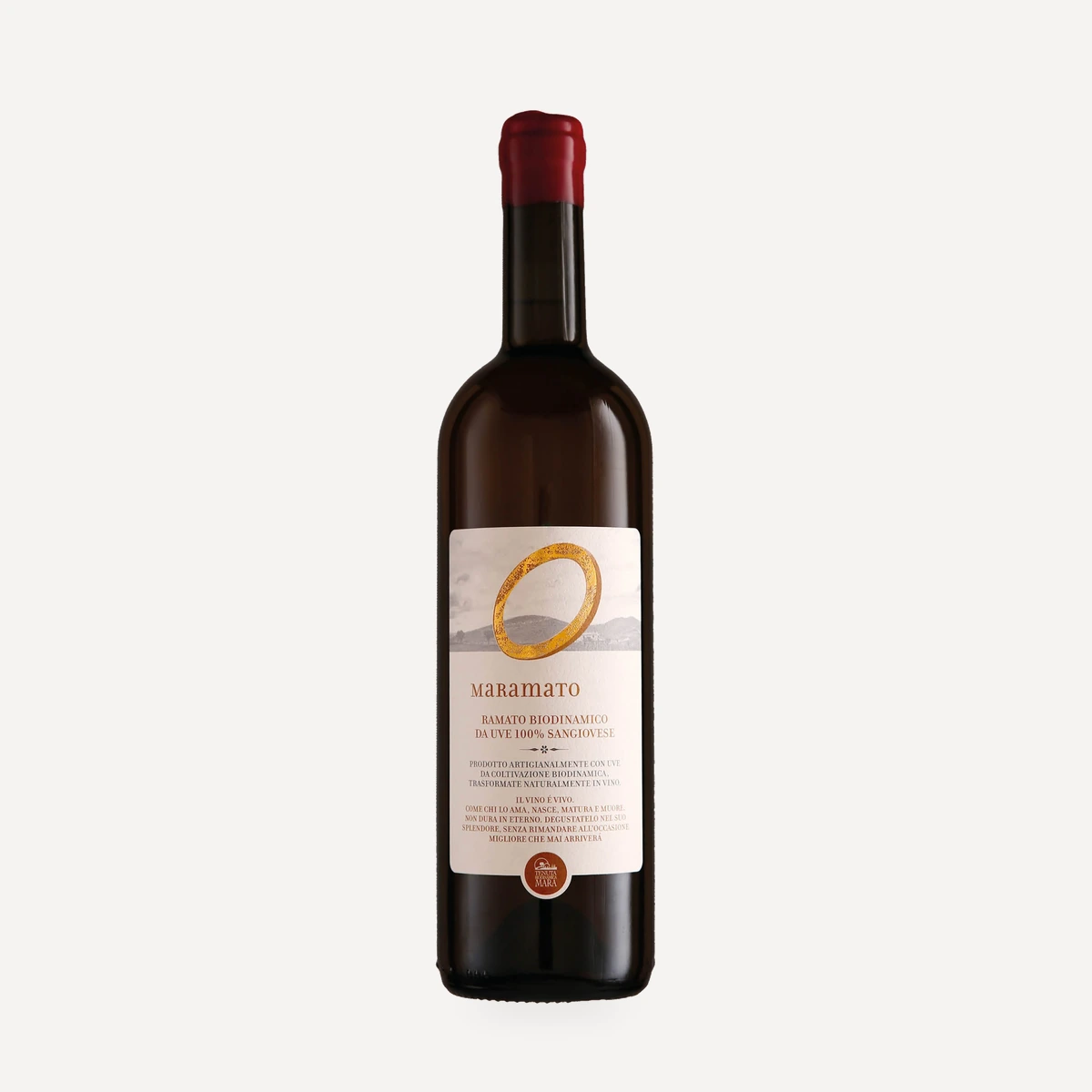
Maramato
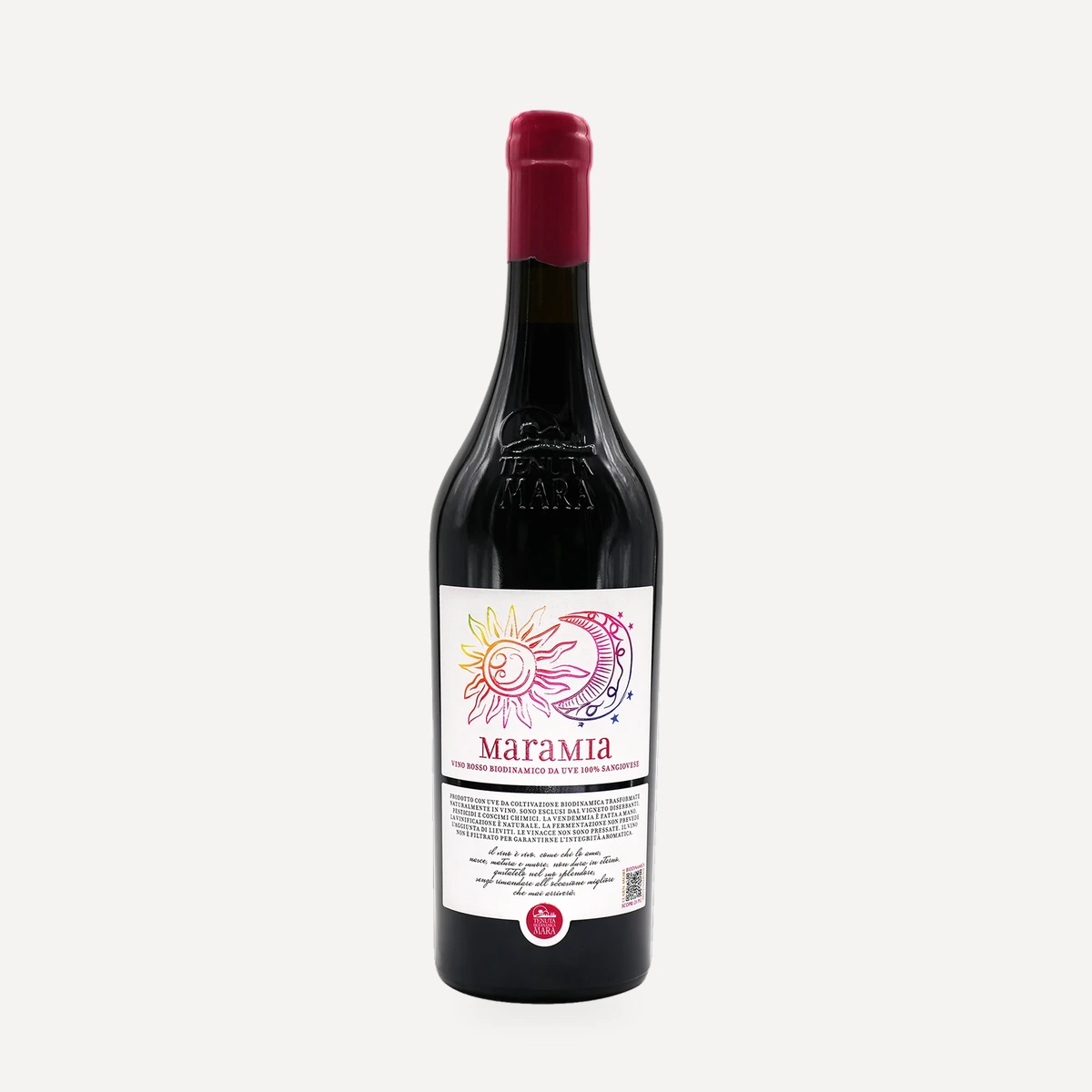
Maramia
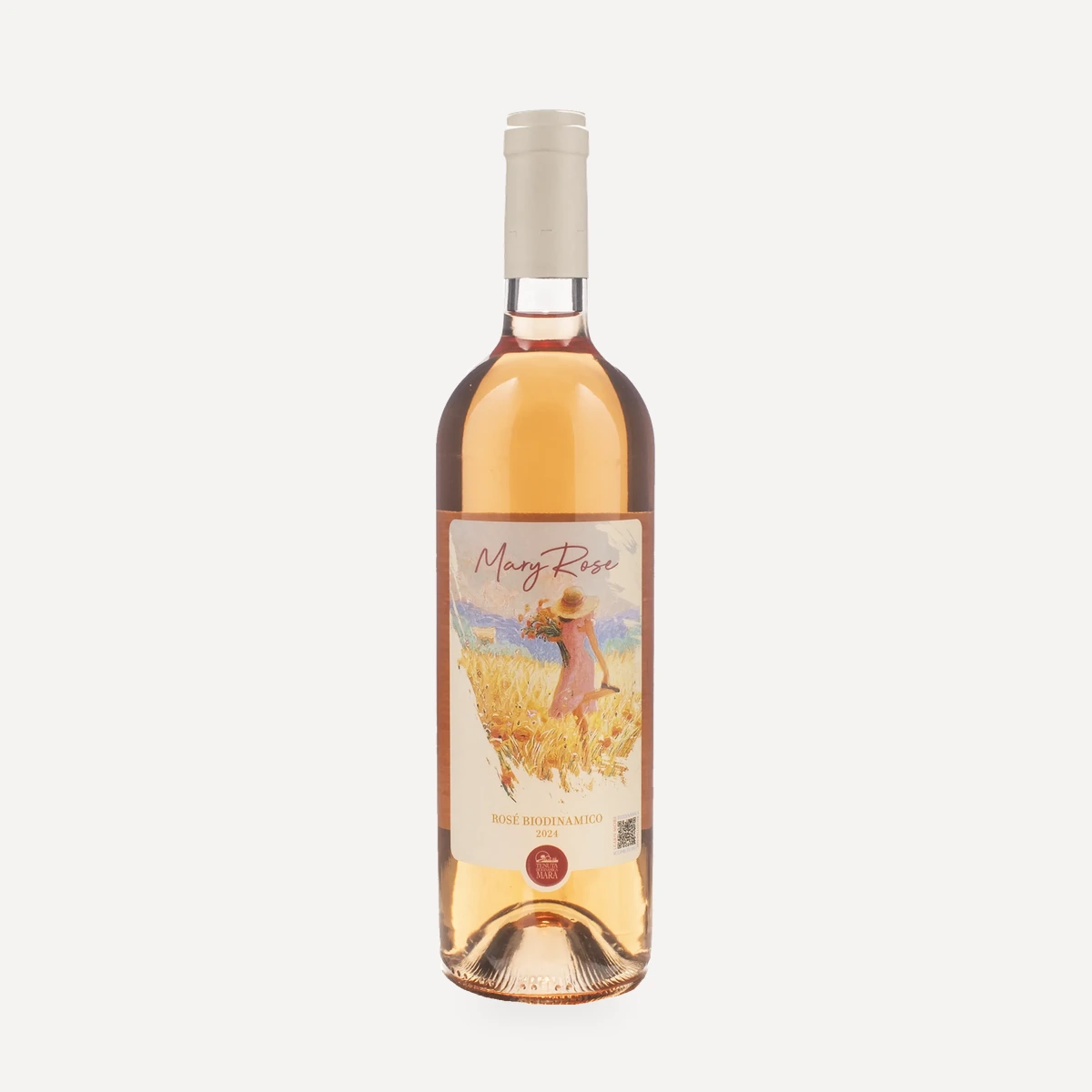
Mary Rose
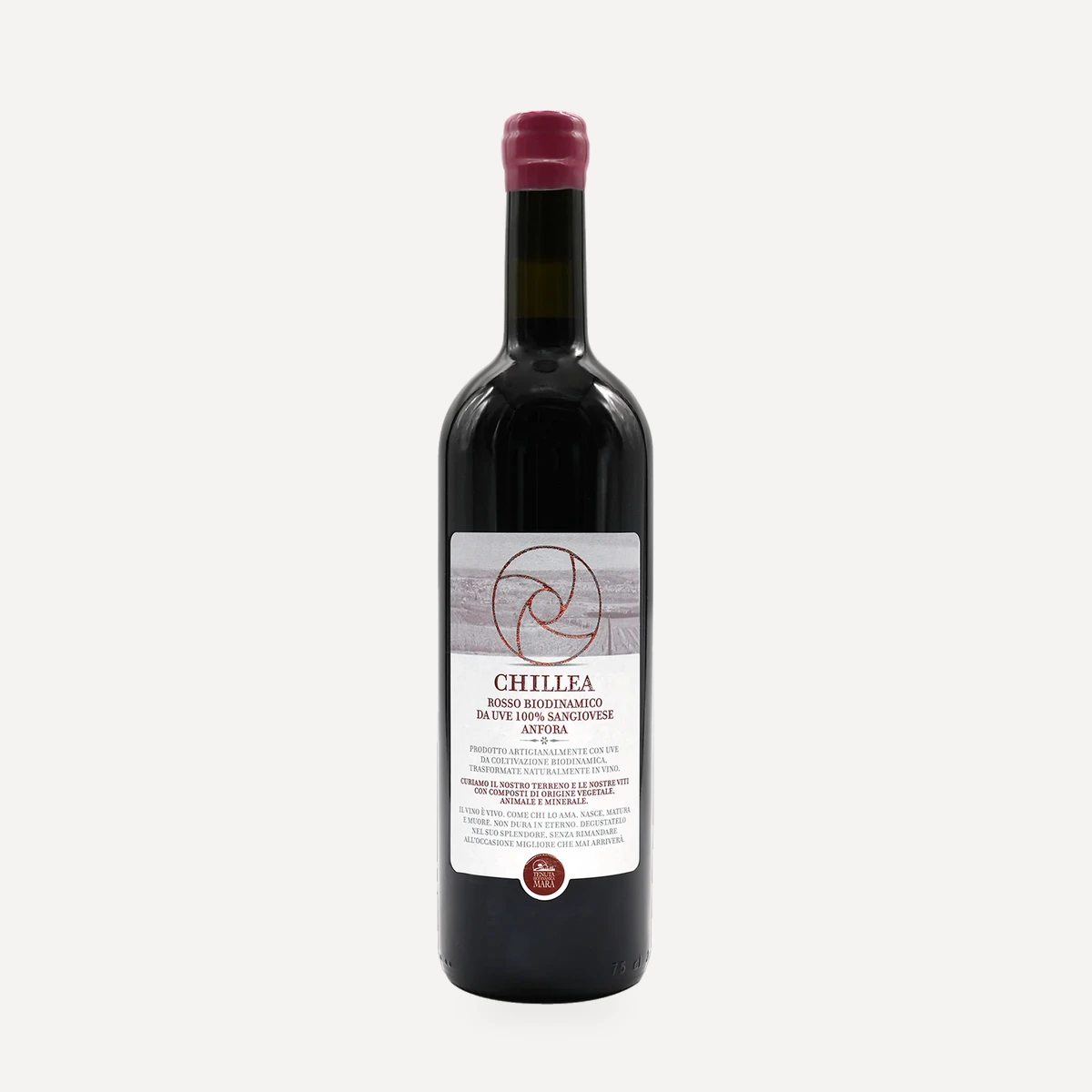
Chillea
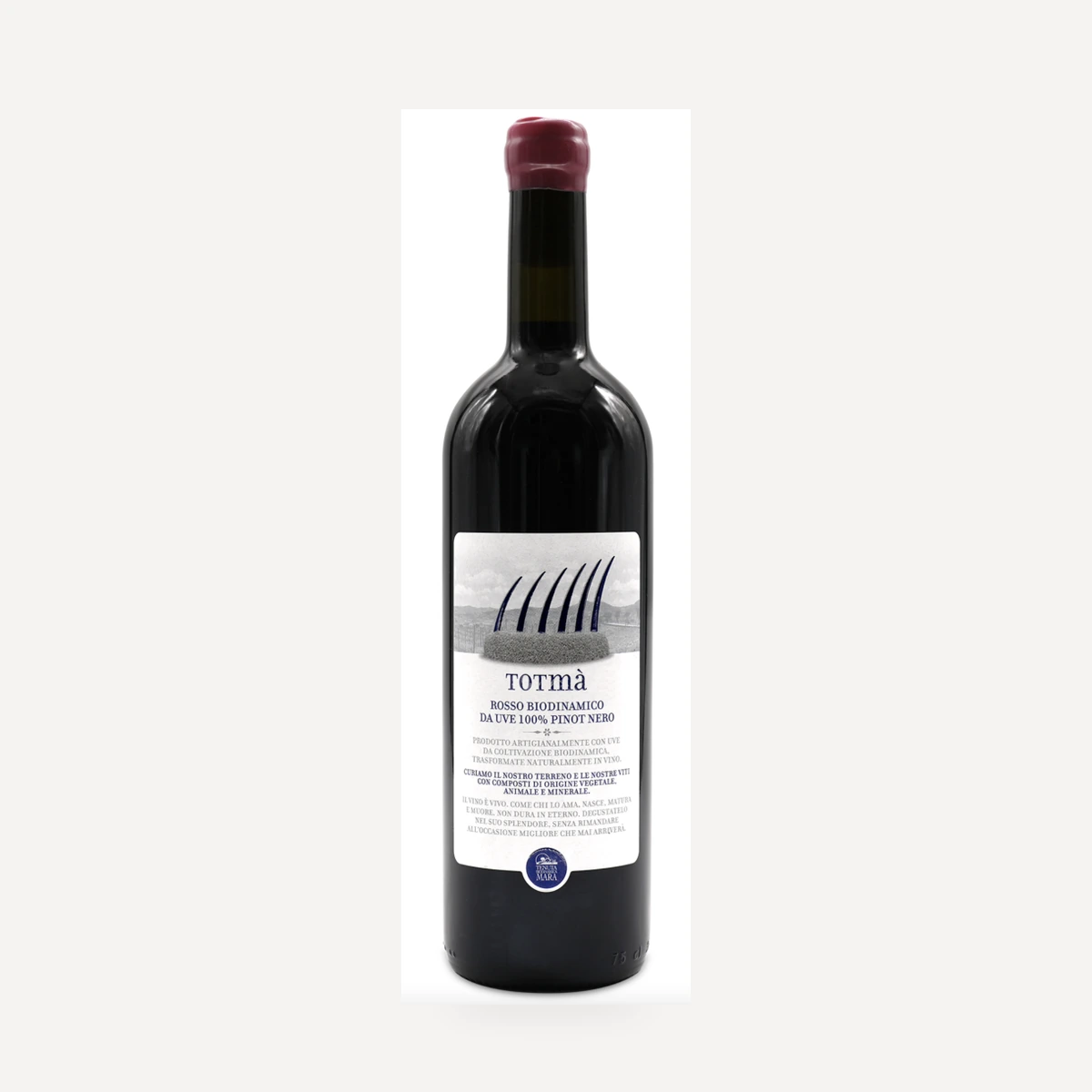
Totma’