Storia
Agricultural roots in the early twentieth century
Antonio Demaio traces the estate’s agricultural tradition to his grandfather Domenico. At the beginning of the twentieth century, Domenico cultivated olive trees at Rignano Garganico, a mountain village in the Province of Foggia. He later moved to San Severo, on the Tavoliere delle Puglie, where he continued the family’s agricultural activity and passed his attachment to olive trees and vines to his son, Antonio’s father.
Antonio Demaio’s early experience
Antonio began working with both crops as a child. He learned to prune olive trees and vines, gather their fruit and turn the family’s grapes into wine. The family used an underground cellar, a type of winemaking space then widespread in San Severo.
Suspension of winemaking in the 1970s
The rise of cooperatives during the 1970s, together with the belief that producers could gain strength by joining forces, led Antonio to suspend the family’s processing and winemaking activity. He subsequently concentrated primarily on agriculture.
During the same period, Antonio became first a professor of Business Administration and later the head of the ITC in San Severo. Alongside his educational career, he continued investing his physical and financial resources in the growth of the agricultural business, with the intention of eventually resuming the production of wine and olive oil.
A new winery from 2010
In 2010, Antonio began renovating an old masseria to create the present winery. The project restored an estate-based processing facility after the long period in which the family had focused chiefly on farming.
Return to vinification in 2013
In 2013, Antonio and his son-in-law Giovanni began processing the estate’s grapes again. They adopted organic and traditional methods in both vineyard and cellar. Their approach combines minimal phytosanitary intervention in the vineyard with spontaneous fermentation, the avoidance of clarification and a restrained approach to filtration and sulphur additions. Antonio presents these practices as knowledge inherited from his father and passed in turn to his children.
Terroir
Tenuta Demaio is based at San Severo in the Province of Foggia, within the Tavoliere delle Puglie. The estate extends to approximately 50 hectares shared by vineyards and olive groves.
The winery grounds have long accommodated several nests of European bee-eaters. These birds preferentially excavate their nesting tunnels in predominantly sandy ground, documenting the presence of suitable sandy areas around the cellar. The tunnels can reach as much as 5 metres in length. The birds generally arrive in April and remain until the end of August, overlapping with the beginning of harvest for the estate’s late-August fruit.
Within the olive-growing areas, the combination of fertile ground, exposure and clean air supports cultivation of the estate’s trees.
Vinificazione
All field operations have been certified organic since 2004. The vineyard programme seeks to limit phytosanitary treatments to the smallest possible number of interventions and places this restraint within a broader organic and traditional approach extending from cultivation into the cellar.
The estate’s agricultural outlook was formed through direct family transmission: pruning, harvesting and grape processing were taught across generations rather than introduced solely as modern cellar protocols. Organic management also covers the estate’s olive-growing activity. In the olive groves, pruning to the traditional vaso sanseverese form and harvesting are performed by hand, with healthy fruit selected during picking.
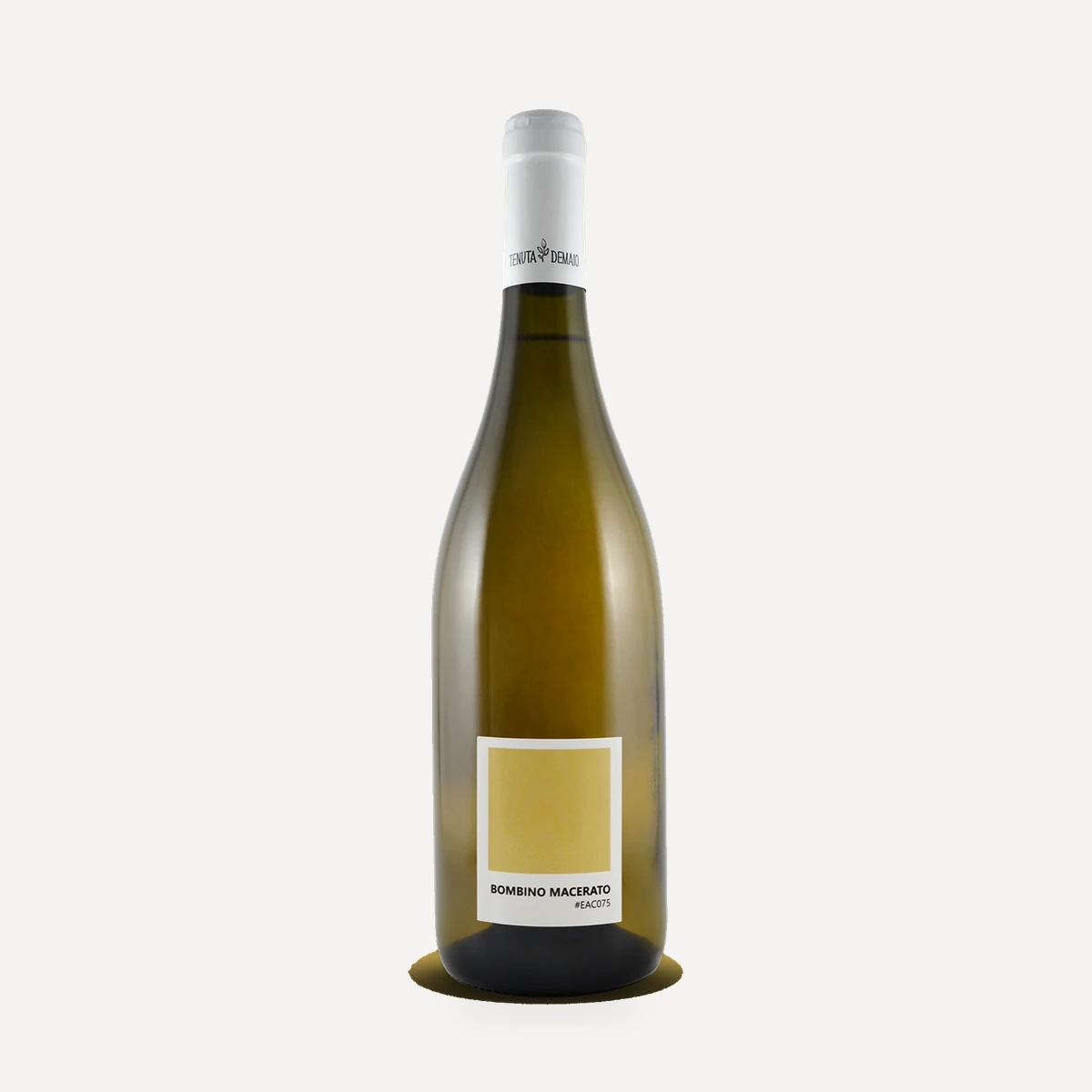
Vinification resumed in the renovated masseria in 2013. Fermentations begin spontaneously, with stainless-steel tanks serving as the principal fermentation vessels. A skin-contact wine undergoes fermentation and maceration in barrique.
The cellar does not clarify or stabilize the wines and avoids sterile filtration. Sulphites are added sparingly. These choices continue the traditional cellar practices Antonio Demaio learned from his father while operating within the estate’s certified-organic agricultural system.
The ancestral sparkling wines are refermented in bottle with must from the same base wine. Yeasts remain in the bottle and allow the wine to continue developing until it is opened. The wines are intended to retain their natural deposit and may be served cloudy.
Filosofia
Tenuta Demaio’s approach joins family continuity, organic agriculture and limited cellar intervention. Antonio Demaio treats vineyard work and vinification as skills transmitted within the family: his father taught him the traditional practices that he now passes to his own children.
The estate seeks to intervene as little as possible in the vineyard and allows fermentations to begin spontaneously in the cellar. Avoiding clarification and stabilization, limiting sterile filtration and using little added sulphur are intended to preserve the direct relationship between grapes and finished wine.
The phrase “the natural color of wine” is expressed visually through square labels carrying the colour of the wine itself. Their design is meant to associate each bottle with its grapes and with the avoidance of chemical additives.
Environmental considerations continue into packaging. The estate uses lighter bottles, stone-powder Fasson Marble label paper, polylaminate capsules chosen to avoid PVC plastic, and unprinted cartons designed for complete recycling.
Vini
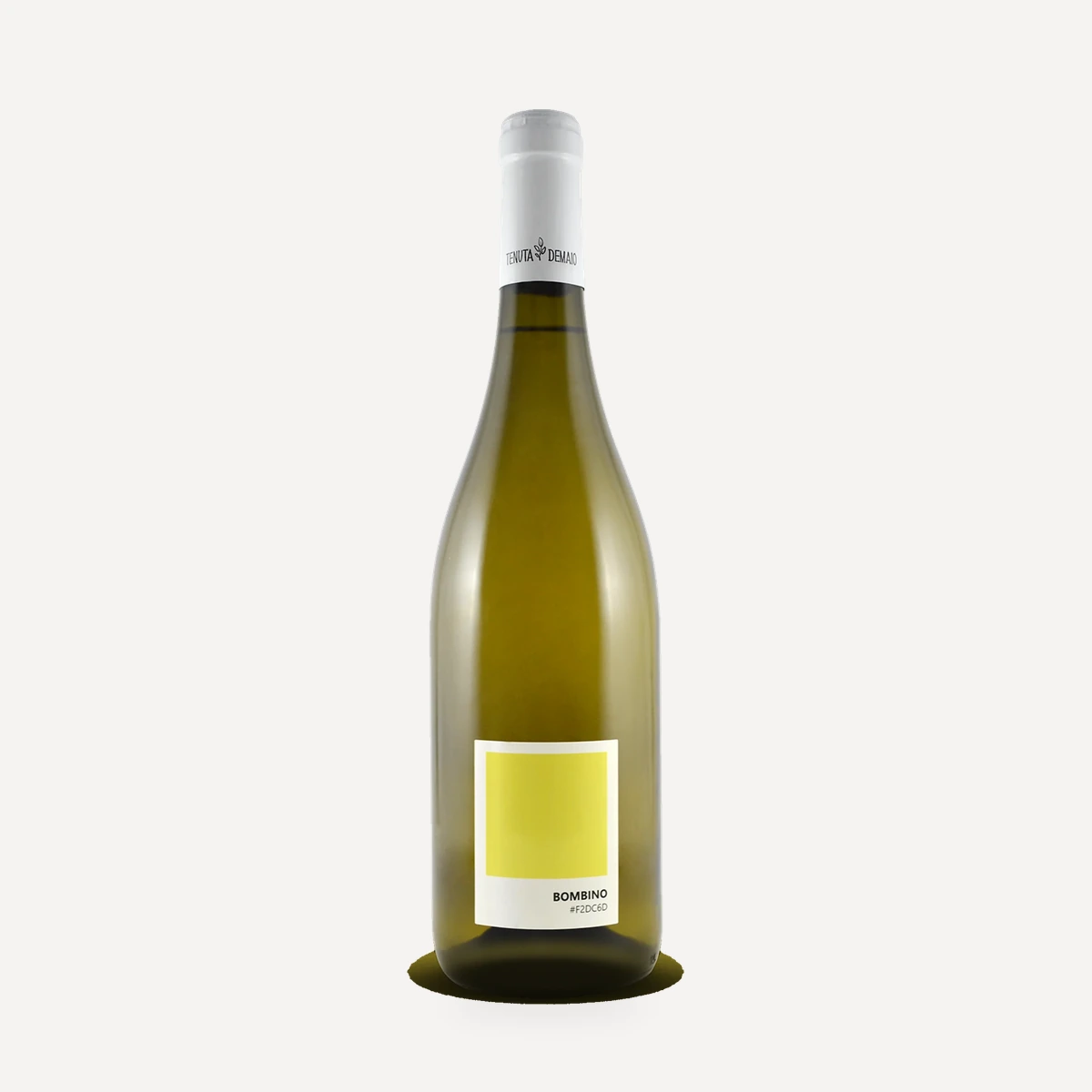
Bombino Bianco IGT Puglia Biologico

Bombino Frizzante Ancestrale IGT Puglia Biologico