Storia
Origins and Alberico's transformation
Wine was being made at Fiorano by about 1930 from local grapes. The modern identity of the estate began in 1946. After the Second World War and the creation of the Italian Republic, Prince Francesco Boncompagni Ludovisi withdrew from public life, relinquished the title Prince of Venosa to his 28-year-old son Alberico and transferred the family estate at Fioranello to him. Alberico, born in 1918 and married since 1941 to Countess Laetitia Pecci Blunt, considered the existing wine unsatisfactory. He sought the advice of agronomist and oenologist Giuseppe Palieri, who recommended grafting equal parts Cabernet Sauvignon and Merlot onto existing vines for the red wine and planting Malvasia di Candia and Sémillon separately for the whites. Alberico acted immediately and retained Palieri for the rest of the consultant's life.
Palieri's non-interventionist ideas suited Alberico, who had distrusted industrial chemicals in the soil since 1934, when he was sixteen. The estate developed a closed agricultural cycle: manure from its own cattle and sheep fertilised the soils, while chemical treatment of the grapes was avoided. Production remained exceptionally small. Under Alberico the estate made three wines and no more than about 2,500 bottles in total: roughly 1,000 bottles of an equal Cabernet–Merlot red, plus a Malvasia di Candia white and a varietal Sémillon in quantities of only a few hundred bottles each. The wines matured in numbered barrels of differing origins and sizes, generally around 10 hl; barrels were normally bottled separately and the red labels recorded both barrel and bottle numbers.
Consultants, continuity and a private cellar
After Palieri died in the mid-1950s, Alberico engaged his friend Tancredi Biondi Santi as oenological consultant. Biondi Santi remained associated with Fiorano until his death in 1970 and was not replaced. Gianni Valenti joined Alberico's workforce in the 1960s and became the estate foreman and its living historical memory. The wines were deliberately released slowly—never before three years after harvest—and their austere youth and tiny volumes kept distribution limited. Outside Rome they were handled by the Milan company Quirici; in Rome they were available in only a handful of places. Mrs Vittoria administered direct purchases from the estate under Alberico's highly private regime.
The estate's reserve extended to the cellar itself. Access was denied to almost everyone, although Luigi Veronelli was one of the rare visitors. The farm nevertheless won recognition beyond wine for fruit, wheat and cattle in France, Germany, the United States and Italy. The small Santa Fresca church, built in 1734, formed part of the family property; the origin of its dedication remained uncertain.
1998: uprooting and near cessation
After 46 consecutive harvests, Alberico ordered almost all the Fiorano vineyards uprooted and destroyed in 1998, leaving only eight rows of Cabernet opposite the principal estate buildings. He gave no public explanation. Production almost stopped: approximately 200 bottles of Rosso were made in each of 2001 and 2002, with only slightly more in 2003. Alberico, already living in Rome because of declining health, continued to advise the estate but in 2001 declined a meeting requested by Veronelli and answered only a few of his questions in writing.
Replanting with Paolo and Alessandrojacopo
Alberico's cousin Paolo Francesco Boncompagni Ludovisi and Paolo's son Alessandrojacopo already owned the Santa Fresca sector with its church and neighbouring villa. As Alberico's health worsened, they became increasingly involved, while he continued to direct the farm from Rome. Between 1999 and 2004 Alessandrojacopo acquired 13 ha adjoining the original nucleus. Father and son planted an experimental vineyard in front of Villa di Santa Fresca, then used replanting rights transferred by Alberico to establish a new vineyard modelled on the one that had been removed.
Alessandrojacopo was only just over twenty. Alberico trained him in the selection of land, clones and vineyard layout and carried the estate's organic discipline through both cultivation and vinification. The historical workforce remained, notably Gianni Valenti. Alberico preserved Cabernet Sauvignon and Merlot for the reds but, without explaining the decision, rejected Sémillon and directed the new generation to use Grechetto and Viognier for the whites. The renewed wines began with the 2006 vintage.
Succession and the present estate
Alberico died in Rome in July 2005 without a direct male heir. The inheritance divided the former property: the Tenuta di Fiorano name and label, together with the title, passed to his closest male relative, Paolo Francesco, while another portion became an independent estate. Paolo Francesco died in 2007, and the title and Tenuta passed to Alessandrojacopo, who had already taken responsibility during Alberico's lifetime. A definitive property division at the end of 2009 left Alessandrojacopo with approximately 200 ha on the right side of Via di Fioranello, including vineyards, olive groves, arable land, pasture and the historic cellar.
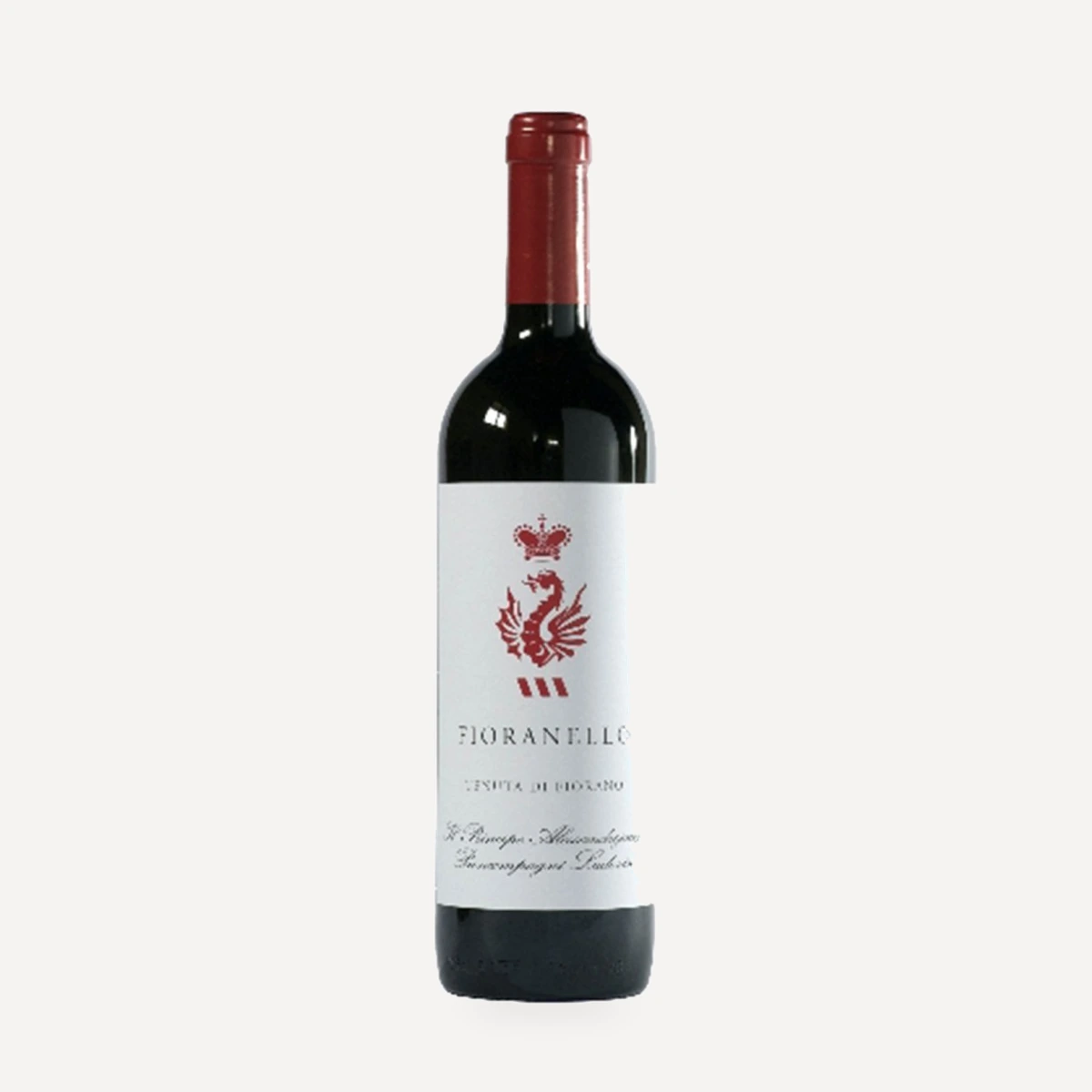
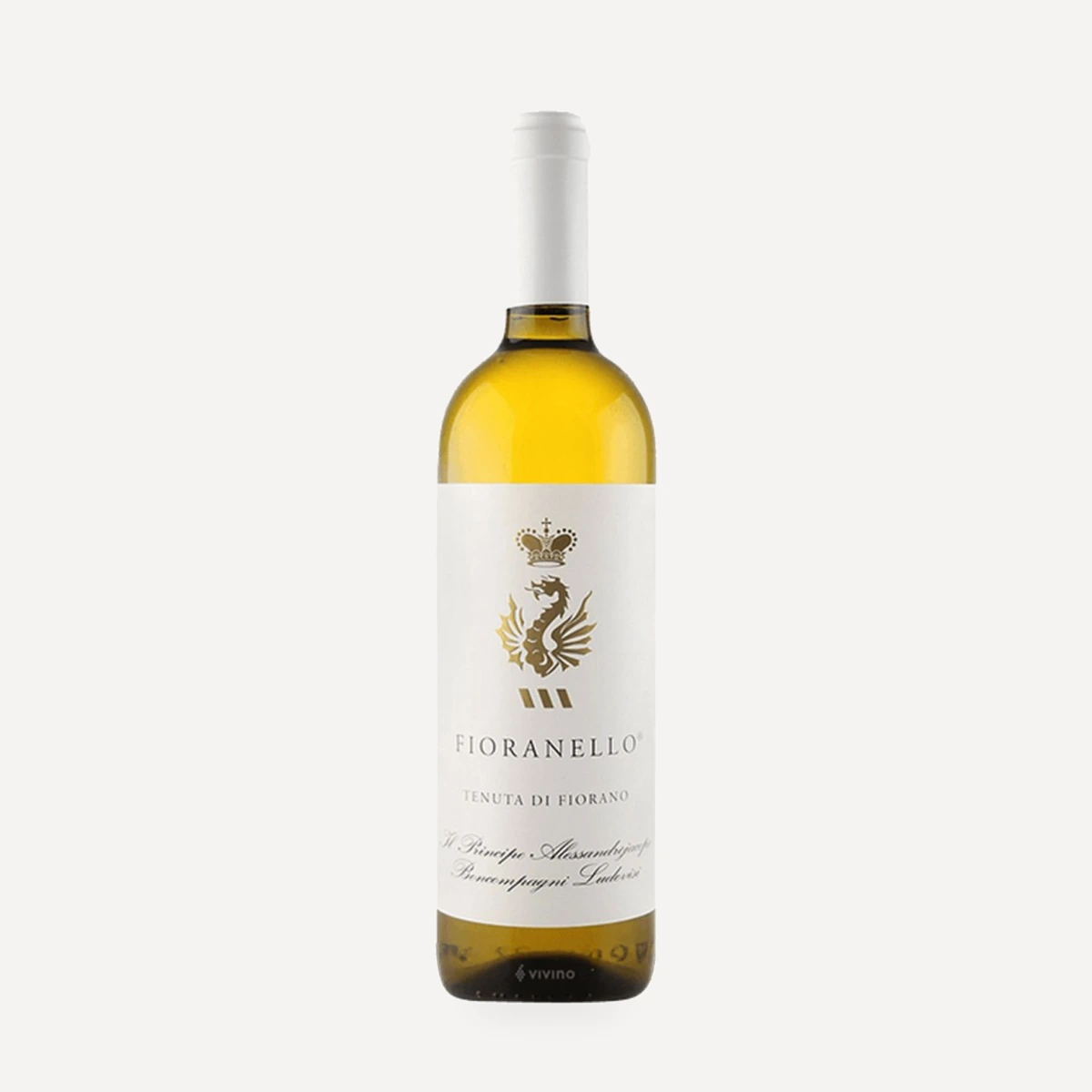
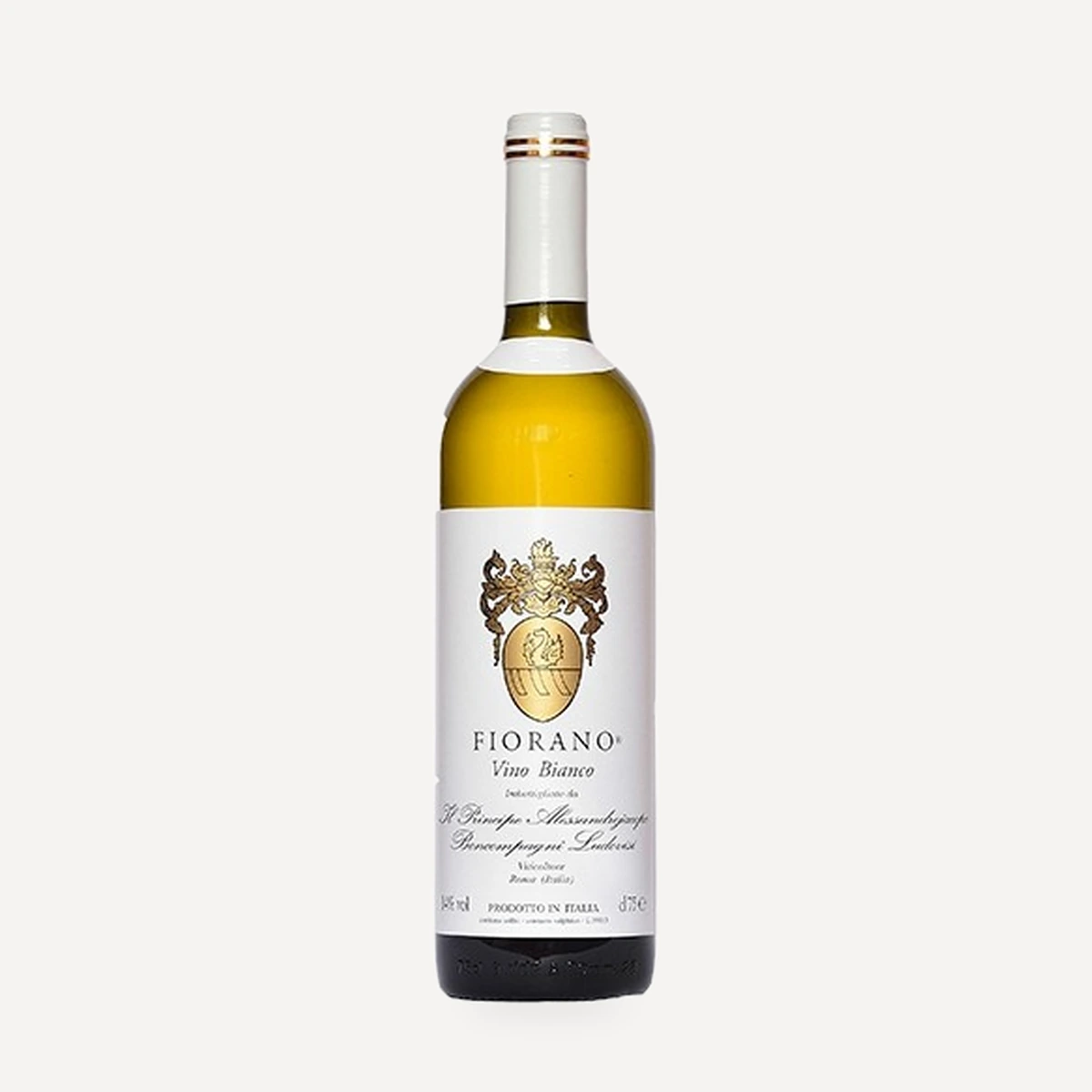
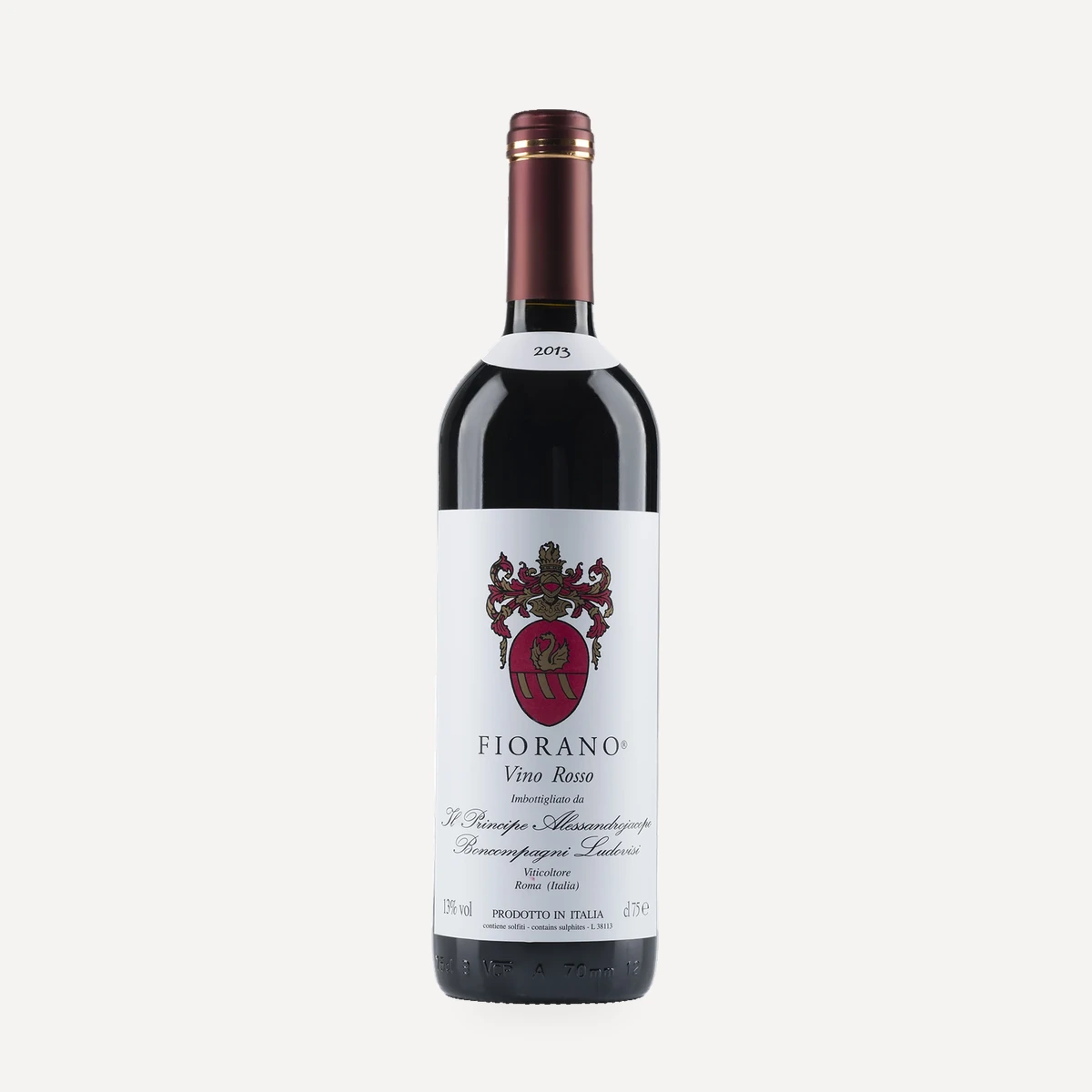
Alessandrojacopo appointed oenologist Lorenzo Costantini to follow production from vineyard to bottle. The established process continued: grapes are harvested and pressed by hand; vinification takes place in the Vecchia Cantina; gravity carries the wine to the Cantina Storica for maturation in old barrels and extended bottle ageing in its natural caves. The historic cellar and its conserved bottles remain protected in continuity with Alberico's practice. The estate now comprises four labels—Fiorano Rosso, Fiorano Bianco, Fioranello Rosso and Fioranello Bianco—while its wider 200 ha agricultural system includes olives, crops, fruit trees and pasture.
Terroir
Tenuta di Fiorano lies at Via di Fioranello 19 in Rome, a few kilometres from the city centre, between the Parco dell’Appia Antica and the slopes of the Colli Albani. It occupies the northwestern corner of the Alban volcanic area and looks toward the Castelli Romani and Castel Gandolfo; in clear northerly weather, St Peter's dome is visible in the opposite direction.
The vineyards stand at approximately 125 m above sea level on open, sunny and well-ventilated plains. The soils are entirely volcanic, composed predominantly of purple-to-pink pozzolana and transported eruption ash deposited by the nearby Vulcano Laziale. Though arid, the soils drain well and contain phosphorus, potassium, sulphur, magnesium, copper and molybdenum. This drainage is associated with sound fruit and extended ageing capacity.
Vine rows run on a southwest/northeast axis, giving the canopy light throughout the day. Breezes arrive from the nearby sea and the Castelli Romani hills; the western ponentino and the protective arc of the hills shape a ventilated microclimate that helps preserve grape integrity and health. The estate's 200 ha scale, position and agricultural self-sufficiency sustain a balanced internal ecosystem rather than an isolated vineyard monoculture.
Vinificazione
Organic cultivation is a historical operating principle across the estate. Alberico had opposed industrial chemical substances in the soil since 1934, and the renewed vineyards were established and maintained under the same rigorous organic discipline. An old bottle label explicitly identified grapes as untreated by chemicals.
The estate functions as a mixed, largely self-sufficient agricultural system. Local manure from its cattle and sheep fertilised the vineyards in a closed cycle. Vineyard, olive grove, arable fields, fruit trees and broad pastures coexist; arable crops are rotated and include wheat, trefoil and alfalfa. Bees contribute pollination, while the wider natural park, hedges, maritime pines, botanical collection and fruit trees provide habitat diversity. The scale and integrated farming pattern are intended to keep the internal ecosystem balanced and the environment uncontaminated.
Vines are counter-espalier trained and spur-cordon pruned within a traditional planting layout. The southwest/northeast row direction distributes light through the day, while sea and hill breezes help maintain healthy, intact grapes. Harvesting is manual, and low yields and selection take priority over expanding volume.
The production route is divided between two historic spaces. Hand-harvested grapes are pressed by hand and vinified in the Vecchia Cantina. The wine then moves by gravity into the Cantina Storica, where it matures in old vessels and rests for an extended period in bottle in the cellar's natural caves. Malolactic fermentation has also been carried out in the cave in continuity with Alberico's instructions.
The principal traditional vessels are old 10 hl Slavonian-oak barrels. The cellar has also used chestnut: in a 2013 description its barrel stock was approximately 90% oak with a smaller chestnut component. White production included sur-lie ageing in 10 hl oak and chestnut barrels, while stainless steel and small oak barrels formed part of the broader vessel repertoire for the younger range.
Historically, Alberico's cellar used numbered barrels of various origins and sizes, generally around 10 hl. Lots were usually bottled separately, and red-wine labels identified both the barrel and the bottle's place in the lot. Releases were held for at least three years after harvest. Old-cellar practice employed very little sulphur: a sulphur disc attached to a fire-sterilised wire was suspended inside a barrel. Bottling used thin, clear-green glass, 35 mm corks and hand-applied capsules. The renewed operation retains hand work, gravity transfer, old barrels and long bottle ageing while incorporating modern vinification techniques under oenological supervision.
Filosofia
Terroir is treated as the basis of the estate's identity, with its volcanic land, ventilation and intact agricultural environment carrying the past into the future. The operating ideal joins historical continuity to careful, limited modernisation: manual work, organic cultivation, inherited cellar spaces and old vessels remain central, while contemporary vinification methods may be introduced without disturbing the estate's balance.
Alessandrojacopo describes the land as his central passion and regards close oversight of every production stage as both privilege and responsibility. His aim is to honour the work of previous generations and pass it forward. This translates into quality over quantity, low yields, restricted production and gradual vineyard renewal rather than volume-led growth. The protected historic cellar, continued employment of long-serving workers and retention of Alberico's methods express the same preference for continuity.
The environmental philosophy extends beyond the vines. Organic management, crop rotation, grazing, olives, fruit, bees and the botanical park form a self-sufficient agricultural whole. The vineyards are therefore managed as one element of a balanced ecosystem rather than as a separate intensive crop.
Vini
Fioranello Bianco
Fiorano Bianco
Fiorano Rosso