Storia
Family roots in Torriglione
The Oberto family comes from Torriglione and has owned vineyards around the hamlet, including three parcels in Rocche dell’Annunziata, for generations. The family did not originally make its own wine: it rented vineyards to local producers or sold the grapes.
Federico Oberto met his mentor, Renato Ratti, in 1970. He worked as cellar man at the Ratti winery from then until retiring in 2005. Beginning in 1971, the Oberto family’s entire holding in Rocche dell’Annunziata was rented to Renato Ratti, establishing a long professional and personal connection between the families.
Vladimiro Rambaldi, born in Siena and based in Turin, first visited La Morra in 1996 and maintained a lasting connection with the village.
2007: the creation of Trediberri
In 2007, Nicola Oberto, his father Federico and their friend Vladimiro Rambaldi acquired approximately 5 ha at Berri, a hamlet on the far western side of La Morra near the Tanaro. The land was intended exclusively for Nebbiolo for Barolo, and the acquisition created Trediberri—the name combines the three partners, tre, with Berri.
The Berri vineyard was planted in 2007 and 2008. It formed the new winery’s principal holding alongside the older family vineyards at Rocche dell’Annunziata and Torriglione. Federico returned to cellar and vineyard work after retirement, bringing the experience accumulated between 1970 and 2005.
2010–2014: first vinifications and recovery of the family parcels
In 2010, with the cooperation of the Ratti family, Trediberri began vinifying fruit from Canavà, one of the Oberto parcels in Rocche dell’Annunziata. The quantity increased gradually as parts of the family holding returned to direct use. The winery entered the market in 2012.
From 2012 through the 2017 vintage, Trediberri rented approximately 1.2 ha of mature Nebbiolo in Capalot, on the eastern side of La Morra. Its east-facing site, older vines, sandstone and silty marl complemented the warmer fruit and firmer tannins of young Berri. Capalot consequently became part of the multi-vineyard Barolo blend.
In 2014, Trediberri also began vinifying Canavà bassa, or “Rocche,” an approximately 0.5-ha family parcel within Rocche dell’Annunziata. Ütin d’Bastiàn, the third family parcel there, remained rented to Renato Ratti.
2018–2021: changing vineyard sources
The Capalot lease was not renewed after the 2017 vintage. In the difficult 2018 season, fruit from Berri, Rocche dell’Annunziata and Torriglione was combined into a single Barolo del Comune di La Morra rather than bottled as separate vineyard wines. That wine was produced only in the 2018 vintage.
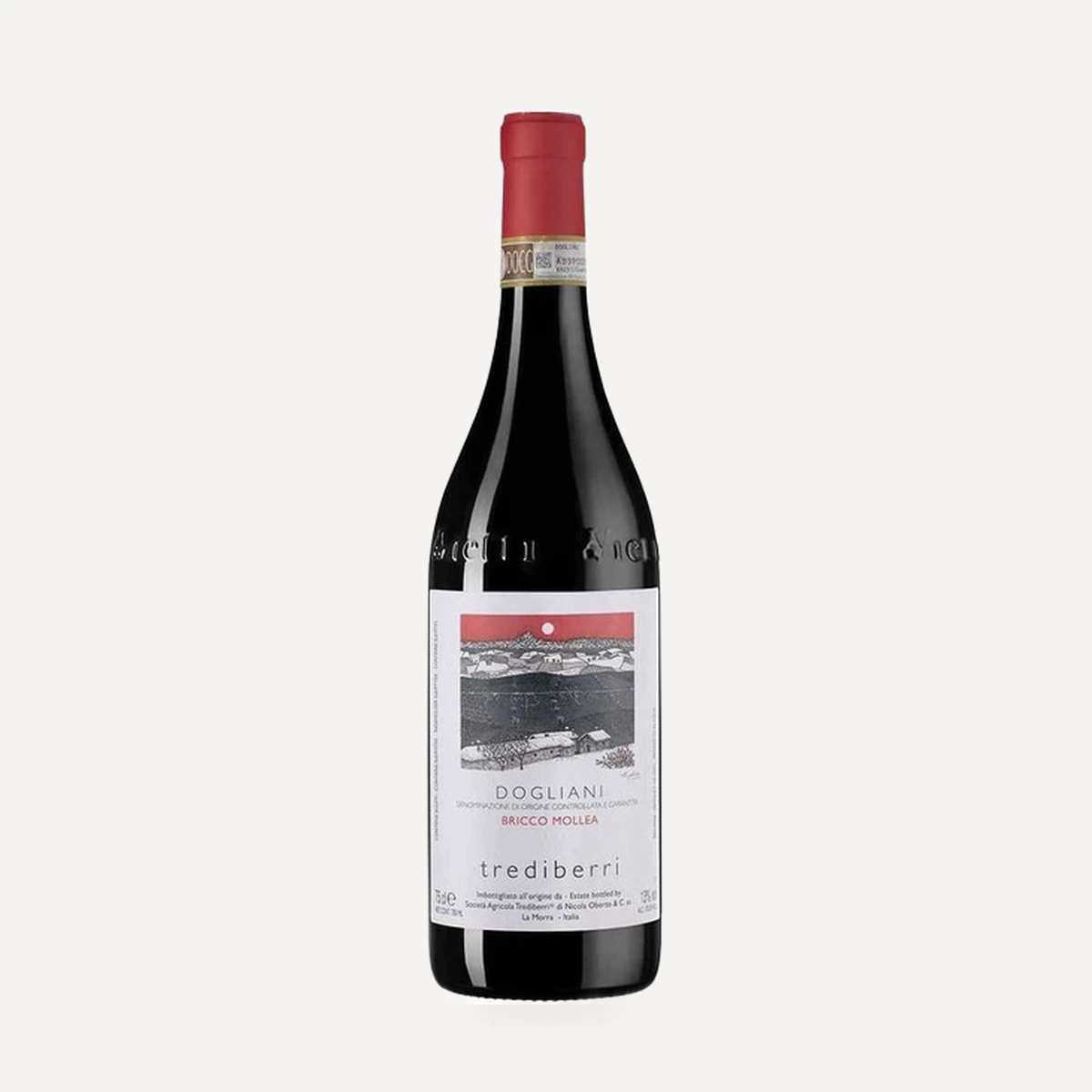
Trediberri rented and cultivated 3 ha at Bricco Mollea in Vicoforte from 2019 through 2021. The vineyard, planted partly in the 1950s and 1970s, supplied Dolcetto and Nebbiolo from a south-facing amphitheatre at 570–600 m near the Alpi Liguri.
From 2022: Dogliani vineyards and a larger cultivated area
From 2022, the source of Trediberri’s Dogliani shifted from Bricco Mollea to Cigliè, Bastia Mondovì and Clavesana. The current structure comprises approximately 5 ha of Nebbiolo at Berri; approximately 2.7 ha owned across Rocche dell’Annunziata and Torriglione in La Morra; approximately 3 ha owned at Cigliè, planted to Dolcetto for Dogliani DOCG and Nebbiolo; and a further approximately 2 ha of rented Dolcetto in Clavesana and Bastia Mondovì. Grapes for Langhe Nebbiolo and Barbera d’Alba are also sourced in part from longstanding external growers. Altogether, approximately 13 ha are cultivated and vinified.
Terroir
Geographic setting
Trediberri is based at Borgata Torriglione in La Morra, in the Langhe of Piemonte. Its La Morra vineyards span markedly different positions: Berri occupies the far western edge of the Barolo area near the Tanaro, while Rocche dell’Annunziata, Torriglione and the former Capalot holding lie farther east. The Dogliani vineyards in Cigliè, Bastia Mondovì and Clavesana occupy the southern Langhe at 450–520 m, near the Alpi Liguri.
Berri and the Tanaro
Berri is approximately 1.5 km from the Tanaro. Its Messinian soils emerged about 5–7 million years ago and are younger than those on the eastern side of La Morra. Proximity to the river is reflected in pebbles, limestone and exposed sandstone extending toward the cliffs above the Tanaro. The south- and south-west-facing slope is moderated by cool air moving from the river. This combination of exposure, elevation and air movement historically supported both vines and fruit trees.
Rocche dell’Annunziata and Torriglione
Rocche dell’Annunziata lies in a sheltered valley facing predominantly south, south-west and south-east. Trediberri’s three family parcels run between the valley road toward Barolo and the road toward Torriglione. Their calcareous blue marl has a smooth texture comprising approximately half silt, with the balance divided between sand and clay. Sand rises from 24% in the upper part to 30% lower on the slope.
A Canavà soil sample taken at 44°37′59.45″ N, 7°56′38.88″ E and 286 m showed Sant’Agata Fossil Marl: blue-grey sediment formed 11–7 million years ago during the Tortonian stage. Lower in the valley, toward Cannubi and the Diano Sandstone of Castiglione Falletto, sand becomes more prevalent; higher at Canavà, the texture is loam with slightly more sand than clay and abundant lime. A plasticity index of 109 indicates a highly plastic soil able to retain considerable water.
Torriglione is the steep hill immediately below the winery, opposite Rocche dell’Annunziata. Its compact blue marl contains approximately 40% limestone, 35% clay and 25% sand. The material is sufficiently firm that historic houses in the hamlet were built directly upon the marl without foundations. The vineyard curves from an east-facing section to a fully south-facing section.
Southern Langhe
The Dogliani vineyards at Cigliè, Bastia Mondovì and Clavesana stand at 450–520 m at the foot of the Alpi Liguri. The former Bricco Mollea holding at Vicoforte formed a fully south-facing natural amphitheatre at 570–600 m. Its soils combined Paroldo Marl—blue-grey silty marl with sandstone and ochre sand veins in the lower section—with the Cassinasco Formation, alternating sandstone and muddy detrital sedimentary rock. The altitude and full southern exposure supported full ripeness while retaining low pH and freshness.
Vinificazione
The current vineyard base combines owned and rented land with fruit from longstanding external growers for part of the Langhe Nebbiolo and Barbera d’Alba production. The only explicitly defined crop-control practice is systematic green harvesting of Barbera to reduce yield. During the rain-heavy 2018 season, downy mildew created severe pressure in spring and early summer; September rain enlarged berries and caused rot in some bunches, requiring particularly strict selection of Nebbiolo and removal of damaged clusters.
Trediberri rejects a single fixed protocol. Vessel choice, maceration and maturation are adjusted to the vintage, grape variety and vineyard, with balance and drinkability as the objective. Concrete is the principal fermentation material, supplemented by stainless steel and wood where appropriate.
Red-wine alcoholic fermentations generally occur in concrete or stainless steel. Nebbiolo and Barbera fermentations described across the range last approximately 10–15 days. Barolo macerations include a post-fermentation phase: approximately 6–7 additional days and roughly three weeks of total skin contact for Berri and the former classic blend, while Rocche dell’Annunziata receives approximately 12–15 post-fermentation days and about four weeks of total contact. The 2018 Barolo del Comune di La Morra began with an indigenous pied de cuve; its detailed record specifies indigenous yeasts, 15 days of alcoholic fermentation in concrete with four to five pump-overs daily, followed by seven days of post-fermentation maceration with one to two pump-overs daily.
Malolactic fermentation for Barolo may take place in oak, steel or concrete; the 2018 communal Barolo completed it spontaneously in concrete. Barolo is generally matured for approximately 20 months in 25-hl and 52-hl Garbellotto casks. The 2018 communal wine spent 21 months in 52-hl Garbellotto casks made from Slavonian oak. A subsequent resting period in concrete, steel or plastic precedes bottling. Depending on the cuvée, Barolo bottling takes place around mid-April or in July–August of the year before release.
Earlier-drinking reds undergo malolactic fermentation in concrete and/or stainless steel. Cold stabilization occurs either outdoors or in temperature-controlled steel tanks, followed by several months in concrete, steel and plastic. Bottling normally takes place in April or May following harvest. Barbera is deliberately matured without oak.
Langhe Rosato uses grapes not selected for the red wines, so its varietal blend changes each year. Grapes are destemmed and crushed, then cold-macerated for 24 hours at approximately 10°C. After gentle pressing and settling, the must remains cold for another 24 hours before fermenting for 18–20 days at no more than 18°C. Filtration is normally used to prevent malolactic fermentation, and bottling occurs around February after harvest.
Filosofia
Trediberri defines drinkability through balance rather than lightness or simplicity. A wine may be powerful and alcoholic yet remain pleasurable, while a lighter wine can still feel tiring or disjointed. The practical measure is whether all its components communicate coherently—the bottle that is finished first is considered the most balanced.
This objective rules out dogma and rigid protocols. Fermentation vessel, length of maceration and maturation are adjusted to vintage, grape variety and vineyard. The partners’ aim is to preserve both equilibrium and ease of drinking while allowing different sites and seasons to require different technical decisions.
The winery presents itself as young, familial and artisanal, without an inherited winemaking marque or constructed ancestral mythology. Its identity is centered on current work, the partners’ friendship and the vineyards they cultivate.
Vini
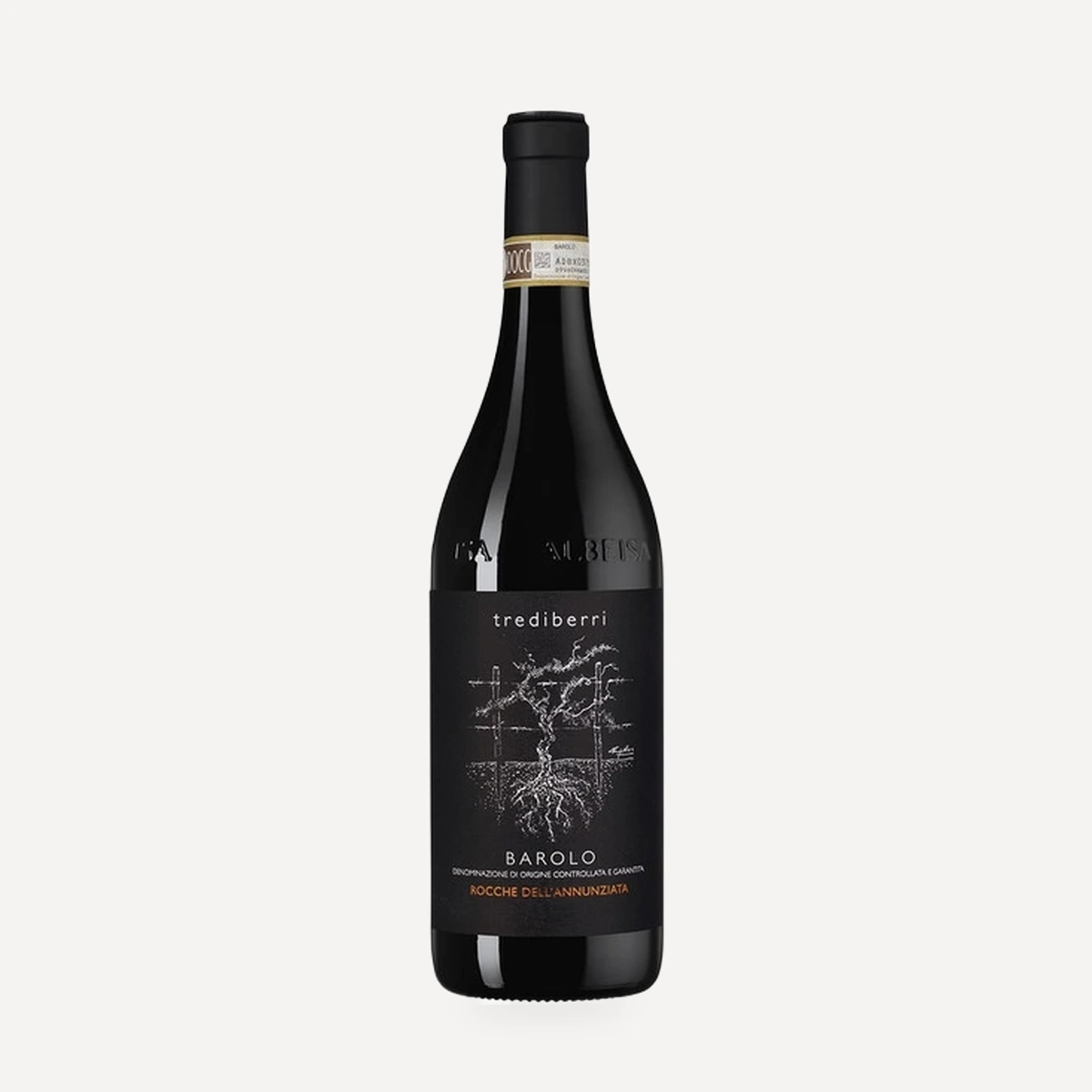
Barolo Rocche dell’Annunziata DOCG
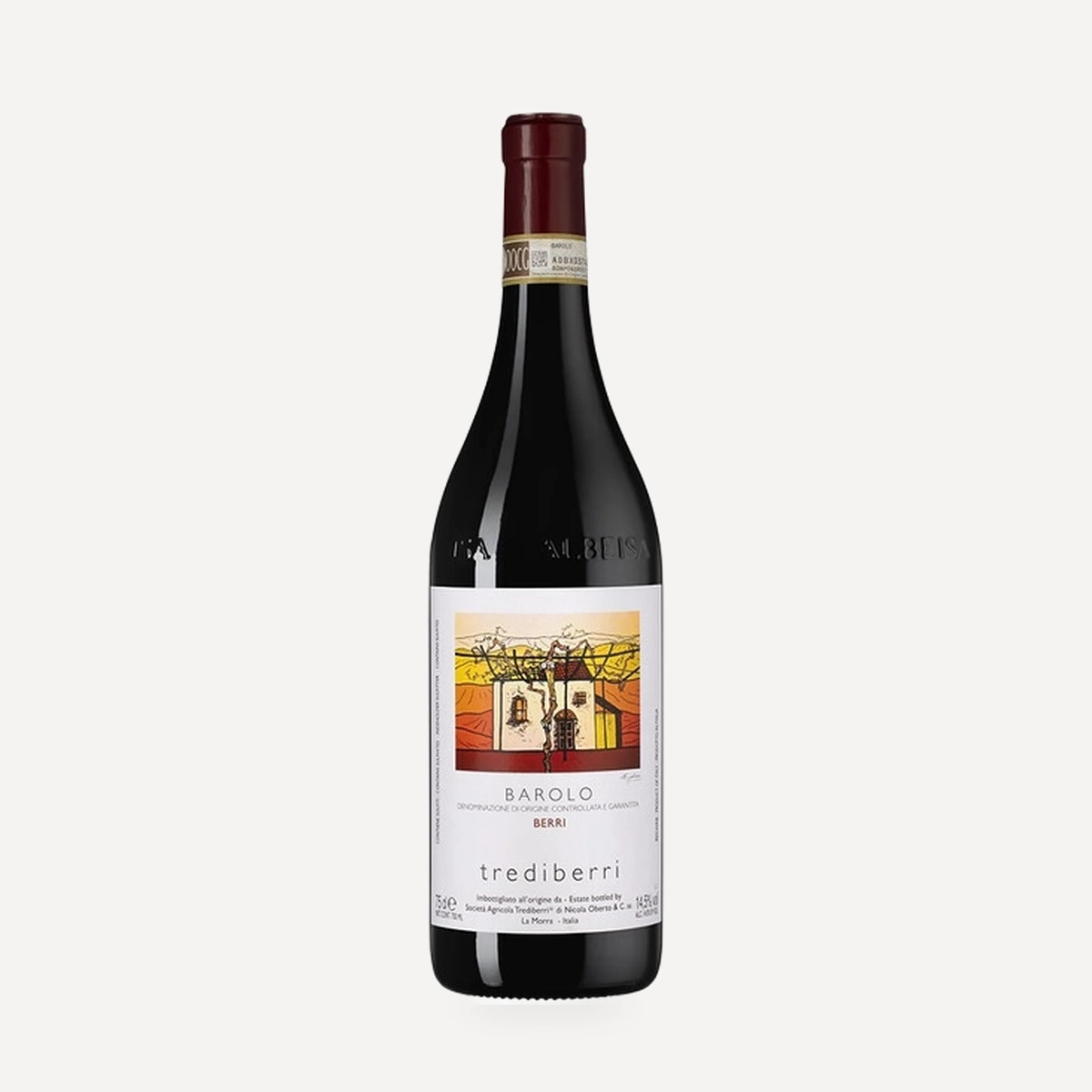
Barolo Berri DOCG
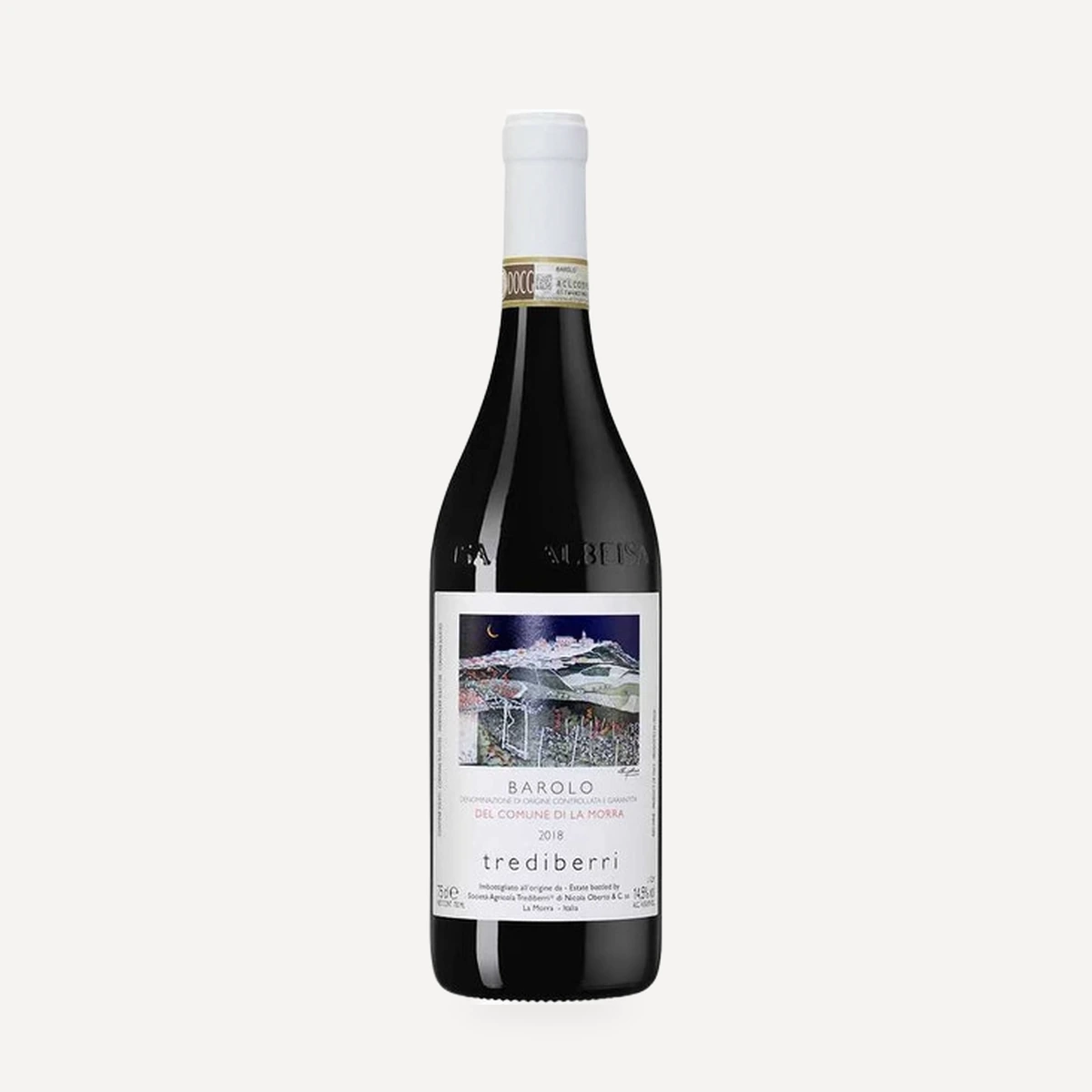
Barolo del Comune di La Morra (2018)
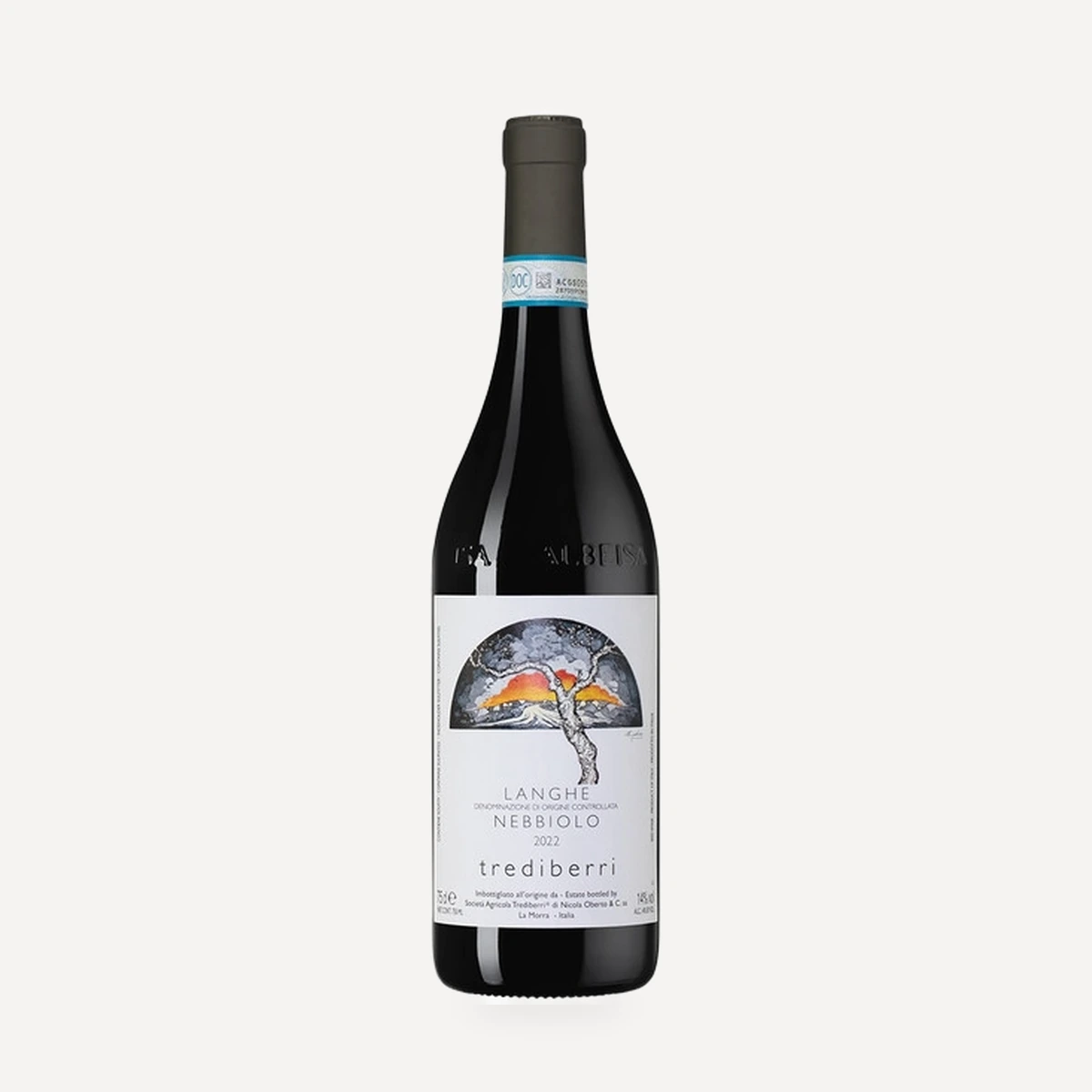
Langhe Nebbiolo DOC
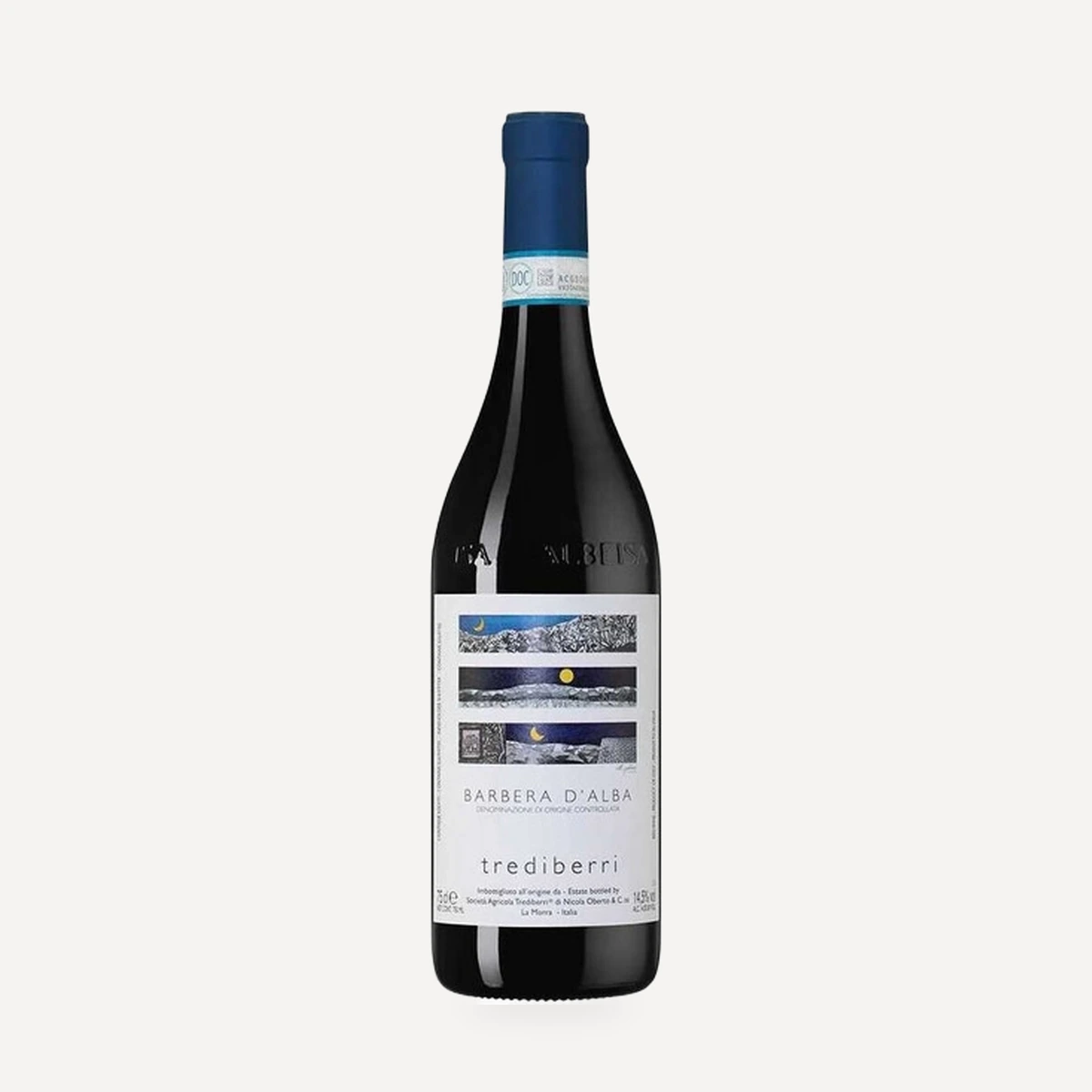
Barbera d’Alba DOC