Storia
From Fratelli Dabbene to Fratelli Alessandria
Construction of the original Fratelli Dabbene cellar began in the late eighteenth century under Giuseppe Dabbene. In 1830 he formally established the winery and dedicated it to his son Clemente, having Clemente’s initials, “CD,” carved into the entrance portal.
In 1843, at the “Primaria Adunanza dell’Associazione Agraria” held at the Royal Estate of Pollenzo, the wines of Fratelli Dabbene of Verduno received two gilded-silver medals: one for wine conservation and another for the good upkeep of the tinaia and cellars.
The family identity changed in 1893, when Clementina Dabbene, the last heir of the Dabbene family, married Carlo Alessandria. Carlo was the son of Antonio Giovanni, nicknamed “Prinsiòt”—“little prince” in Piedmontese, probably because he was an only child. The marriage transferred the family enterprise from the Dabbene line to the Alessandria name, and Fratelli Dabbene became Fratelli Alessandria. The first three generations had operated under the Dabbene name; the succeeding generations continued as Alessandria.
A current family branch formed by Gian Battista, his wife Flavia, his brother Alessandro and his son Vittore represents the seventh and eighth generations. The winery remains family-sized and works exclusively with estate-grown grapes. Its centre is an eighteenth-century house close to Verduno’s historic centre, incorporating the historic cellar begun by the Dabbene family.
Development of the estate’s wines
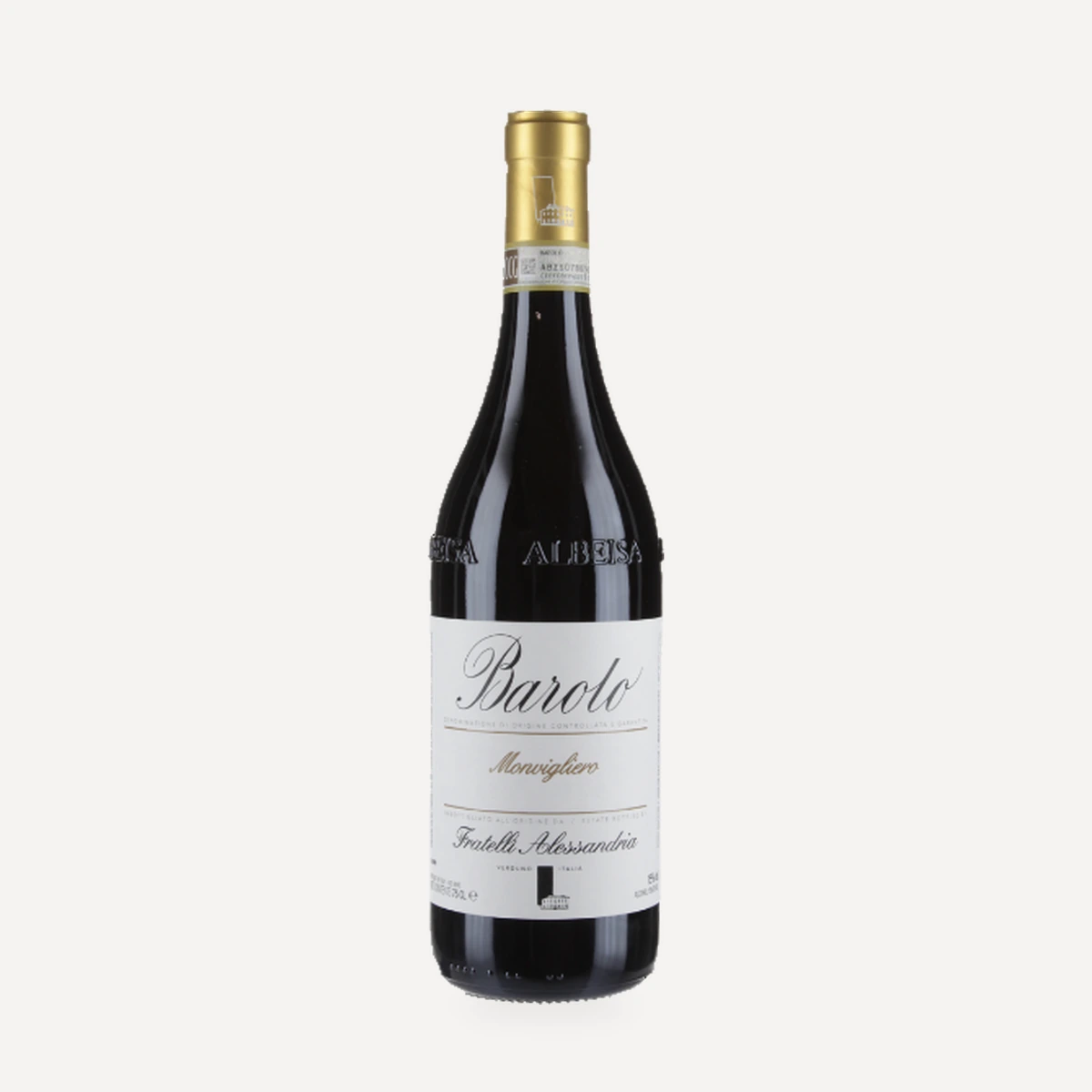
The estate records Barolo production from 1860. Its first named-vineyard Barolo from Monvigliero was made in 1978 by Giovan Battista Alessandria. Monvigliero subsequently became central to the estate’s identity and to its interpretation of Verduno.
The winery began producing Pelaverga Piccolo as a varietal wine in 1973. The Verduno Pelaverga denomination received DOC recognition in 1995 after a campaign led by Verduno mayor Renata Salvano and a group of young producers. Six historic wineries carried the recognition process through its initial difficulties, supported by research involving the Universities of Milan and Turin, the Seminario Veronelli and Dr Oberto’s thesis. In the same year, the 1995 Barolo Monvigliero became the first wine from Verduno to receive the Tre Bicchieri distinction.
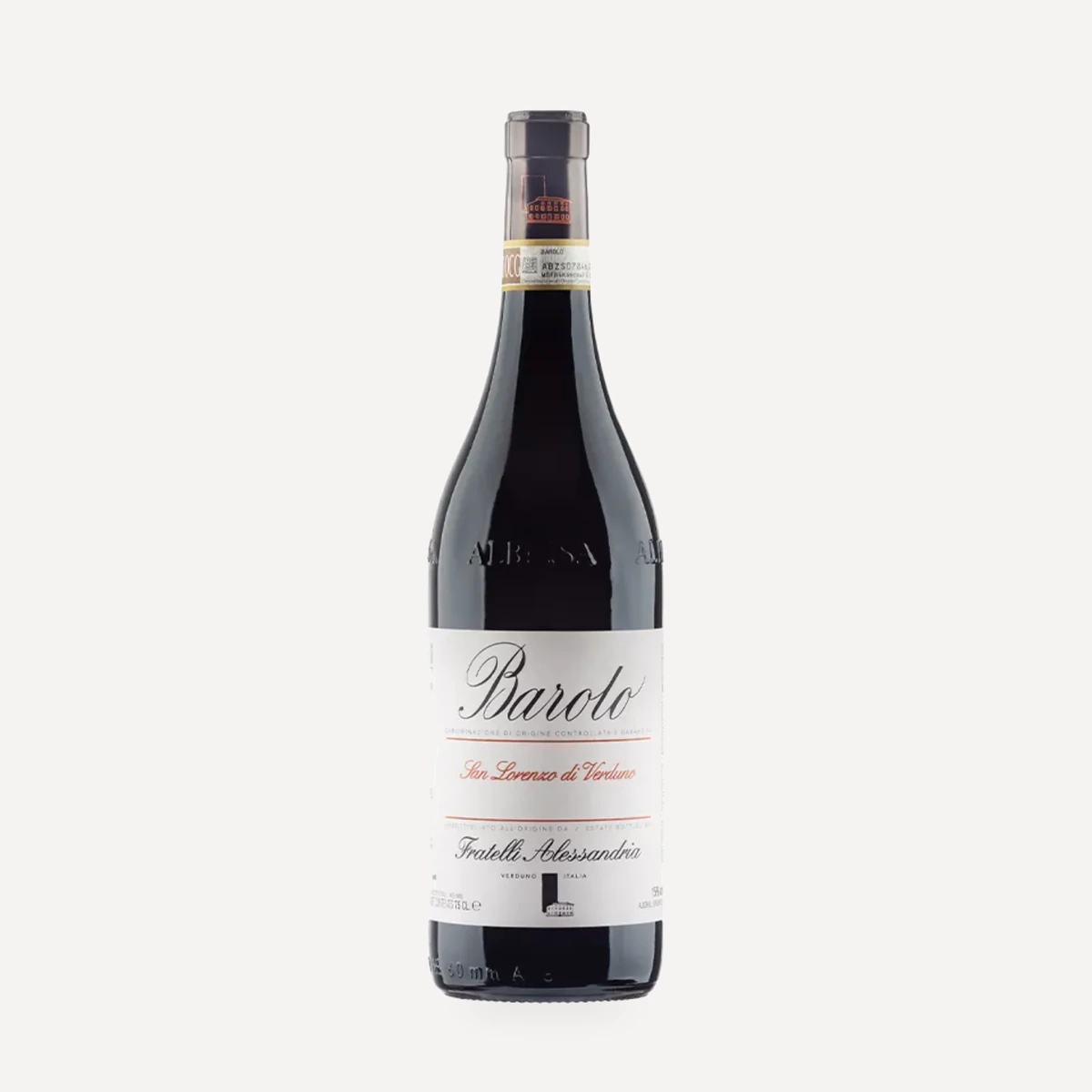
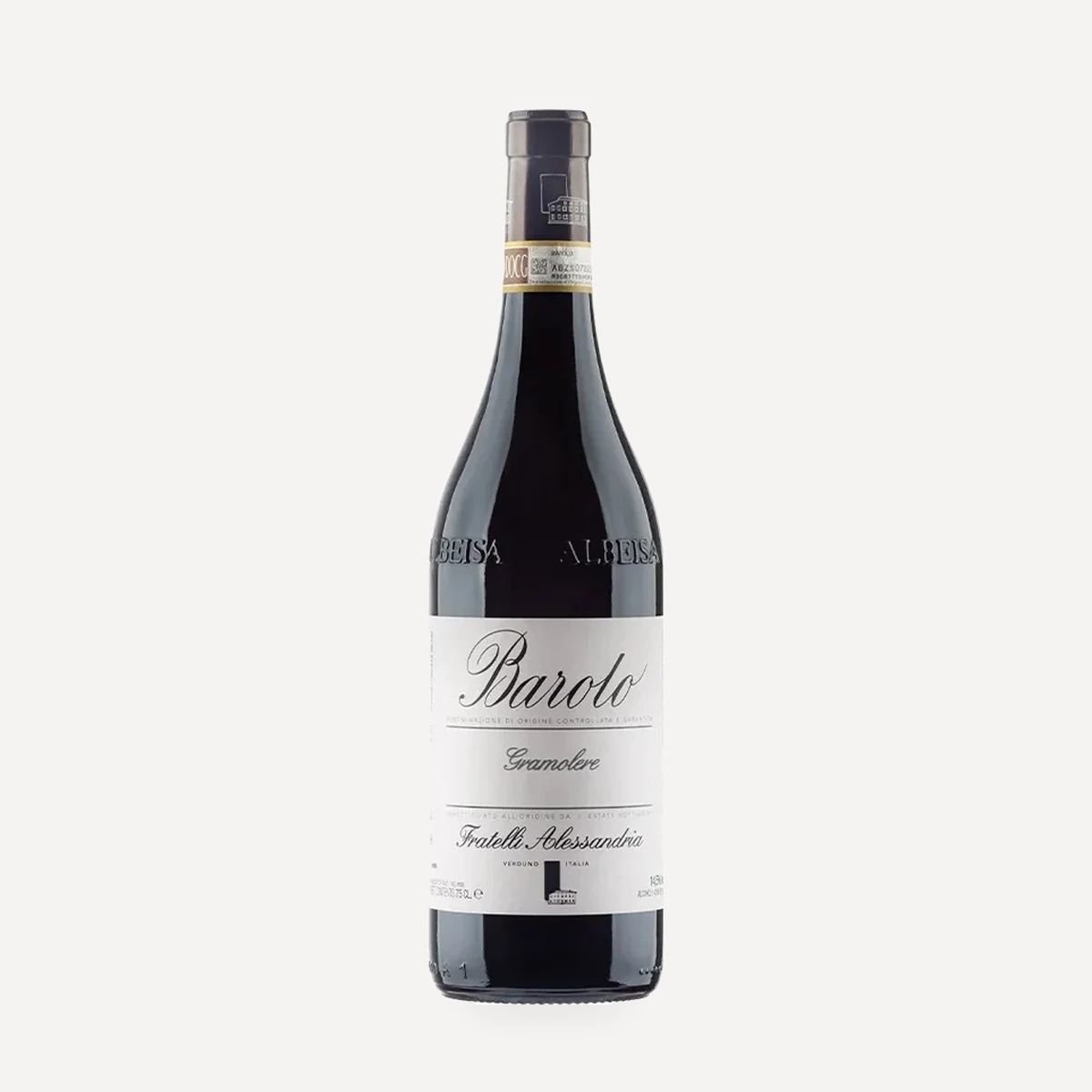
The first Barolo San Lorenzo followed in 1997. Langhe Rosso “Rossoluna” began in 1999, Barbera d’Alba Superiore “Priorà” in 2000 and Barolo Gramolere in 2001. Beginning with the 2011 vintage, the estate named its Verduno Pelaverga “Speziale,” a name joining the ideas of something special and the variety’s characteristic spicy, pepper-like aroma. The first Barolo del Comune di Verduno was produced in 2017, reviving the traditional practice of assembling Nebbiolo from several Verduno vineyards.
Wine hospitality
Speziale Wine Resort opened in 2022. Conceived as the completion of a circle beginning in the vineyards, it extended the family’s interpretation of Verduno into hospitality, art, landscape and direct wine experiences.
Terroir
Verduno and the Tanaro
Verduno occupies the northern end of the Barolo zone and is the Barolo village closest to the River Tanaro. Its vineyard hill lies between approximately 200 and 400 metres. Air currents and humid air circulating from the river influence its microclimate, particularly in sites such as San Lorenzo and Monvigliero.
Verduno belongs to the Tortonian side of the Barolo area and, more specifically, to the La Morra land unit. This unit begins around Monvigliero and extends south toward the end of Monforte, skirting Barolo and incorporating such La Morra areas as Brunate and Cerequio. The broader soils are calcareous and clay-rich fossil marls of Sant’Agata, formed from marine sediments that emerged approximately 6–7 million years ago.
The local geological mosaic also contains laminated fossil-rich Sant’Agata marls, Cassano Spinola formations, gypsum veins and La Morra conglomerates. Monvigliero’s profile consists of very thin, compact layers with high proportions of silt and clay and little sand, allowing the soil to retain water reserves. Fine white marl is also characteristic of the site. Rocche dell’Olmo, by contrast, has a significant sandy component, while Gramolere has slightly sandy limestone. Most other estate sources are described as limestone and silt, with variations in sand content.
Relief, exposure and site variation
The estate’s vineyards extend from the low, river-influenced San Lorenzo site at 240–260 metres to Gramolere’s long Monforte slope at approximately 370–470 metres. Exposures range from the warm south and south-west of Monvigliero, San Lorenzo and Gramolere to cooler east-facing Campasso and Boscatto and west-facing Neirane, Cristiani, Sotto Orti and Galleria. Riva Rocca has a marked slope below the village; Campasso occupies a bright, open, gently sloping position; Monvigliero forms a natural amphitheatre.
Verduno’s combination of river influence, altitude, exposure and calcareous-clayey soils is associated with the estate’s idea of “spicy elegance”: aromatic complexity, a recurrent spicy character and supple tannins.
Vinificazione
The estate cultivates 15 ha of its own vineyards and vinifies only estate-grown fruit. Its plantings are concentrated in Verduno, with Gramolere in Monforte d’Alba. The varietal policy is exclusively native: predominantly red Nebbiolo, Dolcetto, Barbera, Freisa and Pelaverga Piccolo, plus the white Favorita.
Guyot is the stated training system throughout the documented parcels. Planting density is generally about 4,500 vines/ha, with approximately 4,200 vines/ha in Gramolere. Vine ages vary by source: roughly 10 years for the young Nebbiolo sources, around 20 years for Pelaverga Piccolo and standard Barbera sources, about 25 years for the five-vineyard Verduno Nebbiolo assemblage, approximately 30 years in San Lorenzo and Gramolere, about 35 years in Barbera and Favorita sources, around 40 years in Dolcetto sources and more than 50 years in Monvigliero.
Harvesting is manual. Favorita, Dolcetto and Pelaverga Piccolo are picked in the second half of September. Nebbiolo and Barbera follow during October, with timing varying from the first half to later in the month according to variety and site.
A rainwater-collection well supplies water used for vineyard treatments, reducing use of potable-water reserves. Environmental work also encompasses photovoltaic energy for the cellar, recyclable packaging and lighter bottles, while the long-term objective is to preserve the same crus for future generations.
All wines are made from estate-grown grapes, and the family follows production from vineyard to bottle. The cellar combines traditional practices with attention to technological, agronomic and oenological development.
Fermentation takes place in temperature-controlled stainless-steel tanks. The documented red-wine regimes range from 6–8 days at 25–27 °C for shorter-maceration styles, through 7–9 days at 26–27 °C, to 10–12 days at 29–31 °C. Nebbiolo destined for Barolo receives the longest maceration: generally 22–30 days at 28–30 °C, or 25–30 days at 26–28 °C for the multi-vineyard Barolo del Comune di Verduno. Favorita ferments for 20–25 days at 18–20 °C.
Stainless steel and cement are used for wines intended to retain fruit and fragrance, generally for 3–7 months before short bottle ageing. Langhe Nebbiolo ages for 6–8 months in 20–40 hl French or Slavonian oak casks, followed by stainless steel and bottle ageing. Barbera d’Alba Superiore may spend 12–14 months in 500 L French oak barrels and/or 20–40 hl French or Slavonian casks. Rossoluna is the only estate wine aged exclusively in 500 L tonneaux, for 12–14 months, followed by stainless steel and bottle ageing.
Barolo matures for about three years in 20–40 hl Slavonian and French oak casks, then approximately two months in stainless steel and at least six months in horizontally stored bottles. Bottling takes place at the beginning of the fourth year after harvest. The estate also continues the old Verduno practice of assembling Nebbiolo from several vineyards for Barolo del Comune di Verduno, while Monvigliero, San Lorenzo and Gramolere are kept as individual-site expressions.
Barolo Chinato uses Barolo with alcohol, sugar, water and 35 herbs and spices, including calisaya bark, cinnamon, liquorice, vanilla, ginger, cloves, anise and rhubarb. The herbs and spices are infused in a hydroalcoholic solution, and the aromatised wine subsequently rests in oak.
Filosofia
Fratelli Alessandria treats wine as an especially direct expression of its place of origin. Its aim is to respect the traditions and cultural values of the territory while allowing the identity of native grapes and individual sites to remain recognizable.
The family dimension and exclusive use of estate-grown grapes are central to this approach. Direct involvement with individual vineyards and barrels is intended to create a personal continuity from site through cellar to the finished bottle. Tradition is paired with continuing attention to technological innovation and advances in agronomy and oenology.
The estate describes wine appreciation as a relationship: a wine becomes fully meaningful through a drinker capable of understanding it, and its value extends beyond a list of aromas and flavours to the experience it can release.
Environmental responsibility is understood as continuity rather than a label or a fixed endpoint. The stated goal is that a successor should still be able to make Barolo from the same Verduno crus a century from now. Photovoltaic power, rainwater recovery, recyclable packaging and reduced bottle weight are presented as cumulative, measurable steps toward that goal.
Vini
Barolo Monvigliero DOCG
Barolo Gramolere DOCG