Storia
The Spineda legacy
The agricultural history of Venegazzù is associated with the Spineda family and the lands surrounding Villa Spineda. The most recent account places the beginning of the family's work to develop the area in the 14th century and connects the property with the first Merlot vines cultivated in Italy. Merlot was being made behind Villa Spineda by the 19th century. An extract from a Napoleonic cadastral map records the Spineda lands, their vineyards and rural buildings; those buildings and vineyards subsequently became part of the winery's core.
The Loredan period and the historic vineyards
The Loredan family, originally from Montello and descended from three doges of the Republic of Venice, chose a Venetian villa in Venegazzù as its residence. Count Pietro Loredan developed the estate before its transfer to Giancarlo Palla.
The historic 100 Piante vineyard was planted in 1946 with Cabernet Sauvignon, Cabernet Franc, Merlot and Malbec. It preserves old, now rare vine material in the red soils of Venegazzù and later became particularly important to the estate's flagship selection.
During the 1950s, an exacting selection of estate grapes gave rise to the historic Venegazzù red. The wine established the estate's interpretation of a blend based on Cabernet Sauvignon, Merlot, Cabernet Franc and, in some releases, Malbec.
In 1964, the first Capo di Stato selection was produced, drawing especially on the old 100 Piante vineyard. It was served at official occasions in Venice and acquired its name through its association with heads of state who appreciated it.
In 1967, artist Tono Zancanaro created the paired works Des Roses pour Madame and …et pour Monsieur la Bombe. They became the historic masculine-and-feminine labels associated with Capo di Stato.
Giancarlo Palla and a new direction
The present chapter begins in 1973, when Giancarlo Palla assumed Count Pietro Loredan's legacy. He gave new momentum to the estate and helped bring the wines of Venegazzù to international markets. He also introduced a culture of sparkling-wine production to a territory traditionally associated with structured, age-worthy reds, believing that Montello could support both categories.
The estate has produced a traditional-method Chardonnay sparkling wine since the 1970s. A Glera parcel on the Montello hill was planted in 1975, and the estate has offered Asolo Prosecco Superiore since 1978.
Renewing the Spineda vineyard
After years of study and research into the historic Merlot tradition behind Villa Spineda, a 2-hectare parcel was replanted to Merlot in 2004. The project revived the connection with the Spineda lands and adopted yields below 1 kg per vine. The resulting selection was named Spineda in honour of the family associated with the area's early agricultural development.
Independent winegrowing and contemporary projects
Venegazzù remains the estate's historic base and is presented as the only cru within the Montello denomination. The winery has also joined the Federazione Italiana Vignaioli Indipendenti. Contemporary projects include limited-edition labels drawing on Italian graphic art, including a Cortina series created for the 2026 Winter Olympic Games and a Venice series inspired by the historic poster collection assembled by Ferdinando Salce.
Terroir
Venegazzù lies in the Alta Marca Trevigiana, north of Venice, at the foot of Montello in the northern part of the province of Treviso. The winery stands in the historic hamlet of Venegazzù, while other estate land lies within Volpago del Montello. The Glera parcel planted in 1975 occupies a hillside site on Montello, approximately 50 km north of Venice.
The defining soils are red and rich in iron. The local iron-bearing soil is called Ferreto. In the historic 100 Piante vineyard, these red soils combine with old, now rare vine material. The estate associates their freshness with the natural elegance of its Venegazzù reds. The Montello microclimate also contributes to the character of fruit from 100 Piante.
The Spineda Merlot parcel occupies the historic land behind Villa Spineda. Its particular soil and position, combined with very low yields, were the basis for re-establishing Merlot there in 2004.
Vinificazione
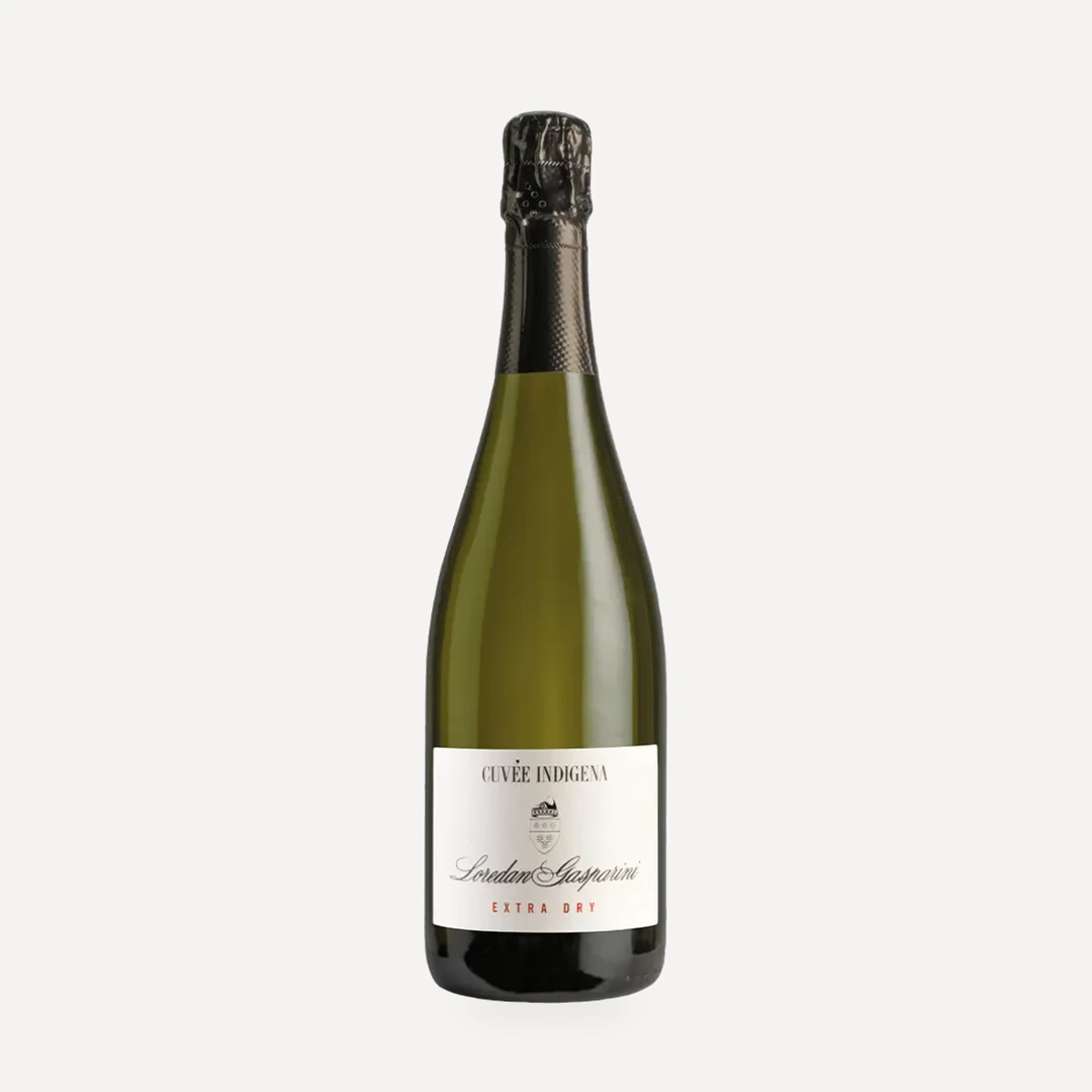
The Cuvée Indigena project uses only fruit from the estate's old Glera parcel and identifies sustainable farming as part of its quality standard. The parcel's vines date to 1975 and grow on Montello's iron-rich Ferreto soil.
The 2-hectare Spineda Merlot parcel is cultivated with particular attention and deliberately restricted to less than 1 kg of fruit per vine. Its 2004 replanting followed years of study into the site's historic Merlot performance.
The 100 Piante vineyard preserves rare old vine material planted in 1946. This historic mixed planting of Cabernet Sauvignon, Cabernet Franc, Merlot and Malbec remains an important source of selected fruit.
Production encompasses both the red-wine tradition of Venegazzù and several approaches to sparkling wine.
The historic Venegazzù red originated in the 1950s from a stringent selection of estate bunches and is based on Cabernet Sauvignon, Merlot and Cabernet Franc, with Malbec also identified in the traditional blend. One historic presentation specifies 36 months in large oak casks.
Capo di Stato was first selected in 1964 from the estate's best grapes, with particular reliance on fruit from the 1946 100 Piante vineyard. Selection of fruit and the preservation of the character of the old vineyard define the process described for this reserve.
The estate's traditional-method sparkling wine is made from selected hillside Chardonnay. Only 50% of the initial harvest yield is retained as free-run juice. Production follows a French-inspired method adopted in the 1970s, with a gentle secondary fermentation and extended ageing on the lees.
Cuvée Indigena follows a distinct, direct-fermentation method. After gentle pressing, the must is transferred immediately to an autoclave at very low temperature. Fermentation proceeds slowly for six months, using indigenous yeasts selected from the estate's own grapes, without added cultured yeast or sugar. The long, low-temperature fermentation is intended to preserve the grape's primary aromas and produce a fine mousse and creamy texture.
The estate also works with oak in its distillates: Capo di Stato Riserva grappa is matured in barrels previously used for the corresponding wine, while the ten-year expression ages in French oak barriques.
Filosofia
The estate presents Venegazzù as a place capable of producing both structured, long-lived reds and vibrant sparkling wines. This dual focus dates from Giancarlo Palla's conviction that Montello should not be confined to its established red-wine tradition.
Its quality principles include estate-grown fruit, the character of iron-rich Ferreto soils, sustainable cultivation, grape-derived indigenous yeasts and slow fermentation at low temperature. In the Cuvée Indigena project, these choices are intended to retain the primary identity of Glera rather than build character through added yeast or sugar.
Old vineyards and historic continuity are central to the red-wine programme. The 100 Piante planting preserves rare vine material from 1946, while the Spineda project arose from years of research into the Merlot tradition of the land behind Villa Spineda. The latter combines historical continuity with a modern replanting and strict yield control.
The traditional-method Chardonnay is described as an “honest” expression: fruit-focused, refined and grounded in careful juice selection, gentle secondary fermentation and time on the lees.
Vini
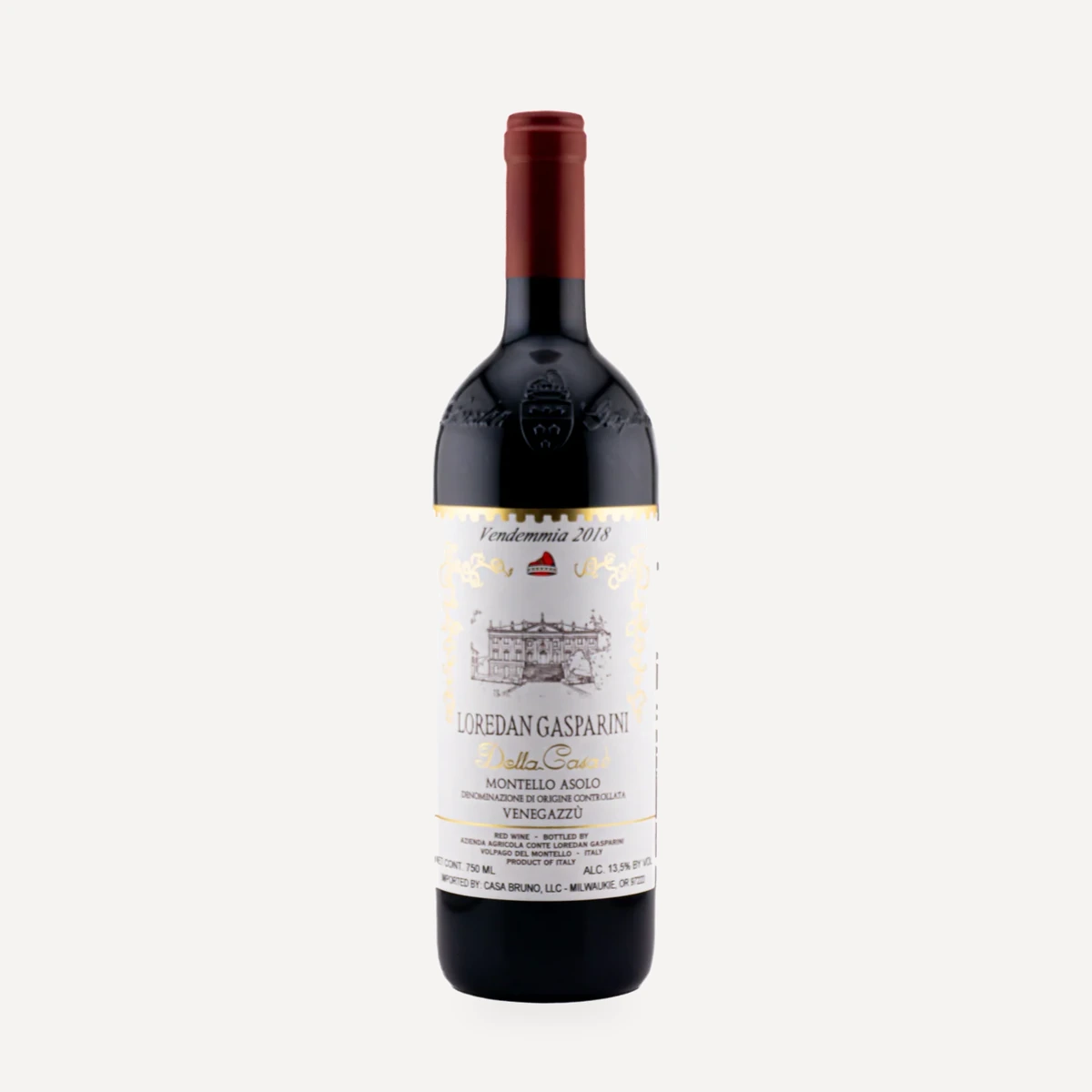
Venegazzù
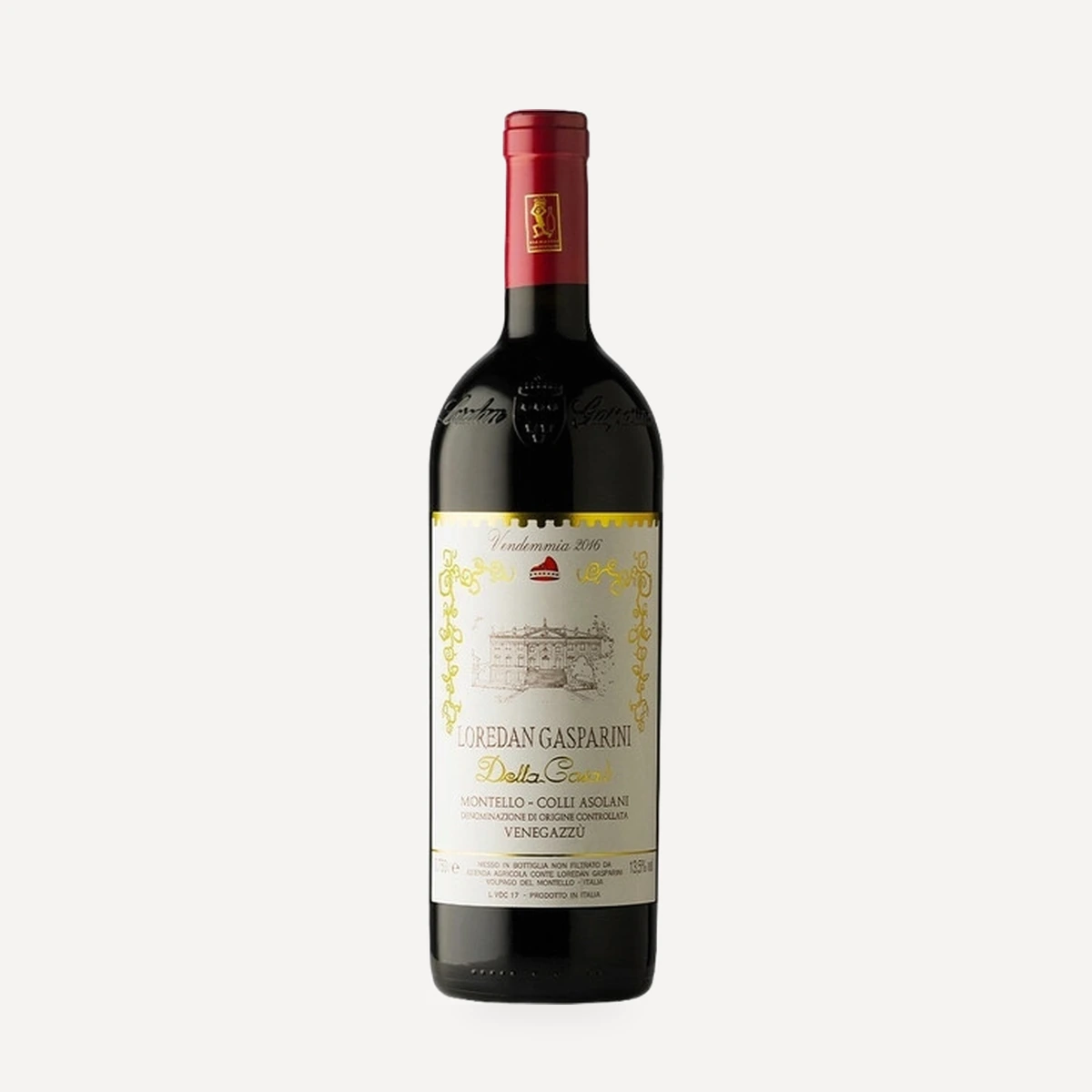
Loredan Gasparini Della Casa Montello-Colli Asolani DOC
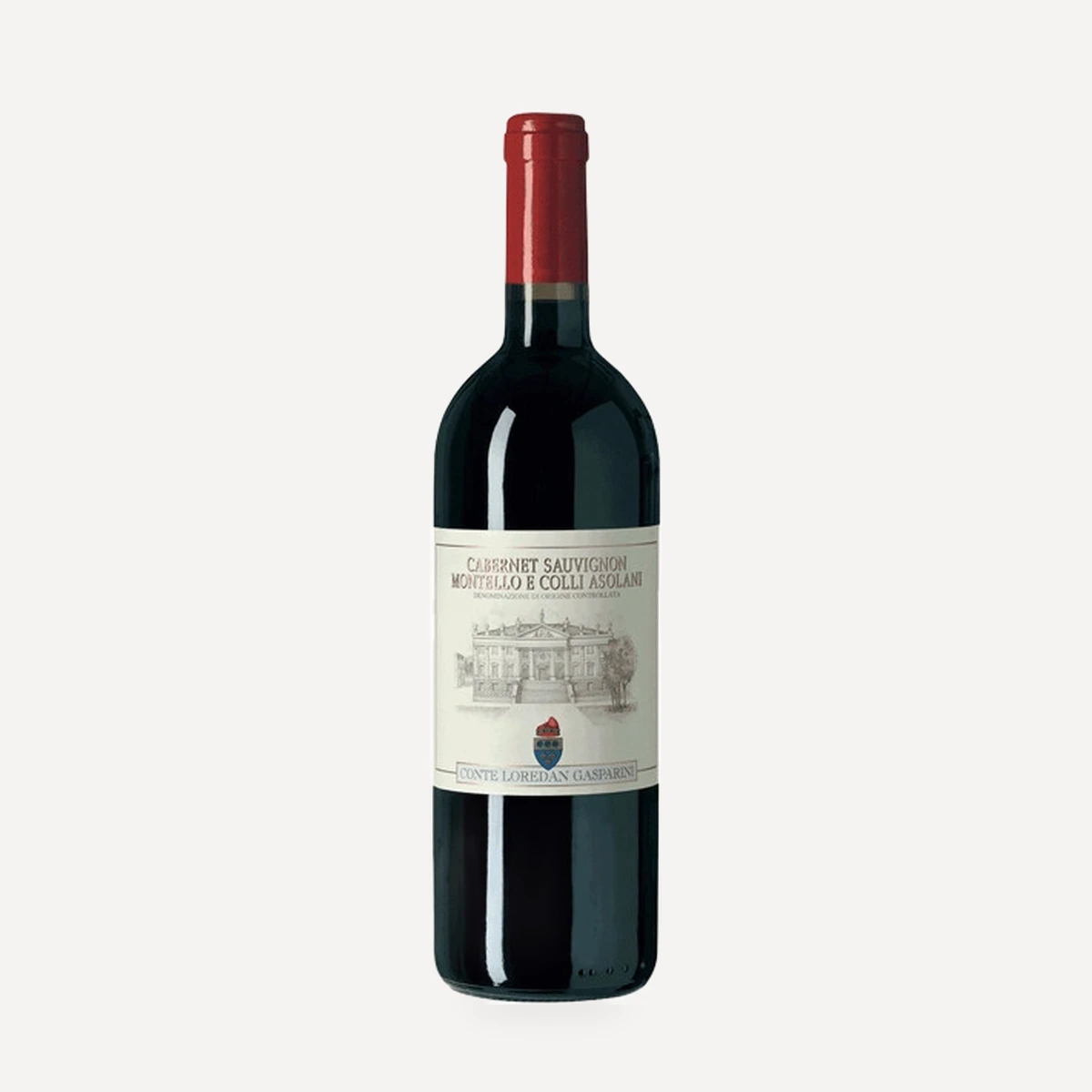
Venegazzu Cabernet Sauvignon DOC

Capo di Stato Colli Trevigiani IGT
Cuvée Indigena