Storia
Seventeenth-century origins
The earliest documented information about the estate dates to the seventeenth century, during the flourishing of Baroque culture in Salento. An eighteenth-century map records an already established agricultural and wine-producing enterprise on the land occupied by Vetrère today.
Foundation in 1700 and the historic cellar
Vetrère traces its formal foundation to 1700, when the ancestors of the present family established the agricultural company. The estate’s winery occupies a tufa-stone building dating from the early nineteenth century. Its star-shaped stone vaults provide natural insulation, while the semi-underground floor helps maintain a constant temperature.
The Ammazzalorsa and Bruni succession
In 1903 Serafina Troilo married Michele Ammazzalorsa. Michele subsequently left his properties to his nephew Enrico Bruni, father of Annamaria and Francesca Bruni. Enrico restored the agricultural estate to full activity.
Enrico Bruni’s agricultural vision
On 8 May 1969, Corriere del Giorno published a report on a presentation by Enrico Bruni entitled “Agricoltura: industrializzazione ma con criteri moderni e razionali.” Bruni argued that southern Italian agriculture needed modern structures, technological development and specialization while preserving the landscape, social fabric, communities and traditions of Puglia. He advocated modern machinery, on-site meteorological equipment, year-round organization of labour, specialization in a limited number of crops and direct access to domestic and export markets. He also condemned the destruction of woodland, pollution of rivers and construction on land better suited to agriculture.
Organic conversion
By the end of the 1990s, 50% of Vetrère’s production was already being managed according to organic principles. The conversion later extended across the entire estate, which is certified by Suolo e Salute.
Renewal under Annamaria and Francesca
In 2002, sisters Annamaria and Francesca Bruni renewed the Vetrère name and developed the estate around their shared attachment to wine and the land. Their approach combined respect for family tradition, protection of the natural setting and a focus on local varieties, particularly Primitivo, Negroamaro, Malvasia and Minutolo.
The historic cellar was completely restored while retaining its early-nineteenth-century structure. Steel vessels became the modern centre of production, while two old Slavonian oak casks preserved the building’s traditional maturation function.
New expressions and the present family team
In 2015 Vetrère produced the first bottle of Aureo, a Charmat-method sparkling wine based on the then little-known Minutolo variety. Initially regarded as an uncertain venture, it subsequently became one of the estate’s best-selling labels.
Vetrère is now managed by Annamaria and Francesca together with their children Fanny, Enrica, Martina and Federico. Fanny works in administration, Enrica in marketing and Martina serves as the estate’s enologist. The family cultivates 40 hectares devoted exclusively to wine grapes.
Terroir
Vetrère lies in the heart of Salento, between Monteiasi and Montemesola in the province of Taranto. Its vineyards extend through these municipalities and neighboring parts of the province at approximately 20 metres above sea level.
The landscape consists of gentle hills interspersed with centuries-old olive trees. A mild Mediterranean climate and fertile ground shape both the vineyards and olive groves. The estate emphasizes the interaction of Puglia’s abundant sunlight, the local climate and its agricultural soils rather than separating the property into individually named vineyard sites.
Vinificazione
The entire agricultural estate is certified organic by Suolo e Salute. The transition began well before full certification: by the end of the 1990s, half of production was already cultivated according to organic principles.
Vineyard inputs are selected from materials certified for organic agriculture. Controlled grass cover is maintained in the vineyards and olive groves, while hedges and dry-stone walls are preserved as habitats for wildlife. Waste is separated and transferred to collection centres under contract with a specialist company.
The vines are trained as spur-pruned cordon espalier and Guyot. At harvest, grapes are collected and selected before immediate pressing. During the 2025 harvest, work began before dawn to take advantage of the coolest hours and protect the integrity of the bunches. The sparkling-wine bases and Chardonnay were picked first, followed by Primitivo, Negroamaro and Minutolo.
Four small nesting boxes face east within the estate to shelter great tits. The birds remain in the area and feed on processionary moths, a pest that damages the property’s pine trees.
Vetrère’s winery occupies a fully restored, early-nineteenth-century building constructed entirely from local Salento tufa. Its star-shaped stone vaults provide insulation, and the semi-underground floor maintains a relatively constant temperature suited to wine storage.
Production is divided among dedicated areas. An outdoor zone receives the grapes. The main interior room contains stainless-steel vessels and forms the modern centre of vinification, while a separate room is devoted to two old Slavonian oak casks in the area traditionally used for maturation.
After harvest, grapes are selected and pressed promptly. The crushed material is cooled immediately to limit oxidation and retain aromatic character. Fermentation takes place under temperature-controlled conditions with oxygen contact restricted as far as possible. Soft pressing and maturation in wood remain part of the cellar’s working repertoire.
Practices vary by wine: the estate uses both manual picking into crates and mechanical harvesting; stainless-steel fermentation and élevage; bottle maturation; new barriques for selected red wines; brief skin maceration for Minutolo; on-vine drying for passito; and Charmat fermentation in pressurized tanks for sparkling wines. These techniques support a range built around local varieties alongside Chardonnay and Aglianico.
Filosofia
Vetrère defines an agricultural company as both a guardian and an ambassador of its territory, operating within a broader system that joins environment, quality and culture. Its stated objective is to produce wines that express the identity, history and culture of Salento while respecting nature and the land.
Family continuity and agricultural tradition are paired with contemporary cellar technology. The restored nineteenth-century winery preserves its tufa architecture and oak vessels, while temperature control, rapid cooling and low-oxygen handling protect the fruit during production.
The modern project places particular emphasis on varieties associated with the area—Primitivo, Negroamaro, Malvasia and Minutolo. Experimentation remains part of that commitment: the estate has explored Minutolo as still, late-harvest, skin-macerated and sparkling wine rather than treating tradition as a fixed set of techniques.
Environmental responsibility extends beyond organic certification. Vetrère generates electricity with solar panels, uses dried grape pomace and olive stones as biomass fuel, maintains wildlife habitats and controlled grass cover, and separates its waste for specialized collection.
Vini
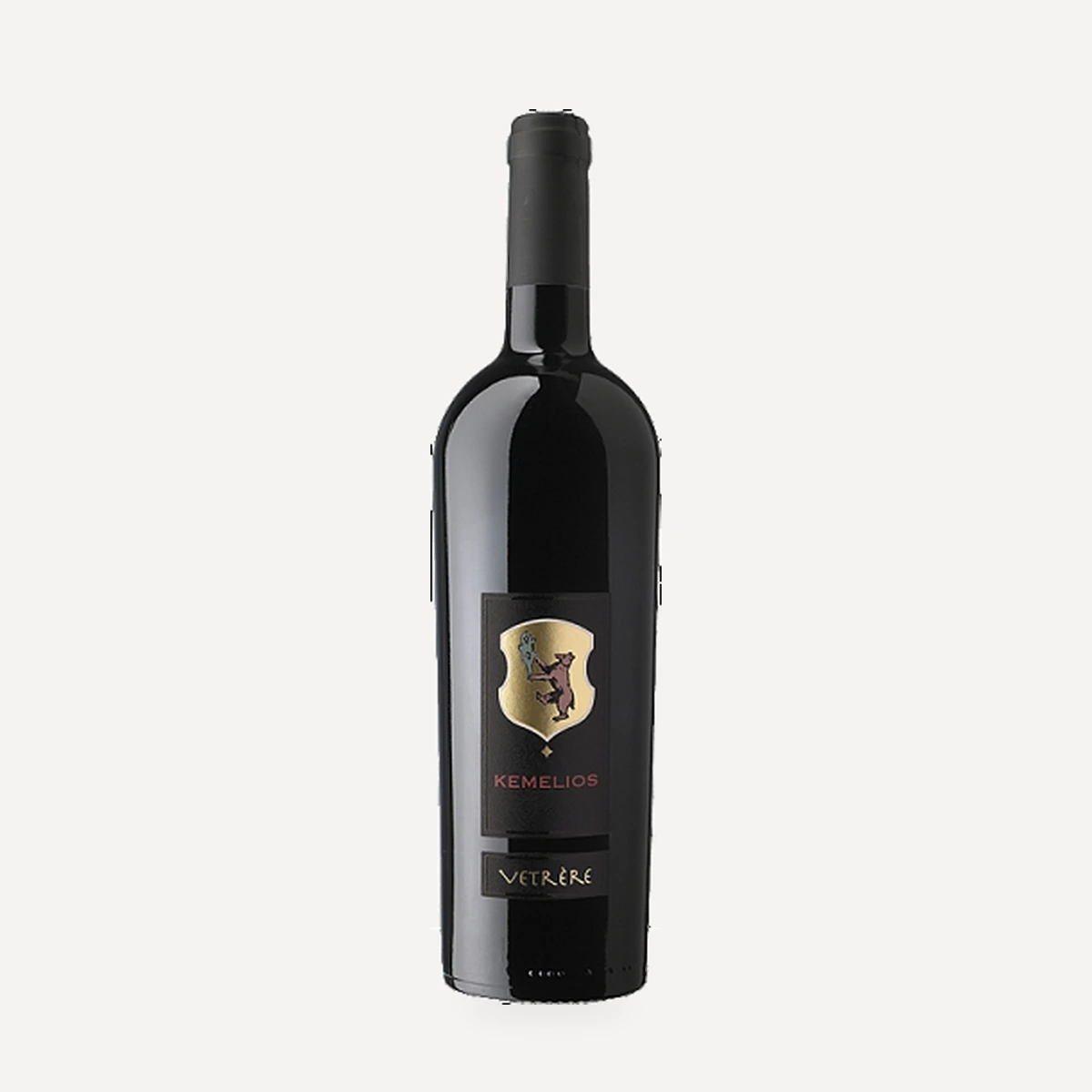
Kemelios
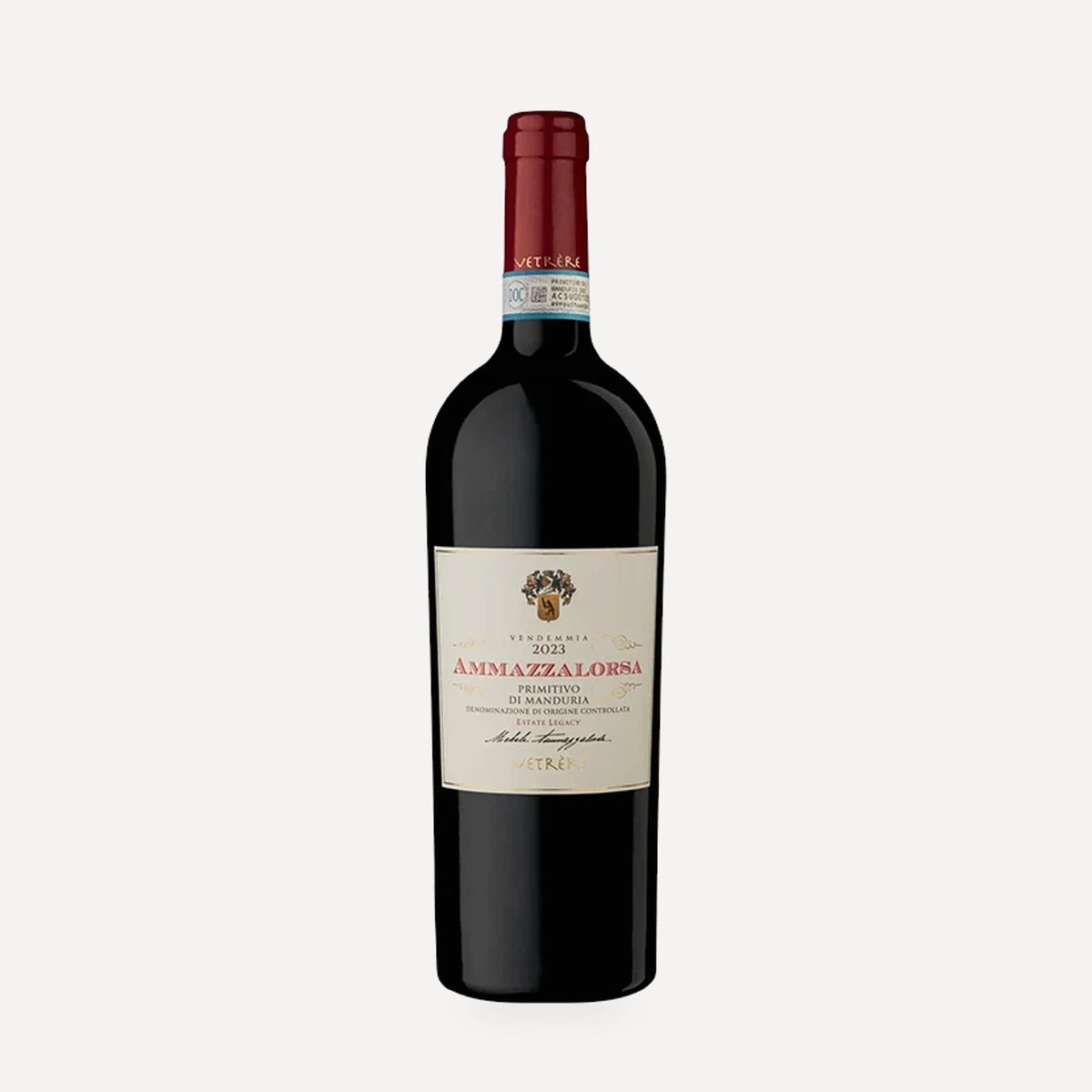
Ammazzalorsa
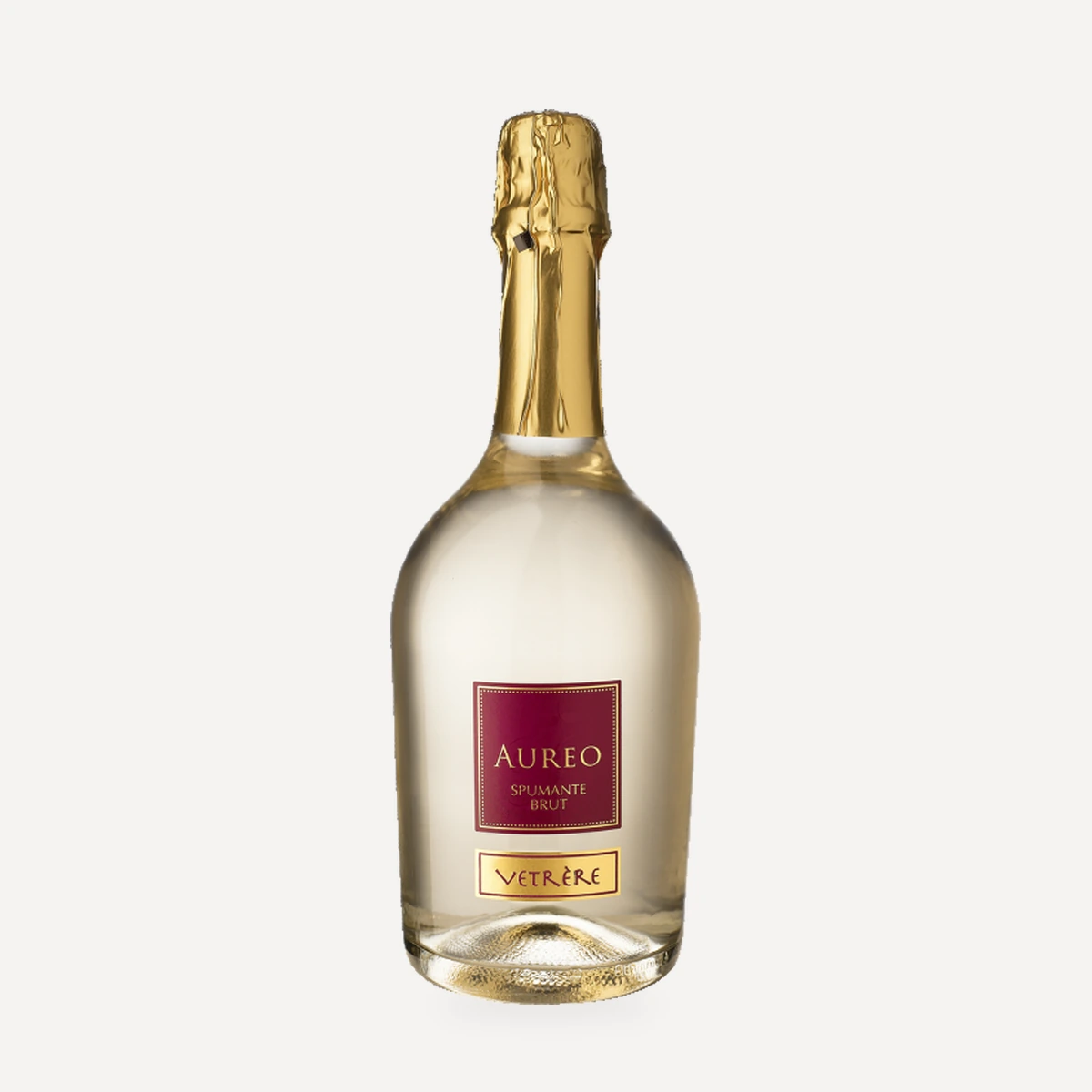
Aureo
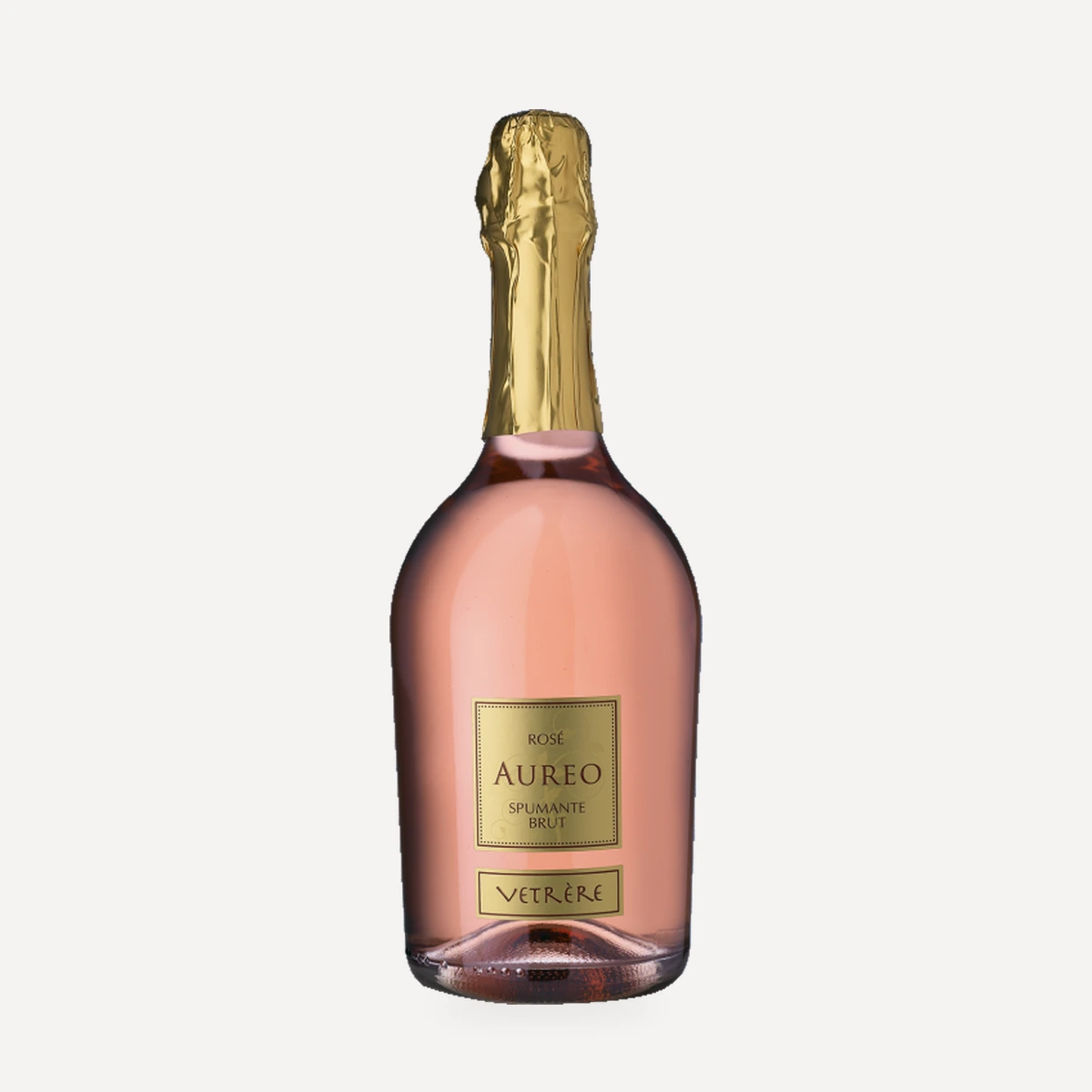
Aureo Rosè
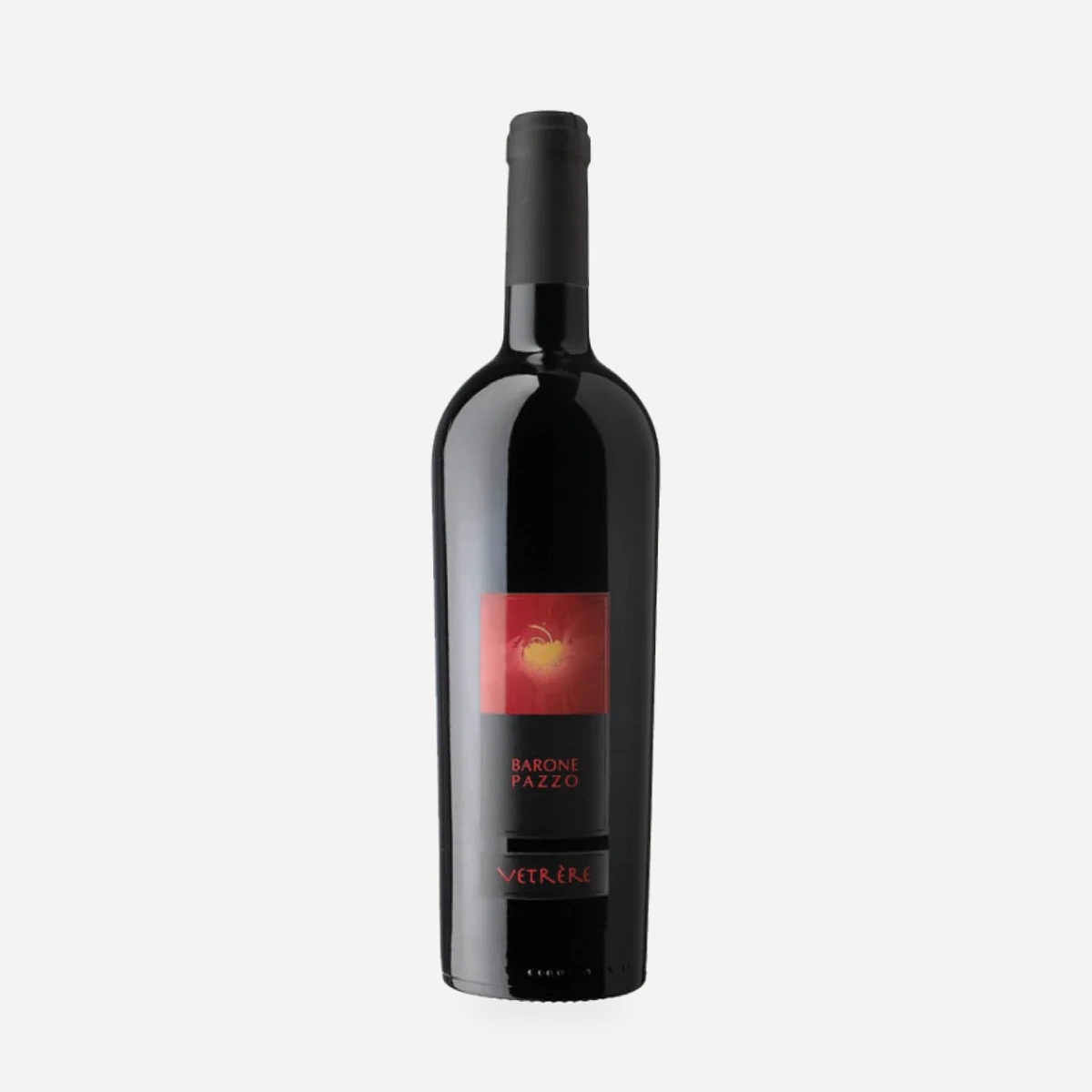
Barone Pazzo
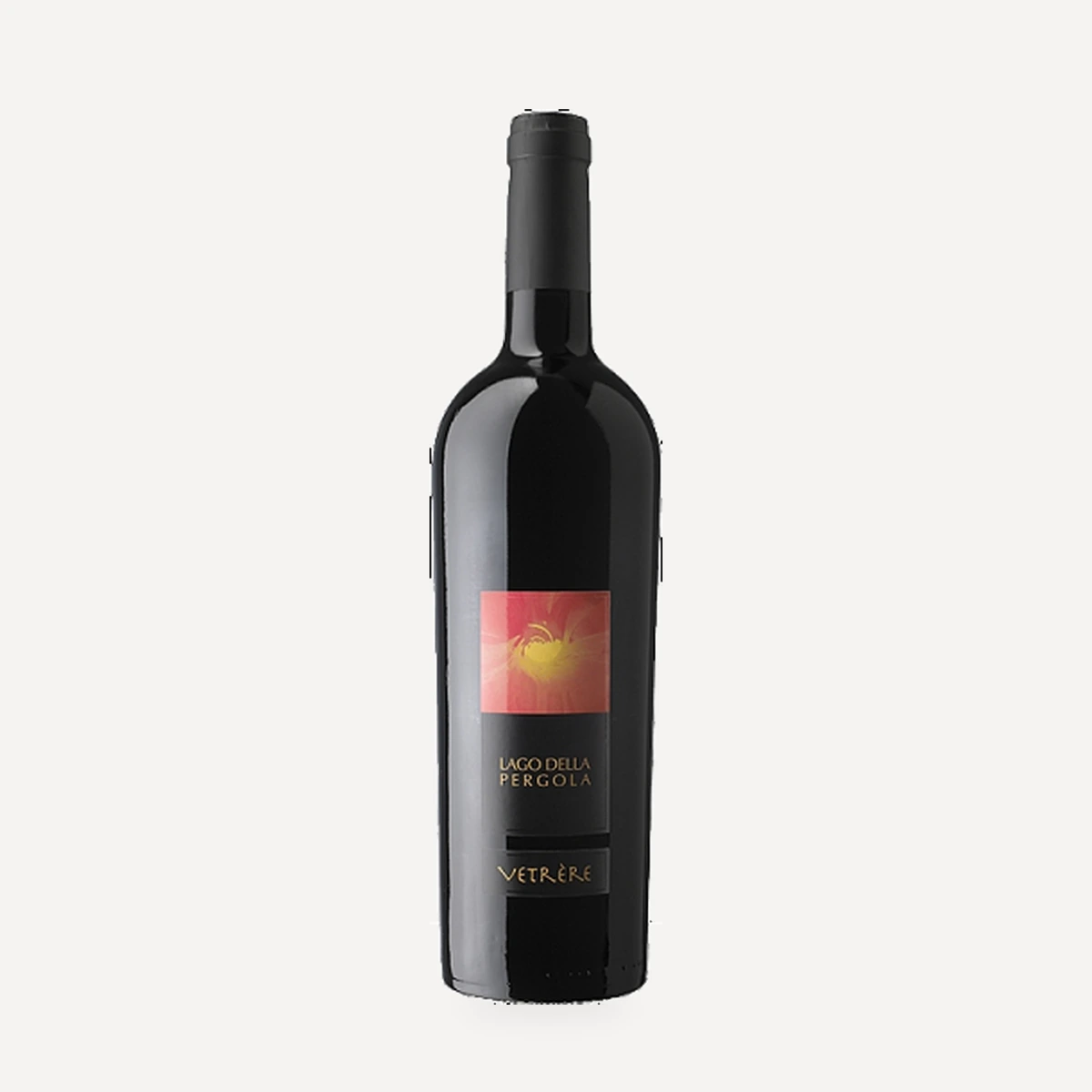
Lago della Pergola
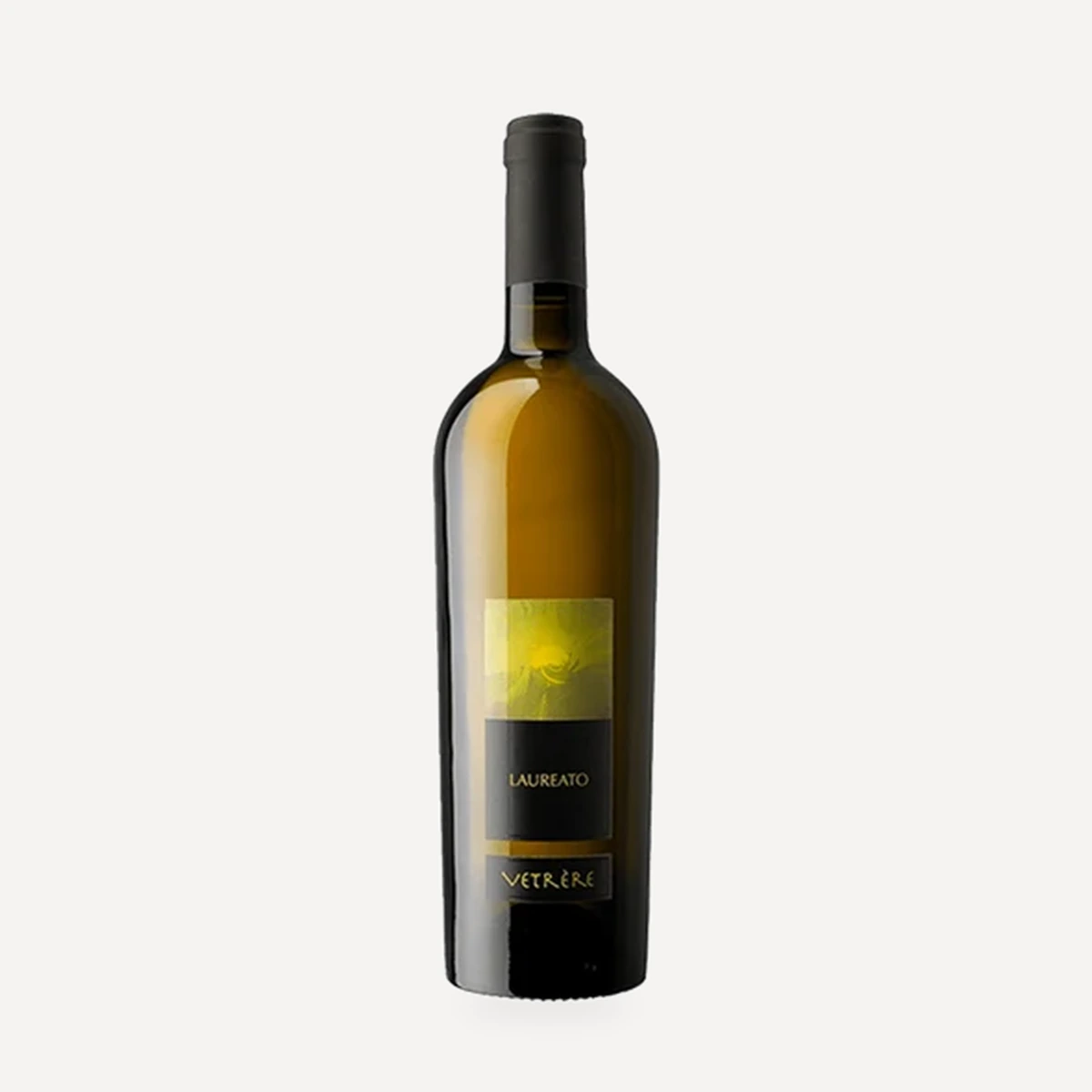
Laureato
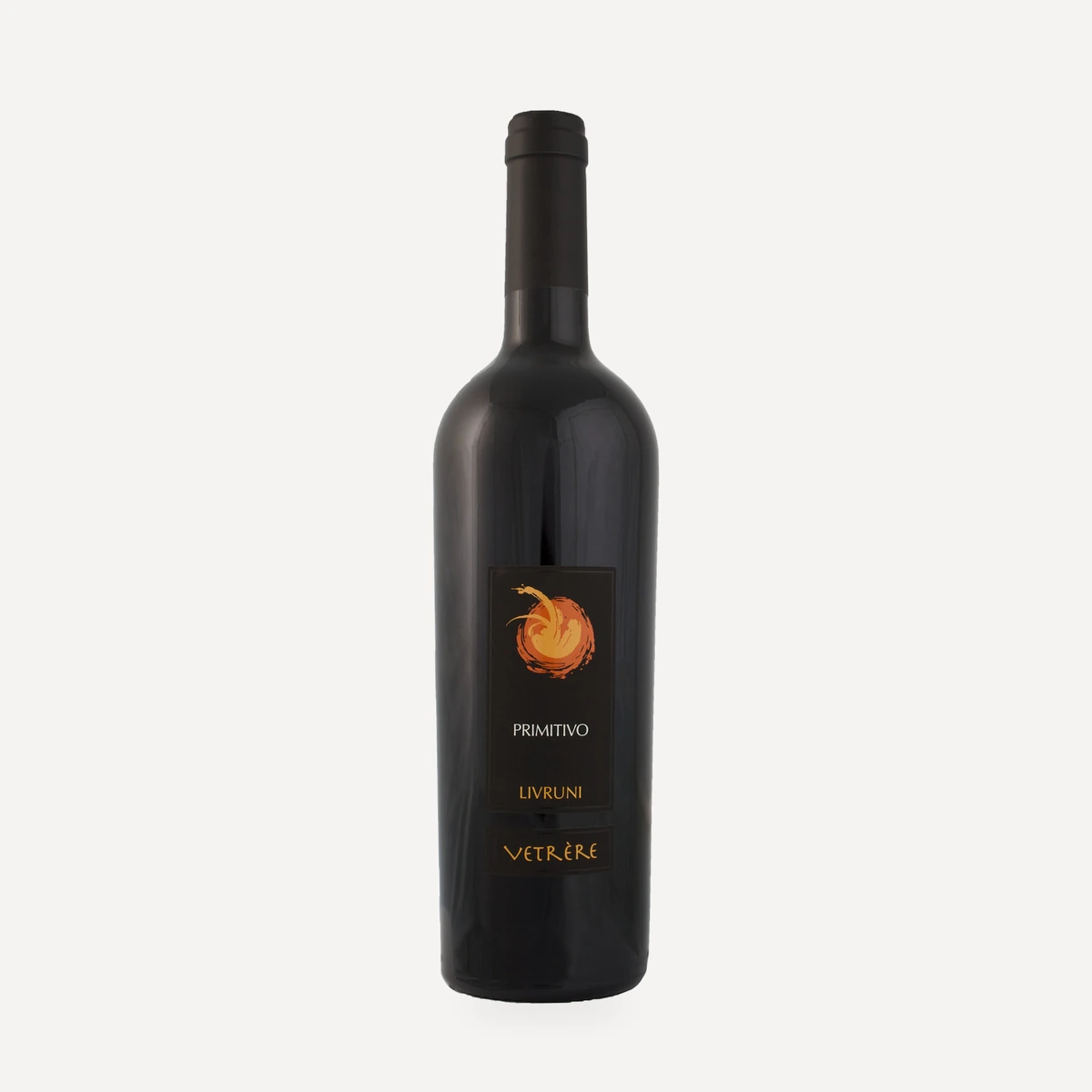
Livruni
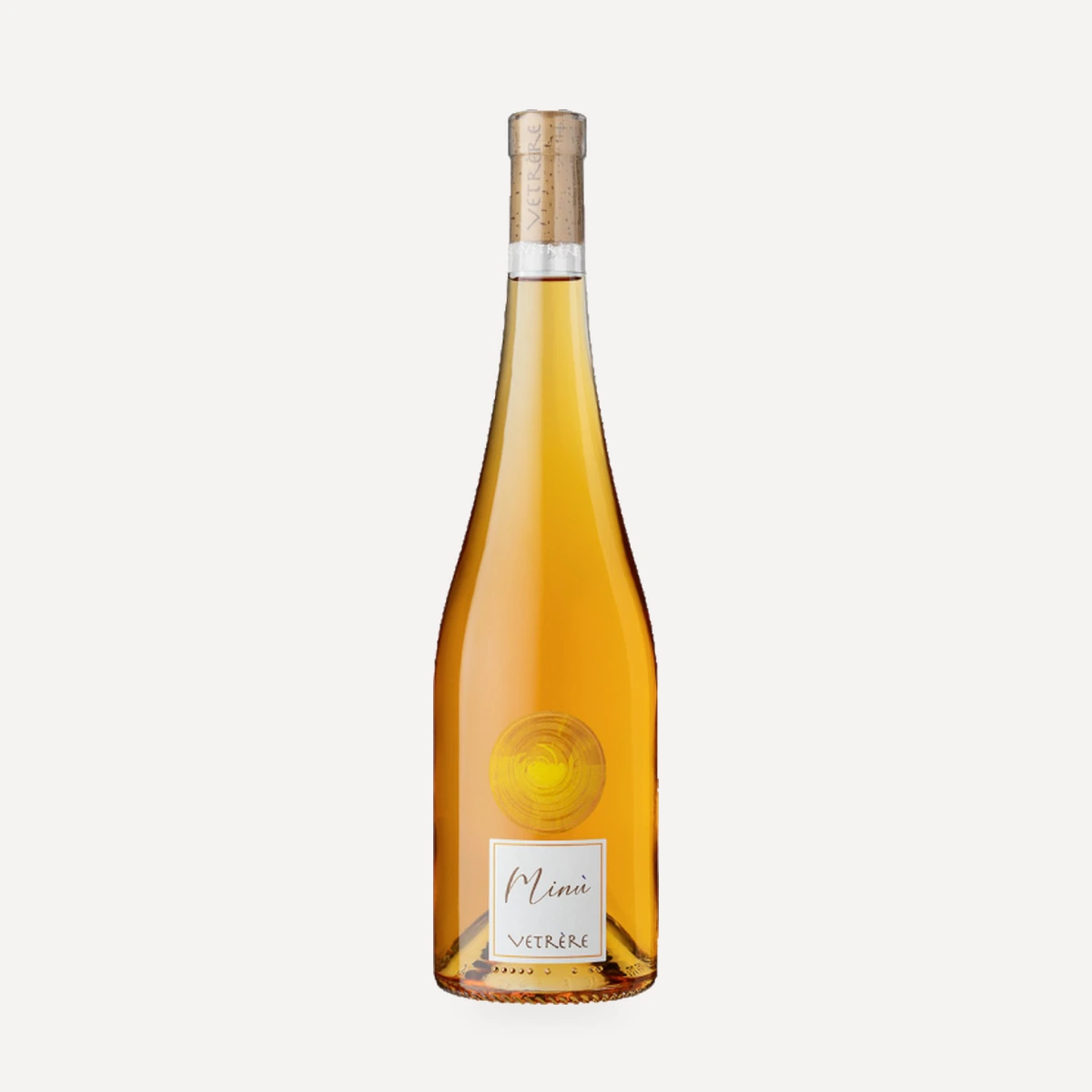
Minù
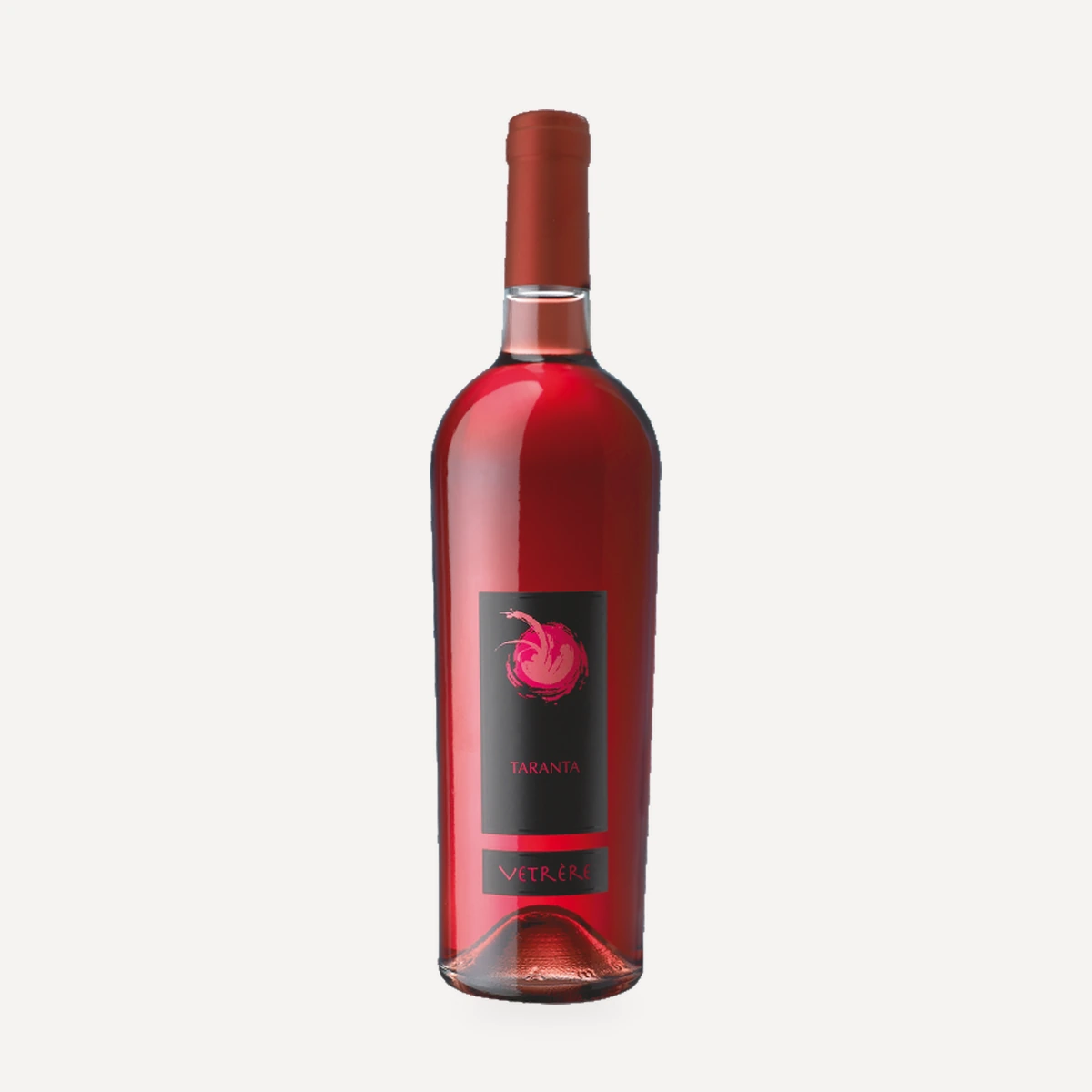
Taranta
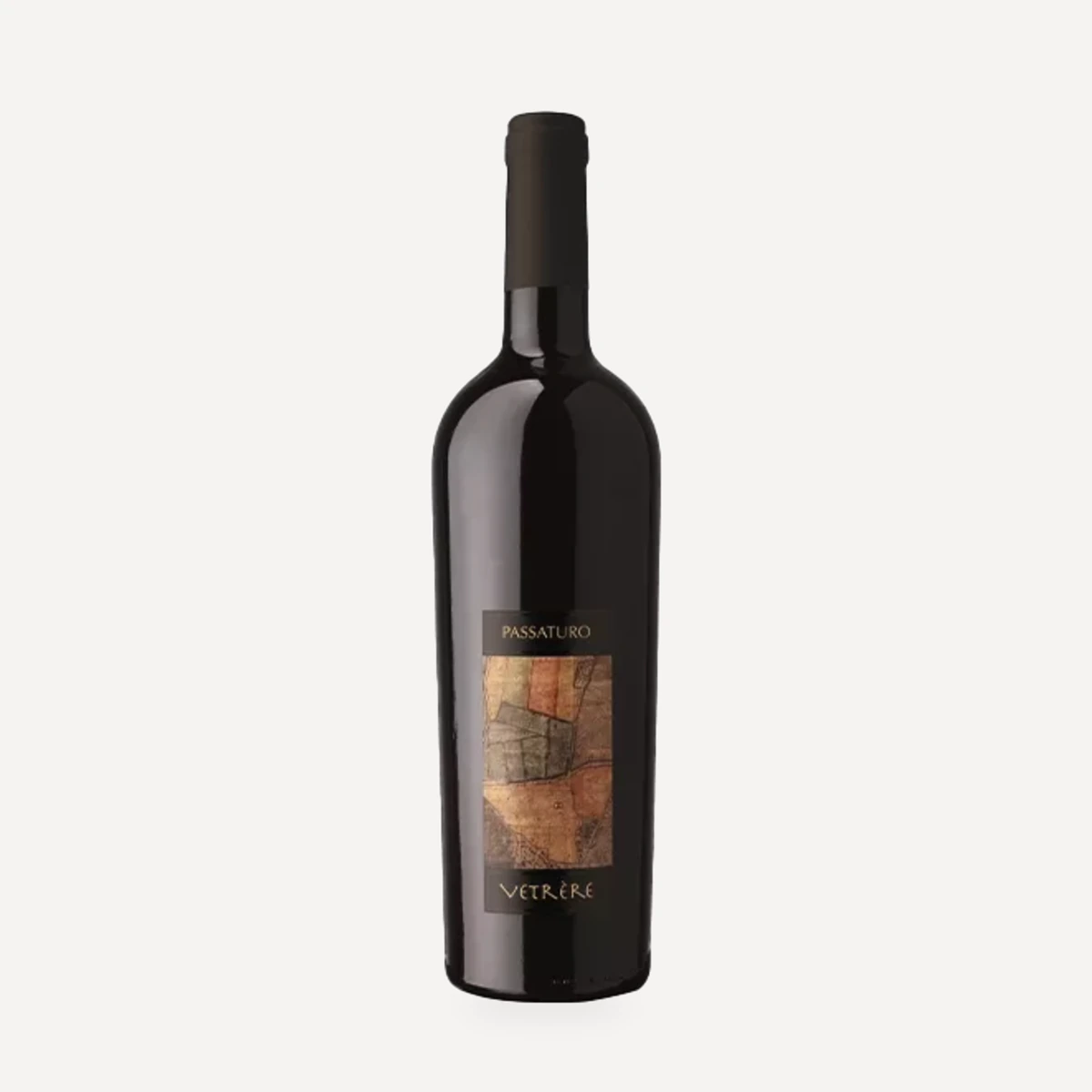
Passaturo
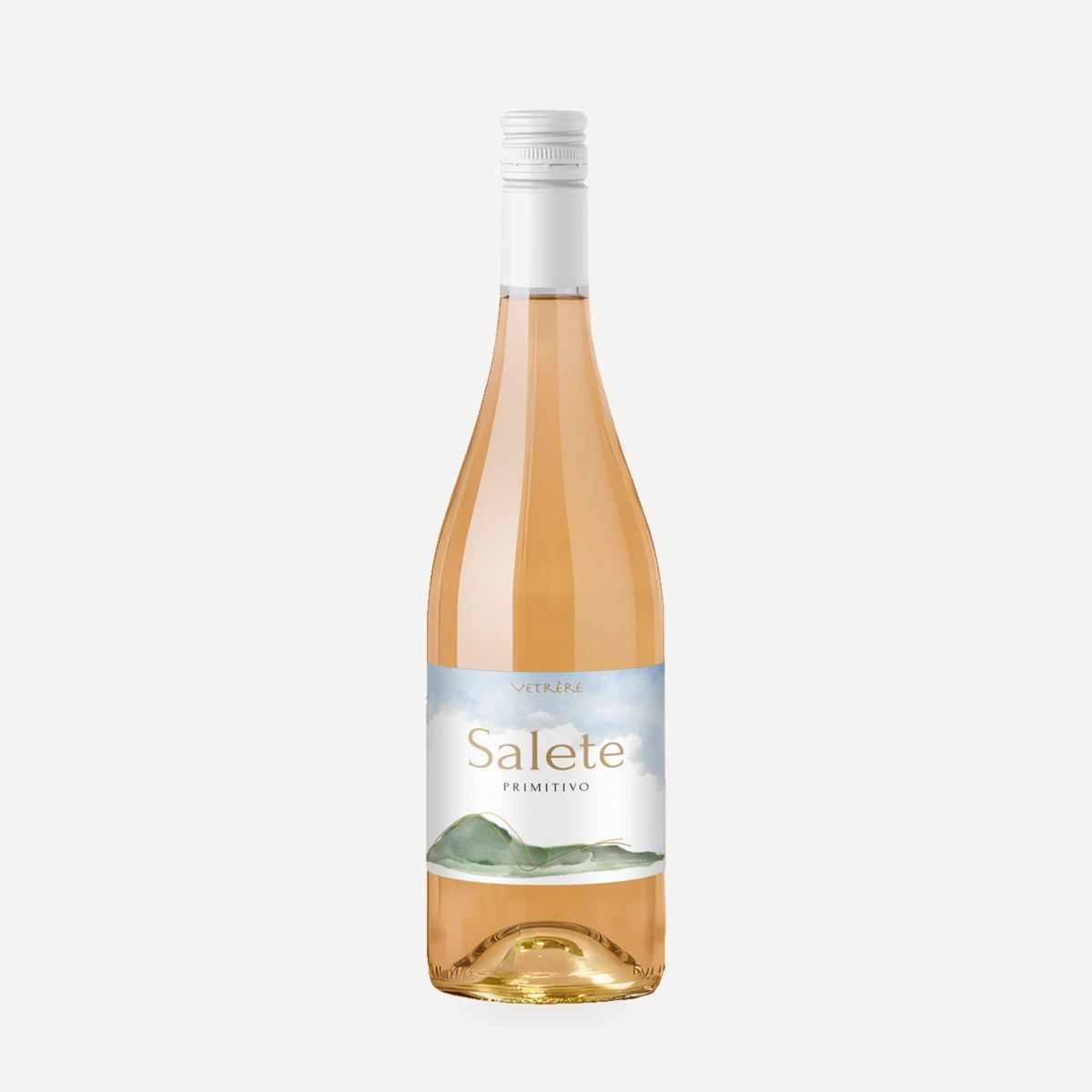
Salete
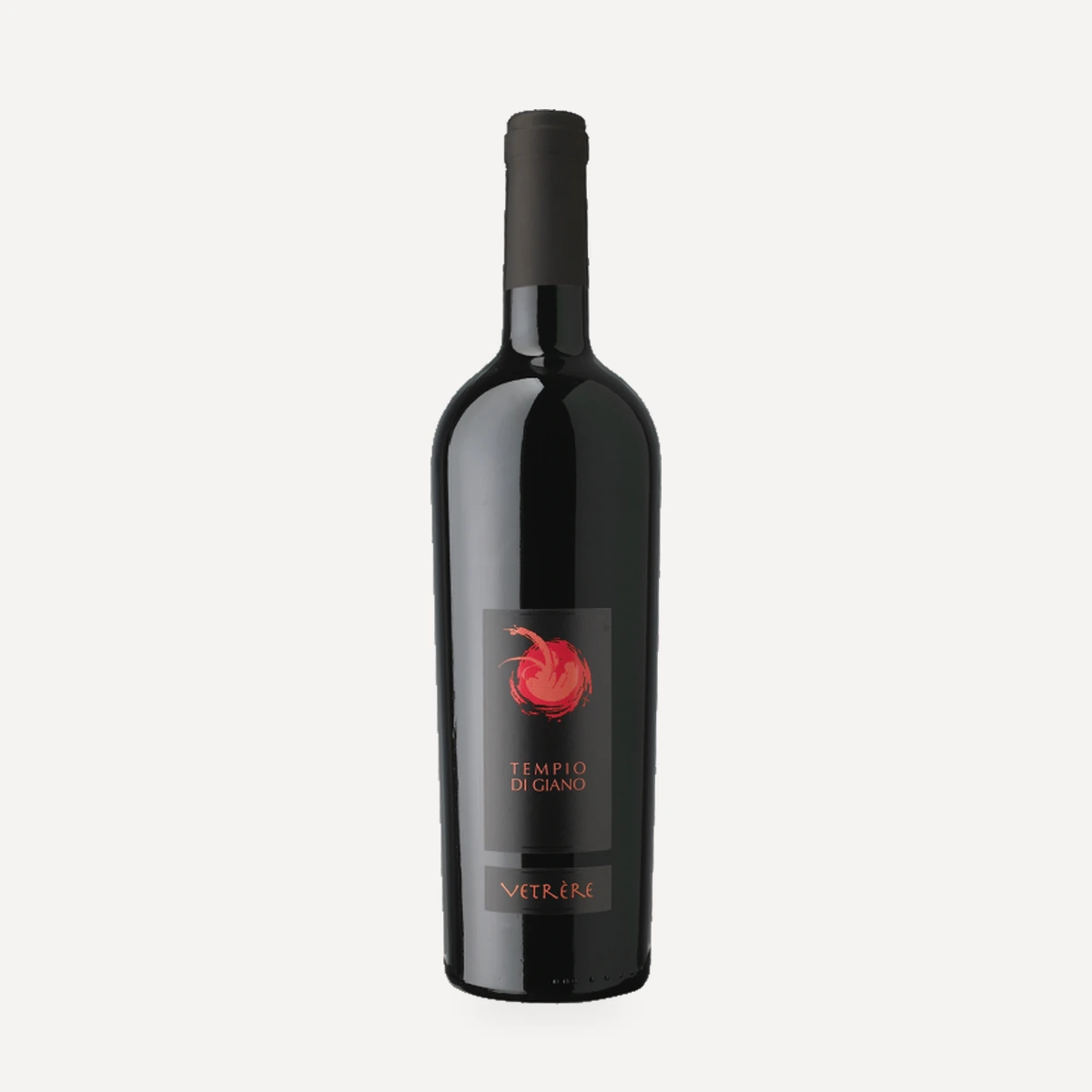
Tempio di Giano