Storia
Before XFarm
The agricultural property comprised approximately 50 hectares in Contrada Montemadre and Contrada Paretone Piccolo, on the provincial road toward Latiano outside San Vito dei Normanni. It was seized in 2004 and transferred to the Comune di San Vito dei Normanni in 2015. Its earlier management had been associated with money laundering, intensive monocultures, heavy reliance on synthetic fertilizers and labor exploitation.
The vineyard in Paretone Piccolo consists of 10 hectares of Lambrusco Maestri trained to the overhead tendone system. Ordinary cultivation ceased after the 2016 harvest, leaving the vines in a semi-abandoned condition.
2014–2017: the cooperative and the agricultural project
Cooperativa Sociale Qualcosa di Diverso was constituted on 7 May 2014 as a type-B social cooperative. It emerged from the ExFadda urban-laboratory environment in San Vito dei Normanni and initially developed social-enterprise, cultural and employment-inclusion activities.
In 2017 the cooperative entered an internal renewal process after ATI Fori do Nui obtained the free concession for approximately 50 hectares of confiscated municipal land. Qualcosa di Diverso began managing the property as the temporary association’s lead organization on 27 July 2017. This marked the beginning of XFarm Agricoltura Prossima as an agroecological and social-regeneration project.
The intended transformation was both agricultural and civic: land formerly associated with illegality, extractive management and environmental pressure would become a multifunctional farm, a common good involving the community and a place for experimenting with sustainable farming, social inclusion and local development.
2017–2019: recovery of the vineyard
When the cooperative assumed management in 2017, the vineyard was in semi-abandonment. The lack of ordinary work after the 2016 harvest meant that the 2017 and 2018 crops yielded either no grapes or only very small quantities. A substantial investment in restoring the vines and soil returned the vineyard to production in 2019.
The project initially sold all of its Lambrusco Maestri to local cellars for use with other varieties. Lambrusco was treated locally as a non-native grape, and direct vinification remained outside XFarm’s operating model through the 2022 harvest.
2020–2022: the regenerative trial
A first field visit by Deafal ONG took place in late July 2020, followed in October by a shared three-year agronomic plan. The plan sought to rebuild fertility and productivity, create crop-specific protocols, reduce dependence on external inputs by producing farm amendments and increase ecological diversity.
For the vineyard, the initial diagnosis identified soil compaction and poor water infiltration associated with one or two annual passes of a four-share plough, irregular fertilization, inadequate pest monitoring and early wood senescence in some vines. The proposed transition included fewer soil-working passes, winter or semi-permanent cover crops, mowing spontaneous vegetation, under-row-only cultivation where necessary, compost, farm-made biostimulants and corroborants, weather-adjusted copper and sulfur programs, monitoring of Lobesia botrana with pheromone traps, possible mating disruption and restorative pruning.
Two vineyard trial lots were designed: Lot A, approximately 1.7 hectares, for a multispecies cover containing at least three plant families; and Lot B, approximately 1.6 hectares, for self-reseeding annual legumes. Together they correspond closely to the subsequently described 3-hectare regenerative trial area. The program paired applied work with comparative experimentation and scheduled physico-chemical soil analysis at the beginning of year one and the end of year three.
By 2022, the vineyard project recorded 1,500 quintals of grapes sold at approximately €45 per quintal. The trial area used soil-regeneration and fertilization practices based on farm-made corroborants, supported agronomically by Deafal ONG and L’Onda Fertile.
2023: the transition from grape sales to wine
In 2023 XFarm began collaborating with Masseria La Cattiva of Turi to transform part of its own harvest. Three expressions were planned: a red, a still rosé and a bottle-refermented rosé. The collaboration changed the project from one that sold all of its Lambrusco for blending into one that controlled part of the production chain and retained more value within the social farm.
The 2023 crop was severely affected by downy mildew. Total grape production fell by almost 50%, illustrating the strain that increasingly extreme weather placed on the vineyard’s recently restored productive balance. Approximately 120 quintals were nevertheless allocated to the first vinifications, while the remaining grapes continued to be sold to local cellars.
Autumn vineyard fertilization used bulk compost supplied by Tersan Puglia. The regenerative work continued with Deafal ONG and L’Onda Fertile, with Masseria La Cattiva joining as the processing partner.
2024: the first Brushko releases
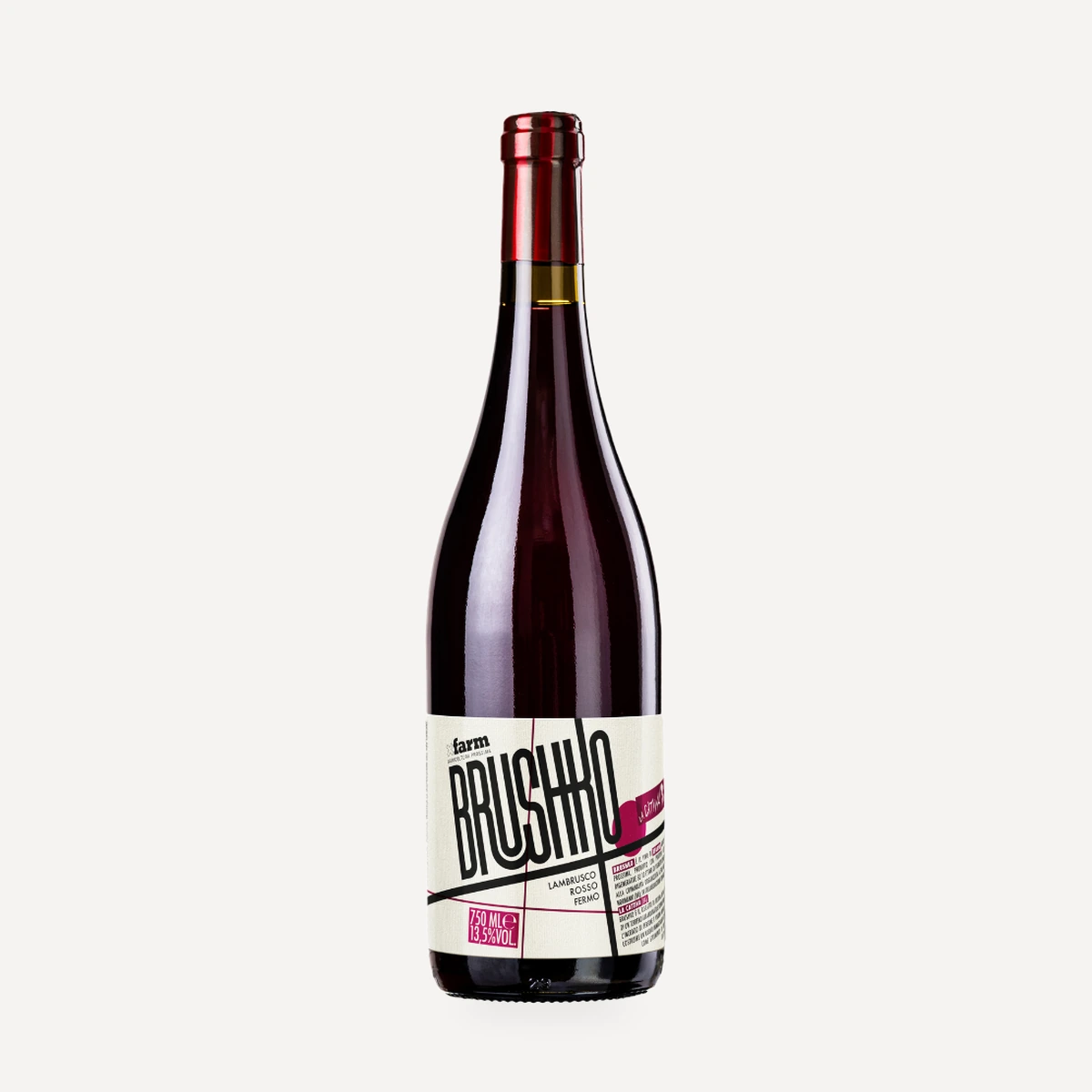
The first Brushko wine was released in January 2024 from grapes harvested in 2023. Approximately 10% of the grape crop was transformed into three wine types. Brushko became the name of the range and the emblem of XFarm’s move from selling Lambrusco as a blending component to caring for the entire chain from vineyard to finished wine.
For the 2024 cycle, XFarm recorded 1,300 quintals of grapes produced and sold, 100 quintals allocated to vinification, 8,500 bottles of 0.75 litres and 300 three-litre bag-in-boxes. The vineyard project involved 18 workers and eight volunteers from six countries and attributed 15 tonnes of sequestered CO₂ to its three regenerative hectares.
Base XFarm also opened in Contrada Montemadre in 2024, providing an operational center for administration, production, processing, sales, training and events. Vinification itself continued through the collaboration with Masseria La Cattiva.
2025: expanded trials and a smaller wine allocation
During May 2025, vineyard work included manual green pruning to improve airflow, reduce humidity-related fungal risk, direct vine energy toward productive shoots and simplify harvest. Preventive and nutritional foliar applications were made with tractor assistance to reinforce the vines’ natural defenses.
The 2025 harvest concluded on 12 October. Immediately afterward, XFarm treated the vines with effective microorganisms to support healing after harvest cuts and nourish still-active foliage before dormancy. The treatment marked a broader trial of EM applied directly to the soil.
The vineyard retained comparative sections under spontaneous cover, sown green manure and soil cultivation. Some areas within each treatment were assigned to tests with effective microorganisms. This followed earlier additions of organic matter, green-manure biomass and cover vegetation that had produced only a slow recovery in the vineyard’s biological soil activity. Autumn work also included sowing annual species for spring green manure and treating pruning and harvest wounds.
The 2025 cycle recorded 1,300 quintals of grapes produced and sold at approximately €60 per quintal, 50 quintals allocated to vinification, 6,000 bottles of 0.75 litres and 150 three-litre bag-in-boxes. The project involved 16 workers and eight volunteers from six countries and recorded 15 tonnes of sequestered CO₂ across 10 hectares described as regeneratively managed.
Terroir
The vineyard lies in Contrada Paretone Piccolo in the countryside of San Vito dei Normanni, in the province of Brindisi, Puglia. The two XFarm operating sites—Paretone Piccolo and Montemadre—are situated along the provincial road toward Latiano, approximately 4.5 km from the town center.
The 10-hectare vineyard is a single tendone-trained planting of Lambrusco Maestri. Its physical condition at the beginning of the project was shaped by semi-abandonment, previous intensive management, soil compaction and poor water infiltration. Subsequent work has concentrated on rebuilding soil structure, biological activity, fertility and water function.
No distinct named crus are identified. The principal internal differentiation is experimental: parcels under spontaneous vegetation, parcels sown with green-manure species and parcels where the soil is worked. Effective-microorganism trials are conducted within each of these management types.
Vinificazione
Organic and regenerative management
The vines have been cultivated organically since the cooperative assumed management in 2017. The wider farm is managed according to organic and regenerative principles: rebuilding fertility, replacing synthetic chemical inputs, reusing farm residues, producing amendments on the farm, improving water efficiency and restoring plant and animal biodiversity.
A 3-hectare vineyard area became the focus of applied and comparative regeneration work with Deafal ONG and L’Onda Fertile. By 2025 Brushko grapes came from part of this area. The work includes farm-made corroborants, biostimulant approaches, added organic matter, green-manure biomass, ground cover and compost. Bulk compost supplied by Tersan Puglia was used for autumn fertilization from at least 2023.
Soil management
The 2020 agronomic diagnosis linked the previous practice of ploughing once or twice annually with a four-share plough to compaction and impaired water infiltration. The recovery plan sought to reduce machinery passes and retain ground cover, especially during the first part of summer.
Options developed for the vineyard included winter temporary cover sown in October and rolled in spring, with biomass retained over summer; semi-permanent subterranean clover; mowing spontaneous vegetation; and cultivation restricted to the under-row zone where necessary. The original trial assigned approximately 1.7 hectares to a multispecies cover representing at least three plant families and approximately 1.6 hectares to self-reseeding annual legumes.
By 2025 comparative management continued among sections under spontaneous vegetation, green-manure sowing and cultivated soil. Earlier additions of organic matter, green-manure biomass and cover vegetation had produced a slow biological recovery, leading to a new series of effective-microorganism tests within each type of parcel. EM applications were made directly to the soil, and annual green-manure species were sown in autumn for spring growth.
Nutrition and plant health
Before the regenerative program, organic pelleted fertilizer had been applied irregularly at approximately 300–400 kg/ha. The three-year plan proposed raising applications initially to 500–700 kg/ha, introducing purchased or farm-produced compost and gradually supplementing or replacing pellets with farm-made corroborants and biostimulants.
The plan also replaced undirected calendar spraying with a weather-adjusted copper-and-sulfur framework and monitoring of grape berry moth, Lobesia botrana, with pheromone traps. Mating disruption using pheromone dispensers was considered as a subsequent option.
In May 2025, preventive and nutritional foliar treatments were applied to strengthen natural plant defenses. After the harvest ended on 12 October 2025, effective microorganisms were applied to support the healing of harvest cuts and nourish vines before dormancy.
Canopy and vine work
The 2020 assessment identified early wood senescence around the vine heads and called for restorative pruning with technical support from Deafal. Manual green pruning in May 2025 improved airflow, reduced humidity and fungal-disease pressure, directed energy toward productive shoots and made the subsequent harvest easier. Work directly on the vines is performed by hand, and the published product specifications identify manual harvesting.
Climate and disease pressure
Downy mildew reduced the 2023 crop by almost 50%. XFarm also links increasingly extreme weather to disruption of the productive balance achieved after the vineyard’s recovery. These pressures reinforced the emphasis on airflow, preventive foliar work, soil cover, biological activity and experimental comparison among management systems.
XFarm moved into direct wine production with the 2023 harvest through a collaboration with Masseria La Cattiva in Turi. Approximately 10% of the initial crop was transformed into three Brushko expressions, while the balance continued to be sold to local cellars. Vinification takes place through the partner facility rather than an estate winery described at Paretone Piccolo.
The grapes are harvested manually. Fermentations are spontaneous, and stainless steel is the declared maturation vessel for the red and still rosé. The project works with three general production approaches:
- The red combines three grape preparations: destemmed and crushed fruit, whole clusters and directly pressed fruit.
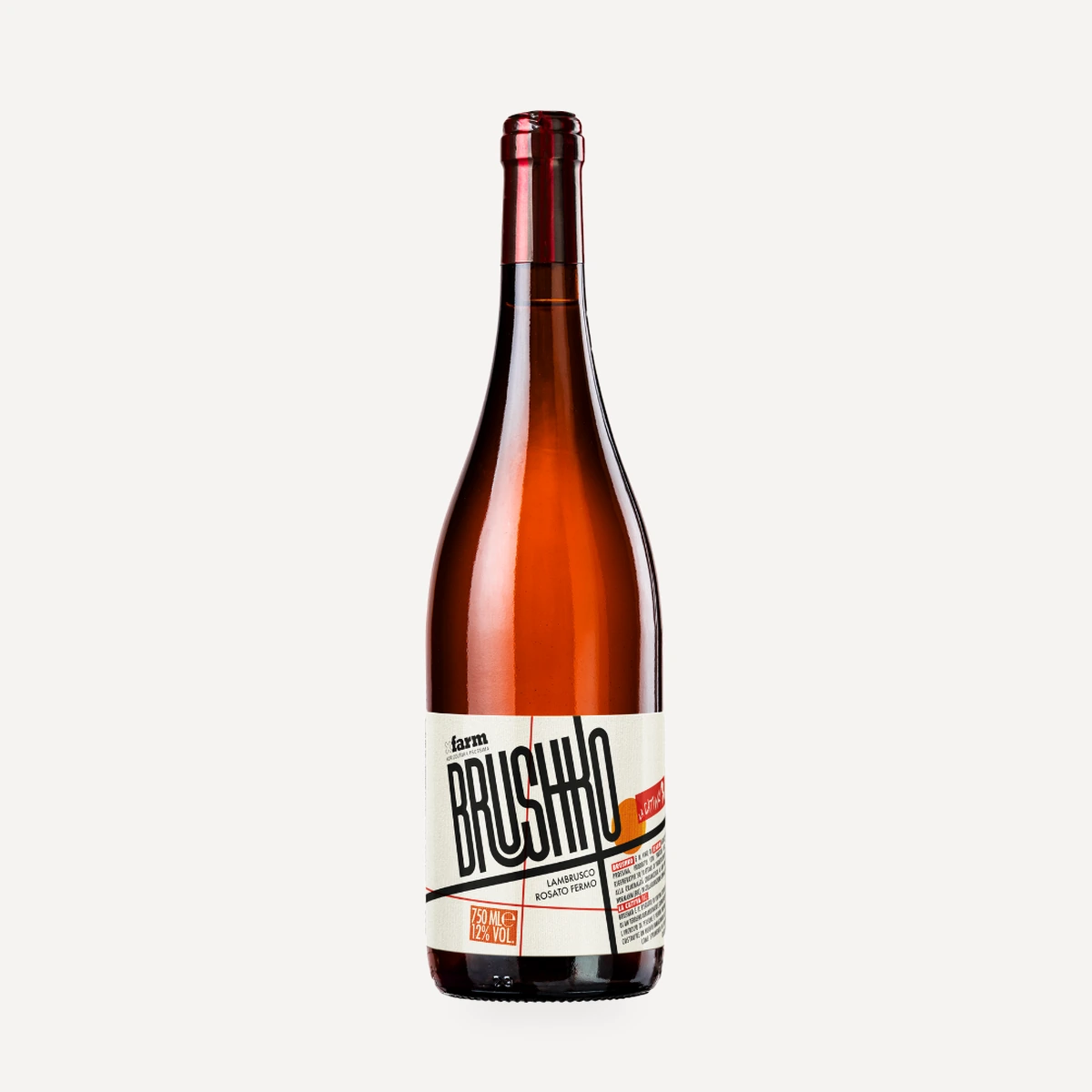
- The still rosé is harvested a few days early for freshness, gently direct-pressed and spontaneously fermented in stainless steel for seven months. The 2024 rosé has no added sulfites.
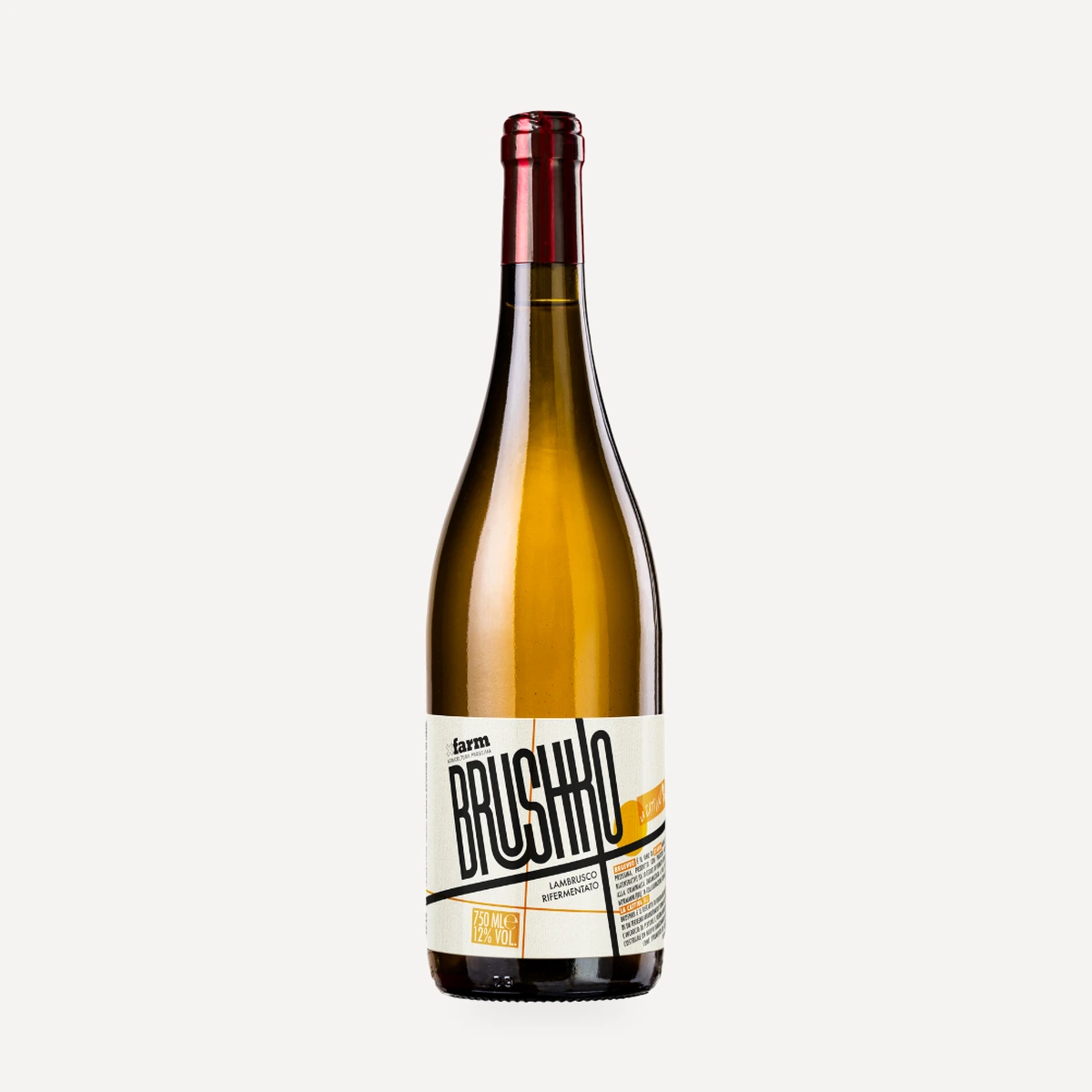
- The bottle-refermented rosé begins with the rosé base wine and completes fermentation in bottle.
The 2023 crop supplied approximately 120 quintals for vinification and produced the first wines released in January 2024. In 2024, 100 quintals were vinified, yielding 8,500 bottles of 0.75 litres and 300 three-litre bag-in-boxes. In 2025, 50 quintals were allocated to vinification, with output of 6,000 bottles and 150 three-litre bag-in-boxes.
Filosofia
XFarm defines itself as an agroecological and social enterprise built on land confiscated from organized crime. Its aim is to reverse three inherited conditions—illegality, extractive agriculture and labor exploitation—by creating biological, productive and social diversity.
The project rejects an extractive relationship with the ecosystem in favor of regeneration. Its practical principles are to rebuild soil fertility, eliminate contamination from synthetic chemicals, reuse agricultural residues, produce inputs on the farm, use water more efficiently, keep plants in physiological balance and increase both plant and animal biodiversity.
The organizational model is cooperative, multicultural, intergenerational and deliberately horizontal. Agriculture is treated as a multifunctional means of ecological care, economic development, employment inclusion, cultural activity and community wellbeing. XFarm’s long-term ambition is to function as a common good managed with an enlarged local community.
Brushko applies the same philosophy to wine. The range represents a shift from selling Lambrusco as a low-value blending component toward responsibility for the whole production chain. XFarm presents careful production as the means of creating economic, social and ecological value and frames collaboration and experimentation as alternatives to chemically intensive practices inherited from the Green Revolution.
Vini
Brushko Rifermentato
Brushko Rosato