About this wine
Vineyard and terroir
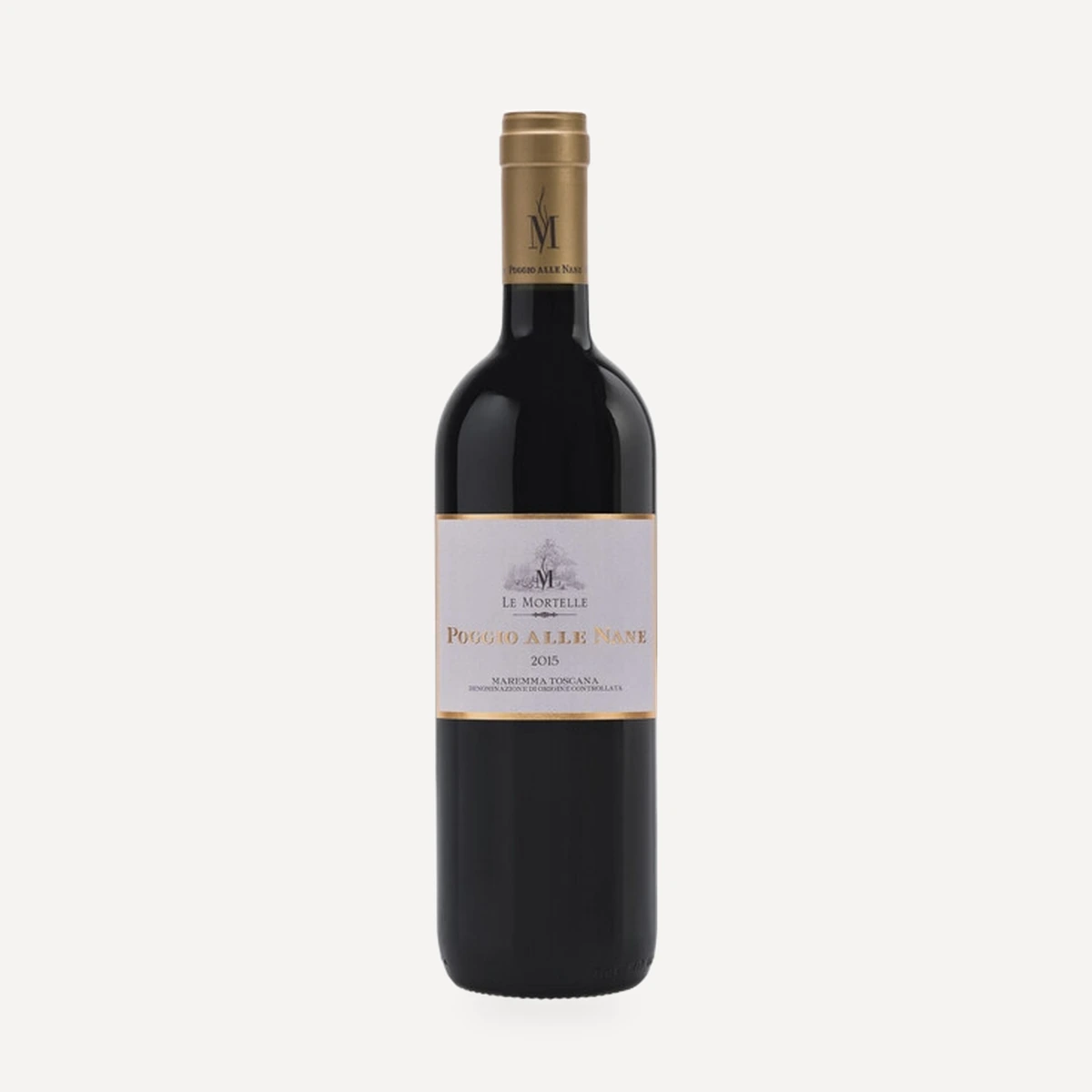
Poggio alle Nane is made from selected Cabernet Franc, Cabernet Sauvignon and Carménère grown in the estate’s Poggio alle Nane vineyards, regarded as one of Fattoria Le Mortelle’s most suitable areas for high-quality fruit. The vineyard area extends from the hill toward the lake that remains on the property. Its sandy, medium-textured soils have a predominantly silica-and-clay composition and contain abundant stones.
Fattoria Le Mortelle lies near Castiglione della Pescaia in the Tuscan Maremma. The Antinori family began substantial work on its vineyards and new cellar in 1999, although an 1863 property document already mentioned Poggio Franco and other parcels among the family holdings.
Grapes
Cabernet Franc, Cabernet Sauvignon and a small proportion of Carménère. Blend proportions vary by vintage.
Vinification
For the 2023 vintage, grapes were hand harvested into crates, then sorted again at the winery before destemming and gentle crushing. The crushed fruit entered truncated-conical stainless-steel tanks by gravity. Alcoholic fermentation took place at a controlled 28 °C, accompanied by approximately 20 days of maceration.
Malolactic fermentation took place in barriques.
Ageing
The wine matured for 16 months in French oak barriques.
Tasting profile
The 2023 is an intense ruby red. Cherry and blackcurrant meet black pepper, clove and licorice, with additional nuances of mint, violet and Mediterranean herbs. The palate is rich and enveloping, framed by sweet, refined tannins. Roasted coffee and dark blueberry chocolate characterize the persistent finish.
Vintage notes
The first part of 2023 was generally cool and quite rainy, particularly through June, yet budbreak and flowering proceeded regularly. Summer was generally warm, but spring water reserves prevented vine stress. Lower temperatures and strong day-to-night variation from late August enhanced the grapes’ aromatic qualities. Cabernet Franc harvest began in the second week of September, Cabernet Sauvignon followed one week later, and Carménère was gathered in early October.
Label / history
The wine takes its name from its vineyard area. Duck farms once occupied the site, and “nane” is the local word for ducks.