About this wine
Vineyard and terroir
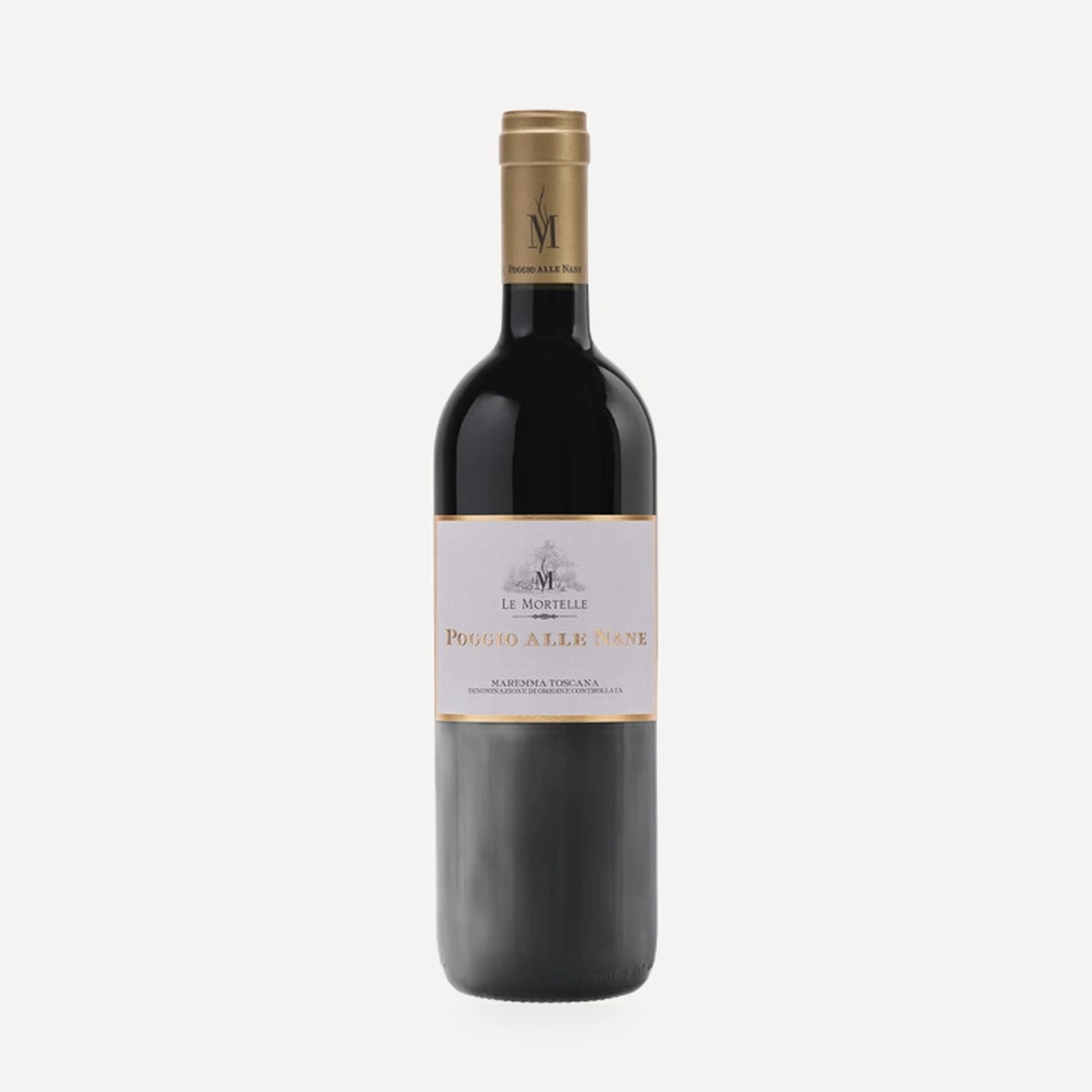
Poggio alle Nane comes from one of Fattoria Le Mortelle’s most highly regarded vineyard areas near Castiglione della Pescaia in coastal Tuscany. The medium-textured sandy soil is predominantly siliceous-clayey and rich in stones. Cabernet varieties and Carménère are particularly suited to this site.
Grapes
Cabernet Franc and Cabernet Sauvignon with a small proportion of Carménère.
Vinification
For the 2023 vintage, the grapes were selected carefully and harvested by hand into crates. A second selection took place on sorting tables before destemming and gentle crushing. The crushed fruit was moved by gravity into truncated-conical stainless-steel tanks, where alcoholic fermentation proceeded at a controlled 28 °C. Maceration lasted approximately 20 days.
Ageing
The wine was transferred to barriques for malolactic fermentation and then matured for 16 months in French oak.
Tasting profile
The 2023 is an intense ruby red. Cherry and blackcurrant aromas mingle with black pepper, clove and liquorice, followed by delicate mint, violet and Mediterranean-herb notes. The palate is rich and enveloping, supported by sweet, refined tannins. Roasted coffee and dark blueberry chocolate mark the persistent finish.
Vintage notes
The first part of the 2023 growing season was generally cool and rainy, particularly through June. Budbreak and flowering nevertheless progressed regularly. Summer was warm, while water reserves accumulated in spring prevented vine stress. Cooler conditions and pronounced day-night temperature differences from late August helped enhance aromatic expression. Cabernet Franc was picked from the second week of September, Cabernet Sauvignon one week later, and Carménère in early October.
Label / history
The estate has been developed by the Antinori family since 1999, although an 1863 property document already recorded Poggio Franco among its holdings. The name Poggio alle Nane comes from the vineyard area, where ducks—locally called “nane”—were once raised between the hill and the lake that still exist today.