About this wine
Vineyard and terroir
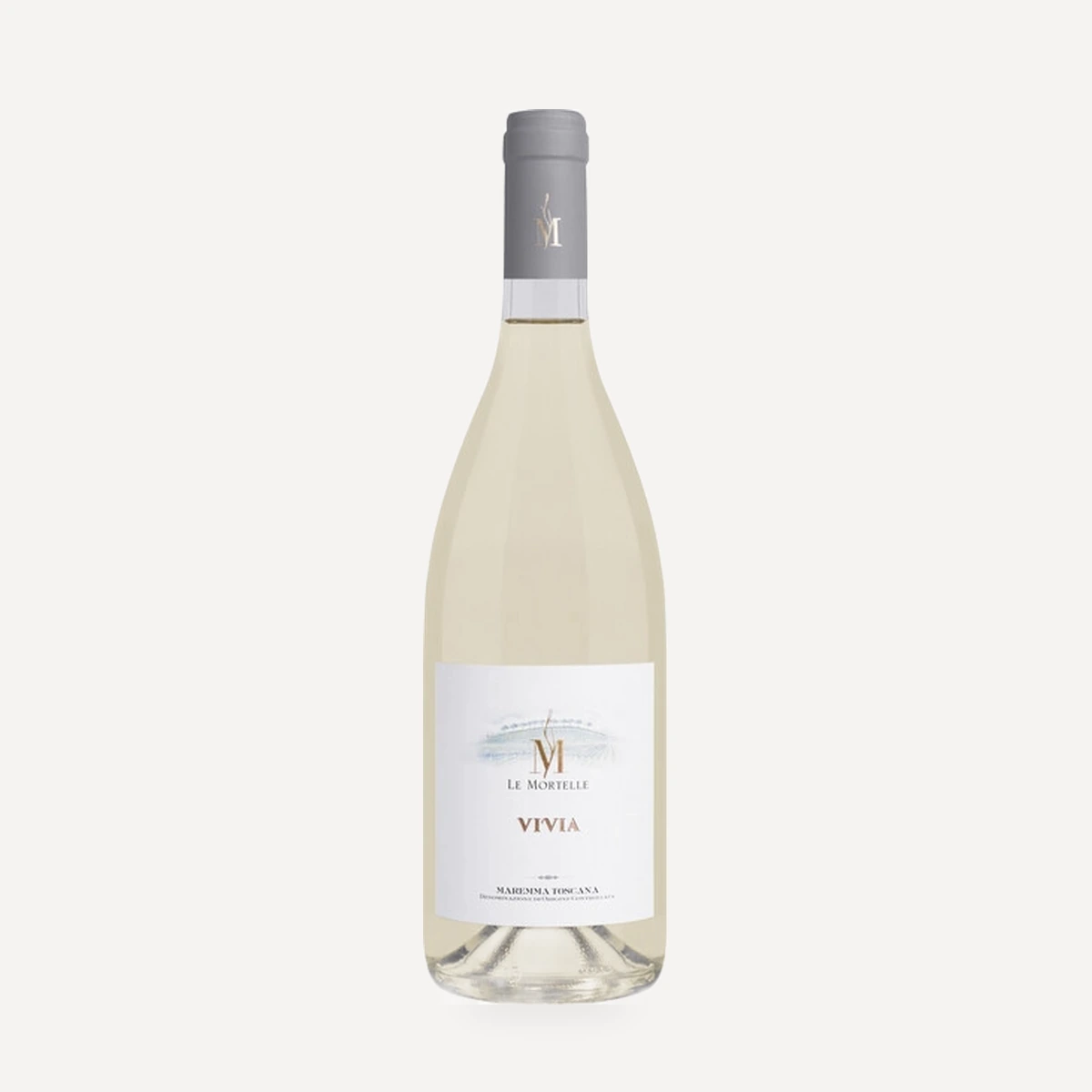
Vivia is produced at Fattoria Le Mortelle near Castiglione della Pescaia, in the coastal Maremma. The medium-textured soil is sandy and silty, with a predominantly siliceous-clayey composition and stones in some areas. Vermentino and Ansonica are traditional varieties of the Tuscan coast; Viognier was planted after years of experimentation.
Grapes
Vermentino, Ansonica and Viognier.
Vinification
For the 2025 vintage, the three varieties were gently pressed and vinified separately to retain their individual character. The resulting must was cooled to 10 °C for approximately 24 hours to clarify naturally. Alcoholic fermentation then took place in stainless-steel tanks at a controlled 16 °C.
Ageing
The wine remained in stainless steel on its lees for approximately three months and was bottled in January 2026.
Tasting profile
The 2025 is straw yellow with subtle green highlights. Its fine, harmonious nose combines white peach, yellow apple and grapefruit with delicate floral nuances and hints of Mediterranean herbs. The palate is balanced and flowing, with freshness and savoury character. The persistent finish brings a citrus aftertaste and light notes of fresh almond.
Vintage notes
The 2025 season began with a mild winter and a cool spring. Well-distributed rain through May encouraged even budbreak and balanced vine growth. Flowering and fruit set occurred regularly during cool, sunny periods interspersed with occasional intense rainfall, building soil-water reserves before summer. The warm, dry summer supported steady ripening without prolonged heat extremes, while strong day-night temperature differences preserved aroma and freshness. Viognier was harvested in the first ten days of September, followed by Vermentino; the Ansonica harvest concluded in the second half of the month.
Label / history
The Antinori family began developing the vineyards and a new cellar at Fattoria Le Mortelle in 1999, although an 1863 property document already mentioned Poggio Franco among its holdings. Vivia brings together two traditional Tuscan coastal grapes, Vermentino and Ansonica, with Viognier planted following long-term experimentation.