About this wine
Vineyard and terroir
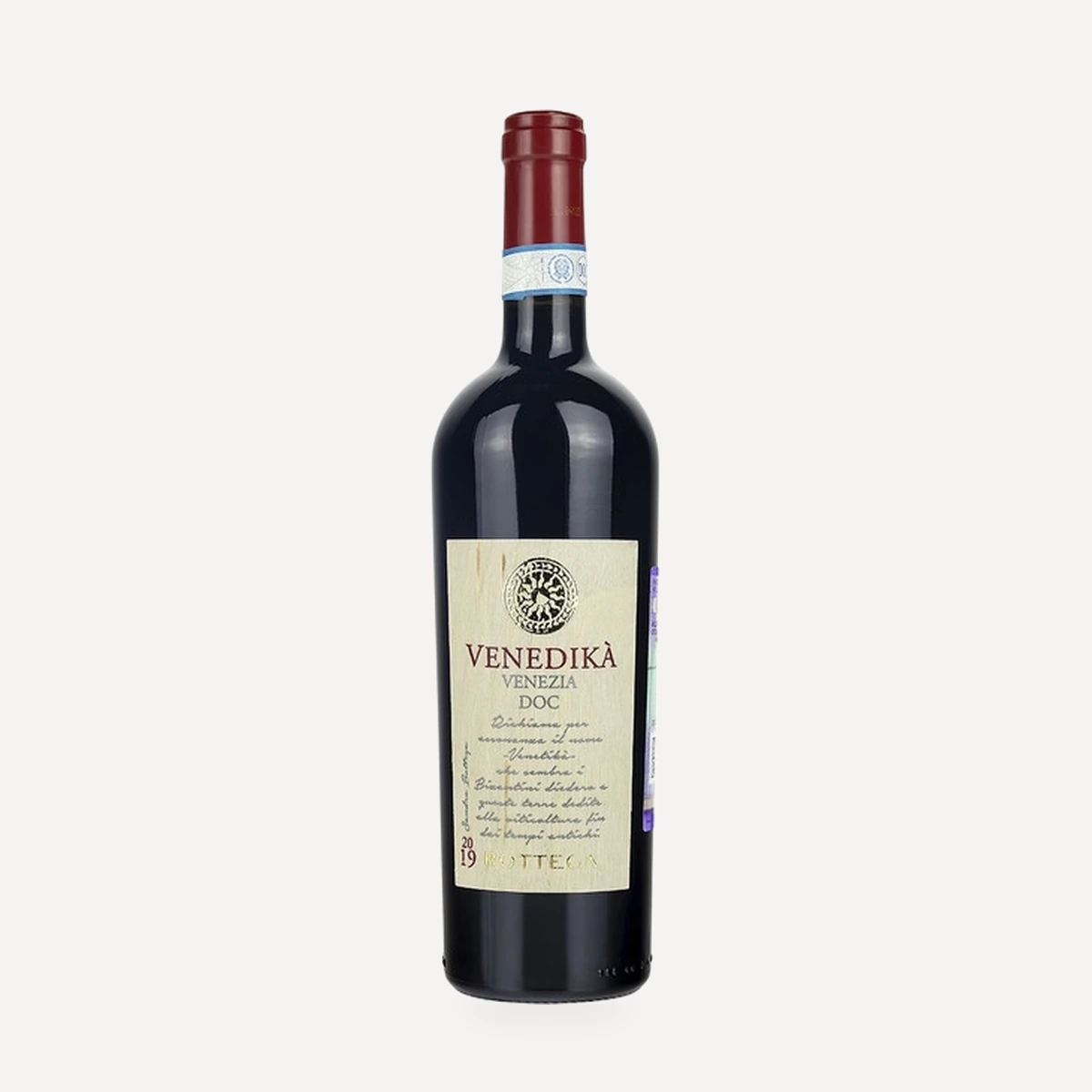
The Venezia DOC vineyards stretch from the foothills of Treviso province to the Adriatic Sea in Venice province. The climate is humid and temperate, shaped by the nearby karst and Dolomite formations, the mountains to the north, and the lagoon and sea to the south. The soils formed from alluvial material produced by melting Alpine and pre-Alpine glaciers and carried by the Piave and Livenza rivers. In the upper plain the soil is mainly gravelly, becoming richer in sand, silt and clay farther south.
The grapes for this wine come specifically from the Piave area, where the loose soil contains pebbles and sand. It drains well and regulates temperature, releasing the warmth stored during the day back to the bunches.
Vinification
Merlot: Harvest usually begins in the last ten days of September. The grapes are destemmed and gently pressed before alcoholic fermentation. Fermentation and maceration take about 25 days in stainless steel tanks at controlled temperature. Daily pumping over extracts more from the skins, and aerating the must encourages the yeast to multiply. At the end of fermentation the skins are separated by gentle pressing.
Raboso: Harvest usually begins in the first ten days of November. The bunches are picked by hand, laid on wooden racks and dried for about a month. As water evaporates, sugars concentrate, acidity decreases, the balance between glucose and fructose changes, polyphenols concentrate and glycerol rises. In December the grapes are pressed and fermentation begins. Fermentation and maceration last around 30 days in small open wooden vats of 5.5 hL. Their design allows the must to be punched down by hand twice a day for about 20 days, which extracts more colour compounds and polyphenols and supplies the yeast with oxygen. The wine is then pressed and blended with the Merlot.
Ageing
The blend is aged for around two years in barriques of Slavonian oak, French oak, cherry wood and mulberry wood. The porous wood lets oxygen pass through, a controlled oxidation that softens the tannins, rounds the wine and helps stabilise its colour. The four woods give a richer, more complex bouquet. After bottling, a short further period of ageing follows before release.