History
1868: Antonio, the pioneer
Carpenè Malvolti traces its activity to 1868, when the first of five generations began a family undertaking devoted to Italian sparkling wine. Antonio Carpenè is presented as the pioneer behind the enterprise. He initiated the work that would associate the family with sparkling Prosecco, research and technical innovation.
The house identifies itself as the first producer of sparkling Prosecco and credits Antonio with creating the Metodo Carpenè, a precursor of the modern Metodo Martinotti. The family was also among the pioneers in exporting Prosecco from the beginning of the twentieth century.
1876: the first Italian School of Oenology
In 1876 Antonio Carpenè founded Italy’s first School of Oenology. Education and research consequently became part of the family’s contribution to the development of Italian sparkling-wine culture, alongside commercial production.
1924: Etile, the communicator
The second generation is represented by Etile and the year 1924, with communication identified as his defining contribution. This phase is associated with the house’s historic role as the first producer to place the word “Prosecco” on a label, helping establish the wine’s name and identity.
1944: Antonio, the innovator
A second Antonio represents the third generation in the family chronology. The year 1944 and the role of innovator mark this stage, continuing the relationship between sparkling-wine production and technical development.
2018: Etile, the experimenter
The fourth generation is represented by another Etile. Paired with 2018 and described as the experimenter, he embodies the continuing emphasis on research and the evolution of the family’s sparkling-wine method.
2026: Rosanna, the guardian
Rosanna represents the fifth generation and is identified with 2026 as the guardian of the family legacy. Her place in the chronology expresses continuity across five generations and the preservation of a culture built around Prosecco, family tradition, research, quality and innovation.
The contemporary house
Carpenè Malvolti remains headquartered at Via Antonio Carpenè 1 in Conegliano. The headquarters and winery stand in the heart of the town and are described as a symbolic historic home of Italian oenology. The company’s current production mix is 95% Prosecco DOCG, with the remaining 5% comprising Prosecco DOC and distillates. Sales are divided between Italy, at 45%, and exports, at 55%, reaching 45 international markets. Carpenè Malvolti is also a member of Istituto Grandi Marchi, an association of Italian wine families united by historic roots, family traditions, recognizable styles and the international promotion of Italian wine culture.
Terroir
Carpenè Malvolti’s Prosecco Superiore DOCG comes from the steep, “heroic” hills of Conegliano Valdobbiadene. The denomination forms the core of the house’s territorial identity, and the hills are part of the UNESCO World Heritage landscape.
The fruit used for the house’s products is harvested by hand in hillside vineyards within the DOCG zone. Cartizze is singled out within this territorial focus as a distinct and significant denomination.
Winemaking
Grapes are harvested by hand in the hillside vineyards of the DOCG production zone. The steep terrain is treated as an essential component of Conegliano Valdobbiadene’s identity.
Metodo Carpenè
The Metodo Carpenè was developed as a precursor of the modern Metodo Martinotti. Sparkling begins with a base wine inoculated with specially selected yeast strains. The second fermentation proceeds slowly over an extended period in small horizontal autoclaves.
The process is closely controlled throughout. Its intended house style emphasizes fine texture, elegance, a distinct personality and the ability to retain its character over time.
Production profile
Prosecco DOCG represents 95% of production. The remaining 5% consists of Prosecco DOC and distillates. Tarvisium provides a separate expression of the house’s sparkling-wine tradition through Metodo Classico and 60 months of ageing on the lees.
Philosophy
Carpenè Malvolti defines its purpose through continuity between tradition and innovation. Research and quality are treated as the means by which five generations have developed Italian sparkling-wine culture while retaining a recognizable family style.
The house presents Prosecco as more than a product: it is a culture that the family helped create and now seeks to communicate internationally. Its stated values encompass excellence in sparkling-wine craftsmanship, historical and cultural depth, family tradition and an authentically Italian identity.
Territory is central to that outlook. Conegliano Valdobbiadene is treated as the source of Prosecco’s identity, while consistency, elegance, personality and longevity define the intended expression of the Metodo Carpenè.
Wines
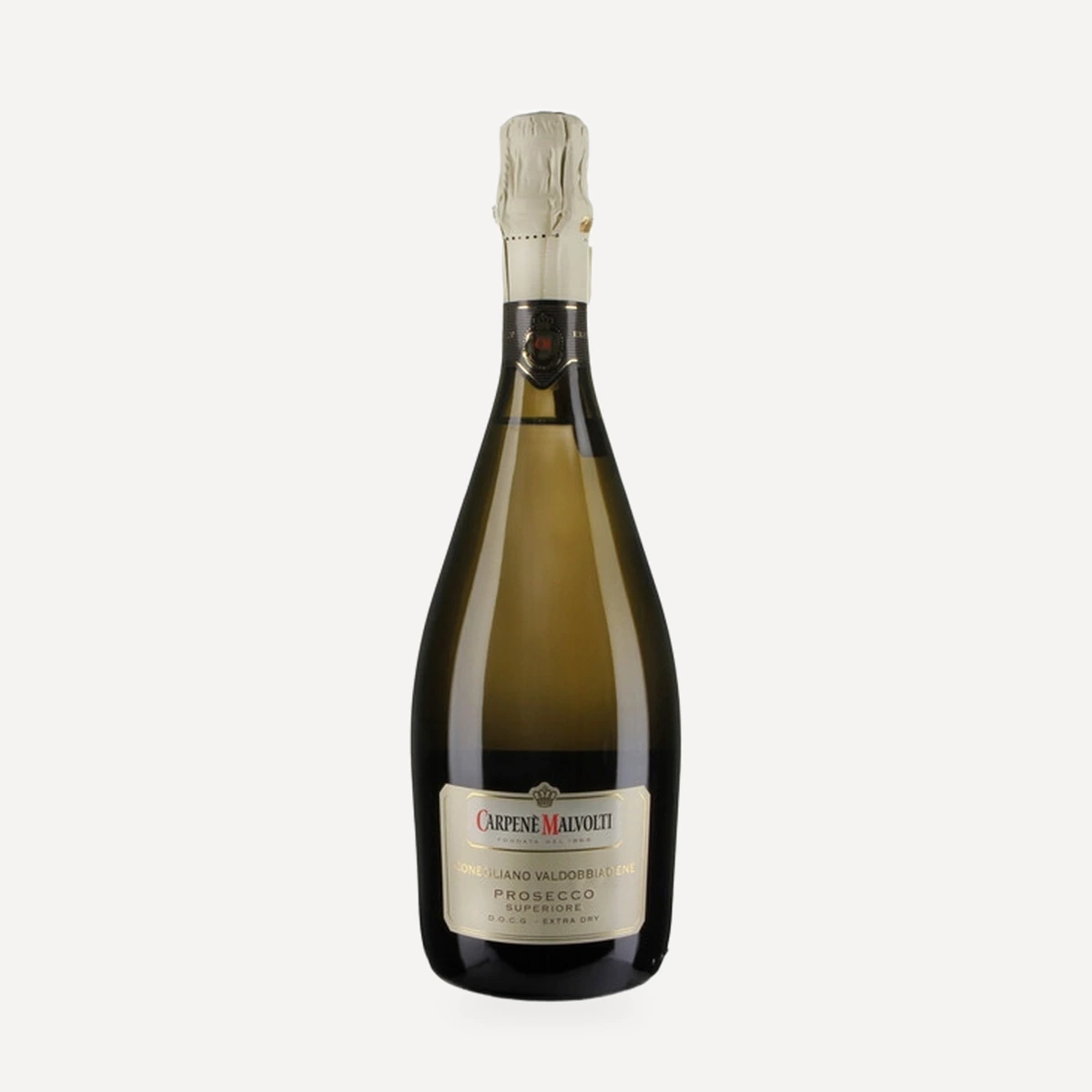
Lo Storico Conegliano Valdobbiadene Prosecco Superiore Extra Dry DOCG
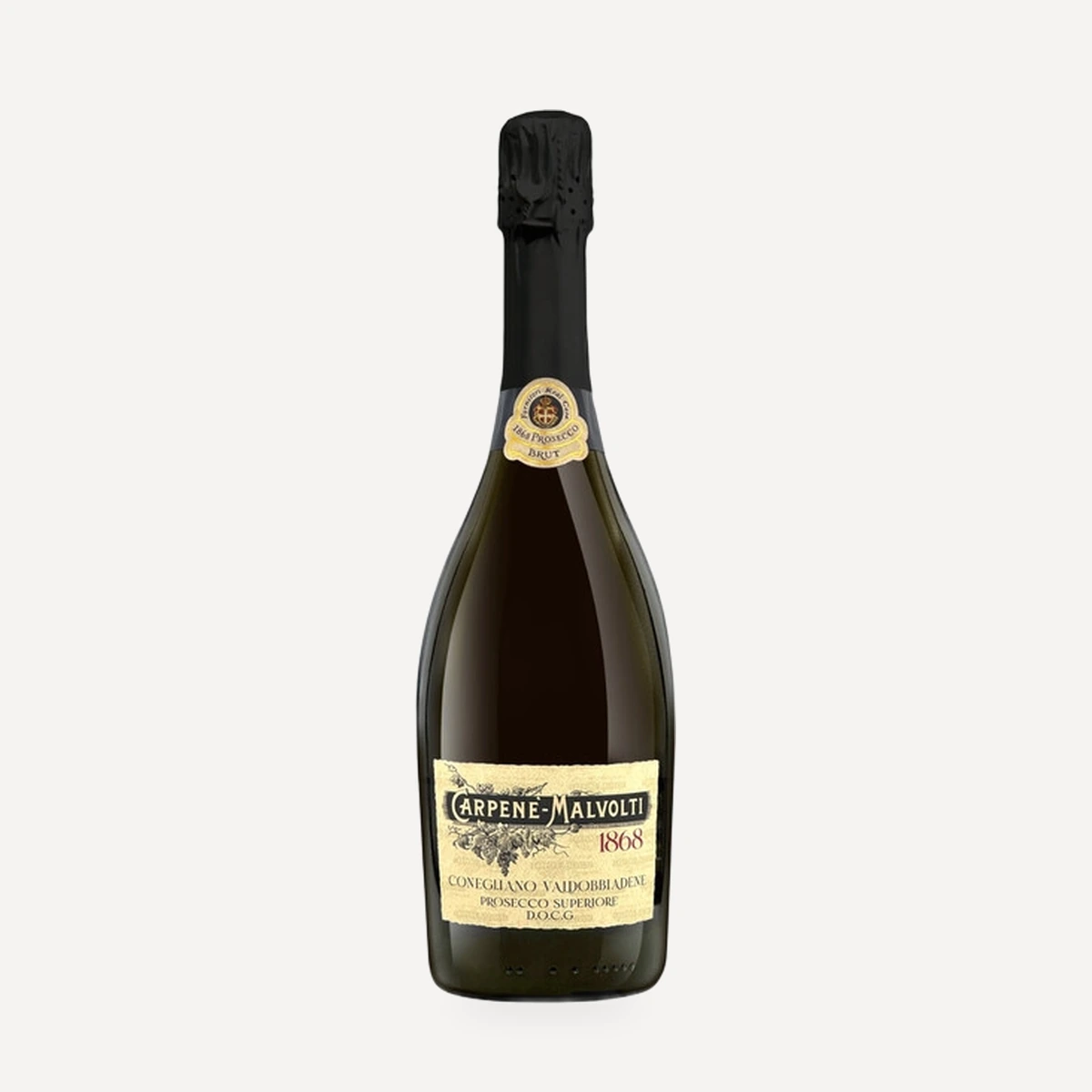
1868 Conegliano Valdobbiadene Prosecco Superiore Brut DOCG
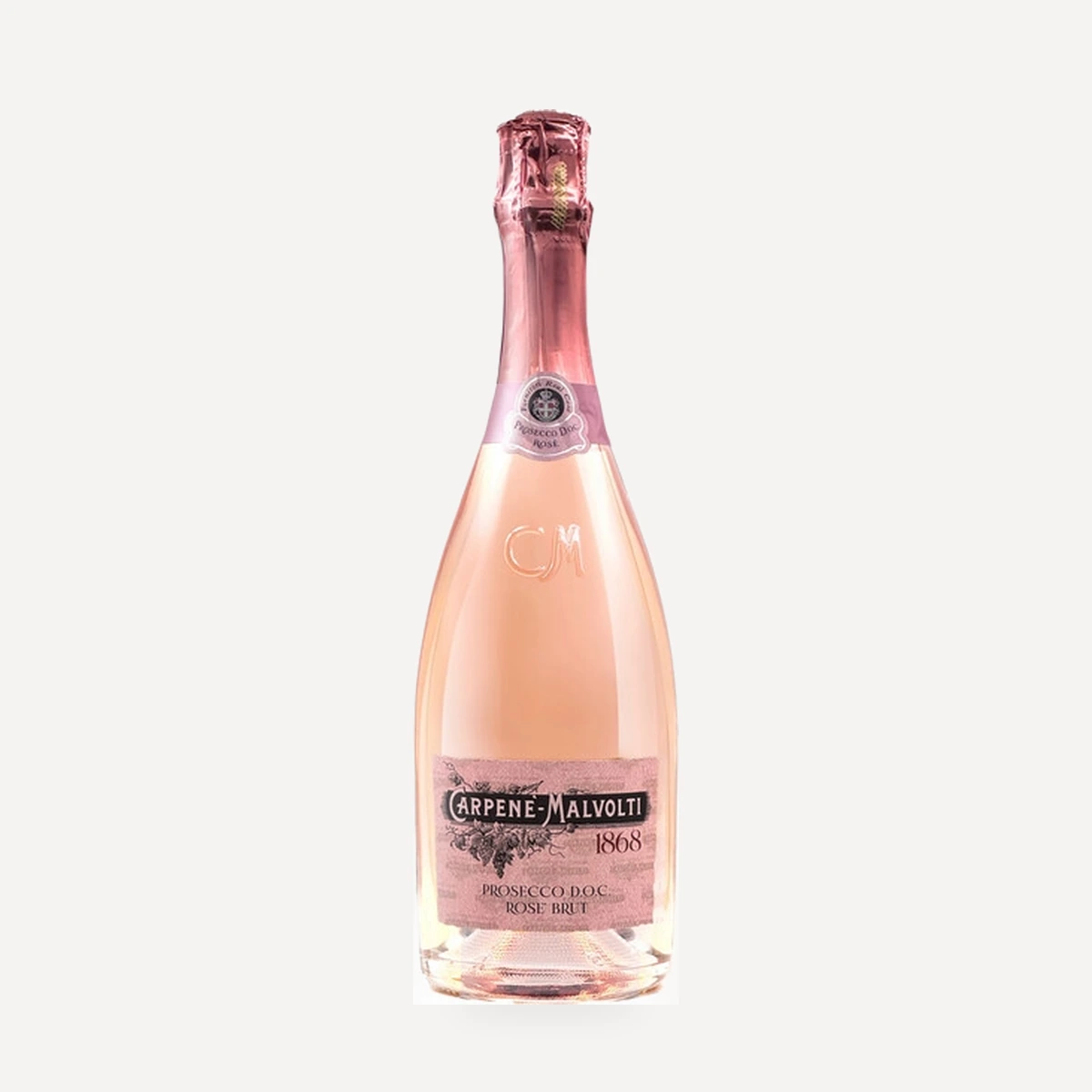
Rosé Prosecco Brut DOC