History
Family roots, 1838–1918
In 1838, Francesco Miotto’s ancestors settled on Col Vetoraz beside the Mont di Cartizze and immediately began cultivating vines. The family’s home and vineyards occupied the summit of the hill that gave the future company its name, in the highest part of the Cartizze area.
Col Vetoraz’s commanding position made it an Austro-Hungarian command base during the First World War. In 1918, the hill was heavily bombarded from the Italian front on the Piave. The Miotto family repaired the wartime damage and continued cultivating vines.
Francesco Miotto assumes responsibility, 1980
In 1980, following his father’s premature death, Francesco Miotto took responsibility for the family farm at the age of 29. He began producing the first bottled sparkling wines with the traditional natural refermentation method known locally as con fondo or sui lieviti, in which the sediment remains in the bottle.
Foundation of Col Vetoraz Spumanti, 1993
On a spring morning in 1993, Francesco Miotto walked through the family vineyards with agronomist Paolo De Bortoli and winemaker Loris Dall’Acqua. The three decided to found Col Vetoraz Spumanti. Their complementary roles created the company’s original working group: Miotto brought the family’s land and multigenerational experience, De Bortoli agronomic expertise, and Dall’Acqua oenological direction. They defined their purpose as producing sparkling wines of the highest quality while expressing the potential and identity of Valdobbiadene.
Recognition and technical development, 1998–2015
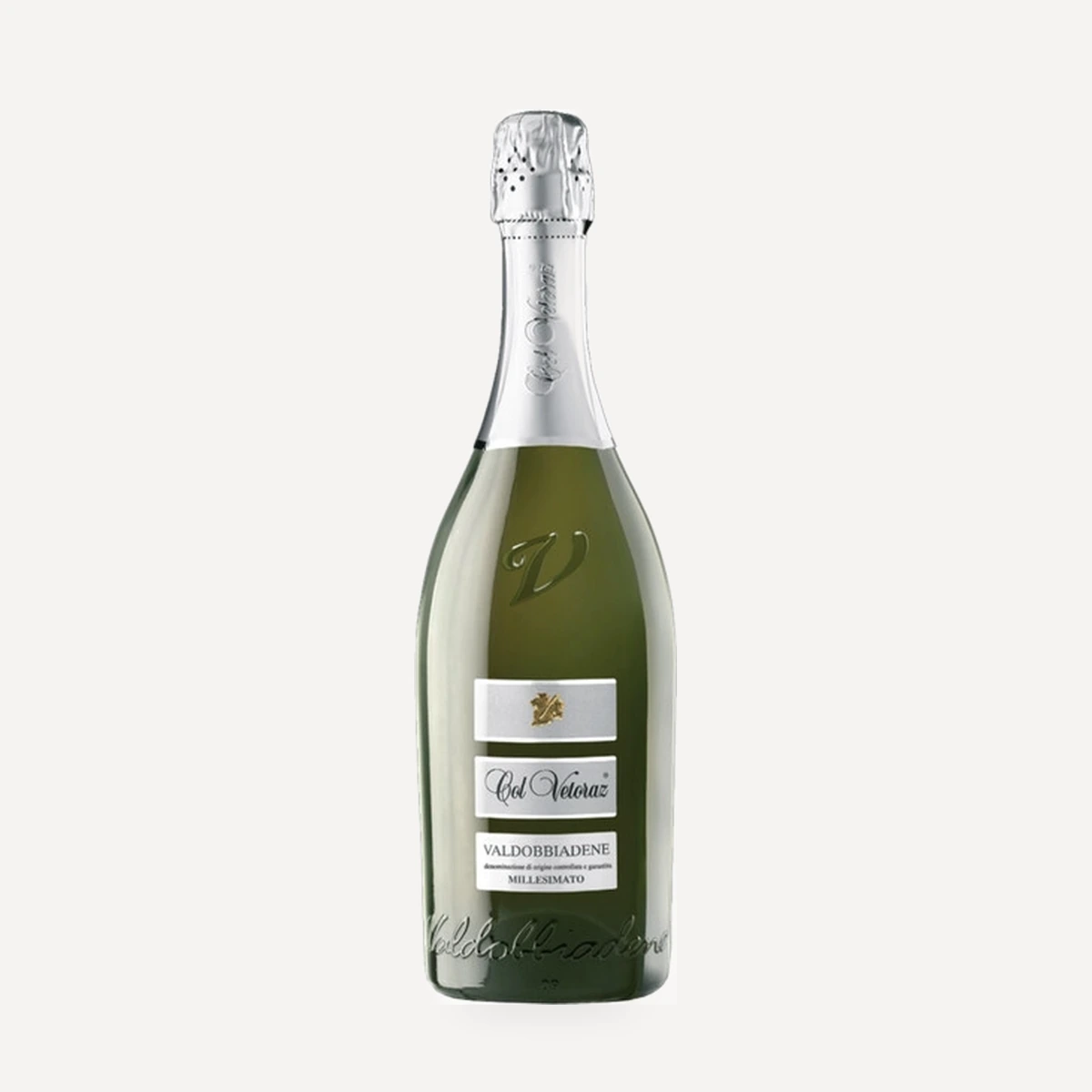
In 1998, Col Vetoraz produced the first successful Millesimato identified in its history. The wine subsequently received the Gran Medaglia d’Oro at Vinitaly for five years as the competition’s leading sparkling wine.
An extended development project culminated in 2012 with Extra Brut Ø, presented as the first DOCG bottling without residual sugar. In 2013, continuing investment in research and technology was accompanied by construction of a new facility for vinification and storage, marking a major expansion of production infrastructure.
In 2015, the estate added a large reception and tasting room and a panoramic meeting room overlooking the Cartizze slopes. The hospitality spaces allowed visitors to experience the wines in the landscape from which they originate.
Twenty-five years and a clearer territorial identity, 2017–2020
Beginning with the 2017 harvest, Col Vetoraz removed the word “Prosecco” from its labels and communications. It adopted “Valdobbiadene DOCG” as its primary designation to distinguish the historic hill territory from the much larger Prosecco denomination created across nine provinces in 2009.
A series of initiatives in 2018 marked the company’s twenty-fifth anniversary. Celebrations concluded with a gala at the Santo Stefano di Valdobbiadene headquarters attended by 300 guests, including local institutions, business representatives, professionals, journalists, staff and agents.
In 2019, a new proprietary bottle was introduced, carrying the leaf motif associated with the brand and emphasizing the Valdobbiadene denomination. Fruit from the 2019 harvest also gave rise in 2020 to two new selections: Extra Brut Cuvée 5 and Extra Dry Cuvée 13.
The contemporary vineyard network
By the 2025 harvest, Col Vetoraz was receiving approximately 2,300 tonnes of grapes annually from 170 ha of vineyards, combining directly owned holdings with fruit supplied by 72 selected, long-standing small growers. The harvest remained entirely manual and was organized progressively according to the different positions and ripening schedules of the vineyards.
Terroir
Col Vetoraz and Cartizze
The winery stands on the summit of its namesake hill at Santo Stefano di Valdobbiadene, at almost 400 m above sea level. It occupies the highest part of the Cartizze area and overlooks the entire amphitheatre, bounded by Fol to the east and Sacol to the west. The Cartizze subzone comprises 107 ha of steep vineyards between San Pietro di Barbozza, Santo Stefano and Saccol in the commune of Valdobbiadene.
The surrounding mountains shelter the Valdobbiadene hills from cold northerly winds. In summer, their proximity encourages pronounced differences between daytime and nighttime temperatures, supporting aromatic expression and preservation of acidity. The vineyards occupy steep slopes with varied elevations, gradients, exposures and microclimates; these differences are treated as distinct components during selection and vinification.
Geological setting
Most of the hills between Valdobbiadene and Conegliano emerged during the Tertiary era. The foothill soils are described as coarse, calcareous-siliceous formations rich in stones. Around Valdobbiadene and Cartizze, clayey limestone, yellow-blue marl and grey or blue sandstone are associated with deep strata left by ancient seas. Their physical and chemical composition contributes character, aroma, elegance and savoury expression.
The wider production zone consists of parallel east–west chains of hills. It is bounded by the Piave River to the west and the Meschio River and Crevada stream to the east, while the Soligo River divides it into western and eastern districts. Geological origins vary across the zone. Conegliano, San Pietro di Feletto and Susegana show heavy, partly ferralitic, dark-red soils derived from alluvial processes that began in the Miocene and continued to the Ice Age. Vittorio Veneto, Carpesica, Scomigo, Ogliano and Colle Umberto have deep, porous, stony soils of Quaternary morainic origin. The high, steep hills from Soligo toward Farra di Soligo and Vidor originated in the Pliocene and Pontian periods. From Serravalle west toward Cison di Valmarino and San Pietro di Barbozza, Miocene clayey limestone, marl and sandstone predominate. Between Valdobbiadene and Vidor, morainic deposits alternate with alluvial terraces and fans.
Production-zone scale
Valdobbiadene–Conegliano covers 15 hill communes, with vineyards from 50 to 500 m above sea level. The zone contains approximately 8,000 ha of vines and averages about 96,000 tonnes of grapes per year. Its diversity of soils, exposures, slopes, elevations and microclimates underpins the differences among its vineyard expressions.
Winemaking
Col Vetoraz works only with grapes from the foothill system of Conegliano Valdobbiadene. Its 2025 harvest network comprised 170 ha divided between directly owned vineyards and 72 selected, long-standing small growers.
Harvesting is exclusively manual. This is intended to preserve intact bunches and avoid the injuries to vines associated with mechanical harvest. In 2025, experienced pickers gathered approximately 900–1,000 kg per person per day. Around 180 people were expected to complete the harvest in 13 days.
Picking follows a staggered calendar determined by each vineyard’s position and ripening pattern, reaching its peak around the third week of September. For the principal Glera selections, the published harvest window is 15–30 September, with a maximum yield of 13,500 kg/ha. Glera is trained to the modified double-arched cane called the Metodo Valdobbiadene. Pinot Nero is spur-cordon trained, with a published harvest window of 20–30 September and maximum yield of 9,000 kg/ha.
The viticultural model depends on detailed zoning. Grapes from each vineyard can be kept separate, allowing the team to assess the potential of each site and lot before blending. The local variety is described as favoring well-distributed rainfall, moderate solar exposure, restrained daytime heat and cool nights.
Environmental stewardship includes retaining 25 ha of the property as woodland. Using an estimate of about 30 tonnes of atmospheric CO₂ absorbed annually per hectare, this woodland is calculated to remove approximately 750 tonnes each year. With a production chain employing 25 people, that figure is presented as five times the average emissions associated with an equivalent group of Italian residents.
Separate vinification and selection
Fruit from each vineyard can be vinified as an individual lot. This zoning-based system allows the oenological team to evaluate the actual potential of every parcel before assembling the principal cuvées. After vinification and an appropriate resting period, each lot is tasted and assessed; only those meeting the house standard enter the blends intended to maintain consistency across the full production of each Valdobbiadene DOCG expression.
Base-wine production
The principal white-wine process begins with gentle pressing and fermentation without the skins. The must undergoes static settling followed by temperature-controlled fermentation. Published technical information for the Glera range gives 30–40 days for the prise de mousse and one to three months of maturation. Secondary fermentation takes place in large pressurized vessels using the Charmat method.
Pinot Nero is vinified as rosé with brief skin contact and gentle pressing, followed by static settling and temperature-controlled fermentation. Its long-Charmat cycle begins in the spring after harvest: the prise de mousse proceeds over approximately 60 days at 13–14°C, followed by 12 months in contact with its own lees at 10–11°C.
Minimal treatment
Finished wines receive no fining treatment. Avoiding clarifying agents is intended to retain the aromatic and structural integrity of the original fruit and to support natural roundness and a creamy expression of carbonation. The broader production objective is to express grape typicity and terroir without adding or subtracting from the fruit’s character.
Philosophy
Territory before category
Col Vetoraz defines terroir as the inseparable combination of soil, climate, wine, customs, traditions and the people shaped by them. Its identity is rooted in the historic hills between Valdobbiadene and Conegliano, where viticulture has been practiced for more than eight centuries and the landscape has been formed through generations of manual work.
The enlargement of “Prosecco” into a denomination covering nine provinces of Veneto and Friuli in 2009 prompted the company to distinguish more sharply between a generalized product name and its own place of origin. From the 2017 harvest onward, it removed “Prosecco” from labels and communications, using “Valdobbiadene DOCG” to foreground the historic hill territory.
Integrity of fruit
Loris Dall’Acqua’s oenological principle is to express the typicity and terroir of the selected grapes without taking anything away or adding anything. Preservation of the fruit’s expressive integrity guides hand harvesting, gentle processing, separate vinification by vineyard and the decision not to fine the finished wines.
Selection and consistency
The winery harvests and vinifies a larger range of vineyard lots than is ultimately required for its selected cuvées. Each lot rests after fermentation and is evaluated independently. Only lots that reach the required standard are assembled, allowing the final cuvées to represent the whole vintage while maintaining the intended house balance.
Balance, harmony, elegance and pleasure
Every operation is directed toward balance, harmony and elegance. Together, these qualities define the company’s idea of drinking pleasure. Production is restricted to Valdobbiadene DOCG and Valdobbiadene Superiore di Cartizze DOCG as the direct expressions of its roots.
Environmental responsibility
The relationship between land and production extends to maintaining 25 ha of woodland within the property. This is treated as a continuing operational commitment rather than a symbolic initiative, with the retained forest calculated to absorb about 750 tonnes of CO₂ annually.
Wines
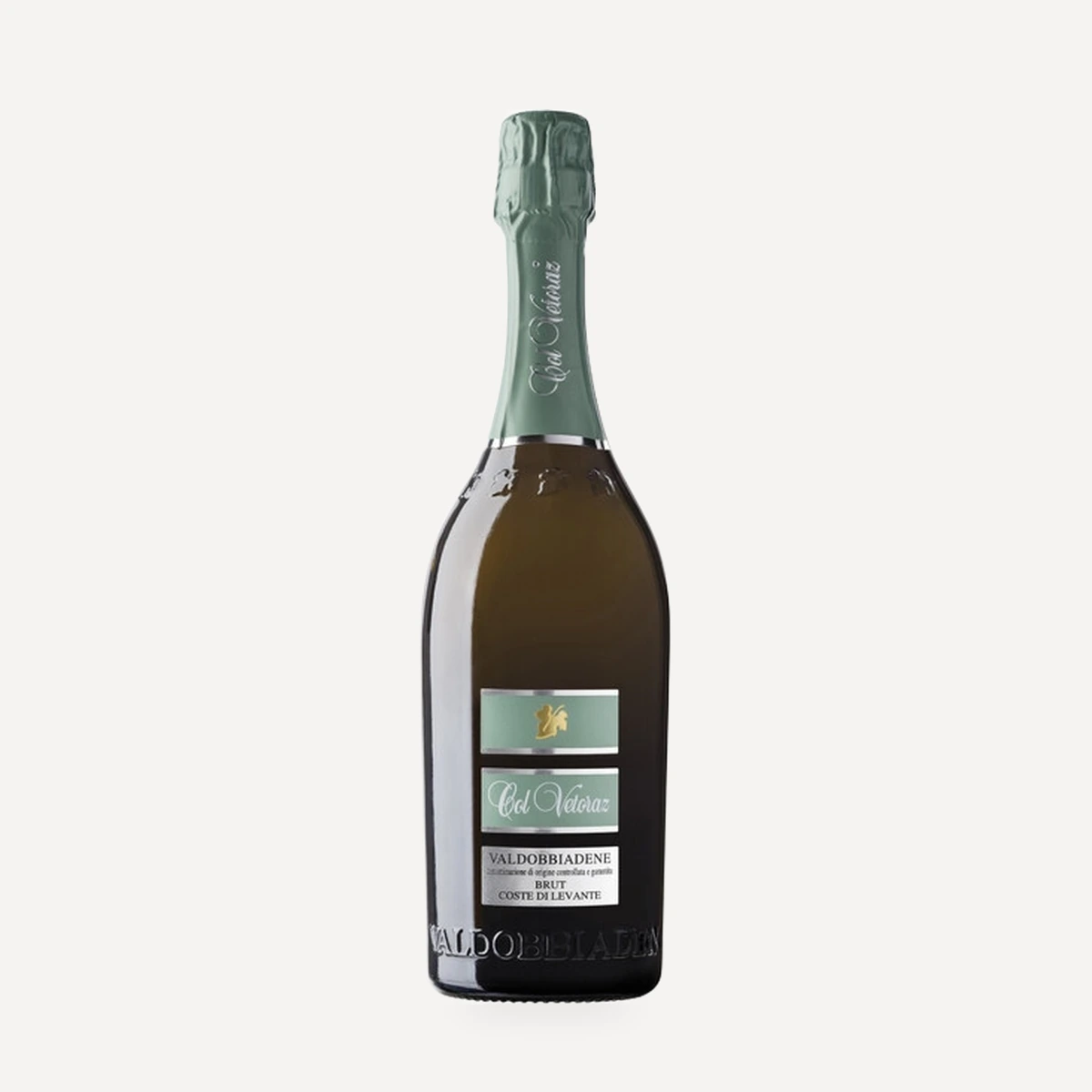
Valdobbiadene Brut Coste di Levante DOCG