History
Di Gaetano family stewardship
Dàgala Borromeo forms part of the Di Gaetano family’s group of agricultural estates in western Sicily. The property preserves the vine-growing traditions of the Trapani countryside, particularly the cultivation of native Nero d’Avola and Inzolia through traditional forms of trained bush vine. The family has renewed this local tradition through precision viticulture: individual exposures, varieties and sections of vineyard are managed according to their own conditions rather than subjected to a single interpretive model.
Continuity of family management
Salvatore Di Gaetano and his family developed Firriato as a family wine enterprise, with Dàgala Borromeo becoming one of its principal estates in the Trapani countryside. Management of the wider family project has continued into a second generation through Salvatore and Vinzia Di Gaetano’s daughter, Irene Di Gaetano, and her husband, Federico Lombardo di Monte Iato.
Terroir
Location and relief
Dàgala Borromeo extends across approximately 40 ha in the Agro di Trapani of western Sicily. The estate is presented at about 90 m above sea level and roughly 15 km from the coast. Its landscape combines flat sections with gently undulating, sinuous terrain. Different row exposures occur within a compact radius and can produce different expressions even within the same grape variety.
Climate
The vineyards experience a dry, well-ventilated microclimate with marked differences between daytime and nighttime temperatures. These thermal shifts support the accumulation of polyphenols and the development of aromatic components as the grapes ripen. Winter can bring humid air, while autumn and winter rainfall may sometimes continue into late spring. The seasonal sequence of rain, solar radiation and moderately rising temperatures during the warmer months governs the cycle from budbreak to ripening.
Geology and soils
The geological profile consists of alternating sedimentary layers with pronounced variability over short distances. The soils are young and alluvial, incorporating allochthonous material deposited through erosion. They are described both as sandy loam and as tending toward clay loam or silty clay, reflecting their internal variability.
Depth is a defining feature: soil profiles can exceed 1 m, giving roots ample space to develop. A loose, stony skeleton encourages vegetative growth. The soils are fertile and well structured, although one estate description characterizes them as relatively poor in mineral elements. Their fertility and depth create substantial vegetative potential and can encourage high productivity, so agronomic choices and timing must be adjusted by area to preserve fruit quality.
The clay component makes controlled water delivery particularly important for maintaining photosynthetic activity and balancing vegetative growth with fruit production. The combination of soil variability, differing exposures and a dynamic microclimate requires close observation rather than uniform management.
Winemaking
Organic cultivation and soil care
The vineyards are cultivated under certified-organic rules. Chemical herbicides are replaced by natural agents and microorganisms. Spontaneous vegetation is retained between the vines and cut regularly rather than eliminated. This cover protects against erosion, returns nutrients to the soil and provides habitat for beneficial insects that help limit potential parasites. Green manure is also used, together with naturally derived treatments rather than synthetic chemicals.
Organic management is based on precision viticulture: sites and varieties are matched carefully, vine susceptibility is evaluated before plant-protection treatments are chosen, vigour is controlled, pruning residues can be reused where specific nutritional needs arise, and high-efficiency water distribution supports the balance between vegetation and production.
Training and canopy work
The supported Marsalese bush vine creates a two-dimensional plant structure with horizontal shoots resting on a wire. Keeping clusters near the ground allows them to benefit from heat released by the soil at night. This system demands repeated manual attention. Dormant wood is pruned in preparation for new shoots, then leaves are removed around formed bunches to improve airflow and sunlight penetration.
Canopy management addresses two opposing risks, especially on flatter ground: excess humidity that could encourage fungal disease, and excessive internal vineyard temperatures that could interrupt ripening during bunch development. The traditional manual operation known as mazzonatura knots the shoots to their support and helps maintain the intended structure. Spur-pruned cordon and Guyot training are also associated with particular estate-grown varieties or blocks.
Ripening assessment and harvest
Rainfall, solar radiation and minimum and maximum temperatures are recorded and compared throughout the year. These data provide the technical team with a provisional harvest calendar, which is then verified directly in the vineyard. Before picking begins, berries are sampled, visually inspected and tasted. Collection is concentrated into a small number of days so each variety can be gathered without losing its optimum state of maturity. Manual harvesting is identified for estate-linked varieties.
Philosophy
Dàgala Borromeo is approached as a compact but internally diverse vineyard landscape. There is no predetermined, uniform interpretation of Nero d’Avola—or of any other variety planted there. Differences in exposure, soil and microclimate are allowed to produce distinct expressions, including among vines of the same variety.
The guiding principle is close human attention to natural rhythms. Precision viticulture is applied by estate, variety, vineyard section and individual vine, with field observation used to refine decisions suggested by recorded climatic data. Tradition is preserved through practices such as the supported Marsalese bush vine and mazzonatura, while measurement, organic protocols and carefully timed interventions provide the technical framework.
Environmental care centres on soil fertility, biodiversity and reduced artificial inputs. Spontaneous ground cover, green manure, natural treatments, the reuse of organic vineyard material and controlled water use are intended to support the vineyard’s own biological cycle while limiting erosion and maintaining balance between growth and fruit production.
Wines
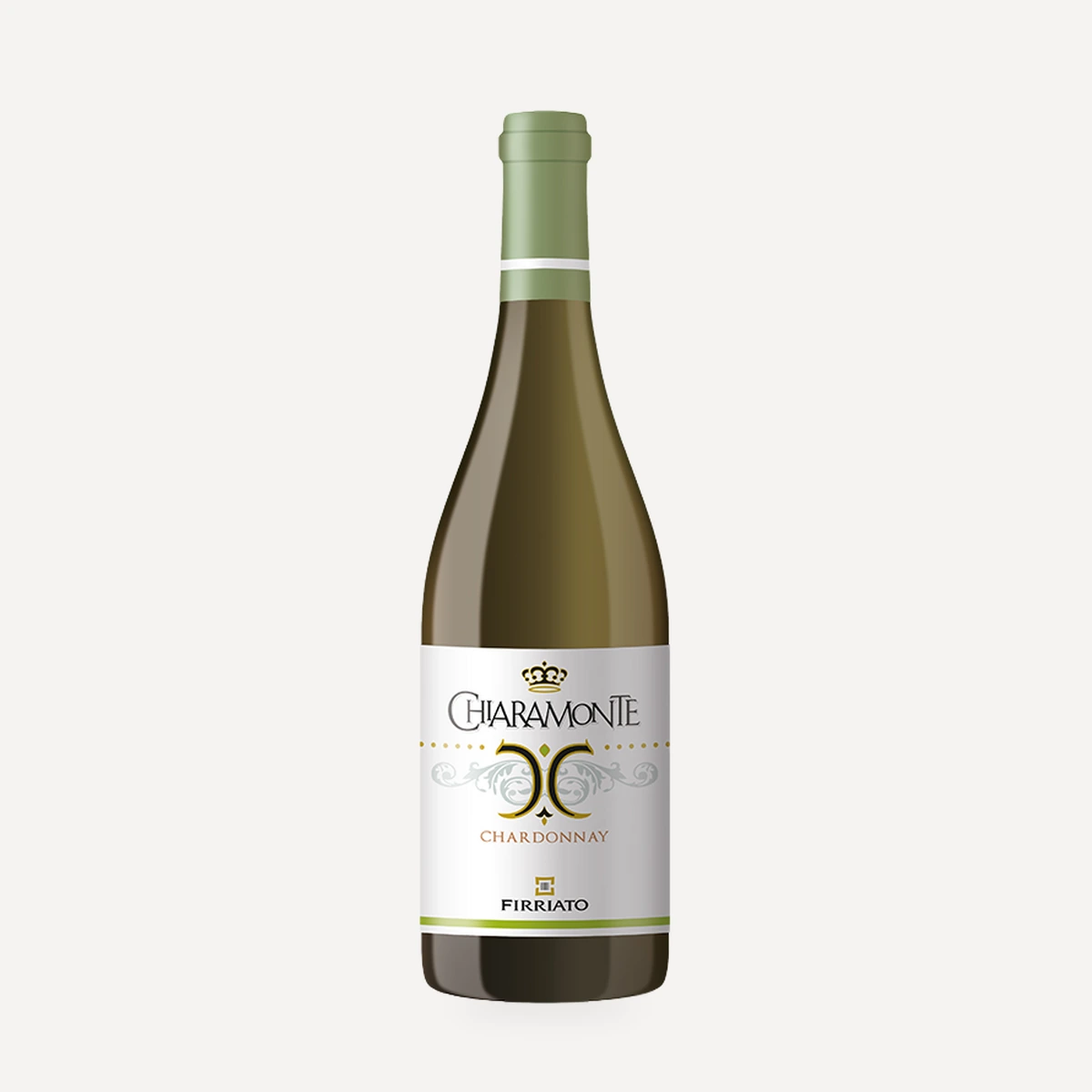
Chiaramonte Chardonnay
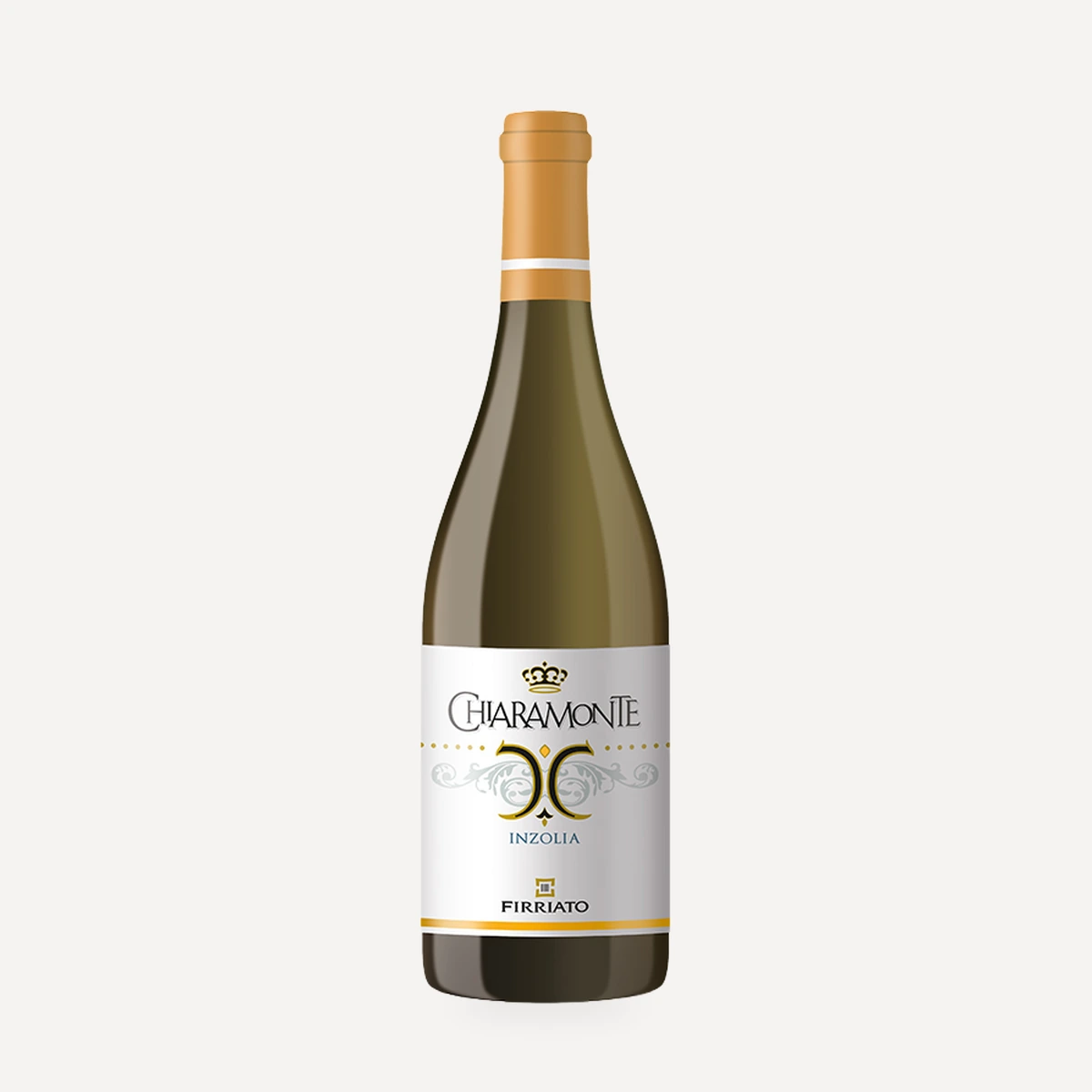
Chiaramonte Inzolia