History
Foundation and early expansion, 1878–1919
Enrico Serafino was born into a prosperous landowning family in Romano Canavese with no connection to winegrowing. At the age of 23, he left that background and moved to Canale in 1878, pursuing the ambition of producing white, red and sparkling “luxury wines” from leading Piemonte vineyards. He began with Barolo, Barbaresco and Metodo Classico, establishing the winery in the buildings and underground cellars that remain in use.
Canale’s connection to the Turin–Genoa railway through the Asti–Canale line, operating from 1882 to 1935, gave the young business a practical advantage in shipping wine. In 1884, the winery became Provveditore del Duca di Genova and received permission to display the crest of the Royal House. Exports expanded from Europe toward the Americas in 1897.
At the 1900 Paris Universal Exposition, wines presented by Enrico Serafino—Barolo 1897, Nebbiolo Secco 1898, Barbera Secco and Red Vermouth—received four medals. In 1910, the founder joined the restricted committee responsible for promoting the following year’s International Exhibition in Turin. In 1911, he was among the few wine producers invited to that exhibition, which marked the 50th anniversary of Italian unification; contemporary coverage identified him as a widely known specialist in fine luxury wines.
The 1914 inventory of Enrico Serafino & Figli recorded 10,400 litres of dry white Gavi in the cellar, establishing the house’s documented connection to Cortese and Gavi. Enrico Serafino died on 22 March 1918, by then regarded as a patriarch of Italian wine, and his sons assumed control. In 1919, the house’s Grignolino was served in Turin to U.S. President Woodrow Wilson during his first official European journey after the First World War. That same year, a fire damaged part of the principal winery building.
International markets and institutional recognition, 1920s–1970
During the 1920s, the house exported still wines and Metodo Classico sparkling wines—including Asti Champagne and Gran Spumante Regina—to the United States, Latin America, France, Switzerland, the United Kingdom and China. Multiple gold medals accompanied this international activity. In 1928, Pope Pius XI conferred the Cross of Knight of the Order of Saint Sylvester on Luigi Enrico, the founder’s son, recognizing the family’s sustained social commitment.
In 1939, the winery introduced Gran Dessert della Belle Epoque, an Erbaluce di Caluso Passito that maintained a link with the founder’s Canavese origins. The historical collection now spans roughly 80 years, with a Barolo 1939 as its oldest bottle.
The Cuneo Chamber of Commerce presented the winery with its Fedeltà del Lavoro award and a gold medal in 1965, recognizing its many decades in the wine sector. Following the establishment of the Barolo and Barbaresco denominations, Enrico Serafino received acquired historical rights in 1970 to complete the vinification and maturation of both wines in Canale, outside their normal production zones. The rights recognized the house’s longstanding role in the histories of Barolo and Barbaresco.
Alta Langa research and changes of ownership, 1989–2014
The family-owned, Canale-based Barbero Group acquired Enrico Serafino in 1989 and initiated its Alta Langa work. In 1990, the consortium of historic Piemontese wineries began the Traditional Method Project, seeking the most suitable high-altitude sites behind the Barolo and Barbaresco hills for Pinot Noir and Chardonnay. Forty experimental hectares were planted.
Enrico Serafino joined the Consorzio dello Spumante Metodo Classico – Progetto Alta Langa in 1994. During the autumn, the first 20 experimental hectares entered production and supplied the first harvest in the denomination’s history. The first bottle destined to become Alta Langa DOCG followed in 1997.
In 2003, Enrico Serafino became part of the wine division of Campari Group, which continued investing in winery technology directed toward quality. The first commercial bottle of ZERO Alta Langa Metodo Classico from the 2004 vintage was released in 2011; it was the first Pas Dosé produced in the denomination. In 2014, ZERO was named Italian Sparkling Wine of the Year by Gambero Rosso. The same year, the vineyard landscapes of Langhe-Roero and Monferrato received UNESCO World Heritage recognition.
Krause Gentile ownership and vineyard development, 2015–2022
The Krause Gentile family acquired Enrico Serafino in 2015, maintaining its family ownership and artisanal orientation. Its first vineyard investment was the purchase of 3.5 hectares in Serralunga d’Alba within the Barolo MGA area. This acquisition led to the first releases identified as single-position wines in 2017: Oesio Roero and San Defendente Barbera d’Alba.
In 2018, the winery released ZERO 140 Alta Langa DOC 2005 after 140 months, presenting it as the Italian traditional-method sparkling wine with the longest lees maturation then available. The following year brought two Nebbiolo-focused releases: Picotener, the “forgotten Nebbiolo,” and Barolo DOCG del Comune di Serralunga d’Alba MGA. Picotener followed experimental vinifications made from the 2015 and 2016 harvests.
In 2021, ZERO 140 Pas Dosé 2008 received the title Sparkling Wine of the Year 2022 from Doctor Wine, with 99/100. By this period the estate had also completed its VIVA sustainability pathway: it joined the program in 2019 and obtained certification for the entire organization in 2021.
Experimental research and Perpetuelle Sbagliato, 2023–2024
On 4 December 2023, the winery formally presented its experimental project to secure the registration of Pinot Meunier in Piemonte’s regional viticultural catalogue. Two trial sites were selected: an east-facing vineyard at 150 metres in Alba and an Enrico Serafino-owned, west-facing Alta Langa DOCG vineyard at 520 metres in Cerretto Langhe. Pinot Meunier clone Entav 865 was grafted in June 2023. Comparative observations began in spring 2024, followed by a planned sequence of three experimental harvests and microvinifications.
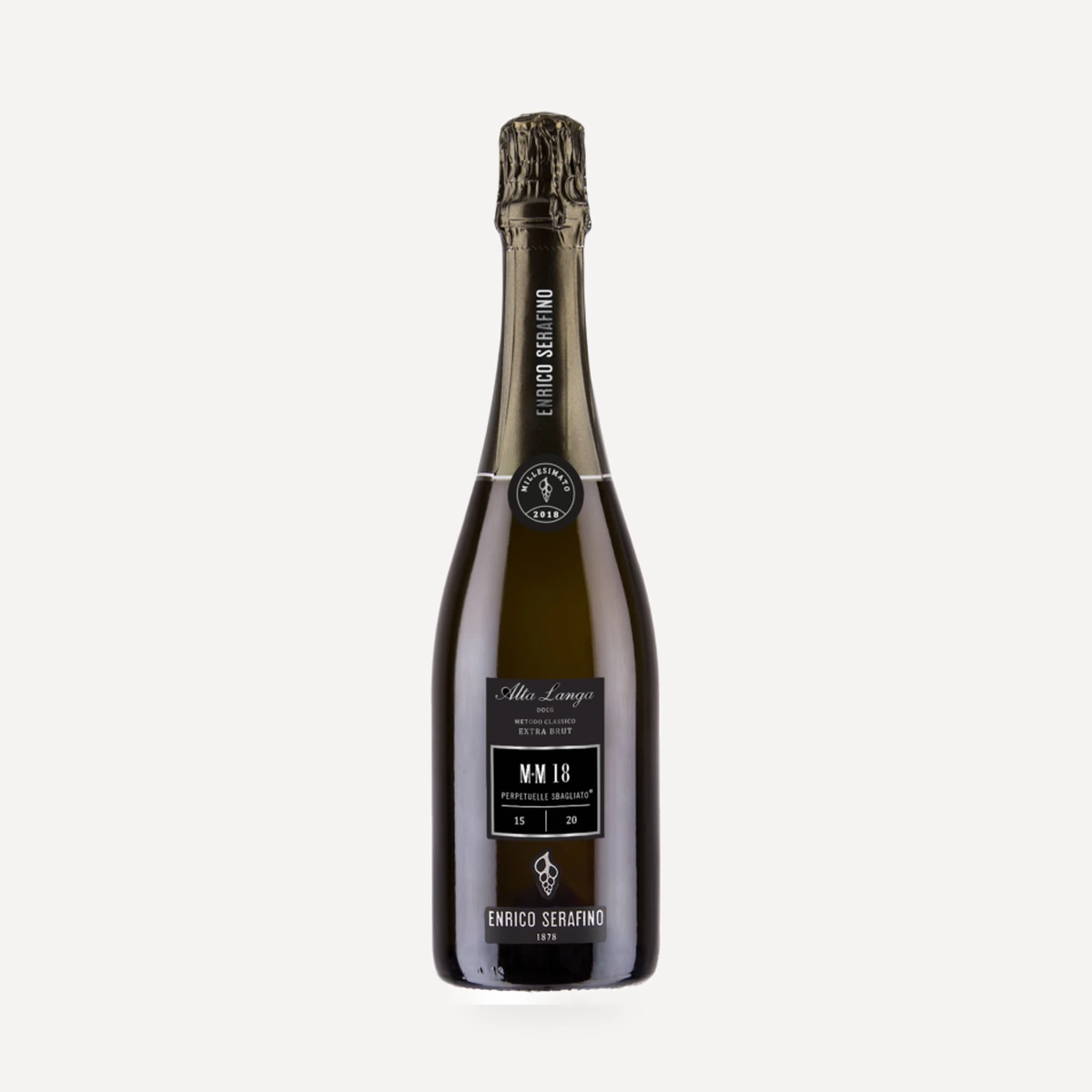
In 2024, Enrico Serafino introduced the Perpetuelle Sbagliato method for Alta Langa DOCG. Development had begun in 2017 as an attempt to combine extended pre-tirage maturation with a multi-vintage reserve while respecting Alta Langa’s requirement that at least 85% of a cuvée come from the declared vintage. The first application combined 85% base wine from 2018—held for 30 months in stainless steel on fine lees with periodic bâtonnage—with wines from 2015–2020. Tirage took place in July 2021, followed by 30 months of bottle fermentation and lees ageing, disgorgement in January 2024 and Extra Brut dosage. The name M+M means Millesimato + Multi-millesimo; “Sbagliato” acknowledges that the perpetual-reserve idea was deliberately applied in a different form.
Terroir
Enrico Serafino works across the UNESCO winegrowing landscapes of Langhe-Roero and Monferrato, sourcing approximately 60 hectares. The geographical spread is deliberately broad: the Alta Langa program encompasses 56 parcels in 41 vineyards across 16 municipalities, extending 58 km east–west and 28 km north–south, with an elevation difference exceeding 400 metres. The parcels are used to obtain distinct but complementary fruit rather than depending on one large, uniform vineyard.
Langhe and Serralunga d’Alba
The owned Barolo vineyards lie in Serralunga d’Alba. Briccolina is a steep, fully south-facing site with calcareous clay and sandy inclusions. Carpegna faces south and southwest; clay mixed with sand in its upper part gives way to predominantly clay soils lower down. Meriame faces west and is based on clay. Barolo grapes are also sourced from Serralunga d’Alba, Monforte and La Morra, while Barbaresco grapes come from Barbaresco, Neive and Alba.
Alta Langa
La Soprana crosses Cerretto Langhe and Roddino at an average elevation of 500 metres. Its Langhe marl is poor in organic matter, naturally limiting yield and producing fruit associated with an austere, complex profile. The Pinot Meunier experiment adds a west-facing Enrico Serafino-owned trial site at 520 metres in Cerretto Langhe. The wide altitude range, multiple aspects, soil composition and differing geological ages are treated as interacting variables in the response to warming temperatures and increasingly extreme climatic events.
Roero and Canale
Oesio ranges in aspect from southeast to west, creating a favourable microclimate for Nebbiolo; its soil contains abundant sand and clay. San Defendente has full southern exposure in a natural amphitheatre and combines cool nights with abundant daytime light and heat; it is the steepest owned vineyard. Valpone also faces south and has a particularly sandy soil. Piemonte’s soils contain fossils from prehistoric marine environments, an origin represented by the sliced tertiary fossil shell used in the house logo.
Winemaking
Viticulture follows a sustainability program designed to reduce chemical inputs while retaining the distinctions among sites, varieties and vintages. Approximately 25 hectares are owned directly; a further 35 hectares are cultivated through long-term supply agreements under the close supervision of Enrico Serafino agronomists.
Fertilizers and plant-protection products are reduced substantially by maximizing mechanical work. A network of vineyard weather stations records site-specific conditions and helps avoid unnecessary treatments. Permanent or managed grassing protects soil against erosion. The resulting vineyard environment supports varied flowers and insects, and biodiversity is treated as part of vine development rather than as a separate program.
Harvesting is exclusively by hand for the processes described across the range. The quality team waits for the fruit to reach the required balance, then places the bunches in suitable boxes. The boxes are taken immediately to Canale; grape temperature is checked on arrival and the fruit is chilled when necessary.
Enrico Serafino joined the Italian Ministry for the Environment, Land and Sea’s VIVA program in 2019 and obtained certification for the entire organization in 2021. VIVA evaluates environmental, social and economic performance through Territory, Vineyard, Air and Water indicators. Vineyard assessment covers crop protection, fertilization, soil compaction, organic matter, erosion and landscape; the broader program also examines biodiversity, community impact, greenhouse-gas emissions and direct and pollution-related water use.
Between the recorded 2019 and 2021 assessments, organization-level greenhouse-gas emissions fell from 920.69 to 769.80 tonnes of CO₂ equivalent, a reduction of 16.38%. The water indicator fell from 2.07 × 10³ to 1.41 × 10³ m³ H₂O equivalent per year, down 31.88%. For the certified product, emissions declined from 2.52 to 1.82 kg CO₂ equivalent per 0.75-litre bottle, while the water indicator moved from 6 to 4 litres H₂O equivalent per bottle. Annual targets are required to maintain and improve certification performance.
Winery and gravity layout
All grapes are vinified and the wines bottled at the Canale winery. The complex covers 6,000 m², including 1,980 m² of underground galleries. Total cellar capacity is 9,700 hl, of which 2,100 hl is in wood. The original 1878 structure was built on three levels to exploit differences in height, and gravity remains the principal means of moving grapes, juice and wine from reception through bottling, reducing pumping.
Grapes are received, selected and transformed on the ground floor. Red wines mature in oak on the first underground level. Bottle ageing takes place on the second underground level. The naturally constant temperature of the nineteenth-century cellars supports the maturation of still wines and Alta Langa Metodo Classico.
Reception and selection
Harvested bunches arrive in boxes and are checked for temperature, with chilling applied when needed. The entire handling line is free of screw conveyors to protect berry integrity. Bunches are hand-selected on a vibrating table and treated with carbonic snow to limit oxidation and reduce sulphite requirements. When grapes are destemmed, the berries can undergo a second hand selection on another vibrating table before fermentation.
Red-wine pathways
Red grapes may follow three routes in stainless-steel or oak vats, using submerged-cap fermentation, pump-overs or délestage as appropriate. Whole-cluster fermentation adds stalk-derived tannins to the berry polyphenols. Destemmed whole berries receive the additional hand selection and are used when a richer, more complex fruit expression is sought. Destemmed and softly crushed grapes form the third, more traditional pathway.
White-wine pathways
One method softly presses whole clusters in an inert nitrogen atmosphere before fermentation. The alternative begins with destemmed, softly crushed grapes: the fruit and juice are chilled under nitrogen for 12–15 hours at 8–10°C, then softly pressed and fermented. This cryomaceration is used to develop broader aromas and additional structure.
Alta Langa base wines and traditional method
Alta Langa base wine is normally obtained by soft pressing whole clusters under nitrogen. For Alta Langa Rosée de Saignée, destemmed and softly crushed grapes are chilled for two to four hours under nitrogen before bleeding and soft pressing.
After primary fermentation, the wines remain on their yeasts with periodic bâtonnage until tirage and the second fermentation. Bottle fermentation and lees ageing take place without light at controlled temperature in the historic underground cellars. Duration varies by wine and vintage, generally from 36 to 144 months. Ice disgorgement is followed by reserve-wine dosage for Zero Pas Dosé or by liqueur d’expédition for other cuvées. Distilled wine or spirits such as Cognac and Brandy are never used in Alta Langa liqueur, preserving the link between wine and origin.
Parcel-by-parcel vinification has been applied since the creation of Alta Langa DOCG. The sparkling-wine program draws on 56 parcels in 41 vineyards across 16 municipalities and maintains an extensive library of reserve wines. Dosage is generally restrained, and long lees ageing is central to the style.
Oak maturation
Oak is treated as a controlled source of oxygen that helps establish wine character without oxidation. Barrel selection considers oak type, stave thickness, toast, capacity, surface-to-volume ratio, cellar temperature and maturation time. Wood aromas are intended to remain integrated rather than dominate the vineyard-derived structure.
Perpetuelle Sbagliato
The method introduced in 2024 combines extended pre-tirage maturation and a multi-vintage reserve within Alta Langa’s vintage rules. Its first cuvée used 85% 2018 Pinot Noir base wine matured for 30 months in stainless steel on fine lees, with periodic bâtonnage, rather than the usual six to nine months before tirage. Wines from 2015–2020 completed the blend. Tirage occurred in July 2021; the wine then spent 30 months on lees in bottle, was disgorged in January 2024 and received an Extra Brut dosage of 0.8 g/L.
Philosophy
Enrico Serafino defines its approach through the “Piemonte Attitude”: time, care, respect for nature, attention to detail and expertise accumulated across generations. The winery presents artisan production as the only suitable response to the fact that every vineyard, grape variety and vintage differs. Unpredictable rain, sun, hail and temperature are treated as factors to understand and accommodate rather than erase.
A central metaphor comes from Michelangelo’s idea that a finished figure already exists within a block of marble. Applied to wine, each vineyard is understood to contain one particular wine, and the grower’s task is to reveal it through patient, sustainable work. Soil, climate and variety create the approximately 1,600 substances contained in wine’s dry extract; attempting to redirect that composition away from the vineyard is considered both a technical and philosophical error.
The winery’s production philosophy is consequently protective. Historical experience is interpreted as evidence that insensitive handling between harvest and the end of fermentation can sacrifice much of a grape’s complexity. Selection, carbonic snow, inert-gas pressing, gentle movement and gravity are used to retain identity rather than impose a standardized result.
Oak is understood through the analogy of a Stradivari instrument: its purpose is to carry the vineyard’s finer elements and emotional character, not replace them with wood flavour. The appropriate vessel supplies controlled oxygen and stabilizes the wine’s micro-elements while maintaining balance.
Tradition is treated as knowledge that must be updated through research. The Alta Langa project, Picotener recovery, Pinot Meunier experiment and Perpetuelle Sbagliato method all follow this principle. Innovation remains valuable when it preserves territorial identity and avoids simplification. Excellence is considered dynamic: a practice suited to present conditions may not remain optimal as climate and vineyards change.
Family values are expressed through people, vineyards, tradition and a long-term perspective. Knowledge is passed between generations, environmental impact is considered a responsibility toward future generations, and wine drinkers are addressed as individuals with differing tastes rather than as a uniform consumer category.
Wines
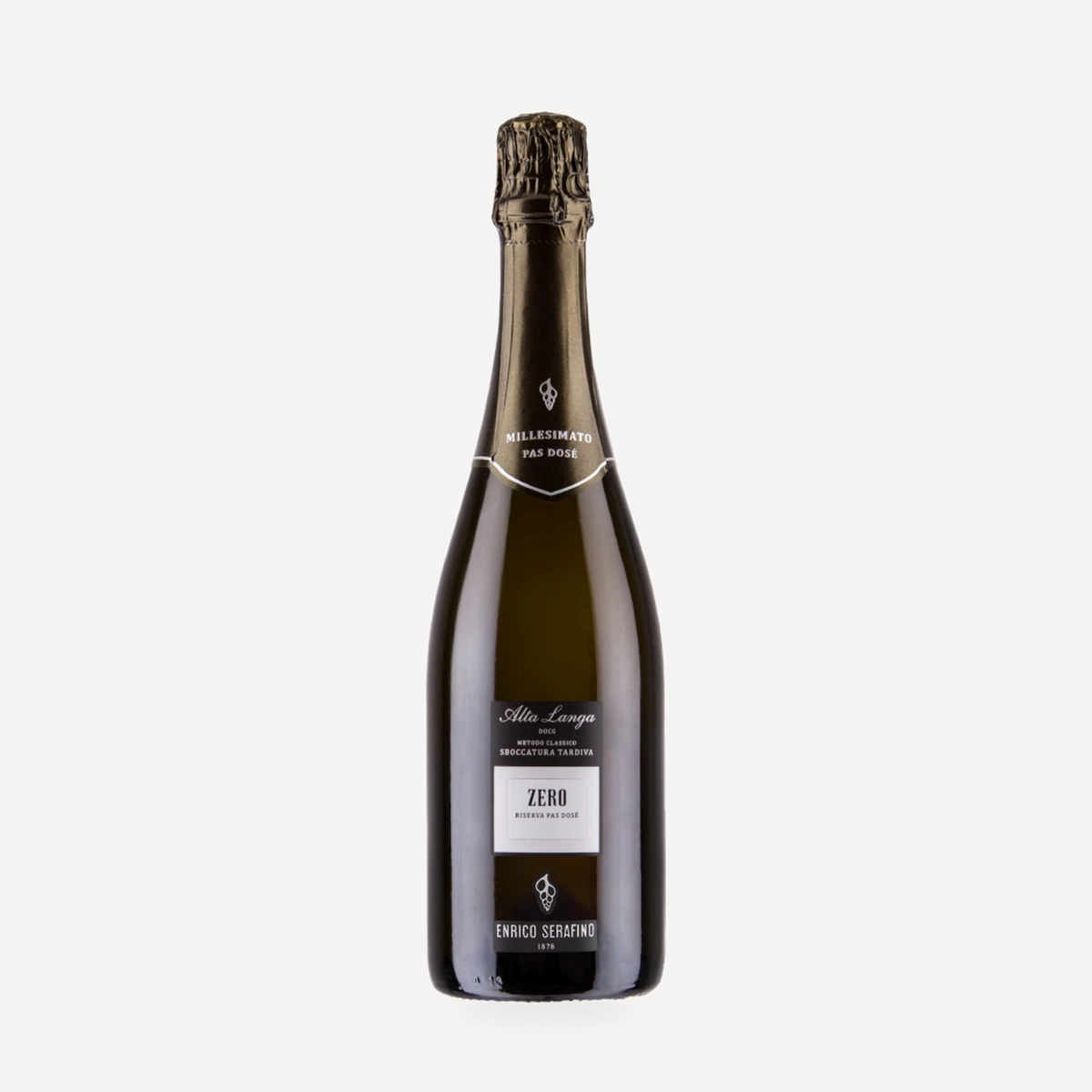
Zero Pas Dosé Alta Langa DOCG
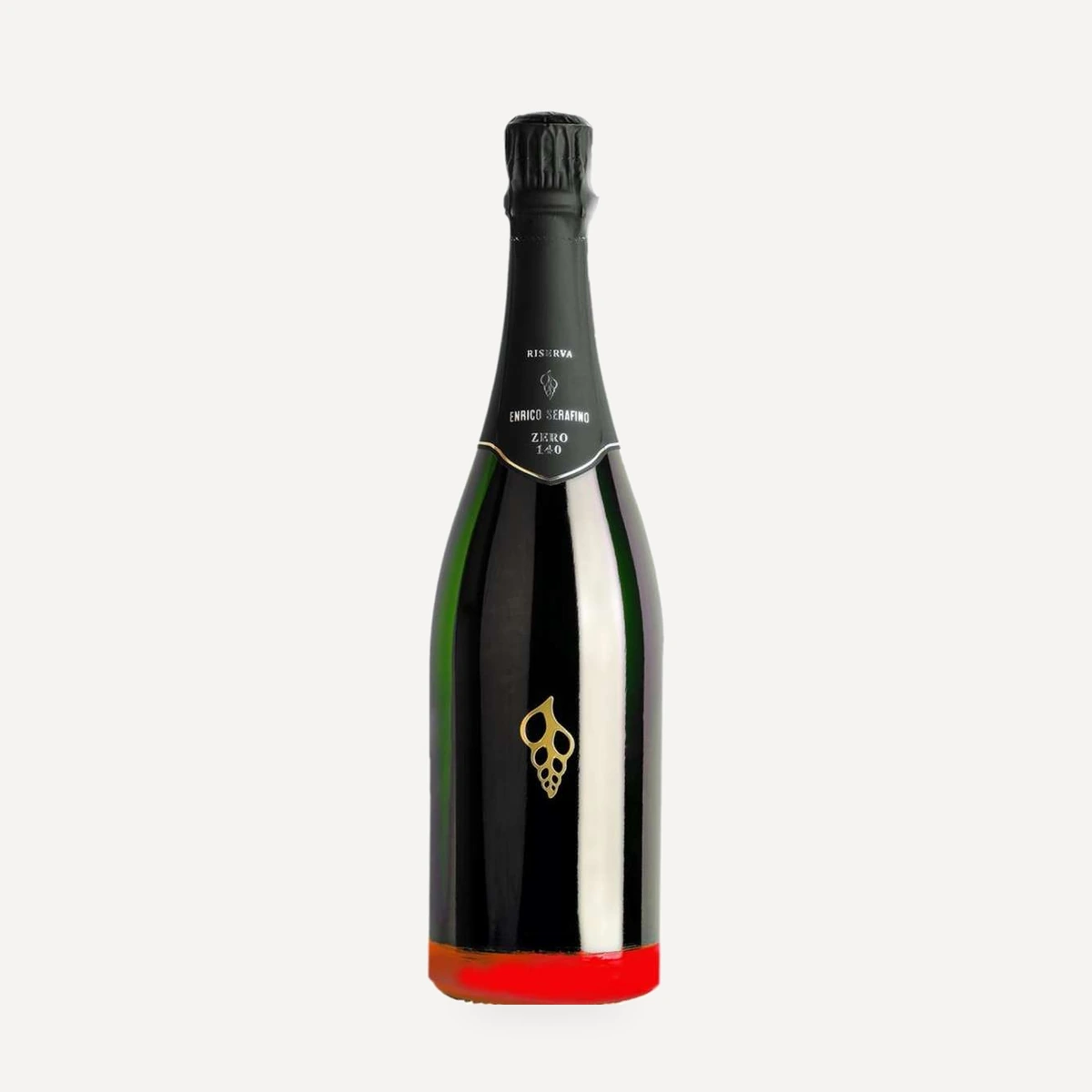
Zero 140 Pas Dosé Riserva Alta Langa DOCG

Barbaresco Bricco di Neive MGA DOCG
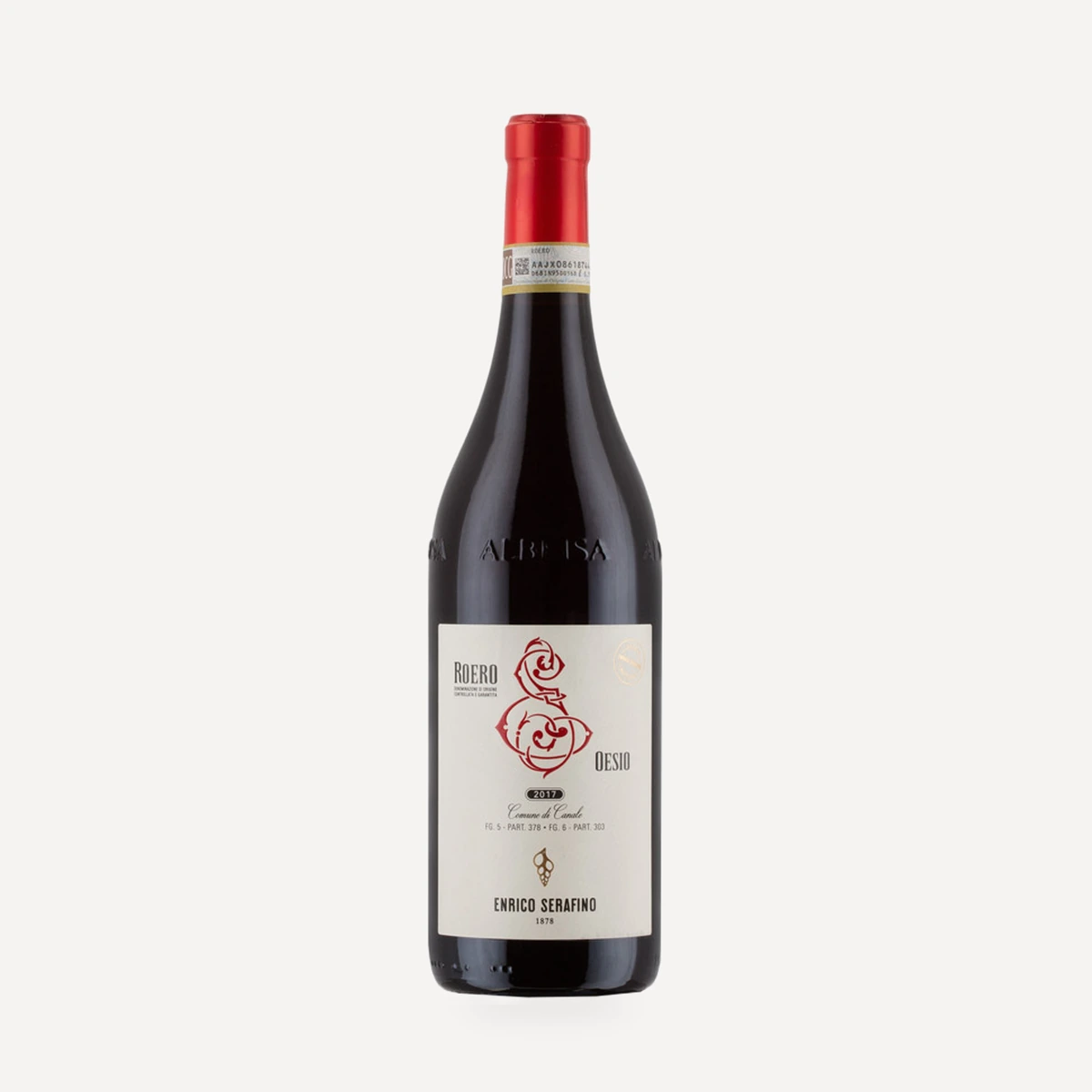
Roero Oesio MGA DOCG
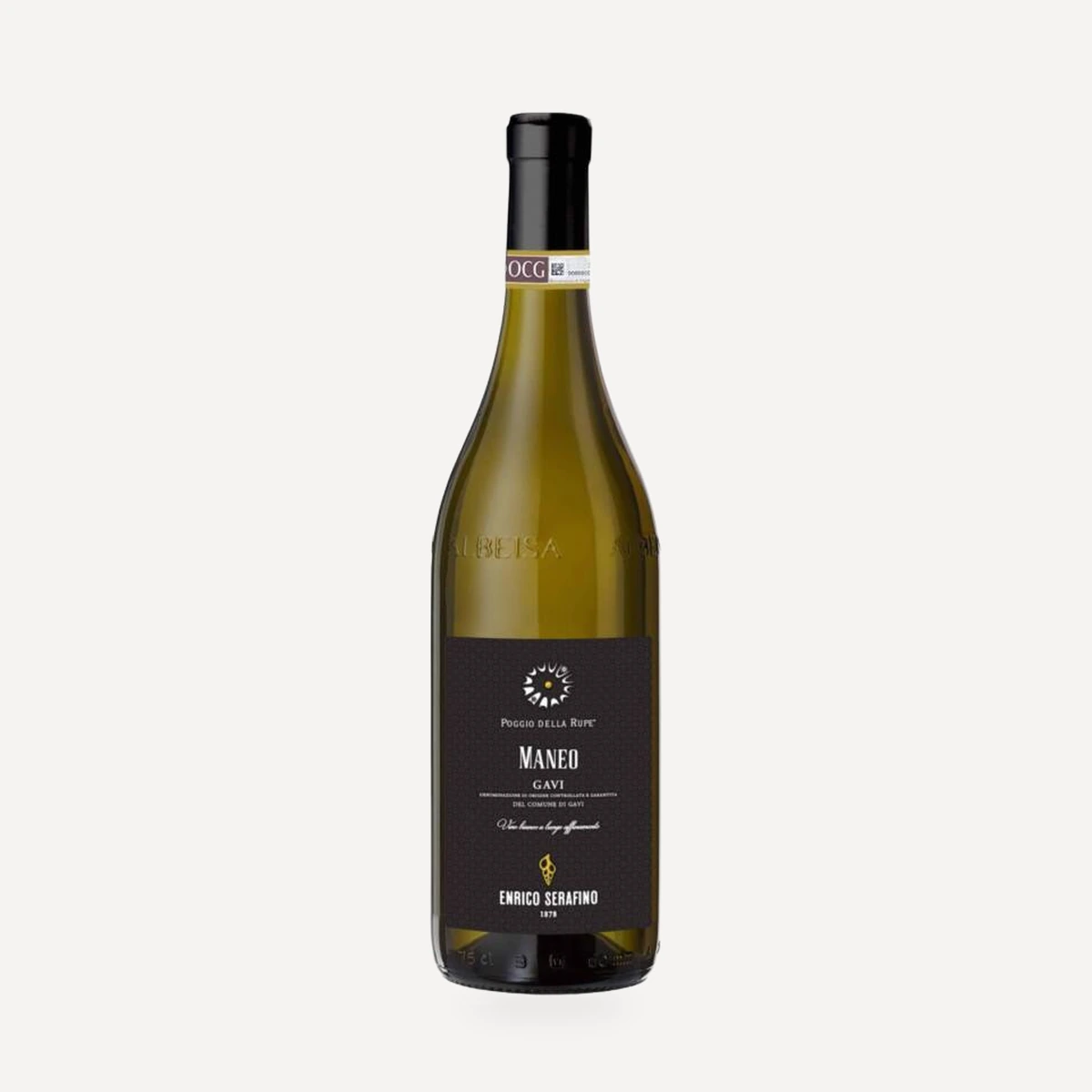
Maneo Gavi del Comune di Gavi DOCG

Poggio della Rupe Monterotondo Gavi del Comune di Gavi DOCG