History
The land before the present estate
The winegrowing history associated with Pietroso reaches back to 1363. Records preserved in the Municipal Archive of Montalcino refer to the area as “CONTRADA EL PETROSO” and document both vine cultivation and wine production on the stony ground beside Montalcino’s ancient town walls.
Domenico “Delfo” Berni and the foundation of Pietroso
The present estate was founded in 1970 by Domenico Berni, known in Montalcino by the nickname “Delfo.” His attachment to the land and to winegrowing shaped a deliberately small-scale project: producing limited quantities of Brunello di Montalcino and Rosso di Montalcino while remaining faithful to the local winemaking tradition.
The 1978 harvest marked the production of Pietroso’s first Brunello di Montalcino.
Gianni Pignattai takes responsibility
In 1992, Delfo’s grandson Gianni Pignattai began working at Pietroso to assist his grandfather. Delfo died a few years later, after which Gianni assumed full control of the estate. He now leads Pietroso together with his family, continuing the family’s traditional approach.
Andrea Pignattai and the first Riserva
After completing his studies in oenology, Gianni’s son Andrea Pignattai joined his father and the rest of the family in the estate’s work. The 2010 harvest produced Pietroso’s first Brunello di Montalcino Riserva, made from the Fornello vineyard.
Terroir
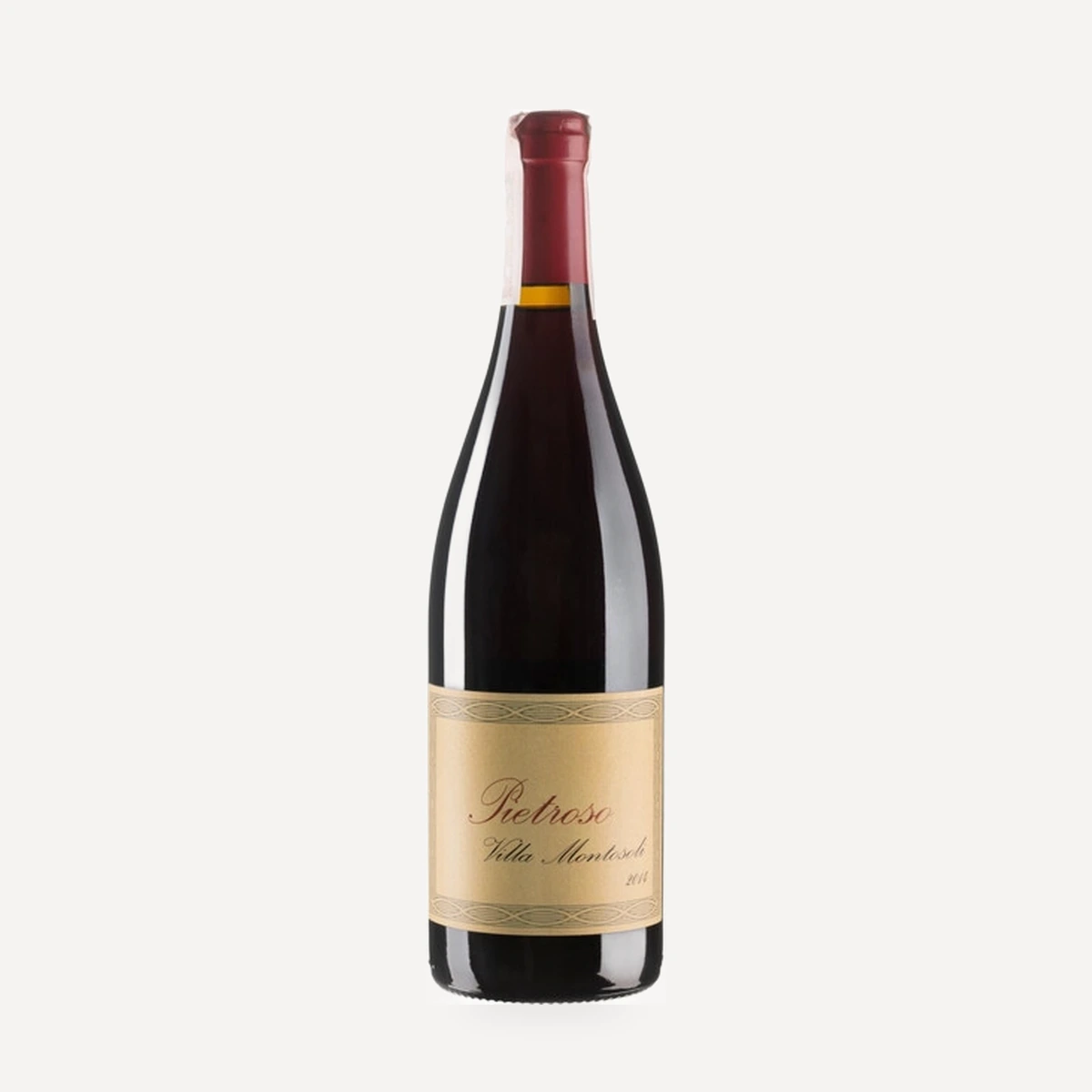
Pietroso owns approximately 6.5 ha of vineyards planted exclusively with Sangiovese and distributed across five distinct sites in the Montalcino area. Their differing elevations, exposures and soils provide complementary growing conditions and help the estate maintain balance across varying climatic conditions.
The vineyards range from 350 to 550 metres above sea level. Exposures include west, southeast and southwest, while Fornello occupies the eastern side of the Montalcino hill. Soils range from the sand-and-rock mixture of Pietroso to the Galestro found at Fornello, Montosoli and Petroso; Colombaiolo has a heterogeneous soil composition.
Several parcels occupy terraces supported by centuries-old dry-stone walls. The cellar and estate headquarters stand a few hundred metres from Montalcino’s historic centre, overlooking the old town, the Val d’Arbia and surrounding woodland.
Site variation
The historic Pietroso vineyard is the highest site at 550 m, with western exposure and sand-and-rock soils. Petroso lies at 500 m on pure Galestro, Colombaiolo at 450 m near the Abbey of Sant’Antimo, Fornello at 400 m on the eastern flank of the hill, and Montosoli at 350 m near the summit of its hill. The estate associates Pietroso with fine, elegant wines; Fornello with structure and richness; and Colombaiolo with a softer, rounder expression.
Winemaking
All approximately 6.5 ha of estate vineyards are planted exclusively with Sangiovese. Vineyard work is performed manually, including the harvest. Grapes for the different bottlings are picked between late September and the first week of October.
Cultivation is guided by respect for the environment and the integrity of the land. Many parcels are arranged on terraces held in place by centuries-old dry-stone walls. The distribution of the vines among five sites with different elevations, exposures and soil profiles is intended to provide balanced fruit under differing climatic conditions.
The cellar
The cellar is located at the estate headquarters, a few hundred metres from Montalcino’s historic centre. Its spaces are deliberately simple, essential and rational, reflecting a traditional organisation designed for grape transformation and subsequent maturation in oak.
Fermentation and maturation
Across the range, hand-harvested Sangiovese undergoes alcoholic fermentation with indigenous yeasts. Skin maceration lasts approximately 20 days in temperature-controlled stainless-steel or wooden vats at around 30 °C, with the vessel varying by bottling.
Oak is central to maturation. The cellar works with wood for Rosso di Montalcino and with French, Slavonian and Austrian oak for its longer-aged wines. The vessels represented across the range include French-oak tonneaux and Slavonian and Austrian oak barrels. The Brunello, Riserva and Berni Domenico bottlings are subsequently matured in bottle for at least 12 months. The estate’s traditional cellar organisation and oak ageing are intended to give the finished wines classical elegance and complexity.
Philosophy
Pietroso’s declared principles centre on limited production, fidelity to Montalcino’s winemaking tradition and respect for the character of Sangiovese and its growing sites. The wines are intended to express both the territory and the grape through classical colour, elegant aromas, sound structure, tannic definition and the capacity to age.
In the vineyards, this approach is expressed through manual work, environmental care and preservation of the land’s integrity, including continued cultivation of terraces supported by centuries-old dry-stone walls. In the cellar, simplicity, rational organisation and traditional oak maturation take precedence. Family continuity remains central: Gianni Pignattai and his family carry forward the work begun by Domenico “Delfo” Berni, while Andrea Pignattai contributes his oenological training.
Wines
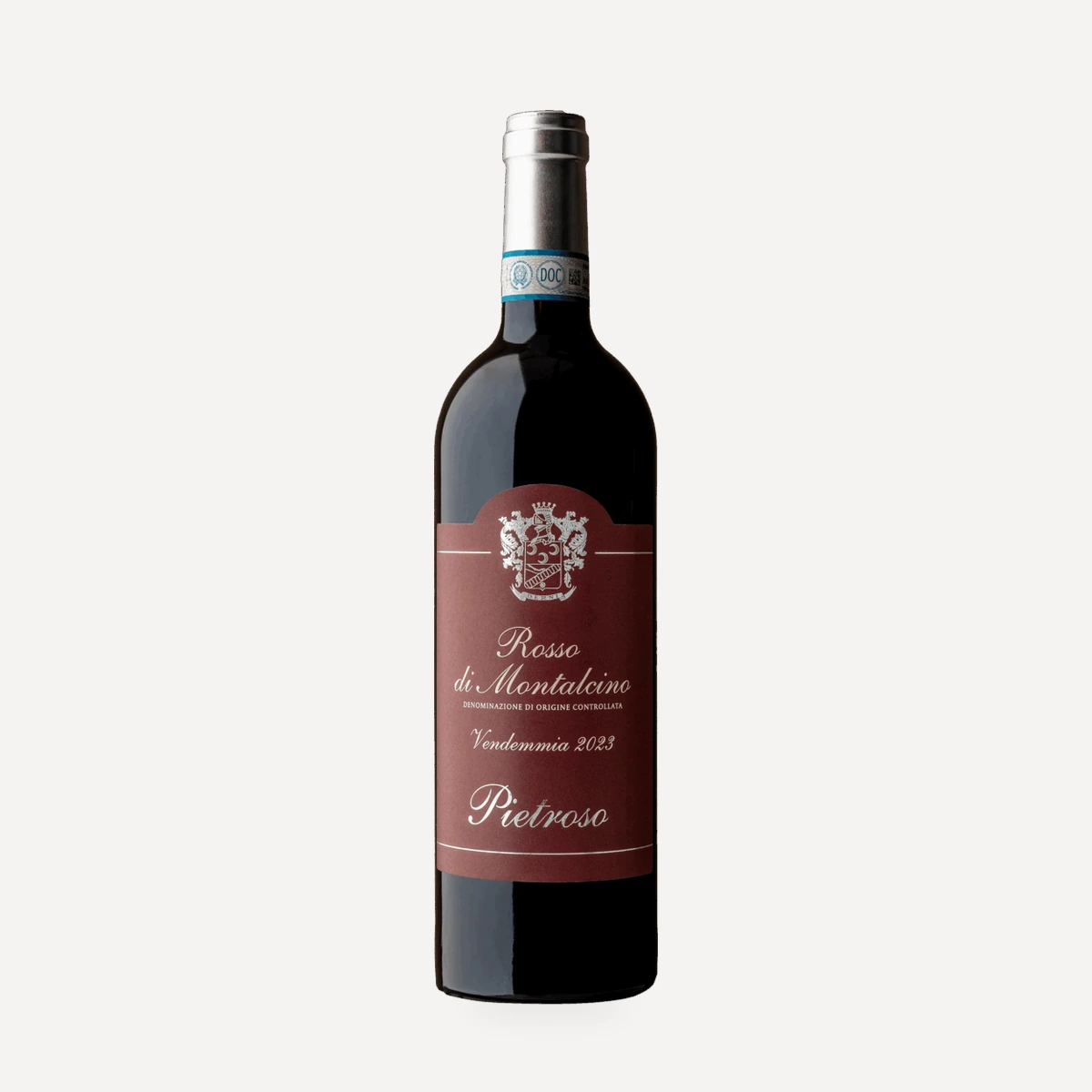
Rosso di Montalcino

Brunello di Montalcino

Brunello di Montalcino Riserva

Berni Domenico