History
From Vicchio dei Longobardi to a Renaissance villa
The origins of the castle, originally called Vicchio dei Longobardi, date to around 1100 and are documented by ancient parchments that have been preserved. Its hilltop position above the Val di Greve, 18 km from Florence and 38 km from Siena, gave the complex considerable strategic importance. The solid-stone fortification retains its crenellated tower, dated to 1100, as well as historic castle dwellings and defensive walls.
During the Middle Ages, the castle played an important part in Florence’s defence during its conflicts with Siena. It was subsequently transformed into a Renaissance villa. In this period, “Maggio” was added to the original name Vicchio in memory of the Calendimaggio celebrations.
The castle hosted Leonardo da Vinci while he was working on the Mona Lisa. He produced a large drawing of the property that survives among his manuscripts. Francesco Redi, a member of the Accademia della Crusca, is associated with the composition of verses from Il Bacco in Toscana at the castle in 1865. Careful restoration and maintenance subsequently preserved the complex, which is recognised as a national monument.
The Matta family’s wine background
In 1921, after working in restaurants in Turin, Paris and London, Federico Secondo Matta established the wine-importing company F.S. Matta Ltd in London. The business initially concentrated exclusively on French wine and maintained direct relationships with Château Margaux and La Mission Haut-Brion.
During the 1950s, F.S. Matta Ltd began importing Italian wine and became the first major business to do so in the United Kingdom. By the beginning of the 1960s it had become the country’s largest and most dynamic importer of Italian wines and spirits, representing Campari, Gancia, San Pellegrino water, Bertolli oil, Bolla and Santa Margherita, among other brands.
Acquisition and vineyard renewal
Federico Secondo Matta purchased Castello Vicchiomaggio in 1964. The estate has remained under Matta family ownership and management ever since.
John Matta, Federico’s son, studied oenology and viticulture in Alba for three years before beginning his career at Castello Vicchiomaggio in 1970. His approach emphasised soil characteristics, low yields, and traditional sustainable farming. He initiated a cautious replanting programme that was nevertheless innovative for its time.
Ripa delle More was created in 1980 as a deliberate departure from the rules then governing local wine production. Its composition continued to evolve in subsequent years, ultimately combining Sangiovese with Cabernet Sauvignon and Merlot.
The next generation
John and Paola Matta’s two eldest daughters, Federica and Delfina, joined the business in 2010. Working with their mother, they concentrated on developing the hospitality operation.
Their youngest son, Sebastian, joined in 2013. His responsibilities span production in the vineyards and cellar and relationships with international customers.
Victoria joined the family business in 2018 after earning a degree from Bocconi University and spending six years with the auditing firm Ernst & Young. Her work focuses on sales development and company management. John remains the estate’s winemaker, supported by Paola and all four children.
Recent developments
Guado Alto debuted with the 2015 vintage, based on a particular estate plot selected for its soil composition and exposure. Le Bolle followed with its first vintage in 2016, expressing a 1.7-hectare Sangiovese vineyard beside the small village of the same name.
Castello Vicchiomaggio joined the VIVA programme, “Sustainability in Italian Viticulture,” in March 2021. The programme measures environmental performance across the entire wine supply chain.
In January 2022 the Matta family began a three-year restoration of Borgo di Vicchiomaggio, a rural hamlet dating from the early twentieth century and formerly inhabited by sharecropping families. The project preserved two traditional farmhouses and two former haylofts and adapted them for hospitality.
Terroir
Castello Vicchiomaggio occupies a hilltop above the Val di Greve in the heart of the Chianti Classico area, 18 km from Florence and 38 km from Siena. The vineyard descriptions cover elevations from approximately 220 to 285 metres.
Heavy soils containing about 30% clay recur across the estate. Certain plots also contain abundant stone and marl. Guado Alto combines 30% clay with 18% loam and plentiful Galestro, a stratified limestone, and harder Alberese. The Merlot plot used for FSM also contains abundant Galestro and Alberese. Le Bolle is identified as the estate’s stoniest vineyard.
Exposures vary by plot. Guado Alto faces south and is open toward the west at 265 metres. The steep Merlot plot associated with FSM faces southeast. The hilltop site used for Vicchiomaggio Vegan is particularly well ventilated and extends from 240 to 285 metres. These differences in exposure, elevation, stone content and clay concentration underpin the estate’s parcel-based selections.
Winemaking
John Matta’s vineyard programme is based on detailed attention to soil characteristics, low yields and traditional sustainable agriculture. After joining the estate in 1970, he began a gradual replanting programme that combined caution with methods considered innovative at the time.
Single Guyot is used in the documented vineyard parcels. Planting densities range from 5,000 to 5,600 vines/ha. Reported yields vary materially by parcel and selection: 20 hl/ha for the steep FSM Merlot plot, about 40–45 hl/ha for the Agostino Petri source, approximately 43 hl/ha for the ventilated hilltop site, 50 hl/ha at Le Bolle and 52 hl/ha for Ripa delle More.
The hilltop Sangiovese site used for the vegan bottling is fertilised with broad beans as a nitrogen-fixing cover crop, avoiding conventional animal manure. Castello Vicchiomaggio joined VIVA, “Sustainability in Italian Viticulture,” in March 2021. Promoted by the Italian Ministry for Ecological Transition, the programme evaluates sustainability performance throughout the wine supply chain. The estate integrates its environmental planning and day-to-day management with attention to natural-resource protection, future generations and collaboration with local and national institutions and associations.
Vinification is centred on stainless-steel tanks, including 50 hl vessels for several red-wine selections and temperature-controlled tanks for white wines. Documented red-wine macerations range from about 5–6 days to approximately 30 days, depending on the fruit source and intended structure. Other protocols use approximately 7 days, 8–10 days, 12 days, 15–16 days or at least 15 days of skin contact.
For rosé production, selected bunches are destemmed and macerated for about six hours under temperature control. After colour extraction, the liquid is held in an insulated tank at −4°C for natural clarification, then fermented in stainless steel at 17°C. White-wine fermentations also take place in temperature-controlled stainless steel. One unoaked white remains on its fermentation lees for four months with bâtonnage.
Maturation varies with the vineyard selection and intended style. Large or medium oak vessels range from 25 to 50 hl, with periods from about 6–7 months to 18 months. French barriques are used for longer maturation: some selections spend 16 months in barrique, while others mature for two years or approximately 26 months. Both new and second-use barriques are employed. Second-year barriques previously used for Gran Selezione may be followed by maturation in 25–50 hl oak vessels. Malolactic fermentation in oak is documented for the estate’s Merlot selection.
Impruneta terracotta provides an alternative maturation vessel. The amphora-aged red spends 12 months exclusively in 500-litre terracotta amphorae.
Bottle ageing before release ranges from three months to one year. Documented regimes include 3 months; 4–6 months; 7 months; 8 months; and 12 months. The longest combined élevage includes roughly 26 months in French barrique followed by about 8 months in bottle.
Philosophy
The Matta family’s approach links continuity with measured innovation. Its historic production is rooted in Chianti Classico and the family’s long wine-trade tradition, while vineyard decisions emphasise soil characteristics, restricted yields and traditional sustainable agriculture.
John Matta’s replanting programme illustrates this balance: deliberately cautious in execution, yet innovative for its period. Parcel selection follows differences in soil, exposure and elevation, and cellar protocols are adjusted to the intended expression rather than imposed uniformly. The range encompasses large oak casks, French barriques, lees ageing and Impruneta terracotta.
Environmental responsibility extends across daily planning and management. Participation in VIVA frames sustainability around the complete wine supply chain, protection of the natural setting, awareness of the needs of present and future generations, and active relationships with local and national institutions and associations. Family continuity is equally central: John and Paola work with Federica, Delfina, Sebastian and Victoria across wine production, hospitality, international relations, sales and management.
Wines

Ripa delle mandorle Rosso

San Jacopo Vermentino

Guado Alto

Agostino Petri

La Prima
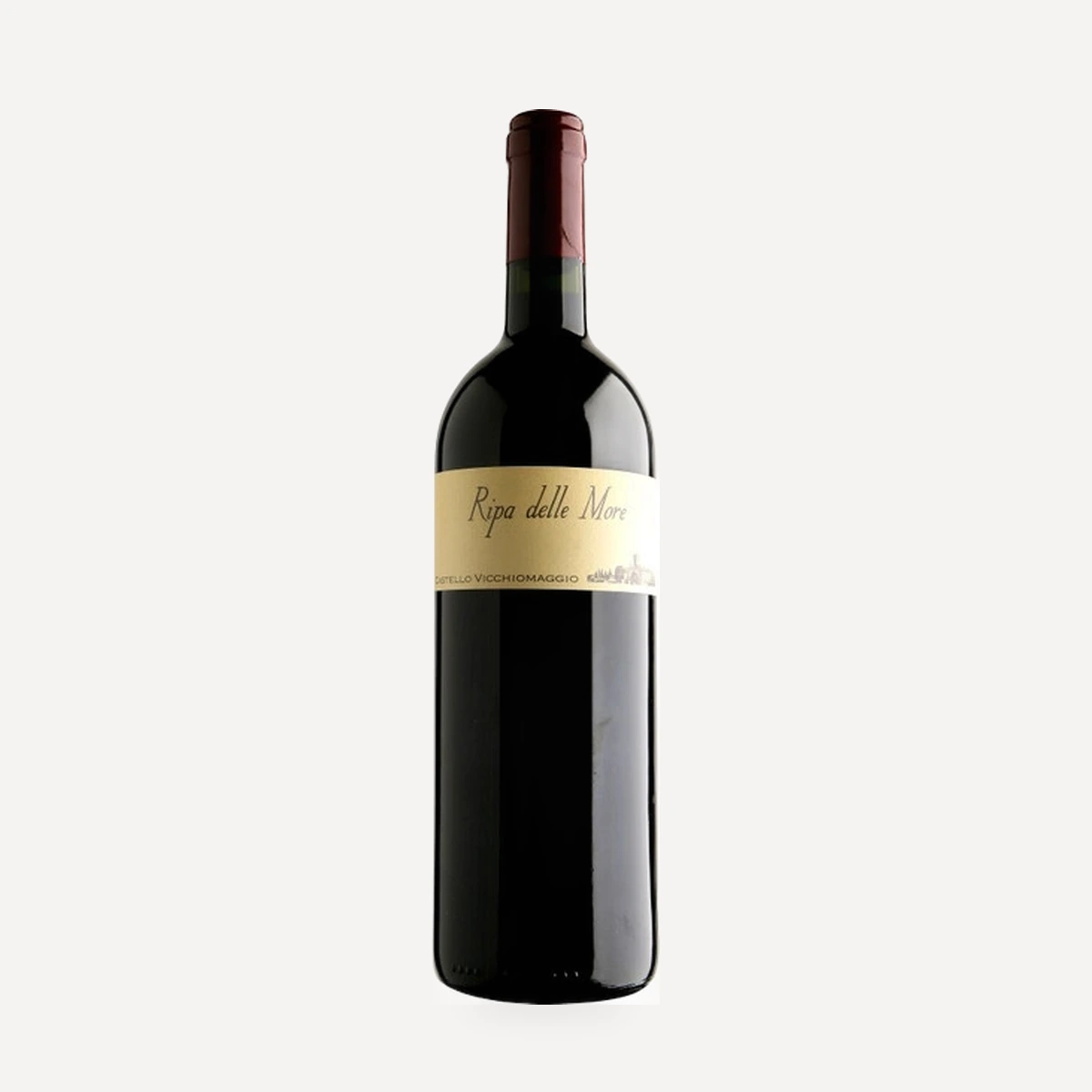
Ripa delle More

FSM (Federico Secondo Matta)
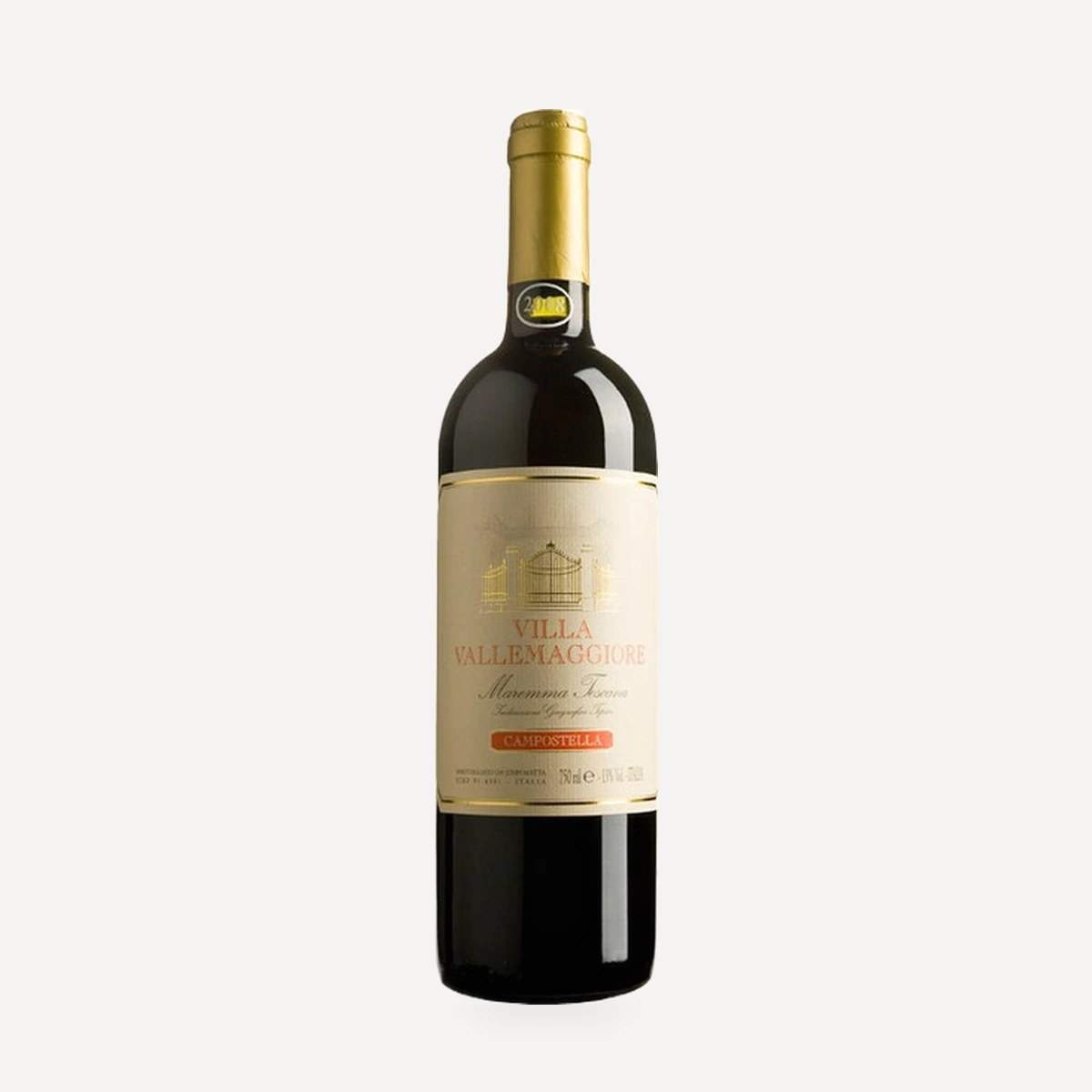
Villa Vallemaggiore Campostella Maremma Toscana IGT

San Jacopo Chianti Classico

Ripa delle mandorle Bianco
