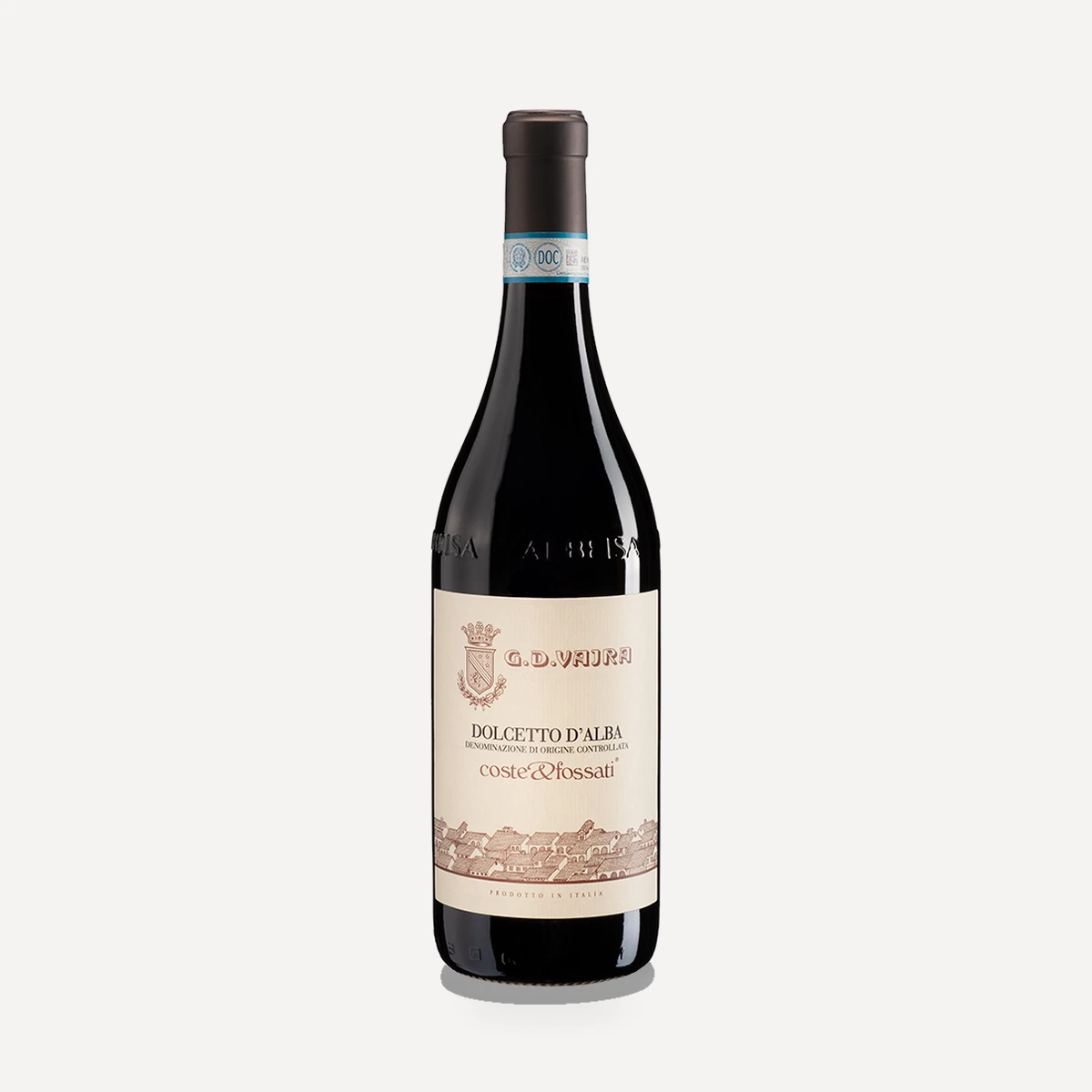
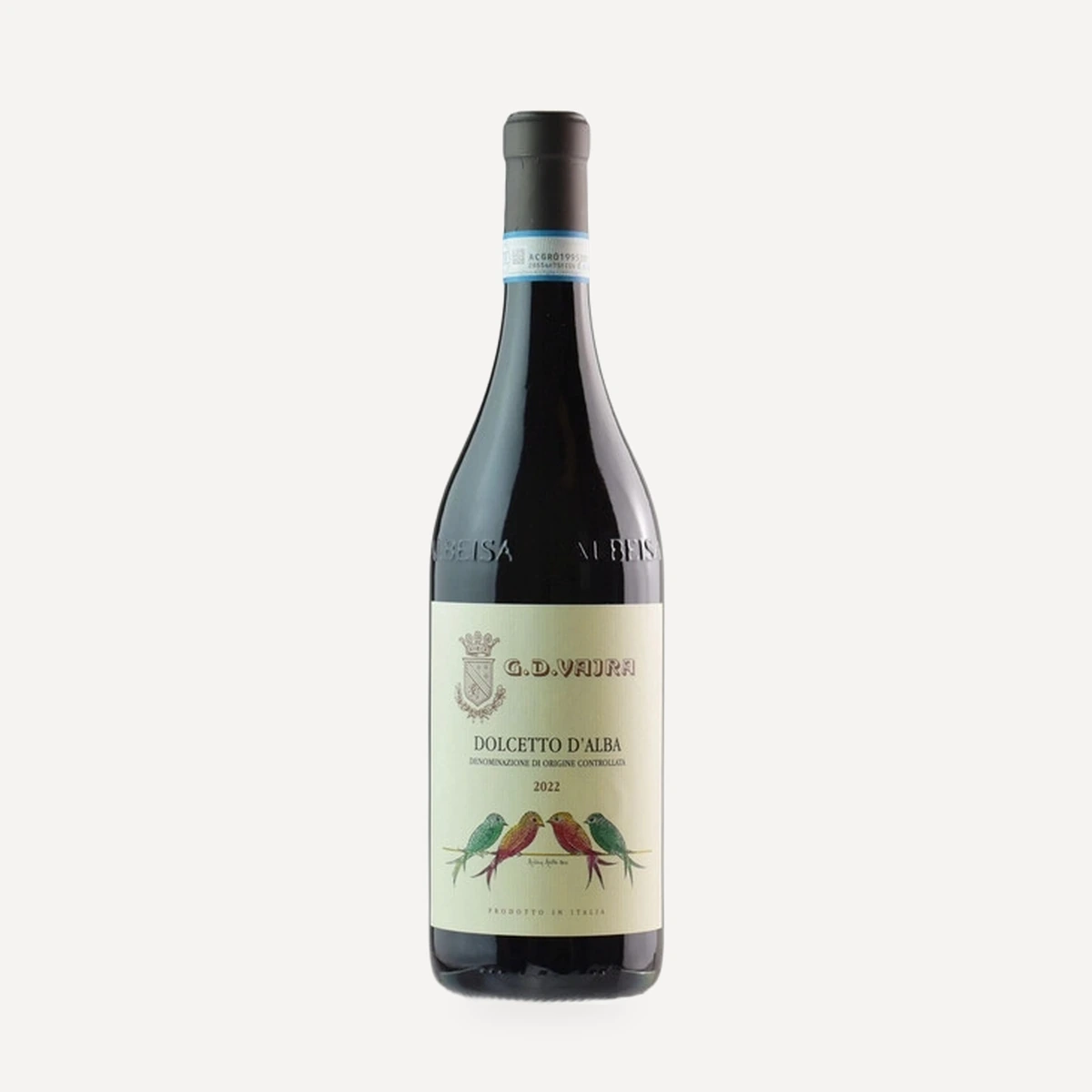
About this wine
Vineyard and terroir
The fruit comes from hills around Alba, including Madonna di Como and Diano d’Alba. Diano d’Alba is particularly suited to Dolcetto. The vines are trained predominantly by the Guyot system, with yields of approximately 60 hl/ha.
Grapes
Dolcetto. Its name refers to the sweetness of the grape, although the variety is sensitive in the vineyard and requires attentive handling. It is the first red variety to be harvested.
Vinification
The grapes are picked by hand, destemmed and gently crushed. Alcoholic fermentation takes place in temperature-controlled stainless-steel tanks. Maceration lasts approximately 10 days, with frequent délestage to develop aromatic expression. Malolactic fermentation follows alcoholic fermentation immediately and is completed before the end of the year.
Ageing
This is a single-vintage wine, ready for bottling at the beginning of the year following harvest.
Technical data
Alcohol: 12–13% vol., depending on vintage.
Tasting profile
Intense ruby red. Pronounced aromas of red fruit, violet and almond lead to a grapey, dry palate and the variety’s characteristic slightly bitter finish. Freshness and a balanced relationship between aroma and flavour make it approachable in its youth.
Serving and pairing
Serve at 18 °C. An everyday, versatile wine for starters, richly flavoured pasta and rice dishes, and fairly mild meats. It shows best during its first 2 years, although particularly good vintages may evolve for as long as 5 years.
Label / history
Furèt means “ferret” in Piedmontese. The name evokes a young, determined wine that matures quickly, comparing its initially reserved character and later openness both to the animal and to the traditional temperament attributed to Piedmontese farmers. The style recalls the fresh, local wines once served at growers’ tables.