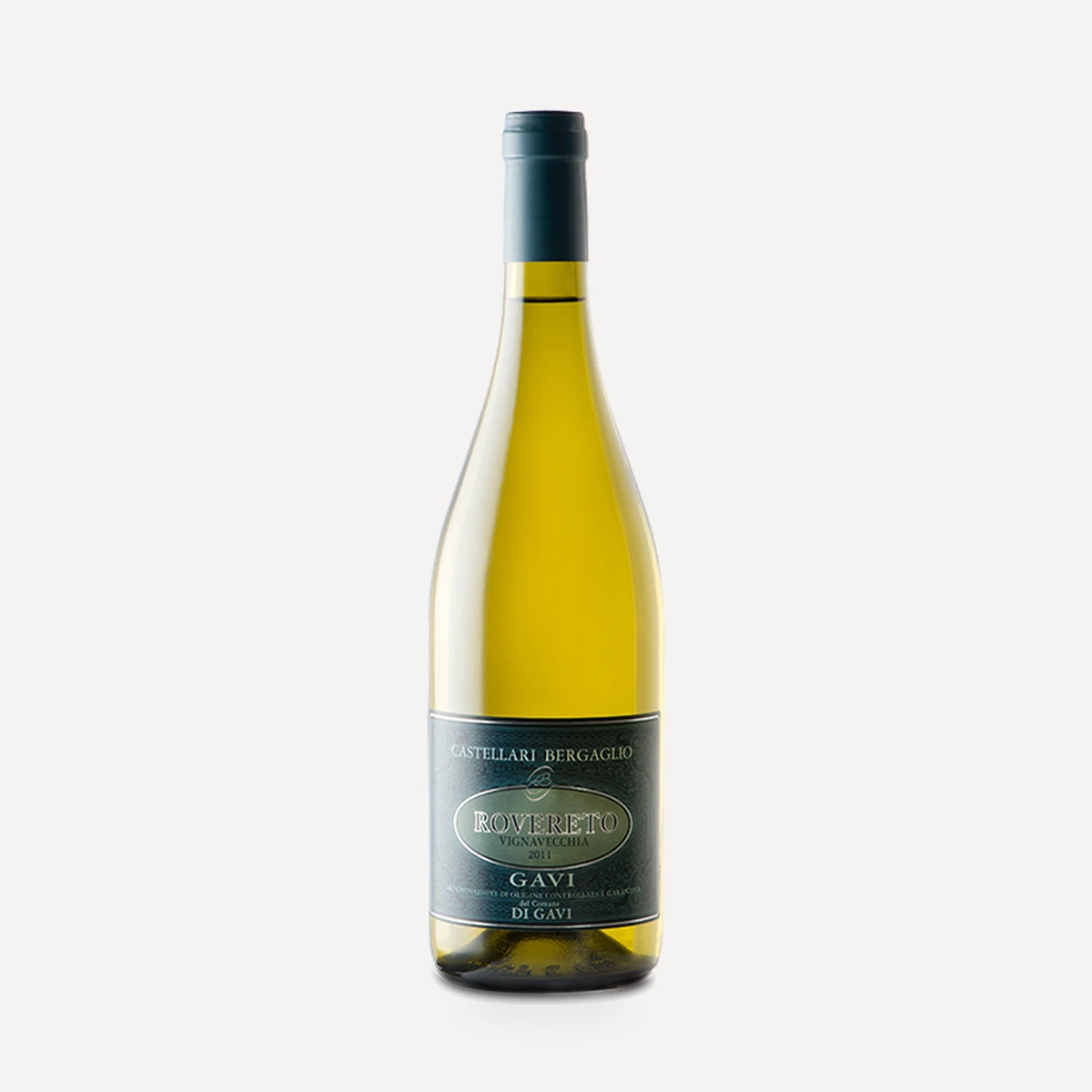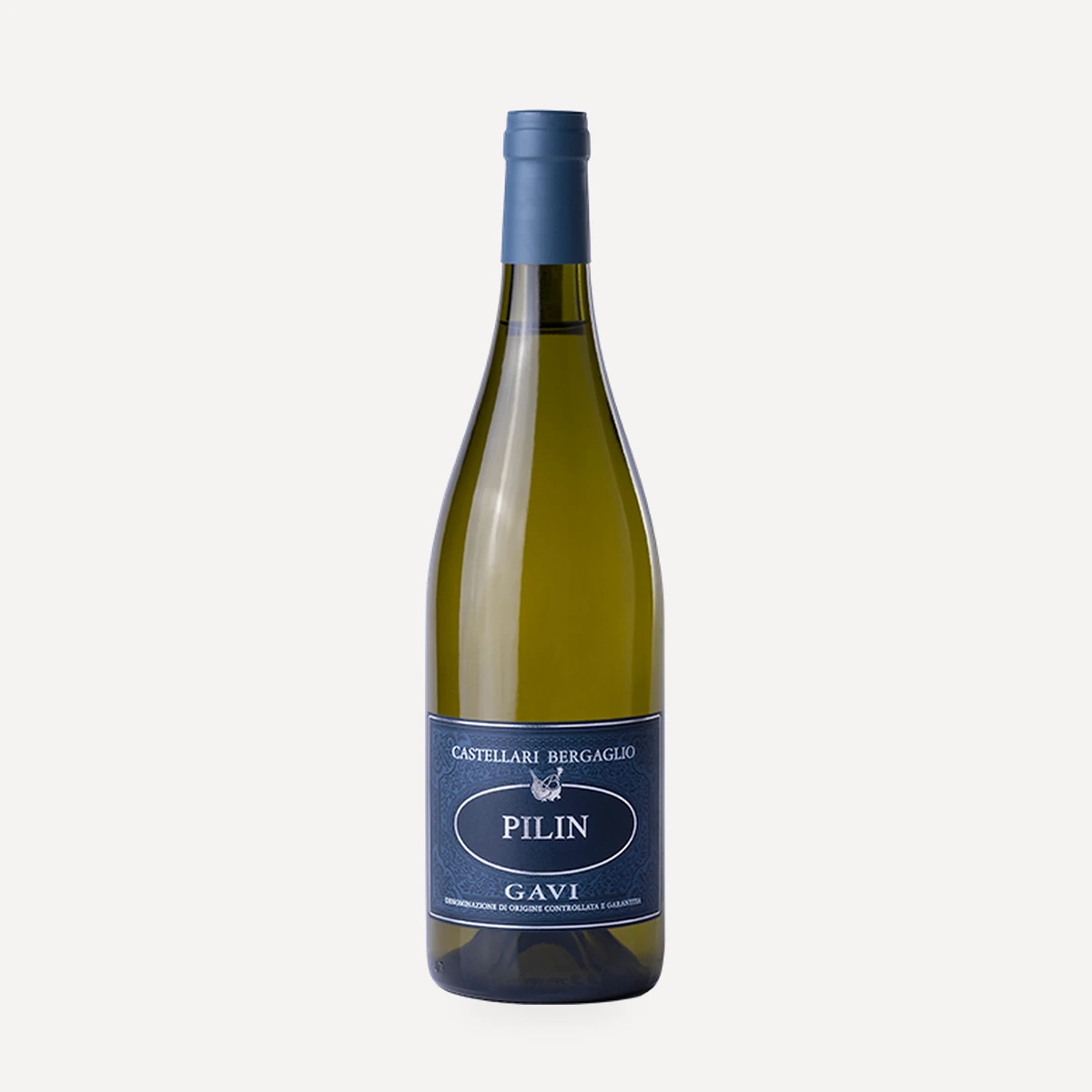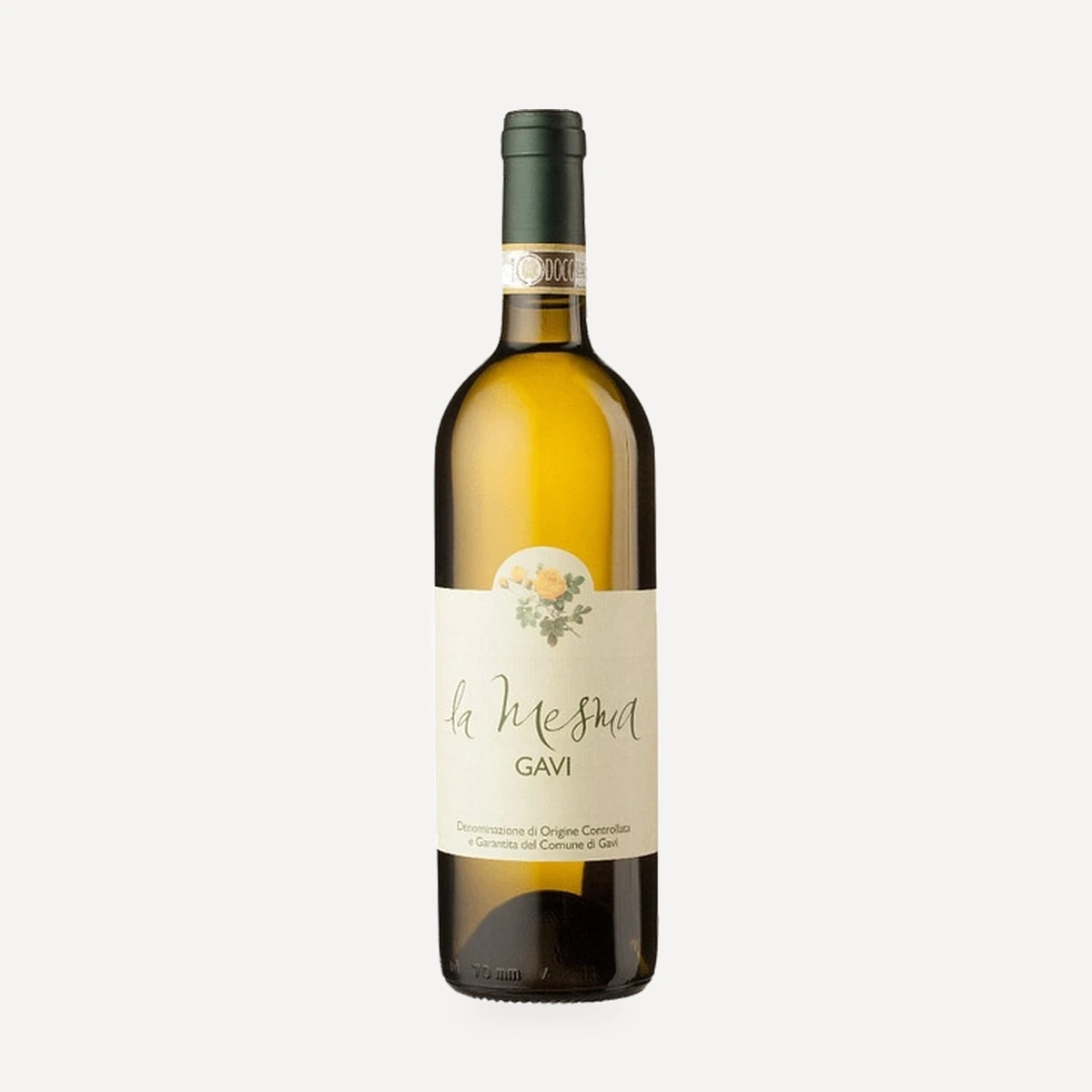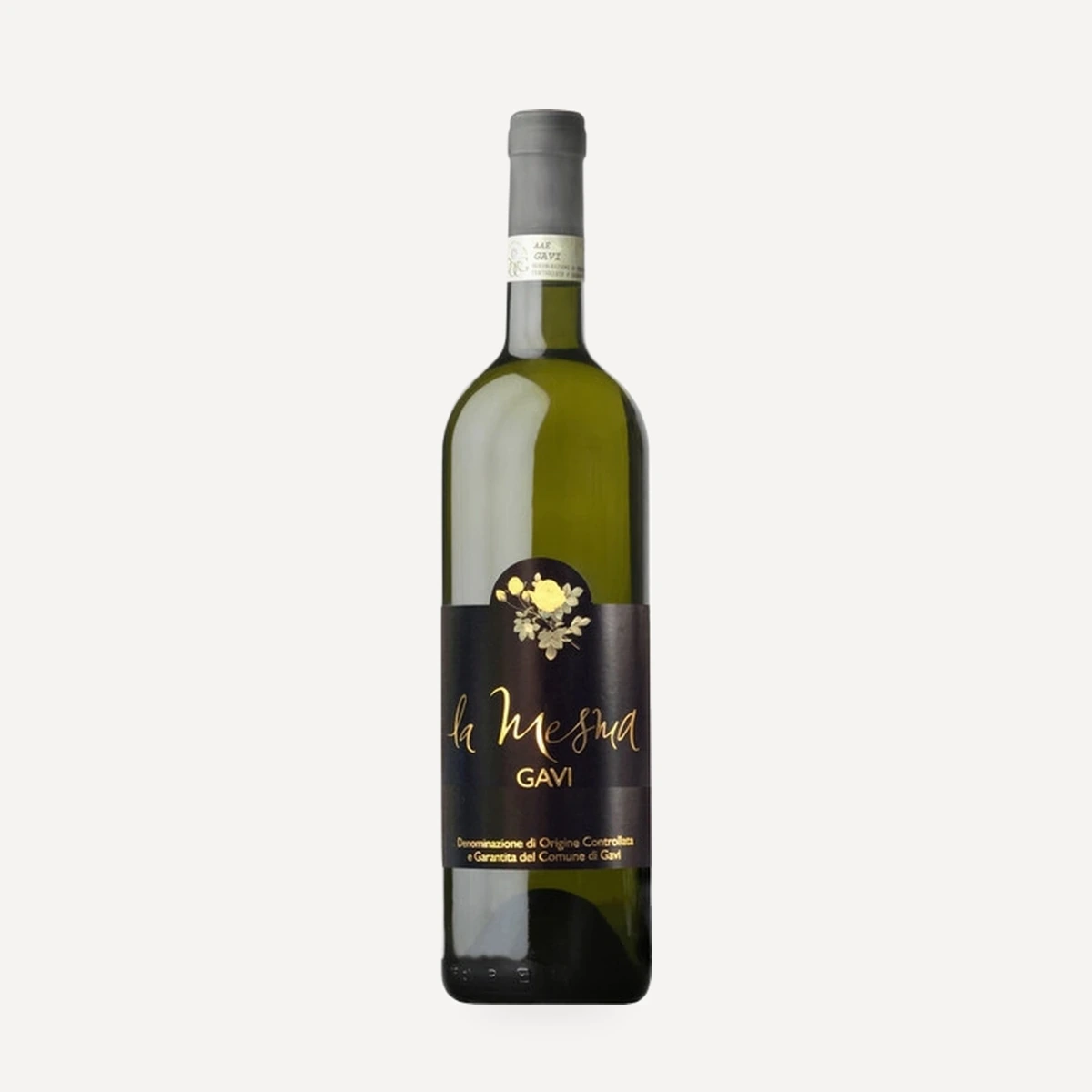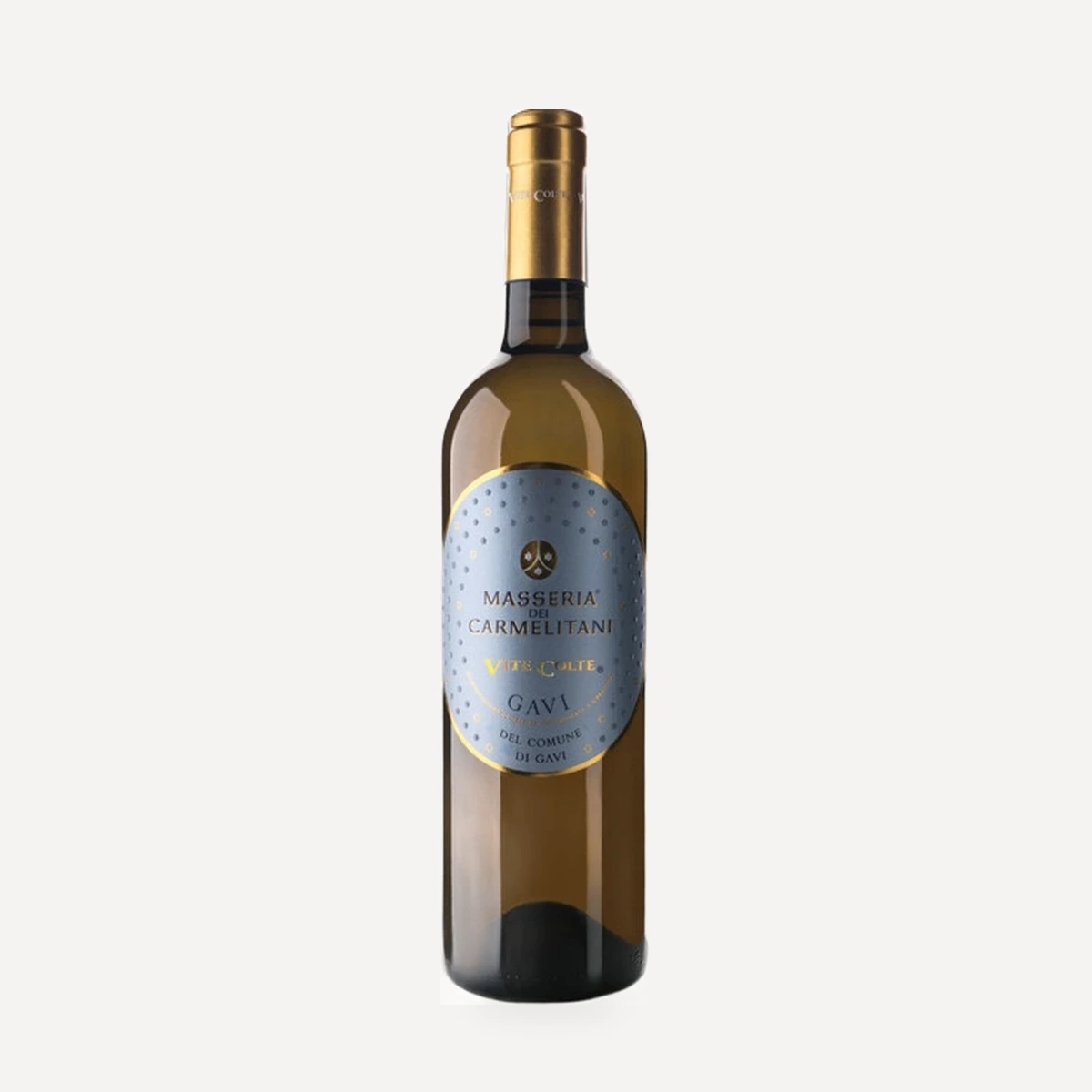
About this wine
Vineyard and terroir
The grapes grow on the hills of the commune of Gavi, in marl and sandy soils. These soils give the wine its lightness, minerality and more pronounced acidity.
Vinification
The grapes are gently pressed and only the free-run juice is used. Fermentation takes place at 16–17 °C and lasts around 10 days. Malolactic fermentation is avoided to preserve the lively acidity and fresh style.
Ageing
The wine ages on its lees in steel tanks, which makes the texture slightly softer and rounder. After a short rest in bottle it is released at the beginning of the following year.
Tasting profile
Delicate and almost weightless. Fresh citrus and pear notes meet a soft texture and a subtle salty touch. The wine opens slowly and gently: at first it feels very light, then it reveals depth and minerality, with the food-friendly character of a good Gavi.
Serving and pairing
Well suited to fish, seafood and vegetable dishes.
Label / history
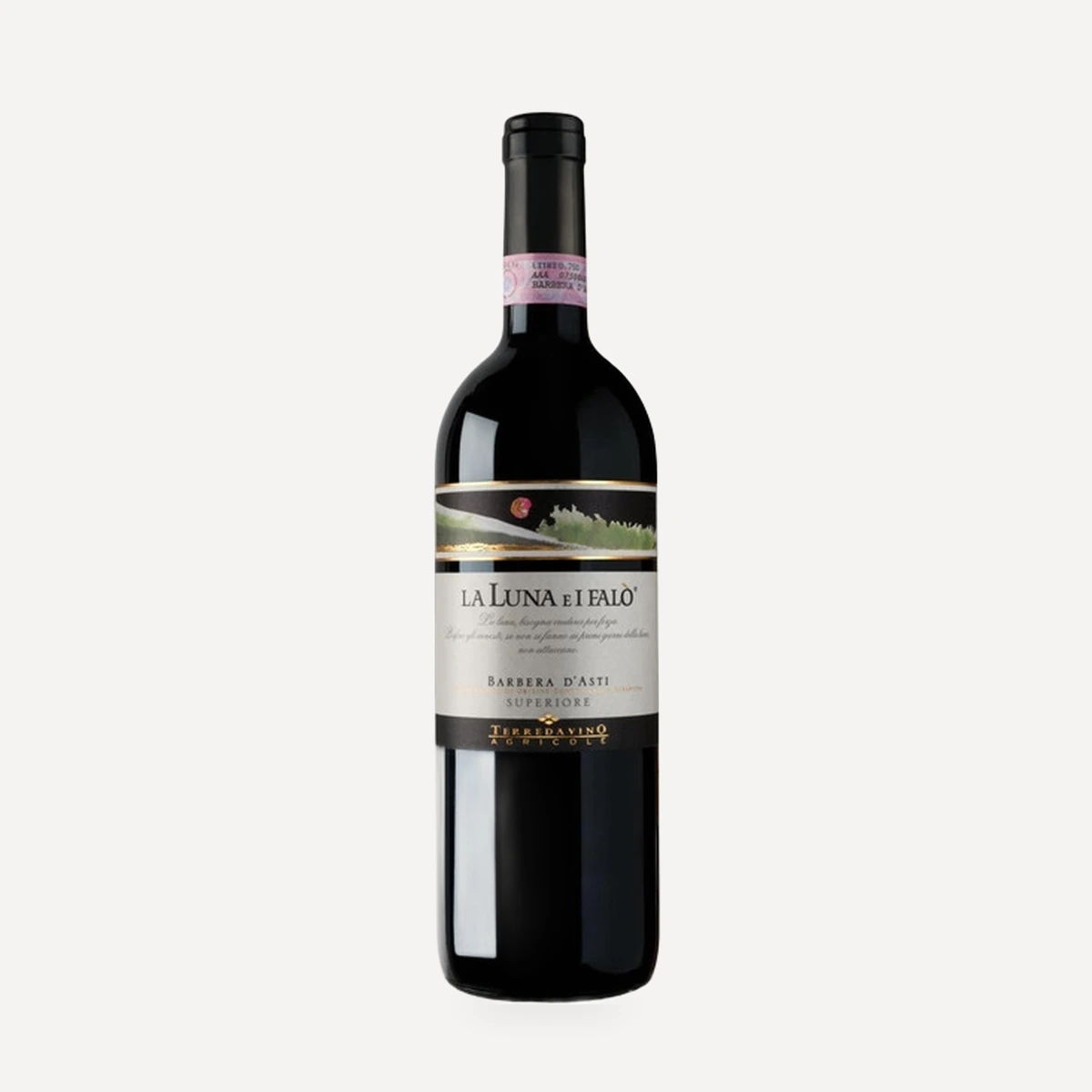
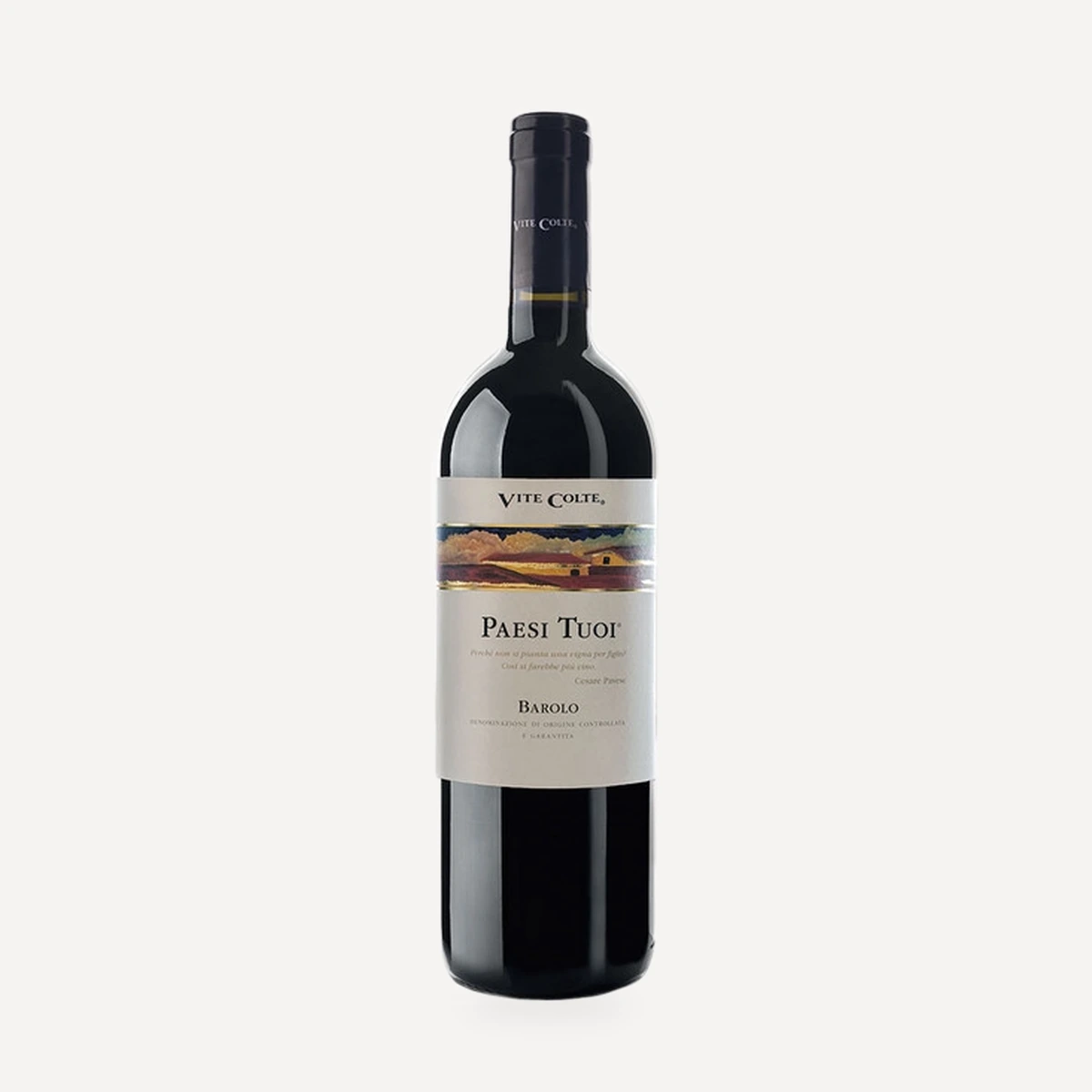
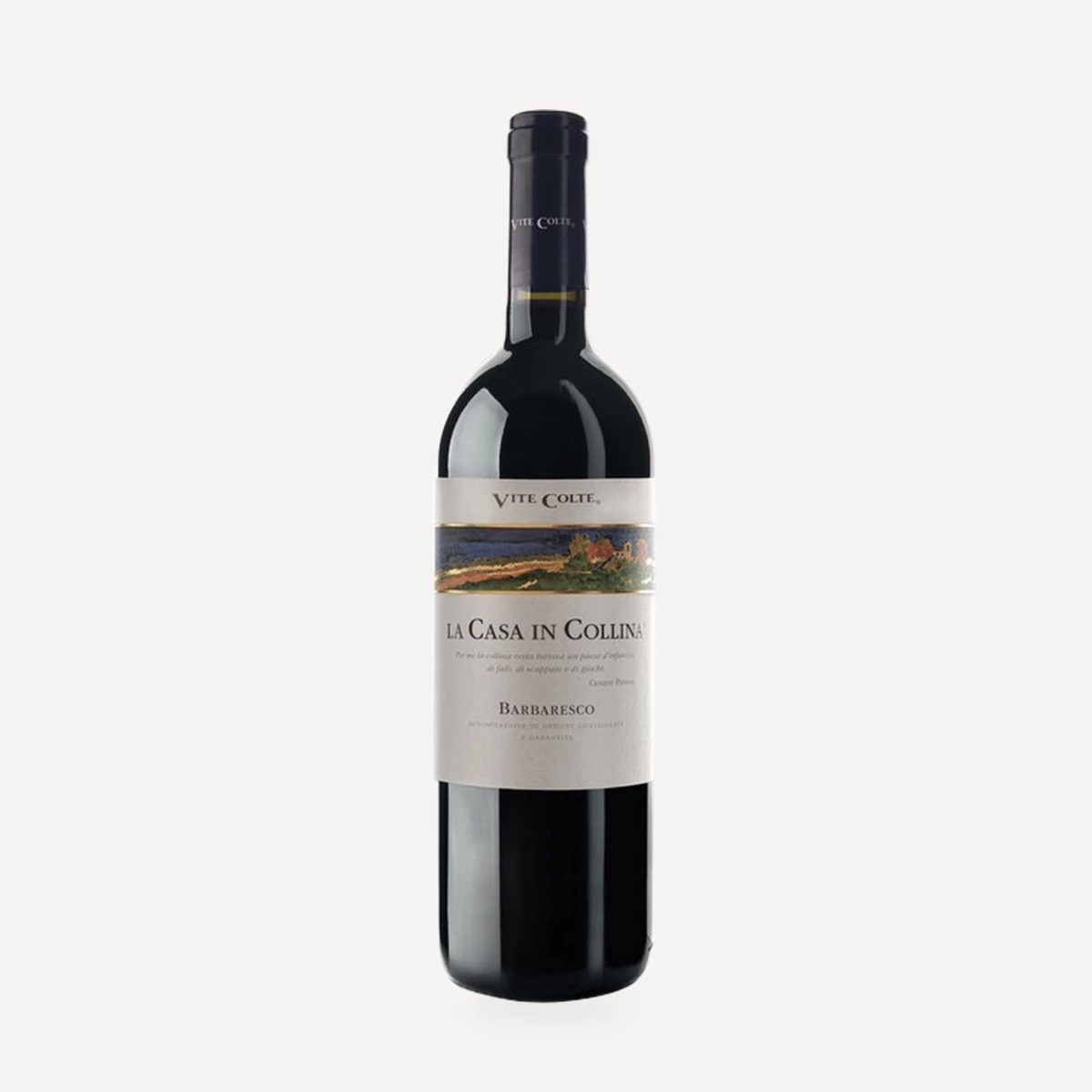
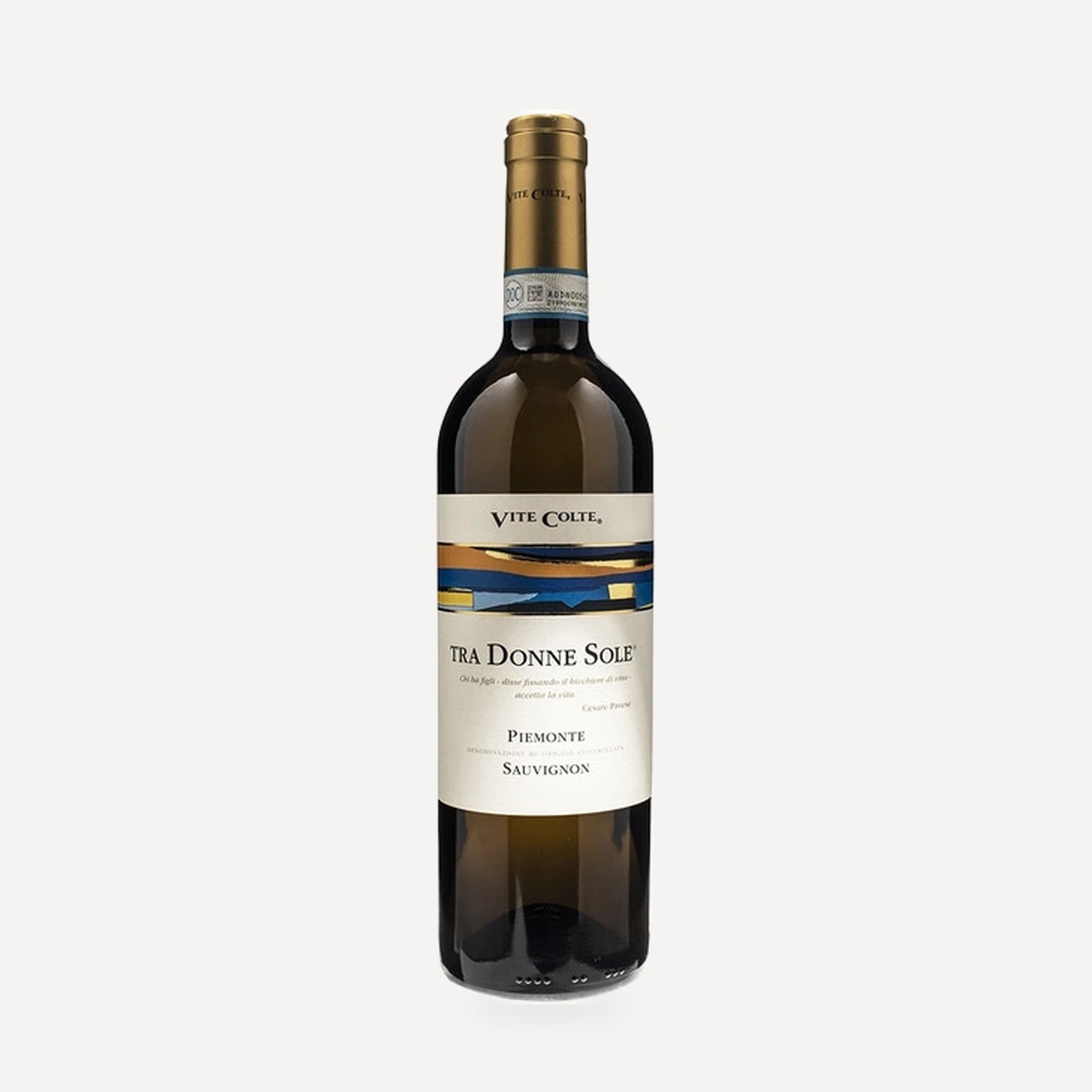
The Masseria dei Carmelitani winery dates back to the XIV century. The lands once belonged to Carmelite monks, who had been growing grapes there since the VI century. The wine belongs to the "Terre da Vino" group, founded in Piedmont in 1980 as an alliance of 14 wineries. The group covers 3900 ha and employs more than 2500 specialists. It focuses on local Piedmontese varieties. Its winery holds more than 3000 oak barrels and almost 1200 m² of steel fermentation tanks. Grapes from the larger members' own vineyards are vinified separately. Harvests from smaller plots are blended into wines with poetic names inspired by Italian writers such as Beppe Fenoglio and Cesare Pavese.