Storia
The Pira family
The Piras were an old family of winegrowers whose presence is recorded in parish registers from the 17th century. Between the late 19th and early 20th centuries, they expanded their activity from growing grapes to making wine.
Gigi Pira represented the estate’s traditional school of production. He assembled grapes from the family’s holdings in Cannubi, San Lorenzo and Via Nuova, believing that fine wine depended first on selecting the best vineyards. His attachment to manual methods was equally pronounced: he was the last local producer to continue crushing grapes by foot and making wine without technical equipment.
The Boschis family and the 1980 transition
The Boschis family had itself produced Barolo since the 18th century. Franco and Ida Boschis were long-standing friends of the Piras, with whom they shared mutual respect. In 1980, they and their daughter Chiara ensured continuity at E. Pira & Figli.
After graduating, Chiara committed herself full-time to wine. By the late 1980s she had become one of the first women to establish herself as a Barolo producer. Her management brought changes to both the cellar and the estate’s production style, while retaining the historical emphasis on distinguished vineyard sites.
Expansion of family ownership and organic farming
In 2010, Chiara’s brother Giorgio joined her in the ownership of the estate. He brought 30 years of experience and shared responsibility for work in both vineyard and cellar.
The estate applied for organic certification and entered conversion in 2011. Certification was achieved beginning with the 2014 harvest. Vineyard work remained rigorously manual, while production was deliberately limited to approximately 40,000 bottles a year, made from directly grown grapes.
The evolution of Via Nuova
Via Nuova was once a very small, individually vinified vineyard beside the village of Barolo. Its name came from the road—new in the previous century—that linked Barolo and Novello; only a walkable path through the vineyards remains. When Barolo’s Menzioni Geografiche Aggiuntive were reorganized and took effect in 2010, Via Nuova was incorporated into the larger Terlo subzone. The estate retained the Via Nuova name for a traditional Barolo blend drawn from Terlo and Liste in Barolo, Ravera and Mosconi in Monforte d’Alba, and Gabutti and Baudana in Serralunga d’Alba.
Terroir
Geological setting
Piemonte is presented as three broad, roughly concentric geographical zones: an outer mountain arc formed by the Western Alps and the Apennines, an inner plain, and the extensive hills of the Langhe and Monferrato.
The landscape originated during the Cenozoic, or Tertiary, approximately 2–4 million years ago, when the area was covered by sea. Sediments carried by rivers descending from the mountains progressively pushed the shoreline eastward. Gradual uplift of the mountains and plain led to the sea’s final withdrawal from Piemonte around 2 million years ago. Tectonic movements then raised and tilted the stratified marine sediments of today’s Langhe, while slow water erosion shaped the present hills.
The soils are principally calcareous-clay marls interlayered with sandstone. Within the Barolo DOCG zone, the geology is described in terms of two formations of different ages, Helvetian and Tortonian. The local microclimate is influenced by the Po Valley in front of the hills and by the Maritime Alps behind them, which provide protection from Atlantic air currents.
The Barolo DOCG zone occupies the centre of the Langhe and extends across 11 communes, with Barolo at its centre. Its individually distinguished vineyard areas are generally small and are differentiated by exposure, elevation, soil composition and microclimate.
Estate sites
The Barolo holdings lie at 300–330 m in Cannubi, Liste and Terlo in the commune of Barolo; 340–420 m in Mosconi, Le Coste and Ravera in Monforte d’Alba; and at 260 m and 400 m respectively in Gabutti and Baudana in Serralunga d’Alba.
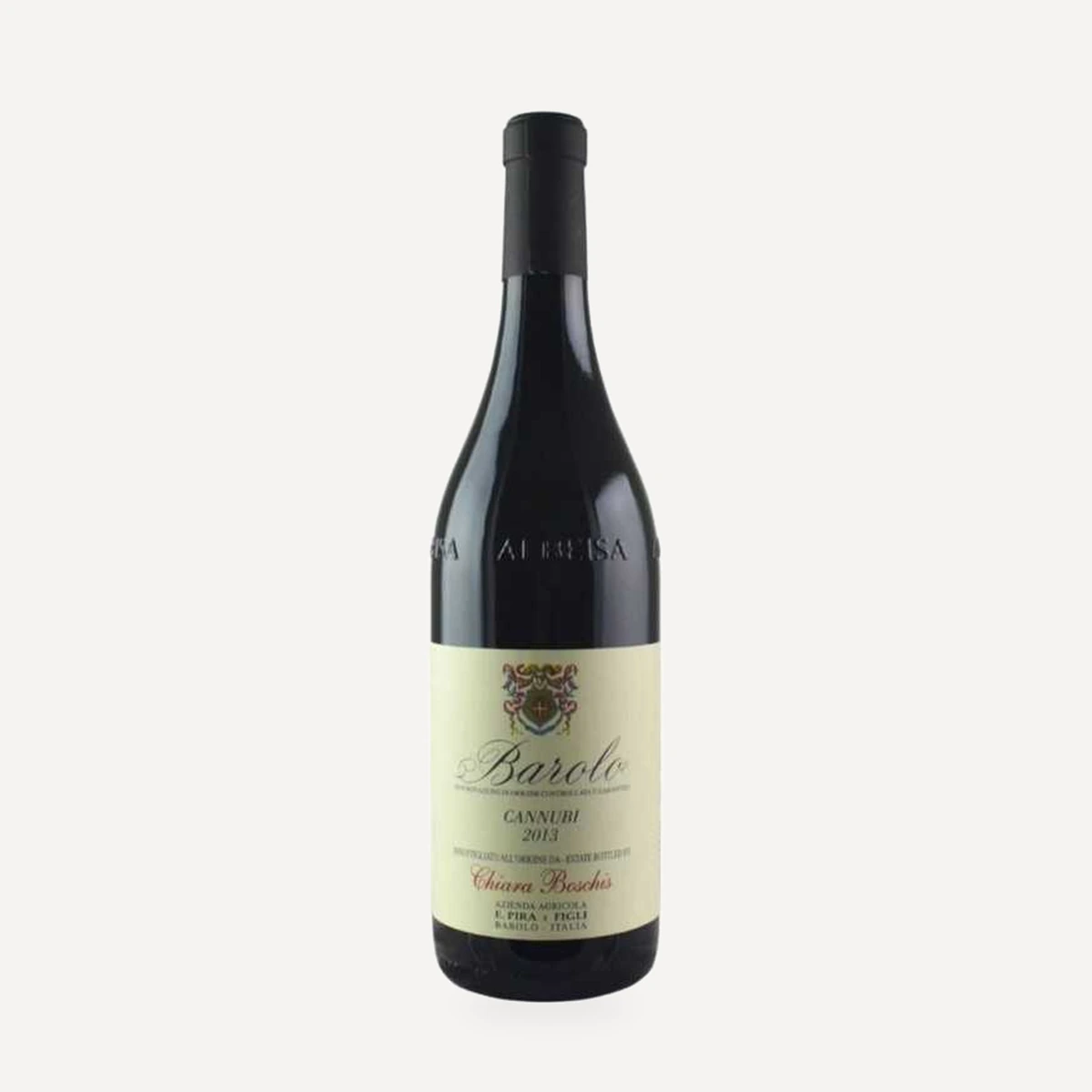
Cannubi combines Tortonian and Helvetian material with a substantial sandy component. The estate’s holding is on the Cannubi hill, with a southern to south-westerly orientation. Its more specific formation is identified as calcareous-sandy Marne di Sant’Agata of Tertiary, Miocene origin.
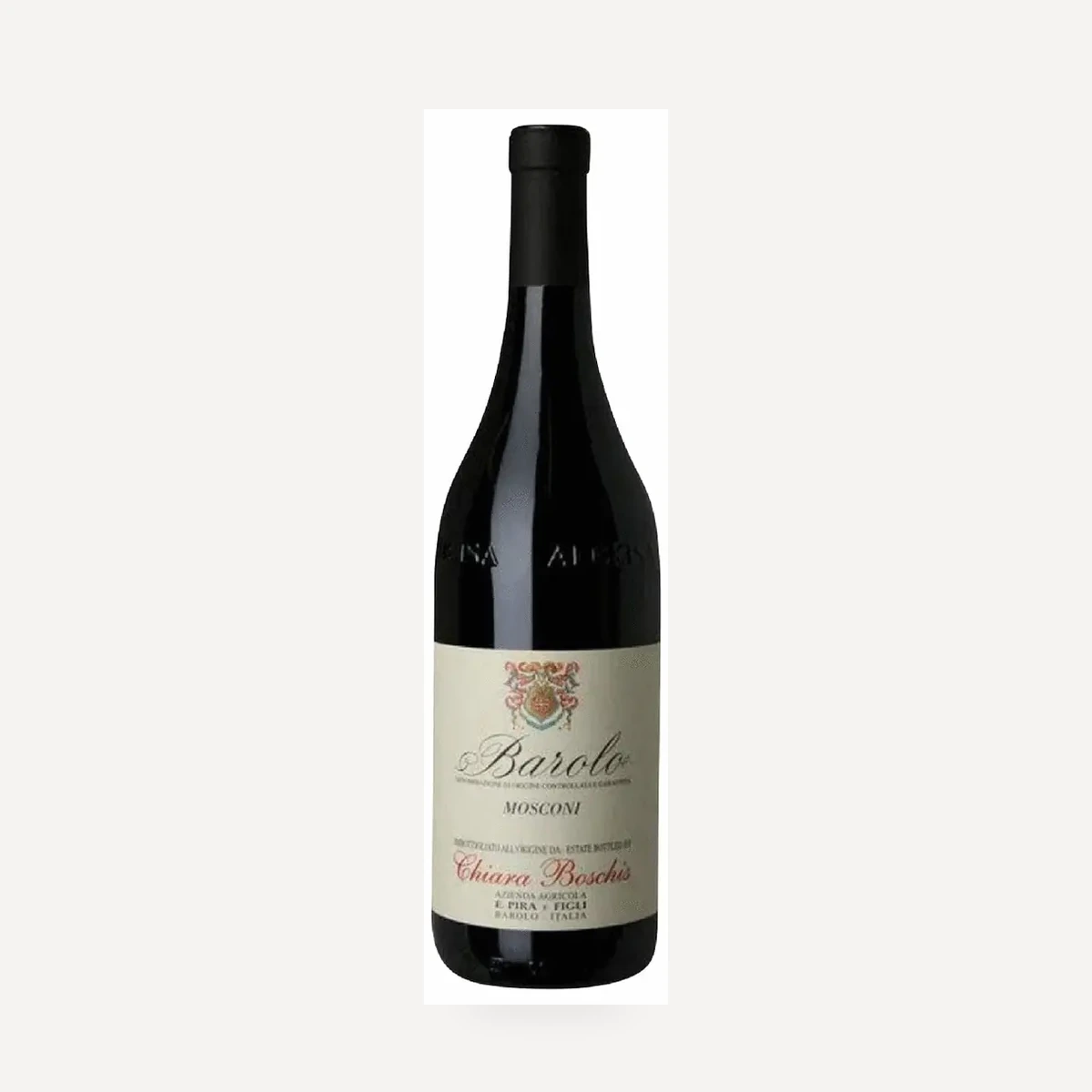
Mosconi is associated with the older Helvetian formation. Its greyish calcareous-clay marls alternate with siliceous sandstone; calcium carbonate and iron give some areas a warmer, slightly pink colour. The site lies at approximately 400 m and faces south-southeast.
The six vineyards assembled under the Via Nuova name encompass calcareous-clay and calcareous-silt marls with veins of sand and sandstone, all of Tertiary, Miocene origin. Their average elevation was recorded as 340 m, with south, southeast and southwest exposures.
The estate’s Barbera grows on Helvetian soils. Dolcetto also comes from older Helvetian terrain: pale grey to pink calcareous-clay soils alternating with siliceous sandstone and containing calcium carbonate and iron.
Vinificazione
All work on the vines is performed manually under certified-organic practices designed to respect the land and minimise environmental impact. The estate entered organic conversion in 2011 and has been certified since the 2014 harvest.
Winter work consists of short, gentle pruning and tying. One fruiting cane is selected per vine, limited to a maximum of nine buds, and secured to the trellis. Spring shoot thinning removes excessive non-fruiting shoots. During vegetative growth, the shoots are arranged along the full height of the row to keep the canopy orderly and provide ventilation throughout each vine.
Crop control is repeated two or three times after fruit set. Surplus bunches are removed to reduce yield and promote complete ripening and balance. The vineyards are monitored continuously, with timely intervention and further thinning when conditions require it.
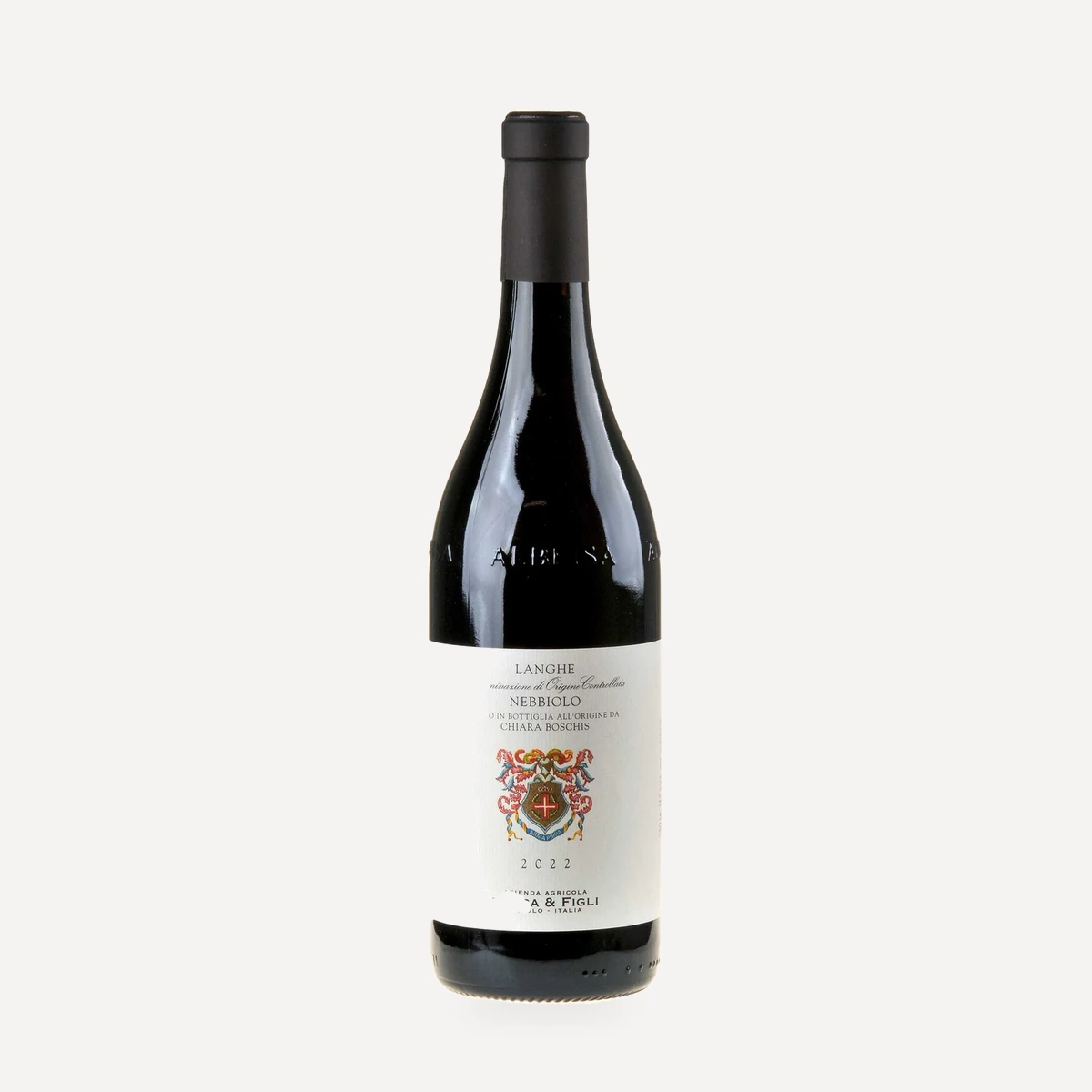
Harvest is manual and timed for full phenolic maturity. Grapes undergo strict selection during picking. Even rows maintained as organic buffer strips beside neighbouring non-organic vineyards are directed to the Langhe Nebbiolo rather than the estate’s Barolo bottlings.
The cellar stands in the commune of Barolo, facing the square at the junction of via Monforte and via Vittorio Veneto, historically known as Via Nuova. It processes only grapes grown directly by the estate in vineyards that are almost entirely owned by the Boschis family.
Production seeks a balance between innovation and tradition, with the objective of bringing elegance and equilibrium to wines that are naturally structured and austere. Cannubi and Mosconi are vinified separately to preserve the character of each individual vineyard. Via Nuova follows the historical blending tradition, combining six sites across Barolo, Monforte d’Alba and Serralunga d’Alba. The three Barolos have also been vinified and matured according to the same stylistic protocol so that differences among their vineyard origins remain apparent.
Grapes are crushed and destemmed. Red fermentation takes place on the skins in automatic fermenters, with an emerged cap and temperature control at approximately 28°C. Punch-downs and pump-overs are carried out daily throughout fermentation. After draining, the skins are pressed gently. The wine is settled off its lees, racked and taken through malolactic fermentation.
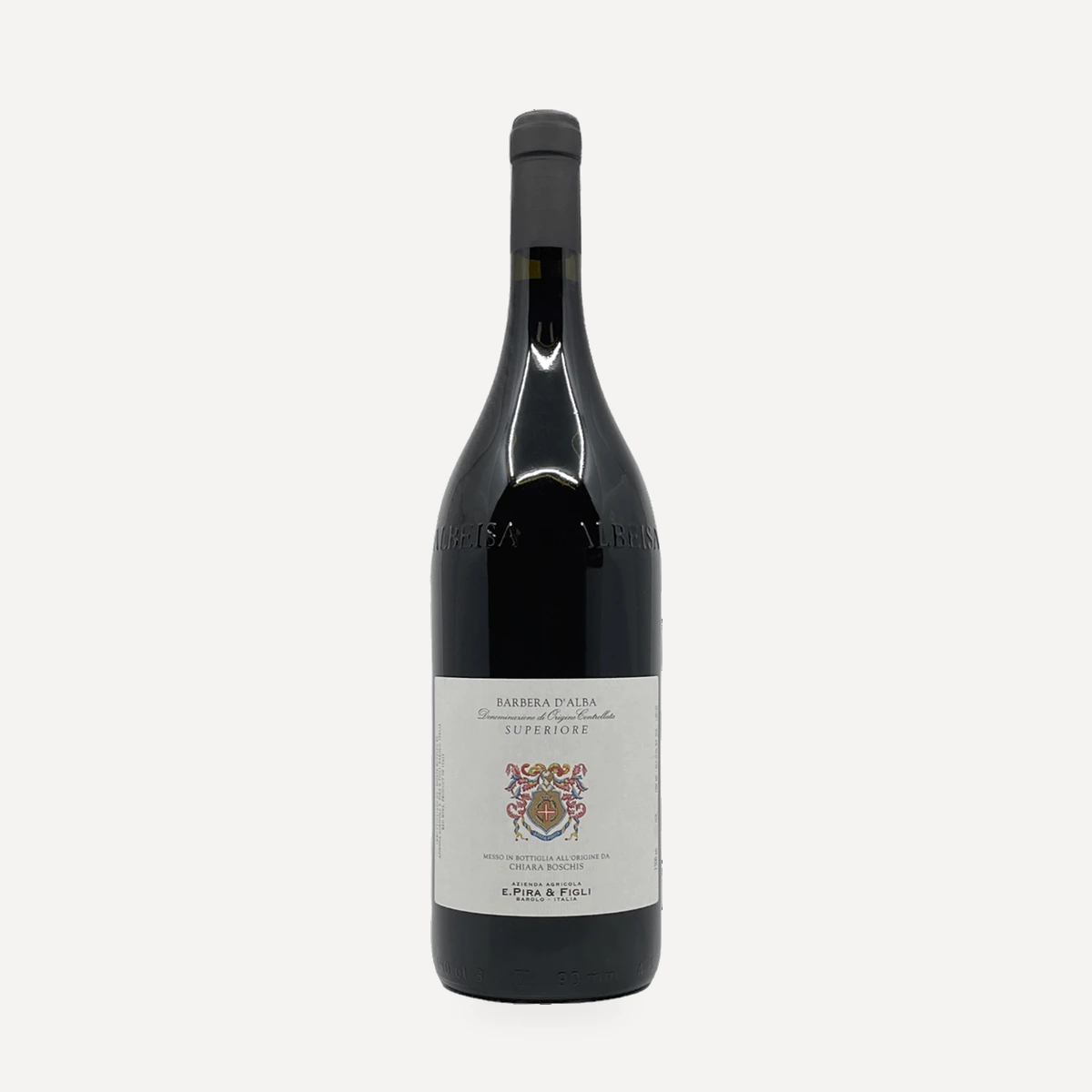
Barolo matures for approximately two years in lightly toasted French oak, using both 225-litre barriques and large 2,000- and 2,500-litre casks, followed by approximately one year in bottle before release. Langhe Nebbiolo and Barbera mature in second-use barriques for approximately 12 months, followed by two to three months in bottle. Dolcetto is made and matured in temperature-controlled stainless steel and receives two to three months of bottle ageing.
Bottling is performed without fining or filtration. Dolcetto is the exception: because it is bottled young and has insufficient time to clarify naturally, it receives a light filtration.
Filosofia
The estate’s philosophy begins in the vineyard. Gigi Pira’s guiding principle was that fine wine requires grapes from the finest sites, a belief reflected in the continued focus on Cannubi, Mosconi and the components of Via Nuova.
In production, tradition and innovation are treated as complementary. Individual sites such as Cannubi and Mosconi are kept separate to express their particular characteristics, while Via Nuova preserves the traditional practice of blending vineyards from different communes. Applying the same cellar approach to the three Barolos is intended to make their geo-climatic differences more legible rather than impose separate production styles.
Manual work, direct control of the grapes and deliberately limited production underpin the approach to quality. Organic cultivation, meticulous canopy and crop management, hand harvesting and strict selection are intended to combine grape quality with minimal environmental impact. In the cellar, restrained processing—including gentle pressing and bottling without fining or filtration for all but the young Dolcetto—continues this emphasis on preserving vineyard character.
Vini
Barolo Cannubi
Barolo Mosconi
Langhe Nebbiolo