Storia
The Pira family
The Pira family appears in parish records as winegrowers from the seventeenth century. Between the end of the nineteenth century and the beginning of the twentieth, the family expanded from growing grapes into winemaking.
Gigi Pira became a representative of the estate's traditional school. He assembled grapes from the family's Cannubi, San Lorenzo and Via Nuova holdings, maintaining that excellent wine depended first on choosing the finest vineyards. His attachment to established methods extended to foot-treading the grapes and making wine without technical equipment; he was the last local producer to continue this approach.
The Boschis family takes responsibility
In 1980, continuity passed to Chiara Boschis and her parents, Franco and Ida. The Boschis and Pira families were already connected by a close friendship and mutual respect. The Boschis family itself had produced Barolo since the eighteenth century, a tradition now described as being in its ninth generation.
After graduating, Chiara committed herself full-time to wine. By the end of the 1980s she had become one of the first women to produce Barolo. Her management brought changes to both the cellar and the estate's production style, while preserving the identity of the historic house.
Expansion of family management
In 2010, Chiara's brother Giorgio joined her in the ownership of E. Pira e Figli. He brought approximately 30 years of experience and became directly involved in both vineyard and cellar work.
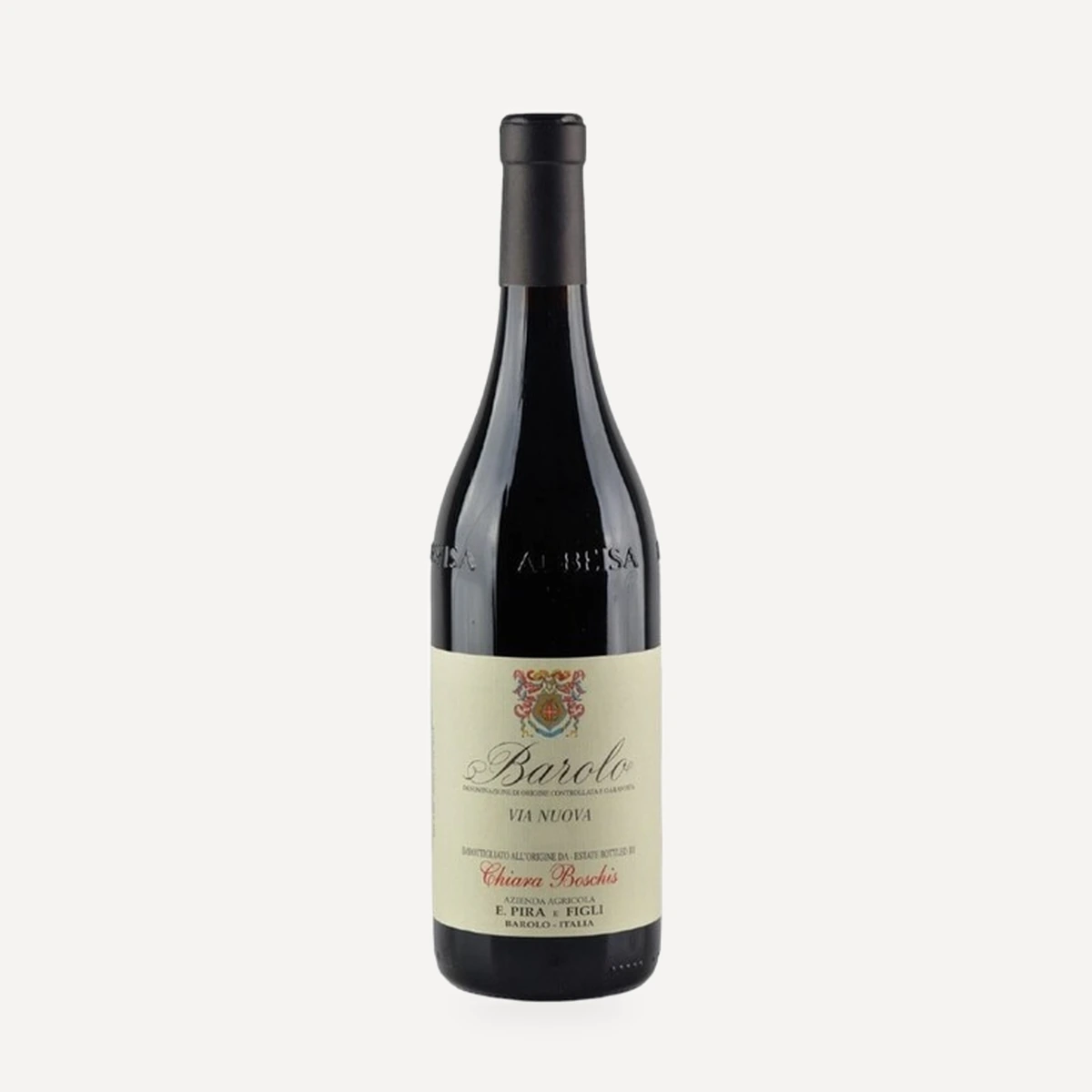
The reorganization of Barolo's official Menzioni Geografiche Aggiuntive, effective in 2010, also changed the role of Via Nuova. Via Nuova had been a small vineyard beside the old road from Barolo to Novello and had long been vinified separately. When it was incorporated into the larger Terlo geographical designation, the estate retained the Via Nuova name for a traditional blend drawn from six sites in Barolo, Monforte d'Alba and Serralunga d'Alba.
A Mosconi parcel at Borgata Conterni in Monforte d'Alba was described in the 2010 vintage documentation as part of a recently acquired property. Its oldest vineyard was selected for separate vinification.
Organic conversion
The estate entered organic conversion in 2011, building on vineyard work already presented as environmentally respectful and entirely manual. Full organic certification applied from the 2014 harvest. The estate currently farms approximately 11 hectares and produces about 40,000 bottles annually, exclusively from directly grown grapes.
Terroir
Geological setting
The vineyards lie in the Langhe hills of Piemonte, within a landscape framed by the Western Alps and the Apennines and opening toward the Po Valley. The area's geological history is traced to the Cenozoic or Tertiary period, approximately 2–4 million years ago, when it was covered by the sea. Sediments carried by streams descending from the mountains gradually shifted the coastline eastward. Around 2 million years ago, the uplift of the mountains and plain brought the sea's final retreat from Piemonte. Tectonic movement then raised and tilted the stratified marine sediments of the present Langhe, while runoff erosion slowly formed the contemporary hills.
The broad soil pattern consists of calcareous-clayey marl interspersed with sandstone. Barolo's soils are presented in two principal formations of differing ages, traditionally identified as Helvetian and Tortonian. The Po Valley lies in front of the hills, while the Maritime Alps behind them provide protection from Atlantic air currents. This setting, together with the hills' exposures, elevations and individual microclimates, creates marked differences among relatively small vineyard sites.
Estate distribution
The approximately 11 hectares are distributed among three communes. About 2 hectares lie in Barolo at Cannubi, Liste and Terlo; about 8 hectares are in Monforte d'Alba at Conterni, Mosconi, Ravera and Le Coste; and about 1 hectare is in Serralunga d'Alba at Gabutti and Baudana.
The Barolo holdings lie between approximately 300 and 330 metres. Monforte d'Alba sites range from approximately 340 to 420 metres. Gabutti is at approximately 260 metres and Baudana at approximately 400 metres.
Site distinctions
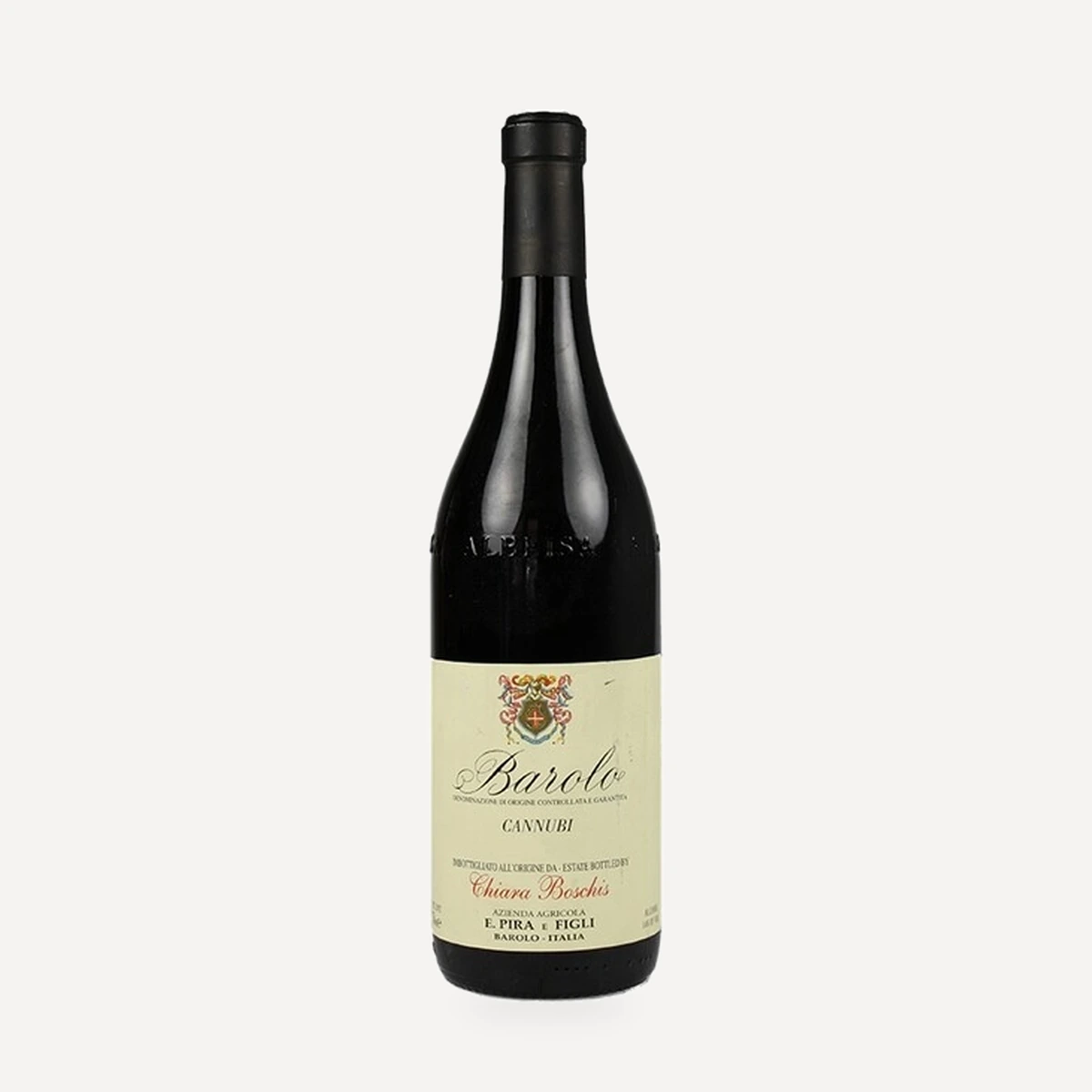
Cannubi combines Tortonian and Helvetian formations with a substantial sandy component. Its Marne di Sant'Agata are calcareous and sandy, and the estate's parcel has a south to southwest exposure beginning around 300 metres.
Mosconi is associated with the older Helvetian formation. Its calcareous-clayey marls tend toward light grey and alternate with siliceous sandstone. Calcium carbonate and iron give some areas a warmer, slightly pink tone. The vineyard is situated at approximately 400 metres and faces south-southeast.
The six sites contributing to Via Nuova combine calcareous-clayey and calcareous-silty marls with seams of sand and sandstone of Tertiary, Miocene origin. Their average elevation is approximately 340 metres, with south, southeast and southwest exposures.
The estate's Dolcetto vineyards are also associated with older Helvetian soils: pale grey to pinkish calcareous clay, alternating siliceous sandstone, calcium carbonate and iron.
Vinificazione
All vineyard operations are manual and follow certified organic practices. The approach is intended to combine grape quality with minimal environmental impact.
Winter work consists of short, gentle pruning and tying. One fruiting cane is selected per vine, retained at no more than nine buds and fixed to the trellis. Spring shoot thinning removes surplus non-fruiting shoots. During vegetative growth, the shoots are arranged along the full height of the row to keep the canopy orderly and promote aeration throughout the vine.
Crop control is repeated two or three times after fruit set. Excess bunches are removed to reduce yield, promote complete ripening and maintain balance among the grapes' components. Continuous monitoring, timely intervention and thinning were particularly important in the difficult, wet 2010 season.
Harvesting is by hand at full phenolic maturity, with strict selection and sorting of the grapes. In 2010, harvest began in Cannubi on 30 September, in the Via Nuova vineyards on 8 October and in Mosconi on 13 October.
Organic conversion began in 2011, and the estate has held certified organic status since the 2014 harvest. Buffer rows beside neighbouring, non-organic vineyards are directed to Langhe Nebbiolo rather than the estate's Barolo selections.
The cellar stands in the commune of Barolo, overlooking the square at the junction of Via Monforte and Via Vittorio Veneto, locally known as Via Nuova. Only grapes grown by the estate are vinified; the vineyards are almost entirely estate-owned.
Reception and fermentation
Red-wine production begins with crushing and destemming. Fermentation takes place on the skins in automatic fermenters, with an emerged cap and temperature control at approximately 28°C. Punch-downs and pump-overs are carried out daily throughout the vigorous alcoholic fermentation. The wine is then drained, the pomace is pressed gently, and the lees are allowed to settle before the wine is racked off them. Malolactic fermentation follows.
Maturation
Barolo matures for approximately two years in lightly toasted French oak: 225-litre barriques and large 2,000- and 2,500-litre casks. The three 2010 Barolos were deliberately fermented and matured with the same stylistic method to foreground the geo-climatic differences among their vineyards. For that vintage, the wood programme included 30% new, very lightly toasted French oak; the single-site documentation also records 2,000-litre vessels.
Langhe Nebbiolo and Barbera mature for approximately 12 months in second-use barriques. Dolcetto remains in stainless steel.
Bottling and bottle ageing
The wines are bottled without fining or filtration. Dolcetto is the exception: because it is bottled young and has insufficient time to clarify naturally, it receives a light filtration. Barolo then rests for approximately one year in bottle before release. Langhe Nebbiolo, Barbera and Dolcetto receive approximately two to three months of bottle ageing.
Cannubi and Mosconi are vinified separately to emphasize each vineyard's individual characteristics. Via Nuova follows the contrasting tradition of assemblage, combining six vineyards across Barolo, Monforte d'Alba and Serralunga d'Alba.
Filosofia
E. Pira e Figli seeks a balance between innovation and tradition. Its production choices are intended to bring elegance and equilibrium to wines whose traditional character is structured and austere.
The vineyard is treated as the primary determinant of quality, continuing Gigi Pira's conviction that only the best sites should supply the best wine. This principle now takes two complementary forms. Cannubi and Mosconi are vinified separately so that their individual organoleptic identities remain distinct, while Via Nuova preserves the local tradition of assemblage by combining six vineyards from three communes.
The three Barolo selections are intentionally handled with a consistent cellar method so that differences in geology, elevation, exposure and microclimate remain legible. At the same time, careful manual work, organic certification and restrained finishing reflect the estate's commitment to limiting environmental impact and avoiding unnecessary intervention before bottling.
Family continuity is central to the estate's identity: the Pira family's documented viticultural history reaches back to the seventeenth century, while the Boschis family brought its own Barolo-producing tradition, dating from the eighteenth century, to the estate in 1980.
Vini
Barolo Cannubi
Barolo Via Nuova