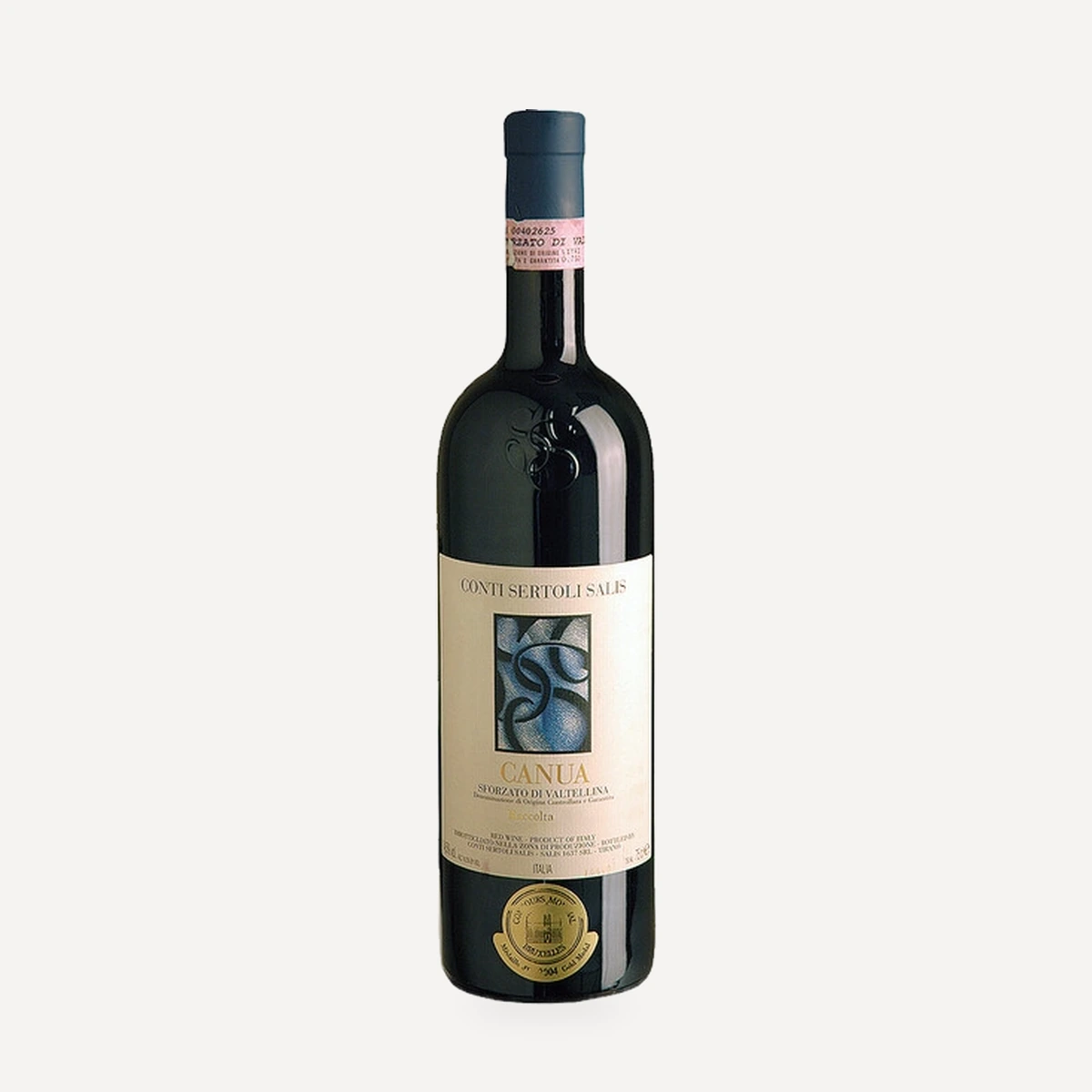
Questo vino
Vineyard and terroir
Nebbiolo, locally called Chiavennasca, comes from long-established vineyards in Tirano under the direct control of Conti Sertoli Salis. The first vintage was 2002.
Grapes
100% Nebbiolo (Chiavennasca). Bunches are picked at the end of October and carefully inspected. Only fully ripe, healthy fruit is laid on the traditional mantavole and dried in cool, dry lofts until between late January and March, depending on the harvest. Water loss concentrates the sugars, while respiration and polyphenolic transformation alter some primary aromas; noble mould may develop on a limited portion of the fruit.
Vinification
The dried bunches are removed manually from the mantavole and pressed without destemming, the stems by then being dry and woody. The resulting must contains 25–28% sugar. Fermentation proceeds slowly because of the sugar concentration and low ambient temperature, with 15–20 days of skin contact. After pressing and recovery of the free-run must, alcoholic fermentation continues without the marc until the sugars are exhausted.
Ageing
Clarifying rackings are completed between April and July. During the waning moon, the wine is transferred to 450-litre French oak casks to refine and harmonise its bouquet. It then rests in bottle for at least six months.
Technical data
Alcohol: 14.5–15.5% vol. Total acidity: 6–6.30 g/L. pH: 3.5–3.7. Dry extract: 28–38 g/L.
Tasting profile
Deep ruby red, frequently with garnet reflections. The high alcohol contributes an ethereal character, followed by pronounced marasca cherry and complex spice, with cinnamon and liquorice undertones. The palate is smooth and full-bodied, repeating the fruit and spice impressions and finishing with notable persistence.
Serving and pairing
Serve at 18°C. At 5–6 years, pair with elaborate game dishes such as venison or boar, or with full-fat soft cheeses. With greater age, it is suited to the end of a meal or contemplative drinking.
Label / history
Canua was the first Lombard red wine with the 2002 vintage, as described in the estate’s wine catalogue. The wine can age for several decades; after 6–7 years it develops greater roundness and harmony, followed by increasing complexity and finesse.