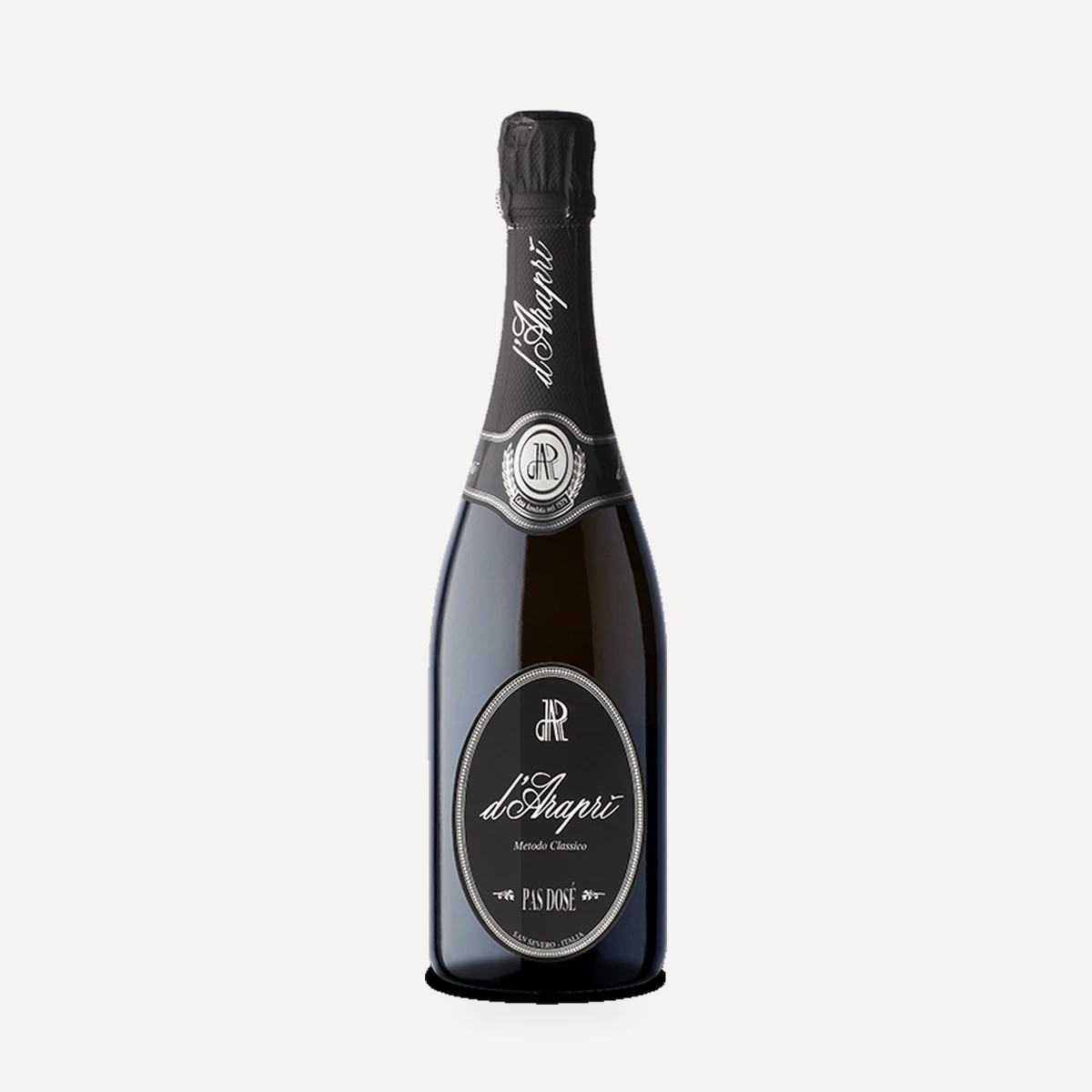
Storia
Origins and the 1979 experiment
D'Araprì grew out of the friendship of three San Severo musicians: trumpeter and industrial chemist Girolamo D’Amico, pianist Louis Rapini and double bassist Ulrico Priore. Their friendship began in jazz and developed through a shared interest in wine and the native grapes of the Tavoliere. The name combines the opening letters of their surnames—D’Amico, Rapini and Priore—and can also be read in the local dialect as da aprirsi, “to open oneself.”
The project began in 1979, when the founders were young men approaching their mid-twenties. San Severo had a celebrated wine history, but much of its contemporary production consisted of ordinary bulk wine. They chose the technically demanding bottle-fermented sparkling-wine route as a means of restoring value to the area and its grapes. Metodo Classico also suited their modest starting resources better than a tank-method operation, which would have required more costly equipment.
Their central intuition was that Bombino Bianco, rather than an imported white variety, could become the basis of a southern Italian traditional-method sparkling wine. The initial experimental production amounted to only 90 bottles. The early trials were not immediately trouble-free—some bottles burst—and the founders had to resolve unfamiliar regulatory questions surrounding sparkling-wine production and the storage of sugar. They approached the fraud-repression office in Bari, which in turn consulted Rome.
1980–1990: technical study and the first commercial steps
Throughout the 1980s the founders developed their expertise through research, contacts and repeated study trips in Italy and abroad. They travelled to Champagne annually to deepen their understanding of bottle fermentation; Louis Rapini, born in Lyon to parents from San Severo and the son of a man who had worked with cellars in Champagne, provided a personal connection with France.
The first pure-varietal label appeared in 1983. Production reached 3,000 bottles in 1985, the year also described as the first fully established harvest. In the middle of that decade Luigi Veronelli tasted their sparkling wine while travelling with the Giro d’Italia and asked what story the wine told—an encounter that reinforced their concern with place, memory and identity.
Bombino Bianco remained the foundation, but the founders broadened their trials. Montepulciano was introduced first. At the end of the 1980s they encountered a local grower with Pinot Nero for which there was little local market; experiments showed that it could work as a partner for Bombino Bianco. By 1990 production had reached 10,000 bottles.
The 1990s: from experiment to profession
During the 1990s the founders decided that what had begun almost as a game should become a profession. The original small cellar in San Severo’s historic centre was expanded by recovering old underground spaces where local families had once made wine. The first significant recognitions arrived in the middle of the decade and encouraged continued investment and research.
The first vintage of Gran Cuvée XXI Secolo was 1993; it was released in 2000, giving the cuvée its reference to the new century. Total production had reached approximately 25,000 bottles by 2000.
2002–2010: underground restoration, culture and hospitality
In 2002 an ancient subterranean olive mill connected to the cellars was restored and named ARCA—ARte in CAntina. Its surviving construction phases range from the Middle Ages to the eighteenth century. The setting also preserves the memory of the imprisonment of the Risorgimento Carbonari Morelli and Silvati. Architect Giovanni Di Capua directed the philological restoration. ARCA was conceived for music, exhibitions, conferences, wine tourism and wider cultural exchange, and the complex entered the orbit of the FAI, Fondo per l’Ambiente Italiano.
The early-nineteenth-century palace above the cellar underwent renovation in 2007. The broader wine-tourism project was completed in 2010 with restoration work on the former Fraccacreta family palace directed by architect Leonardo Pallotta. The resulting Palazzo d’Araprì combined hospitality, cultural activity and wine education above the historic maturation cellars.
The company also began systematically retaining earlier cuvée vintages to study their evolution on the lees and in bottle. This work supported comparative tastings with sommeliers, oenologists, journalists and enthusiasts. A collaboration with the University of Foggia was established to add scientific study to the observation of local grapes under long bottle-ageing conditions.
Recognition and production growth
From 2002 onward D'Araprì became a regular presence in national wine guides. In 2004 it received the Stele Argos Hyppium, the Premio Diomede from the Foggia Chamber of Commerce and a Diploma di Merito from the Comune di San Severo for its twenty-fifth anniversary. Further institutional recognition followed through the 2007 Eurispes report on Italian excellence, the Premio Internazionale Daunia in 2008, the Gran Medaglia di Cangrande in 2011 and the Premio Mediterraneo in 2013.
Production rose from the original 90 bottles to 80,000 by 2012–2013, approximately 100,000 around the fortieth-harvest celebrations and 180,000 by 2023. Growth led gyropalettes to assume most routine riddling, while traditional pupitres remained in use for special formats.
2018–2019: forty harvests and generational transition
The fortieth-harvest celebrations in October 2018 introduced Sansevieria, a rosé Metodo Classico made from Nero di Troia and named for the botanical work associated with Raimondo di Sangro, seventh Prince of San Severo. The anniversary brought the range to seven principal references. That year also marked the arrival of the founders’ third generation within the extended D'Araprì family.
A formal generational transition followed in 2019. Anna D’Amico, Daniele Rapini and Antonio Priore entered fully into the business, and the company became a Società Agricola. The second generation now works with the founders while pursuing stronger international promotion and the longer-term idea of a recognizable Capitanata sparkling-wine district.
Terroir
Capitanata and San Severo
The vineyards lie around San Severo in northern Puglia, within Capitanata—the historic territory corresponding broadly to ancient Daunia and the modern province of Foggia. The area encompasses the Tavoliere delle Puglie between the Gargano and the Subappennino Dauno. San Severo occupies the northern part of Capitanata, historically associated with vines, white wine, cereals and olive cultivation.
Relief, exposure and climate
The vineyards stand at approximately 80–100 m above sea level on gently sloping ground, generally facing south to south-west. Strong sunlight and marked daily temperature variation support gradual ripening. The territory is sheltered by the Majella mountains and the Gargano Promontory and is described as little exposed to frost. Rainfall is limited, while regular ventilation discourages mould development.
Soils and water relations
The soils are calcareous clay with silt and sand. A more detailed composition gives approximately 30% sand, 24% silt and 46% clay. They contain substantial limestone and organic matter and possess high water-holding capacity, allowing the grapes to ripen regularly even in a dry environment. Ripening is gradual rather than abrupt, helping to preserve acidity and aromatic components.
Bombino Bianco’s local adaptation
Bombino Bianco ripens around the middle of September even in hot, dry years while retaining elevated acidity—around 7‰—and a low pH. Moderate potential alcohol and this acid profile led the founders to regard it as especially suitable for fine Metodo Classico bases. A local tradition attributes its arrival in San Severo around 1200 to Knights Templar returning from the Holy Land; its ultimate origin is nevertheless treated as uncertain.
Vinificazione
The vineyard programme is described as conventional but directed toward low-impact work. Interventions are reduced to what is considered essential, with preference for biological products, guided pest control and organic inputs. The guiding principle is to protect the inherited balance among place, vine and human practice, joining long observation of natural conditions with newer knowledge.
Pergola pugliese is the dominant training system in the country vineyards, while one urban vineyard is trained to espalier. The general vineyard description associates the pergola with 3,500 vines/ha and reduced production per vine; current parcel specifications commonly give 2,000 vines/ha. The lower vine load is intended not merely to raise sugar concentration—which is not the primary need for sparkling bases—but to improve the relationship between malic and tartaric acid and retain a low pH. Published technical specifications give yields of roughly 100–120 quintals/ha, equivalent to 10–12 tonnes/ha, or around 3–4 kg per vine.
Harvesting and grape selection are manual. Selected bunches travel in small carts to the vendangerie on the outskirts of San Severo, close to the vineyards. The short journey minimizes the interval between cutting and pressing, preserving freshness and fruit integrity while limiting premature crushing, colour extraction and unwanted phenolic transfer.
Pinot Nero is picked in August, generally in the latter part of the month. Bombino Bianco follows in early to mid-September. Nero di Troia is harvested during the first half of September, and Montepulciano from mid-September into late September or early October, depending on the vineyard and intended use.
Two complementary cellars
Production is divided between two sites. The vendangerie, close to the vineyards on the outskirts of San Severo, operates principally from September to March. Grapes are received there and converted into base wines through gentle pressing, clarification and fermentation. The historic centre cellar in Via Zannotti receives the bottled wine under temporary closure and carries out the second fermentation, maturation and finishing stages.
The maturation cellar comprises approximately 1,000 m² of underground passages beneath historic palaces beside the Church of San Nicola. Dating principally from the seventeenth century, the complex contains a section of the thirteenth-century city walls, an 1836 press and the former prison of the Carbonari Morelli and Silvati. Its darkness and naturally cool, stable conditions provide the setting for long bottle ageing.
Base-wine rules
All wines are made in-house, and the grapes are drawn exclusively from the San Severo area. The ethical production charter requires Bombino Bianco or Montepulciano to account for at least 60% of every cuvée, the use of free-run or first-press must for base wines and fermentation below 20°C. Tirage must take place by March following the harvest. The objective is a base wine free of sensory faults, since carbon dioxide can magnify defects as readily as desirable qualities.
Bottle fermentation and ageing
Tirage initiates the second fermentation in hermetically sealed bottles, trapping carbon dioxide and creating the mousse. Bottles rest horizontally sur lattes in the underground cellar at a constant 10–14°C. Contact with the yeasts slowly transforms the base wine and develops the characteristic maturation profile.
General ageing extends from 15 months to three years or longer. Vintage wines reach or exceed five years. The production charter requires prolonged lees ageing and restrained dosage, without imposing a single identical period on every cuvée.
Riddling, disgorgement and release
At the end of maturation, sediment is moved toward the neck through remuage. Traditional hand-riddling on pupitres remains in use for special formats, while gyropalettes handle most of the larger contemporary production. Disgorgement follows, then any applicable dosage, final corking with a high-quality two-disc cork, fitting of the wire cage and labelling. The bottles receive a further rest before release. The complete process is intended to retain an artisanal character while using modern equipment where production scale requires it.
Filosofia
D'Araprì’s declared purpose is to make sparkling wine that carries human memory and the character of San Severo rather than becoming anonymous or merely easy to drink. Its model rests on the interaction of territory, grape and human work: the first two are treated as an inheritance, while the producer’s responsibility is to avoid damaging their balance.
The founders describe vineyard practice as a measured relationship between accumulated local custom—knowledge derived from observing natural phenomena—and new technical understanding. In the cellar, manual skill, creativity and professional discipline are paired with scientific study. Time is treated as a prerequisite for quality rather than an economic inconvenience.
Bombino Bianco is the central expression of this philosophy. Choosing the native grape for bottle-fermented sparkling wine was both a technical experiment and an assertion of local identity. The subsequent use of Montepulciano and Nero di Troia continued that emphasis, while Pinot Nero was adopted as a complementary variety after local trials.
The ethical and quality charter formalizes ten commitments:
- All wines are made in-house.
- Most vineyards are owned, supporting stylistic continuity.
- Grapes come exclusively from the San Severo countryside.
- Bombino Bianco or Montepulciano constitutes at least 60% of every cuvée.
- Only first-press must is used for base wines.
- Fermentation remains below 20°C.
- Tirage occurs by March after harvest.
- Lees ageing is prolonged.
- Dosage is restrained.
- Final closures use extra-quality two-disc corks.
D'Araprì presents its mature style as a synthesis of Italian taste and French traditional-method heritage. Cultural work is part of the same outlook: music, architecture, art, research, hospitality and wine are intended to communicate why agriculture matters to the territory, rather than reducing production to its immediate commercial value.
Vini
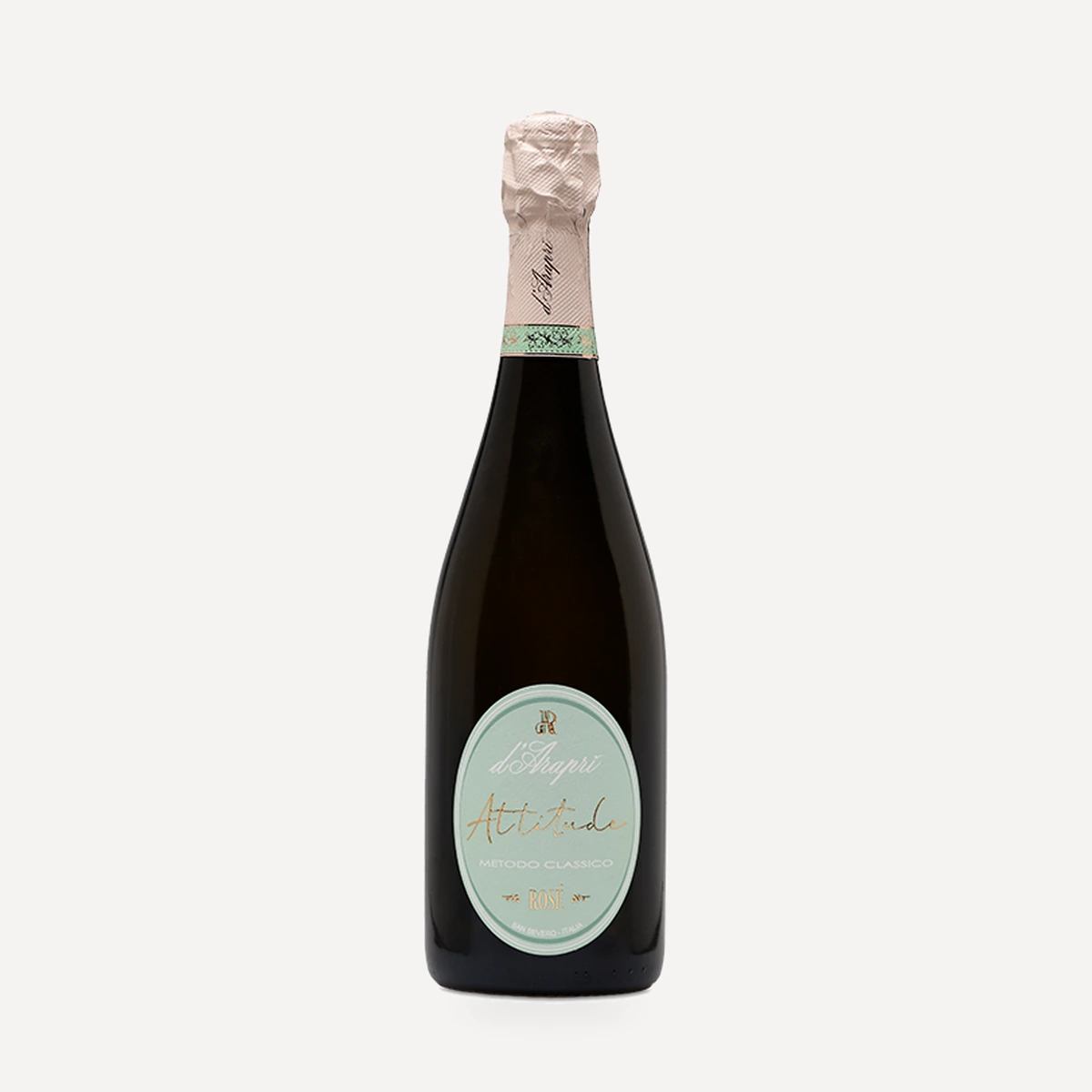
Attitude Extra Brut Rosé
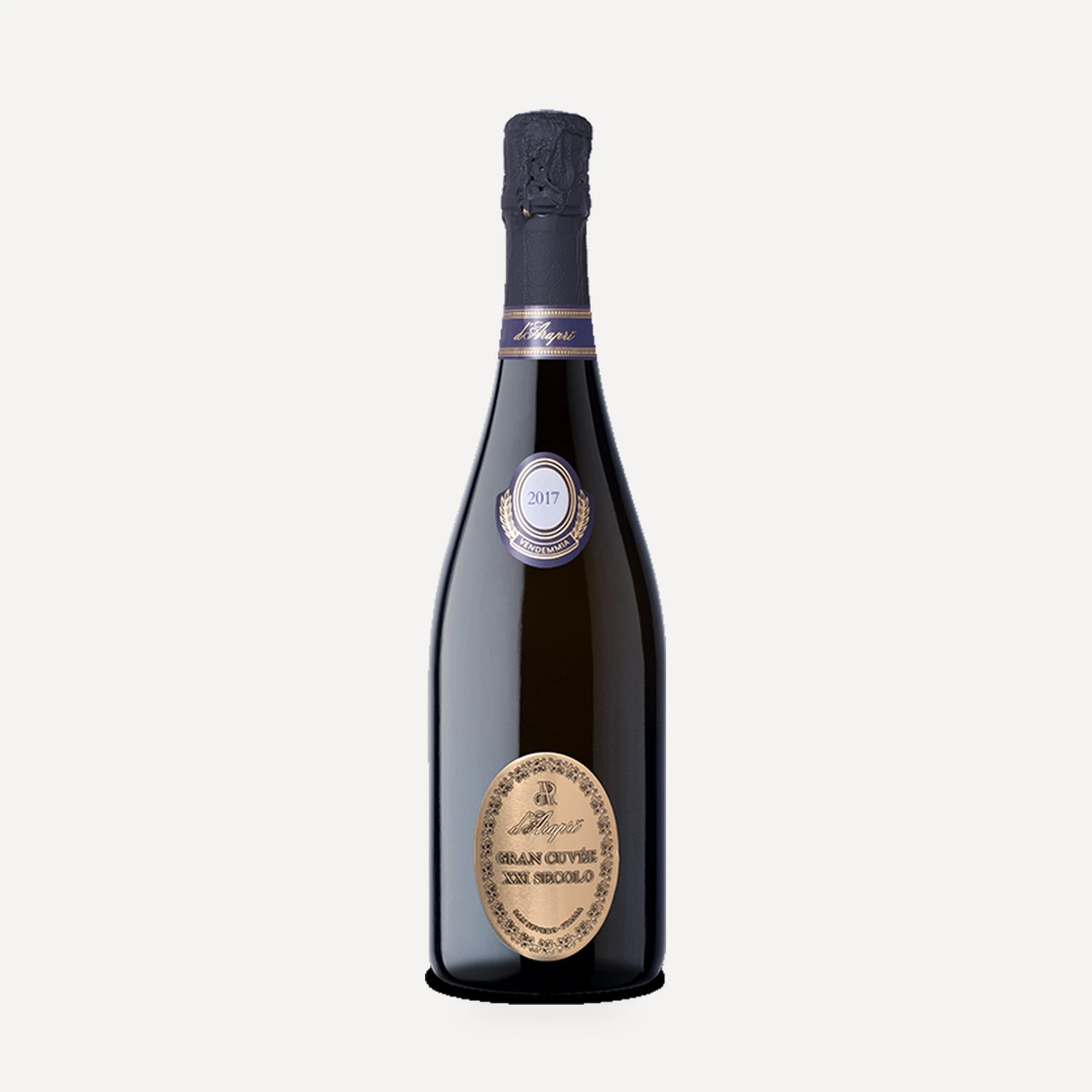
Gran Cuvée XXI Secolo
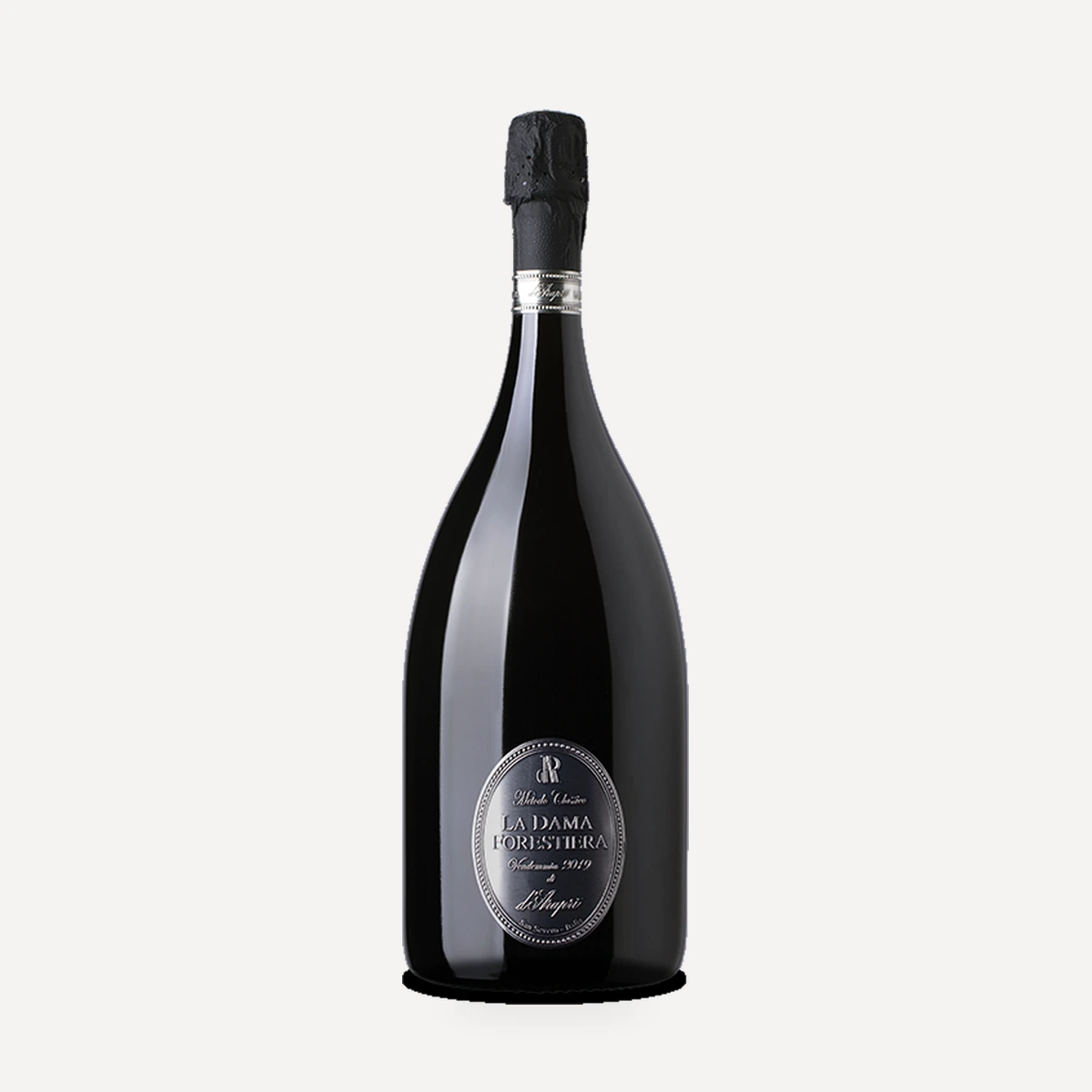
La Dama Forestiera
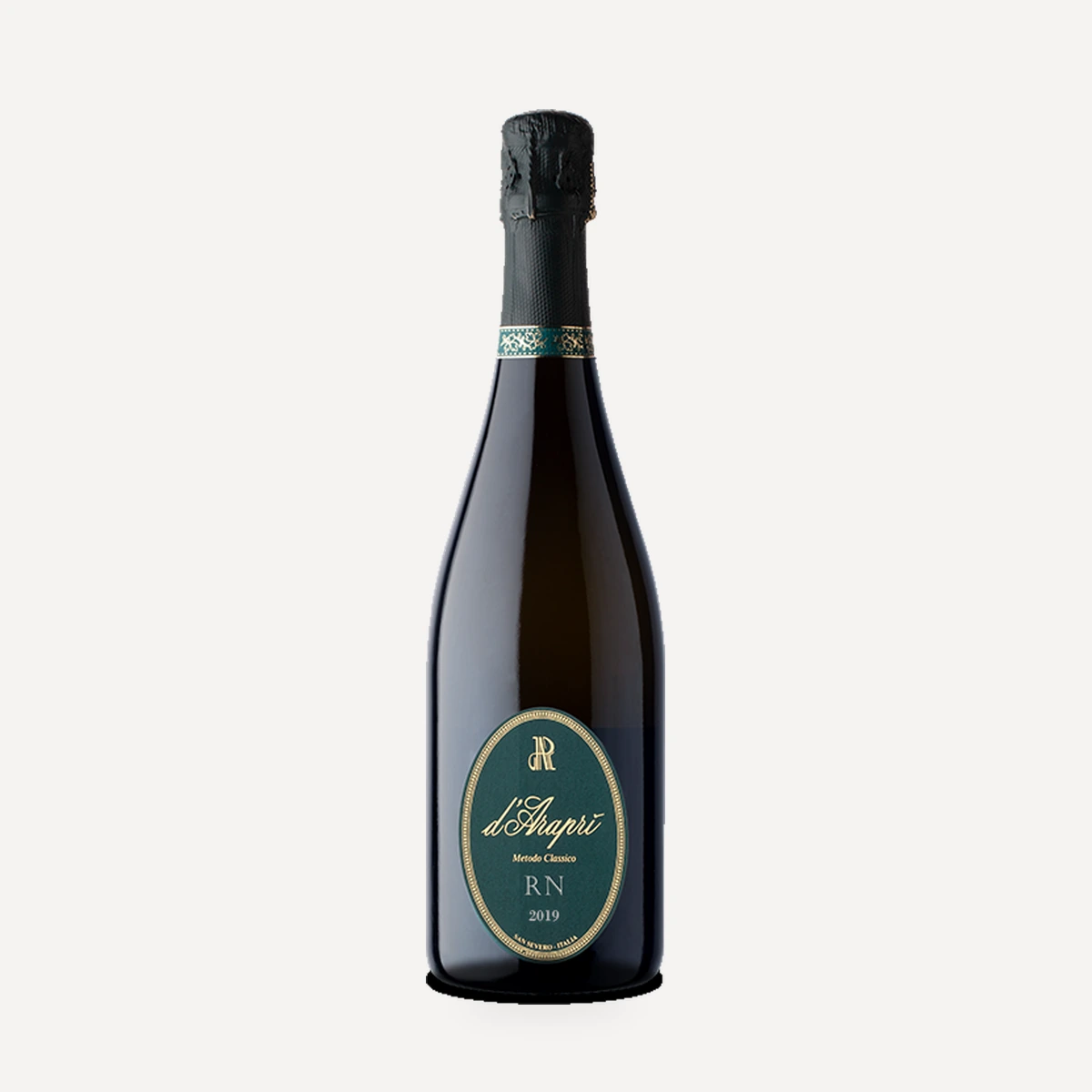
RN
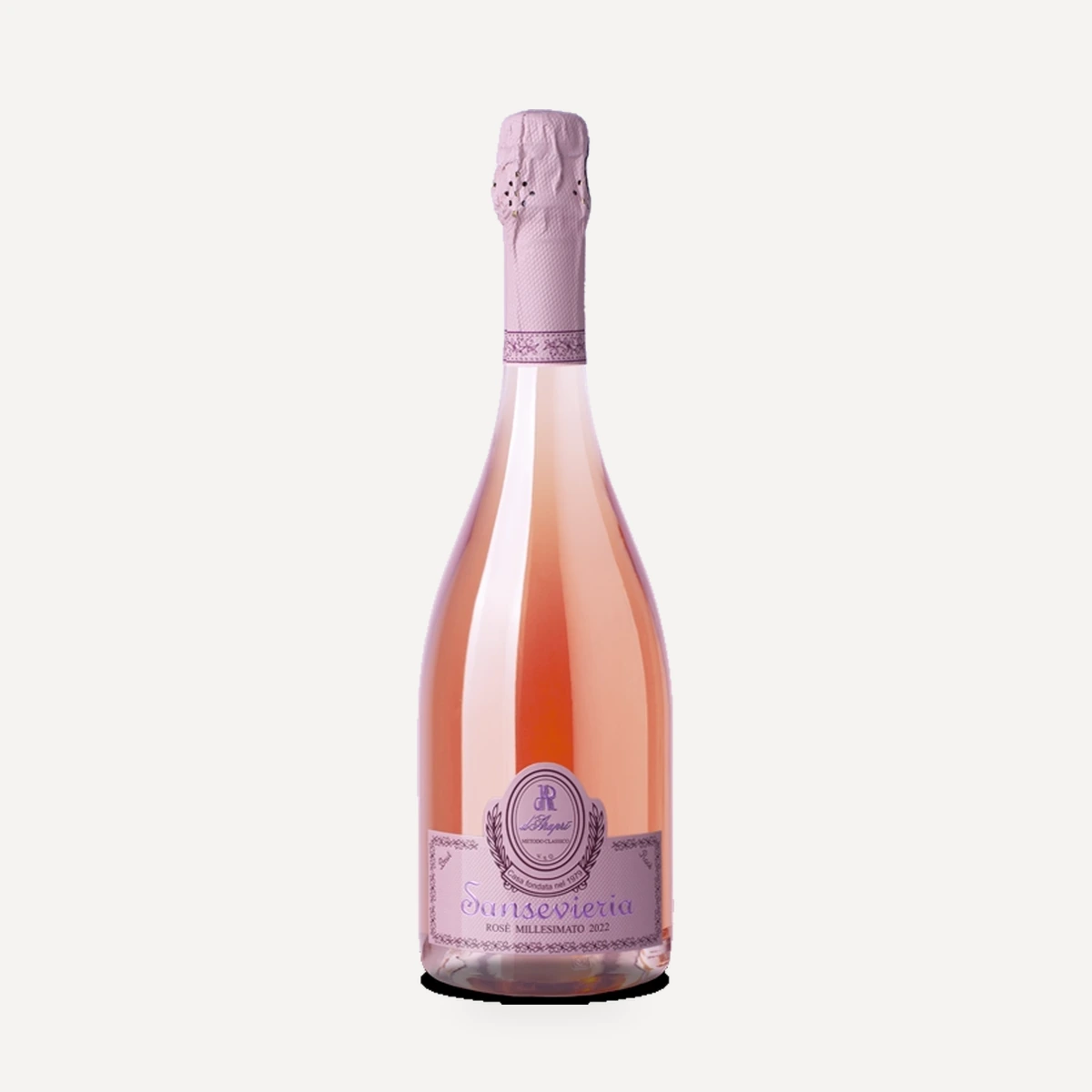
Sansevieria
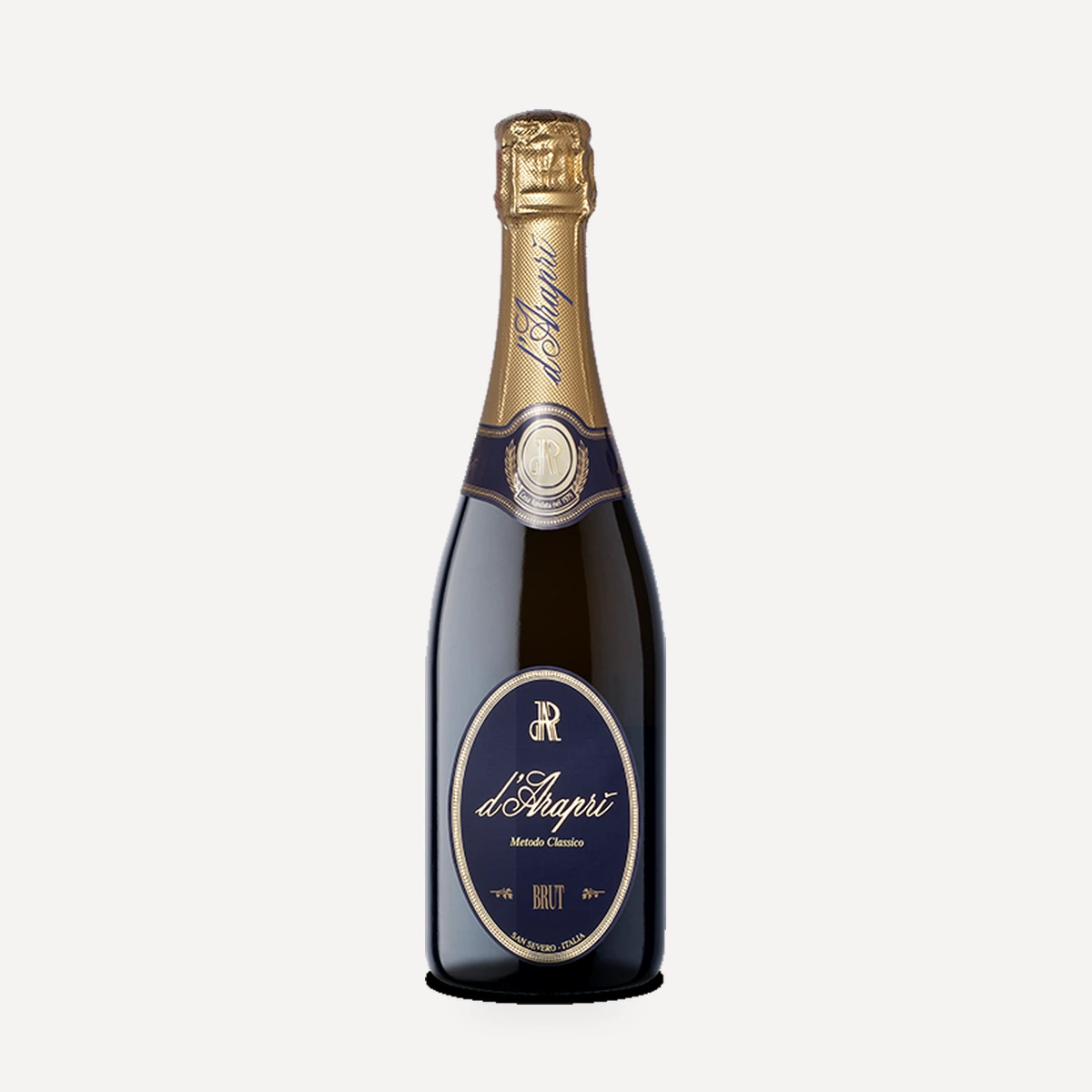
Brut
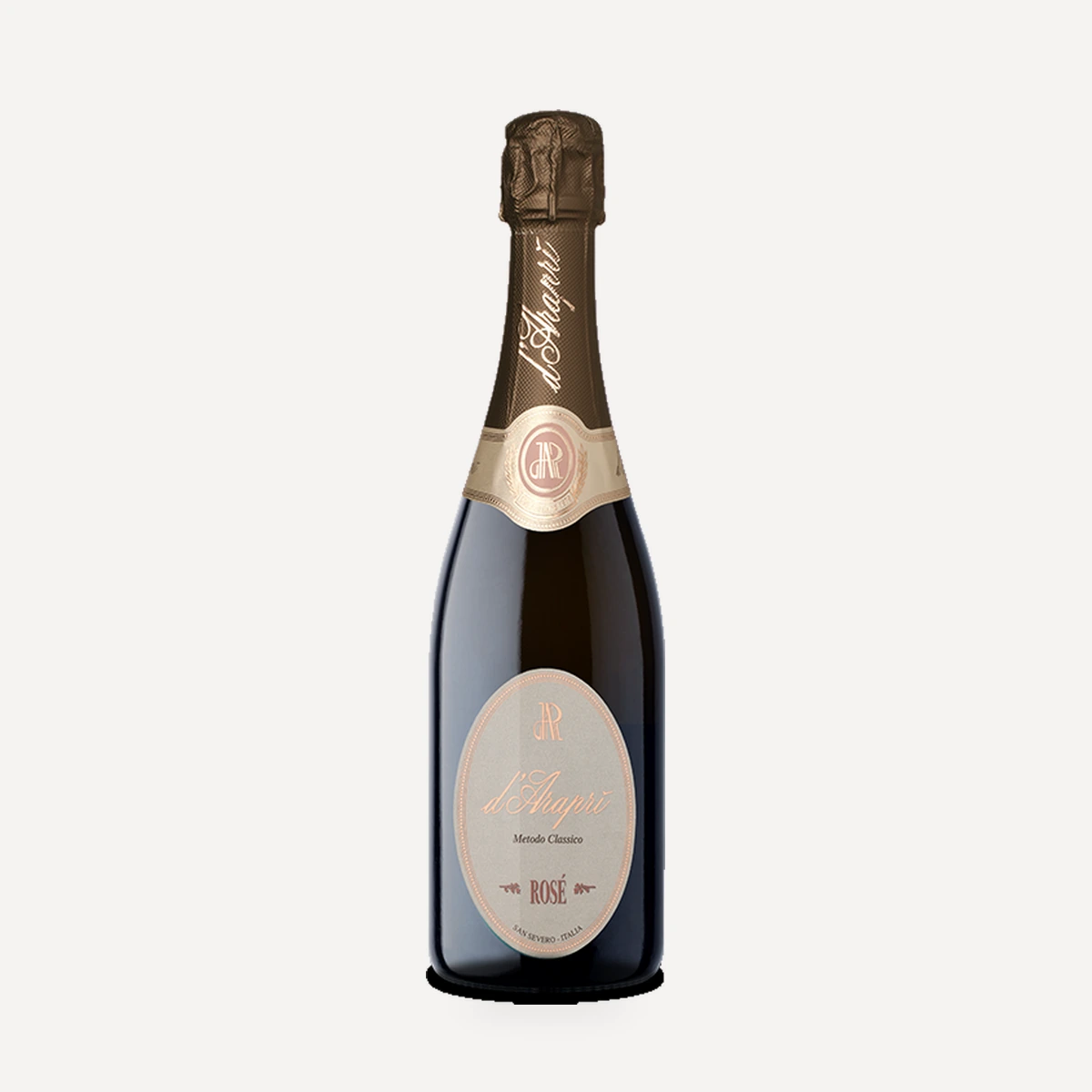
Brut Rosè