Storia
Ancient viticultural setting
Viticulture around Gaiole in Chianti reaches back to the Etruscan period. Archaeological excavations at Cetamura uncovered thousands of grape seeds preserved in Etruscan wells and dated to the 3rd century BC, evidence of vine cultivation and a long agricultural relationship between people and the local environment.
During the Middle Ages, the hills belonged to the territory of the Lega del Chianti. Formed between the 13th and 14th centuries as an alliance of Radda, Gaiole and Castellina, the league served the Republic of Florence as an administrative and military system and also represented an organised agricultural structure. The earliest legal documents referring to Chianti as a wine produced in the area date to 1398.
Definition of Chianti
In 1716, Grand Duke Cosimo III de’ Medici legally defined and delimited the Chianti winegrowing area, making it the first Italian wine zone to receive such a legal boundary.
Bettino Ricasoli subsequently formalised a model for Chianti during the 19th century. In 1872, in the municipality of Gaiole in Chianti, he established a composition of 70% Sangiovese, with the balance made up of Canaiolo and Malvasia. Later experimentation beyond the restrictions associated with Chianti helped open a path for structured, ageworthy Tuscan wines based on international varieties, particularly Cabernet Sauvignon and Cabernet Franc—the phenomenon that became associated with Super Tuscans.
Foundation in 1993
Colombaio di Cencio was established in 1993 around a historic country house. During the 1990s, German entrepreneur Werner Ernest Wilhelm selected the property with the intention of preserving and interpreting the land rather than merely cultivating it. His approach prioritised quality, respect for the place and the distinct identity of individual vineyard units. Vineyard management and production were already oriented toward sustainability, soil stewardship and recognisable site expression.
During this period, the estate gained international recognition through Il Futuro, a contemporary interpretation of the territory that received Gambero Rosso’s Tre Bicchieri on several occasions.
The name Colombaio di Cencio preserves the property’s rural history. It refers to an old farmstead equipped with a colombaia, the dovecote traditionally found on Tuscan farms, joined to “Cencio,” probably the name of a local owner or family.
From 2018
In 2018, Colombaio di Cencio became part of Fontanafredda. The collaboration brought further refinement of plot-by-plot vinification, strengthening the estate’s ability to interpret and distinguish the character of each vineyard.
Approximately seven hectares have since been replanted with a carefully selected collection of Sangiovese clones originating in the Gaiole and Monti in Chianti areas. The objective is greater precision in expressing local characteristics through Sangiovese.
Terroir
Location and landscape
The estate lies at Località Cornia in Gaiole in Chianti, between Siena and Florence, within the Chianti Classico production area. Its 17 hectares of vineyards occupy elevations from 340 to 480 metres and are divided principally among Cornia, Montelodoli and Vinci. Woods surround the amphitheatre-like terraces at Cornia, while vineyards, olive groves and deciduous woodland form the broader estate landscape.
Gaiole combines varied soils and altitudes. Significant differences between daytime and nighttime temperatures, together with persistent air movement, support slow, complete ripening. Constant breezes are particularly important at Montelodoli, where they delay maturation and help retain acidity and aromatic definition.
Geological foundation
The vineyards share a marine-origin geological matrix in which limestone, schist and sandstone alternate. These materials provide natural drainage and support balanced vine development.
Cornia is especially rich in alberese, a compact calcareous material that limits vine vigour and favours concentration and balance. Some Cornia soils occupy the meeting point of the Macigno del Chianti sandstone formation and the limestone-rich Monte Morello formation. Clay can be prominent within their medium-textured profiles.
Montelodoli combines galestro, sandstone, a substantial rocky skeleton and marked clay components. These conditions keep the ground relatively cool and dry and balance acidity with tannic development.
Vinci contains galestro, sandstone and clay. The combination is associated with balanced structure and a clear expression of place.
Individual mesoclimates
Montelodoli includes the estate’s warmest and sunniest Sangiovese blocks, with pronounced day-to-night temperature changes. Cornia’s wooded, amphitheatre-shaped terraces experience cooling air movement. Vinci includes south-facing Sangiovese sites, while the Merlot vineyard Al Piano at Cornia faces north.
Vinificazione
The 17 hectares of vineyards are managed under sustainable farming principles and with organic methods. Particular attention is given to biodiversity, the vitality and health of the soil, and the distinct behaviour of each vineyard unit.
Management is organised plot by plot so that individual differences can be observed and interpreted rather than treated uniformly. Approximately seven hectares have been replanted with selected Sangiovese clones originating in Gaiole and Monti in Chianti, reinforcing the estate’s focus on local identity.
Manual work accompanies every stage from vineyard to bottle. Harvesting is entirely by hand, with timing determined through observation of natural rhythms and the maturity of the grapes. Several selections are picked into small crates, and bunch or grape selection begins in the vineyard. Both Guyot and spurred-cordon training systems are used across the estate.
The cellar combines traditional practice with technical precision. Grapes from different vineyards and vineyard units are vinified separately so that the character and nuances of each site remain identifiable. Respect for the harvested fruit guides production decisions.
Stainless-steel tanks with temperature control are used for fermentation. The estate’s red-wine methods include destemming, skin maceration and, for selected lots, fermentation with a proportion of whole bunches. Maturation is centred principally on large wooden casks of 50 hl, supplemented where appropriate by tonneaux and barriques. Manual work continues through to bottling.
The overall stylistic aim is classical: to foreground the vineyards and the varieties while allowing tradition and modern technique to coexist. Separate vinifications and plot-specific maturation decisions have been refined further since the relationship with Fontanafredda began in 2018.
Filosofia
The estate presents land as an inherited asset to protect and pass forward, rather than merely a means of production. Its identity is framed through three elements: Gaiole in Chianti as its territory, Colombaio di Cencio as its home and Sangiovese as its essential variety.
Sangiovese is treated as the most direct medium for expressing the hills and the relationship between soil, landscape and wine. Replanting with locally selected clones is intended to make that expression progressively more precise.
In the vineyard, organic methods, biodiversity, soil vitality and detailed observation of individual plots form the practical foundation. In the cellar, respect for the fruit is balanced with technical accuracy. Separate vinification translates the differences among vineyards into distinct wines rather than suppressing them through a uniform process.
Craftsmanship rests on manual work, observation and respect for natural timing. The declared stylistic objective is classical, but tradition is not treated as static: modern techniques and occasional experimentation are accepted when they deepen understanding of the vineyards and varieties.
Vini
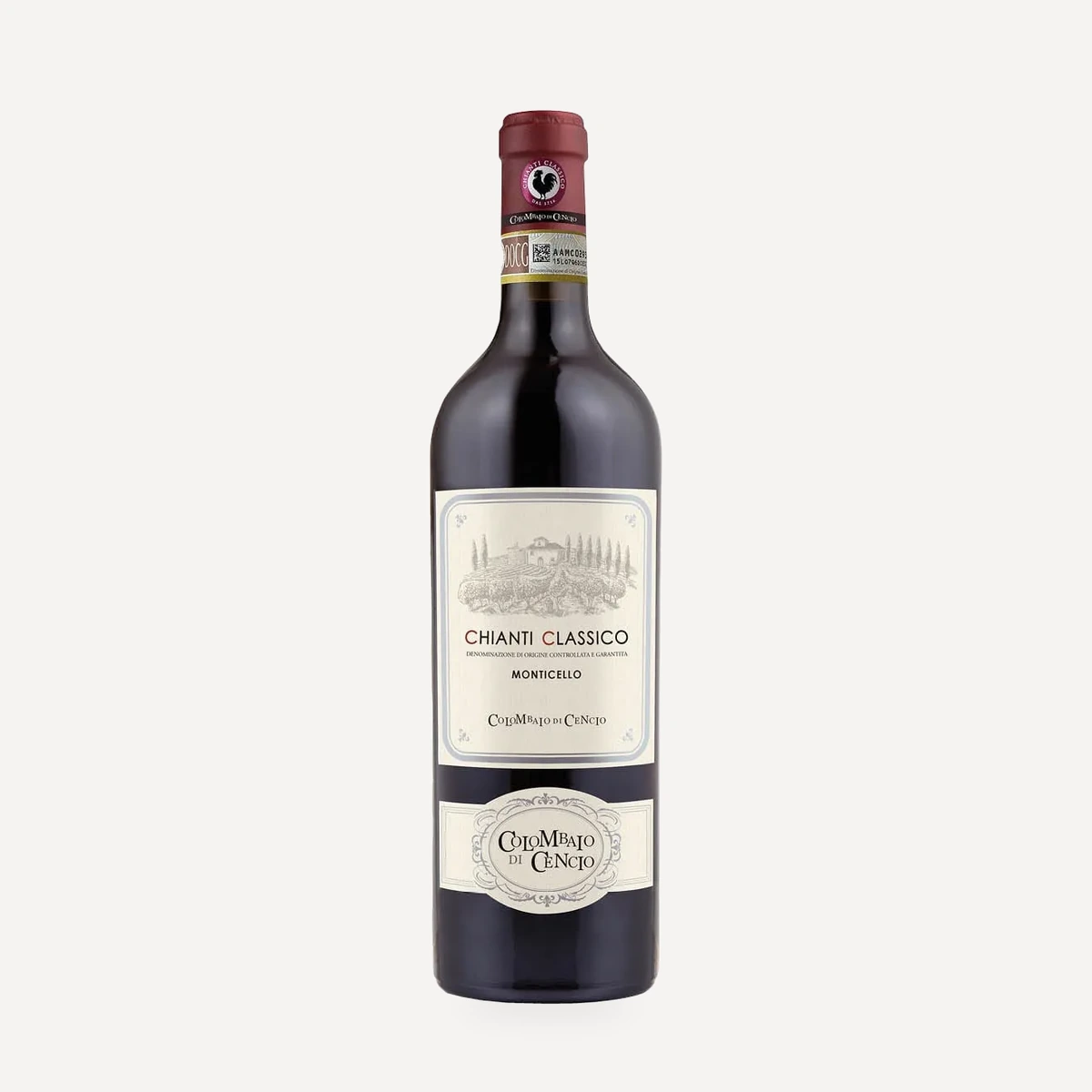
Chianti Classico Monticello DOCG
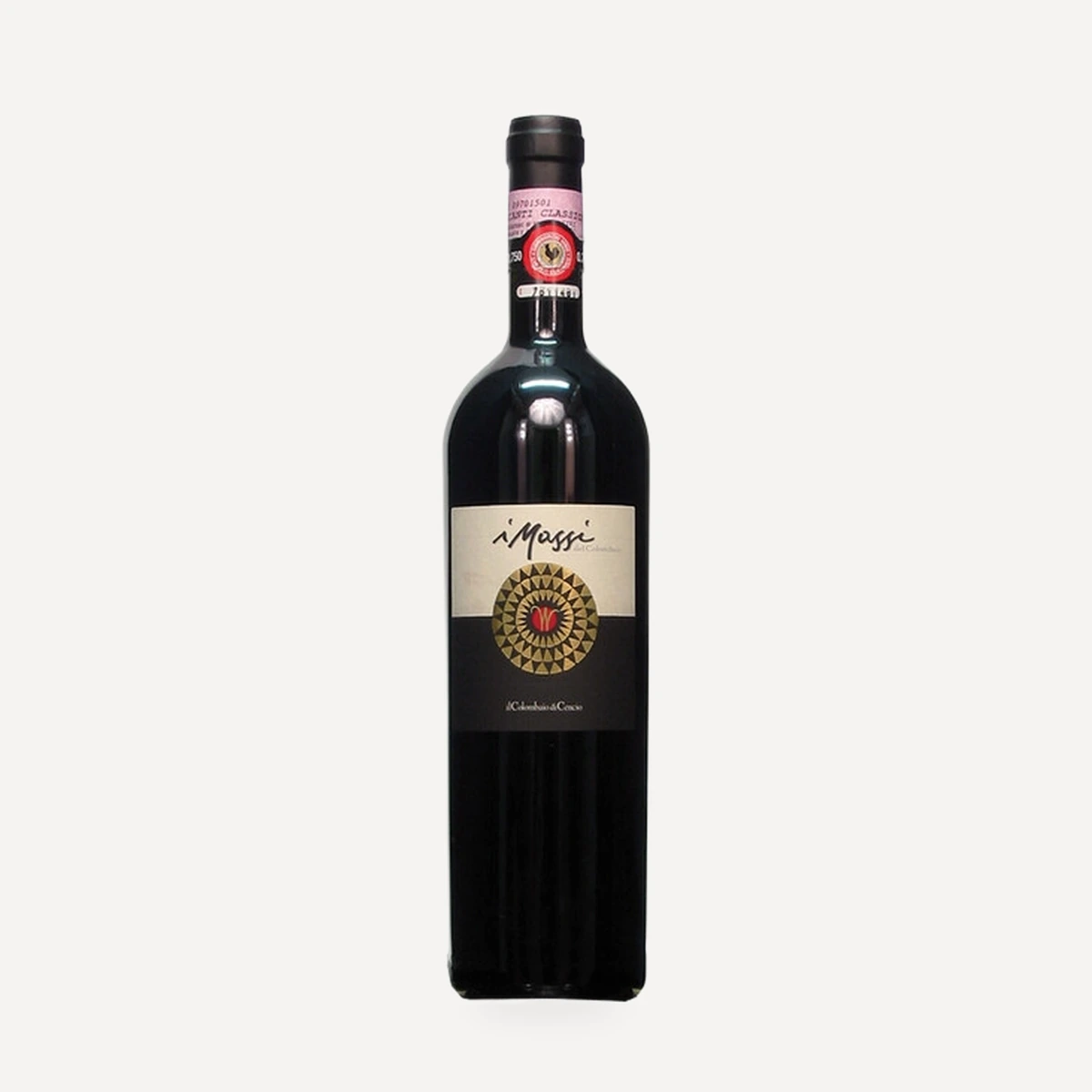
Chianti Classico Massi del Colombaio Riserva DOCG
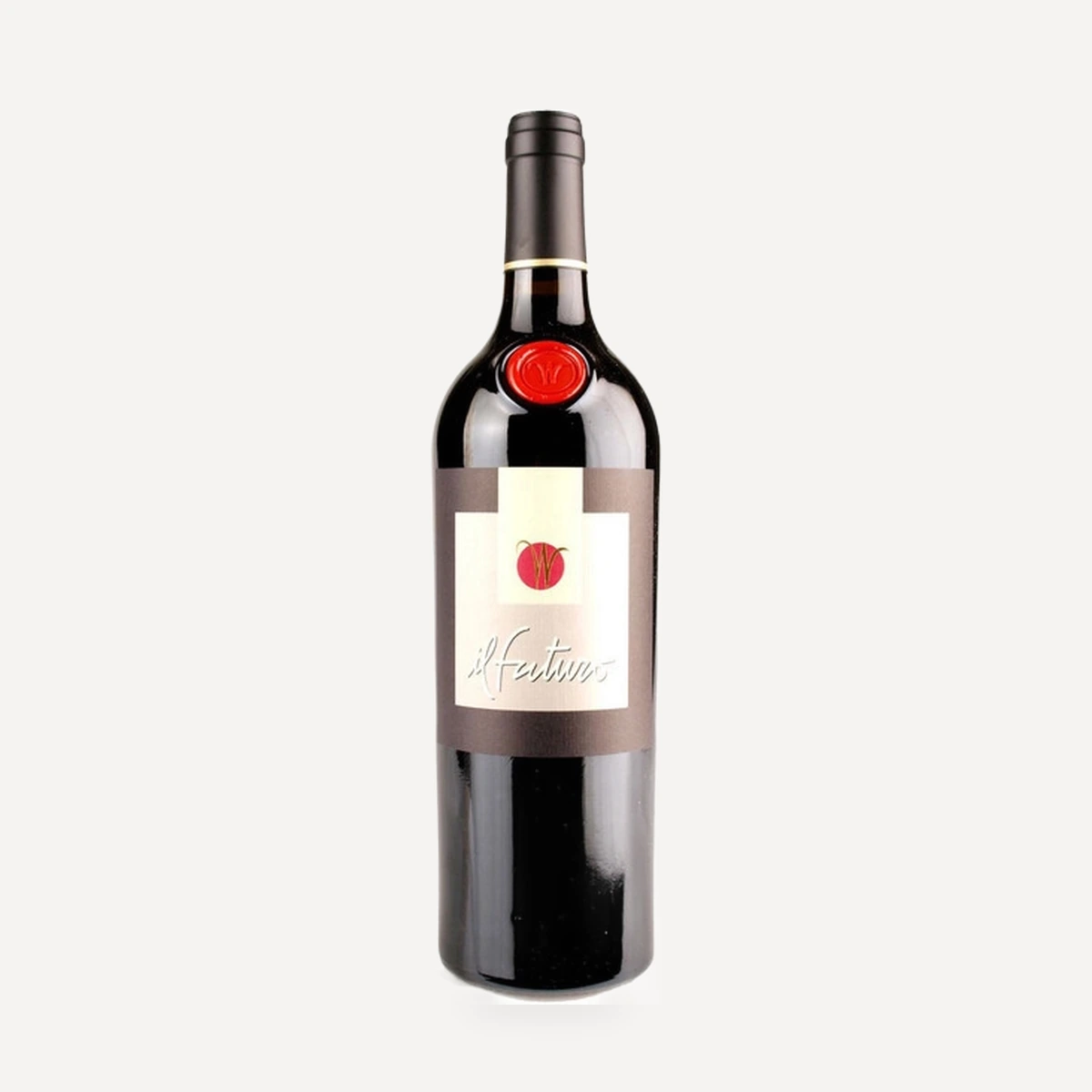
Futuro
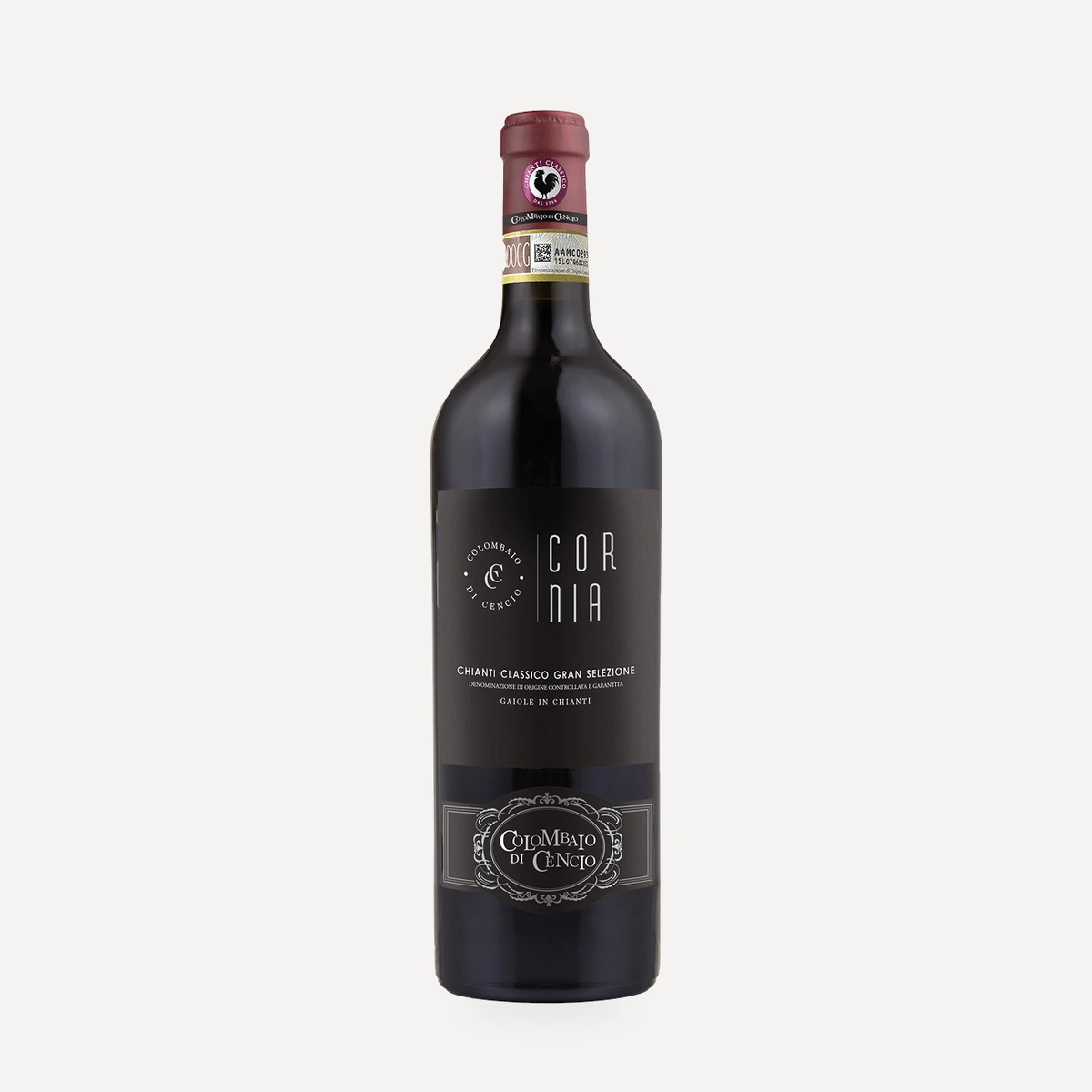
Chianti Classico Gran Selezione Cornia
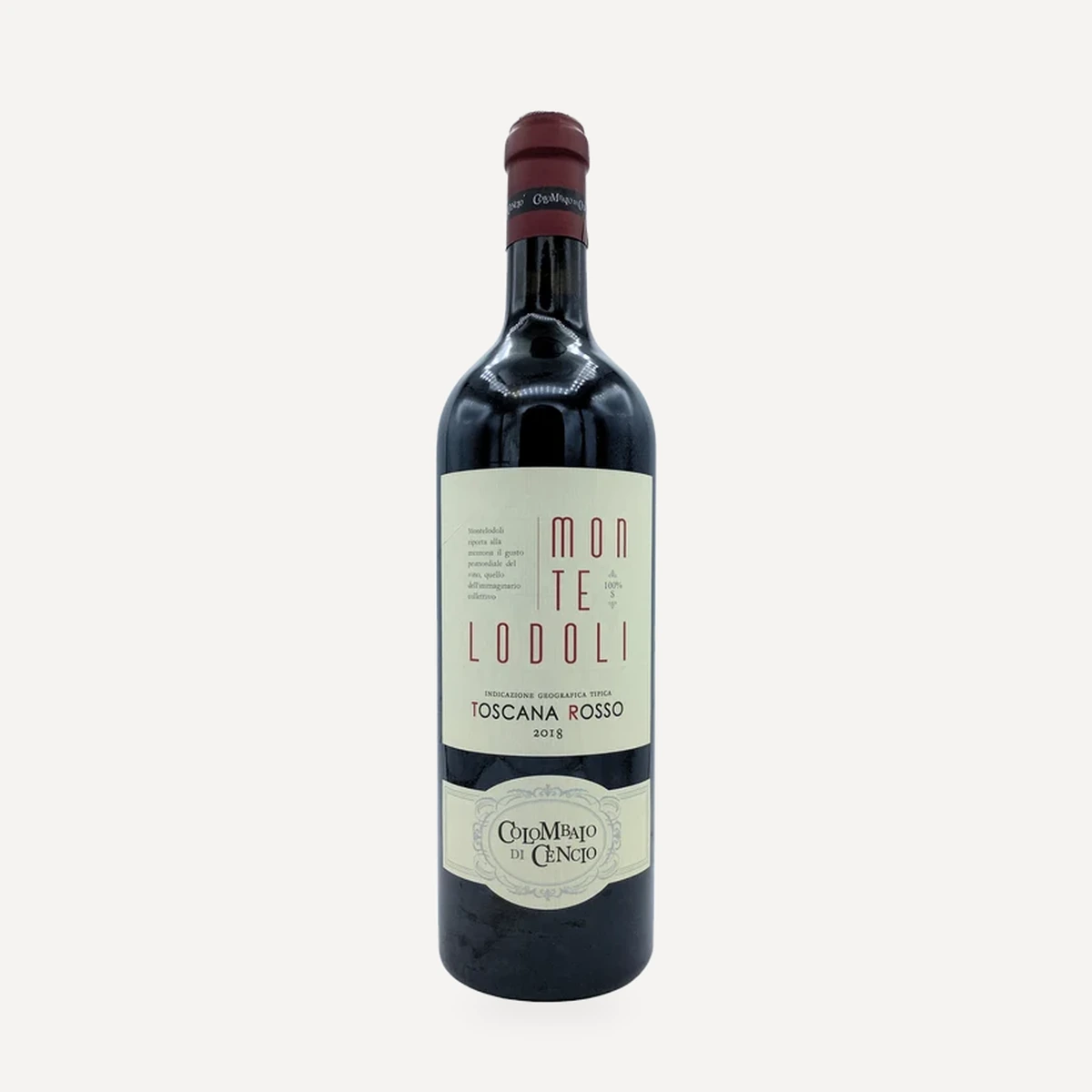
Montelodoli Toscana Rosso IGT