Storia
The beginnings
Le Macchiole originated at the beginning of the 1980s from the project of Eugenio Campolmi and Cinzia Merli. The founders were among the early winegrowing pioneers of Bolgheri, then a coastal area whose modern identity and stylistic direction were still taking shape. The first Bolgheri appellation regulations date to 1983, the same year in which Le Macchiole began cultivating vineyards there; the DOC followed at the beginning of 1984.
The property first encountered by the family was characterized by wheat fields and olive trees. Because Bolgheri had little established modern winegrowing experience, the founders concentrated on studying their land, identifying both its limitations and its potential and developing an approach founded on close vineyard management and environmental care.
First wines and a varietal direction
The first vintage of Paleo Rosso was produced in 1989. Initially conceived as a Bordeaux-style blend, it later became central to the estate’s move toward wines focused on individual varieties. Paleo Bianco followed in 1991, combining Chardonnay with a smaller proportion of Sauvignon Blanc.
In 1994, Le Macchiole introduced two further varietal projects. Messorio was created from Merlot as a challenge to produce a more forceful and distinctive expression of the variety; the inaugural lot comprised only 300 bottles. Scrio was born from the desire to make a pure Syrah and was likewise produced in very small quantities.
Paleo Rosso changed decisively with the 2001 vintage, becoming a 100% Cabernet Franc wine rather than a Bordeaux blend. This transition consolidated the focus on monovarietal interpretations that came to define the estate’s principal wines.
Organic farming and the vineyard mosaic
Organic farming began in 2002. At that stage, Le Macchiole was also working toward biodynamic winegrowing methods, while intensifying its focus on varietal and terroir expression. The contemporary approach remains organic, sustainable and highly differentiated by parcel.
The vineyard holding was assembled gradually across different parts of the appellation. Casanuova 1 was planted in 1998 and Vignone in 1999. Casanuova 2 followed in 2009 and Casanuova 3 in 2013. Sommi was planted in 2015; Casavecchia and Ulivino in 2016; Puntone and Livrone in 2020; and Quercione, Lamentano and Vallone in 2021. Together, the vineyards now cover 35 ha. The modern Puntone planting replaced or succeeded an earlier Puntone vineyard documented in the estate’s historical material.
Bolgheri Rosso was first bottled from the 2004 vintage, adding a multi-variety Bolgheri DOC expression to the estate’s predominantly Toscana IGT range.
Cultural projects and present leadership
In 2012, Le Macchiole organized an international program devoted to Paleo, including complete vertical tastings, a people-centered photographic exhibition by Maurizio Gjivovich and the creation of the Paleo Club.
The Messorio04 project linked wine, visual art and the cultural landscape of Bolgheri. Stefano Tonelli’s painting Calligrafia di un sentimento was divided into 48 individual labels for 48 six-litre bottles of Messorio 2004. Proceeds funded five steel viewing frames donated to Castagneto Carducci and installed at locations associated with the poetry of Giosuè Carducci.
In 2018, OZMO created a monumental mural on the winery’s north wall. Further artistic commissions included Luca Canapicchi’s comic-strip account of Bolgheri wine history and a second large mural by Fabio Schirru, known as Tellas, on the western side of the main building.
Le Macchiole is now led by Cinzia Merli with the active support of her sons, Elia and Mattia, and a broader team of collaborators. The family continues to revise vineyard and cellar practices while retaining the founders’ emphasis on varietal identity, close reading of individual sites, refinement, authenticity and environmental care.
Terroir
Setting and climate
Le Macchiole’s vineyards lie around Bolgheri on Tuscany’s Etruscan Coast, between the coastal hills and the Tyrrhenian Sea. The setting combines hills, woodland, olive groves, cultivated land and the maritime horizon. The climate is dry and gently ventilated, with temperatures slightly lower than elsewhere along the Tuscan coast and particularly intense natural light. These factors create a Mediterranean environment suited to Cabernet Sauvignon, Cabernet Franc, Merlot and Syrah, as well as white varieties including Chardonnay and Sauvignon Blanc.
Geological diversity
Bolgheri contains 27 identified soil units. The broader pattern is deep, alkaline clay-and-sand soil with a fine but substantial mineral skeleton, but Le Macchiole’s holdings demonstrate considerable variation over short distances. Their elevations range from 30 m at Sommi to 220 m at the upper edge of Quercione.
Vignone lies entirely over calcareous rock, with clay and sand proportions changing across the site. The three Casanuova parcels have clay soils with sandstone-derived stones. Sommi is notably sandy and low in silt, while Puntone combines clay with a fluvial skeleton. At higher elevation, Casavecchia has red soil rich in marl and surface rock; Quercione is predominantly loamy with clay and sand. Ulivino changes with aspect: its west-facing side has a medium-textured clay-and-sand soil, while the north-facing side is more clay-rich and contains limestone. Livrone and Lamentano are loamy-clayey sites with sand and abundant stones, and Vallone combines sand, loam and clay.
Vinificazione
Le Macchiole farms 35 ha distributed across different parts of the Bolgheri appellation. The holding has been assembled parcel by parcel, creating a mosaic of sites with different elevations, soil compositions, training systems and varieties.
Organic cultivation has been practiced since 2002 and forms the basis of the estate’s broader sustainability program. An earlier phase also involved a transition toward biodynamic winegrowing methods. Contemporary work is calibrated parcel by parcel and vine by vine rather than imposed uniformly across the estate. Vineyard operations and harvest timing are adjusted to the conditions of each site, and harvest is performed manually.
The importance assigned to precise maturity decisions is illustrated by the 2024 season, when Merlot harvest dates were selected separately for each vineyard and, in some cases, row by row. The resulting yields were lower, while Syrah developed more evenly and produced more generously. Chardonnay was picked somewhat early to retain acidity, and the Cabernet varieties—especially Cabernet Franc—reached maturity from the third week of September into the first week of October.
After harvest, the grapes undergo two selections in the winery. The estate’s approach is to admit only the material that meets its quality requirements. Recent investment in precision agriculture includes a drift-recovery vineyard sprayer. Its inter-row recovery system is projected to save approximately 3.03 litres of fuel and 8.03 kg of CO₂ per hectare while reducing phytosanitary mixture use by an estimated 30% compared with the previous conventional system.
The estate’s general production approach begins with manually harvested fruit and two successive selections in the winery. Lots are kept responsive to the characteristics and maturity of individual parcels rather than treated as a uniform estate blend.
The cellar works with several fermentation and maturation vessels. Current production employs stainless steel and concrete tanks, oak barrels and tonneaux, truncated-cone wooden vats, ceramic or stoneware amphorae and Tava vessels. The winery includes a dedicated barrel-ageing cellar, where wines mature in wood.
These vessels are assigned according to the intended expression. Fermentation and maceration may take place in stainless steel, concrete or stoneware; maturation may combine new and previously used oak with concrete, ceramic or stoneware. Across the range, documented maceration or initial vinification periods extend from approximately 10 to 40 days, while maturation spans approximately 8 to 16 months. The approach has evolved from a stronger historical reliance on new barriques toward a broader palette of larger wooden vessels, concrete and amphorae.
Filosofia
Le Macchiole’s central principle is that wine begins with a close understanding of the land. Its style was developed by examining the strengths and limitations of a relatively young winegrowing territory, giving priority to vineyard management and avoiding environmental harm.
The estate treats its vineyards as a mosaic: contrasting parcels contribute different nuances, and their individuality is preserved through tailored work and separate decisions about cultivation and harvest. Organic farming, manual picking and rigorous selection express a broader commitment to attentive, sustainable agriculture.
In the cellar, the goal is varietal and terroir expression rather than conformity to a predetermined model. The move toward monovarietal Paleo Rosso, Messorio and Scrio exemplifies this direction. The contemporary stylistic priorities are refinement, elegance, authenticity and personality. Continuous change is understood as a means of remaining faithful to the original vision rather than abandoning it.
Family and community are also integral to this outlook. The working team is conceived as an extended family, while the cultural projects connect wine with Bolgheri’s landscape, poetry, history, contemporary art and local civic life.
Vini
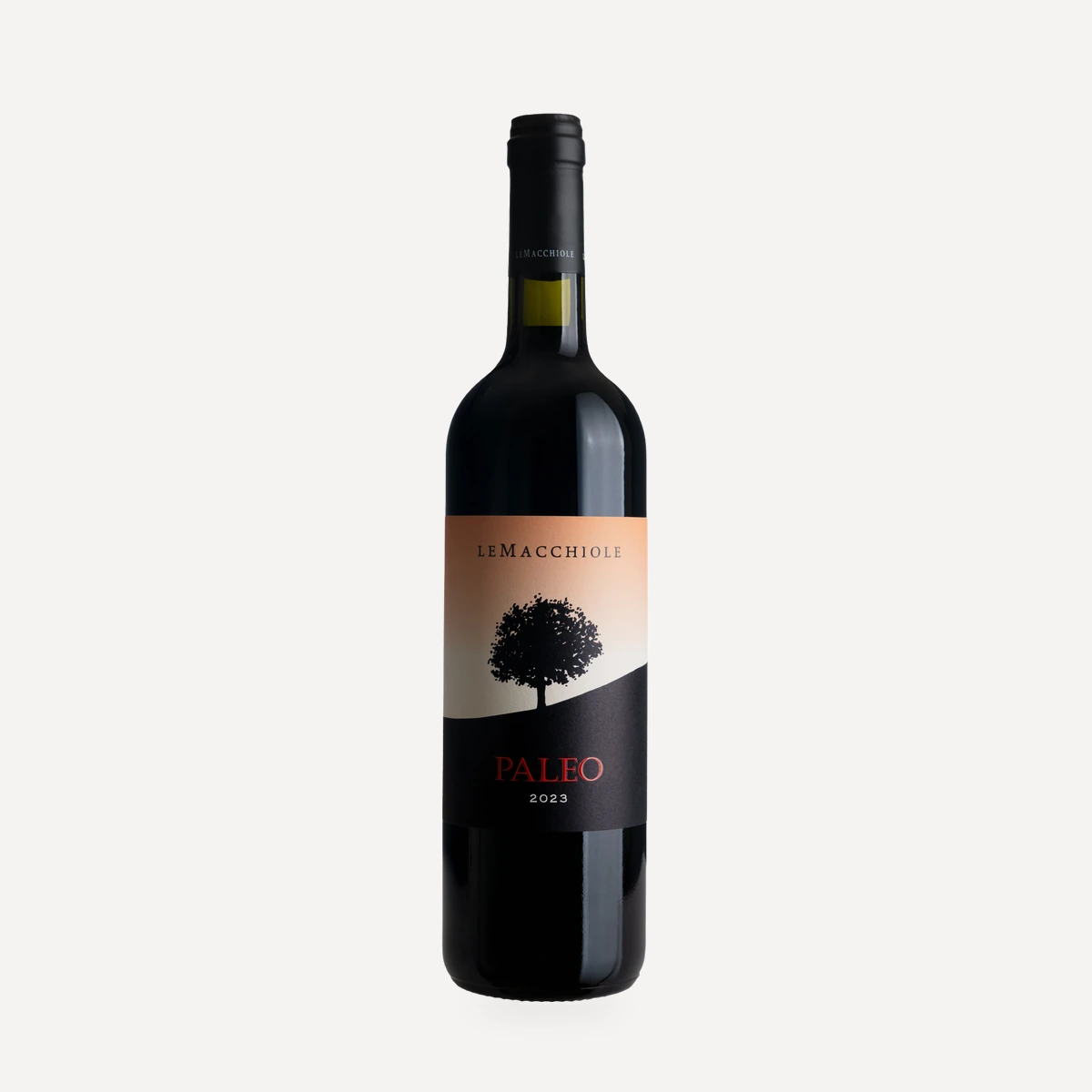
Paleo Rosso
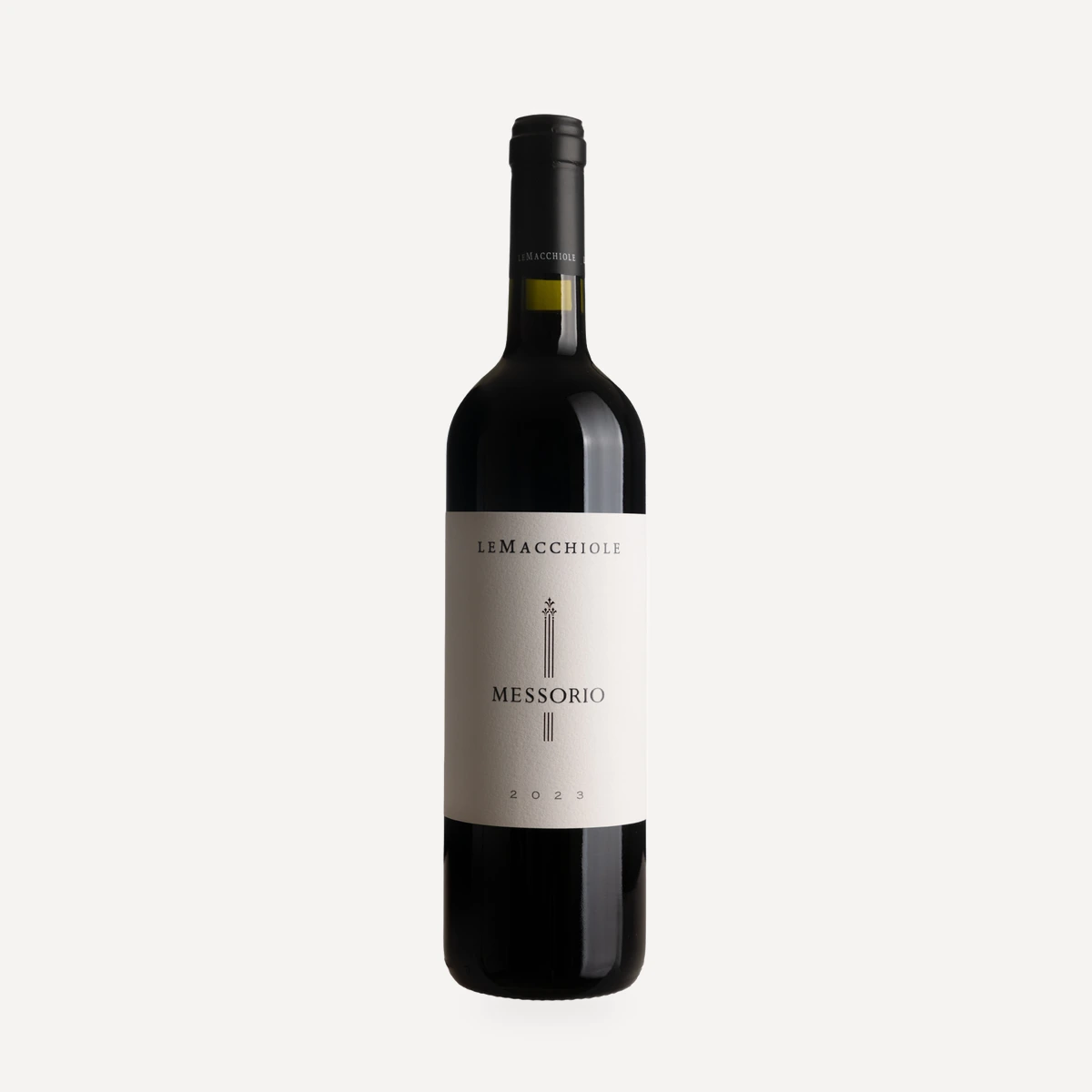
Messorio

Scrio
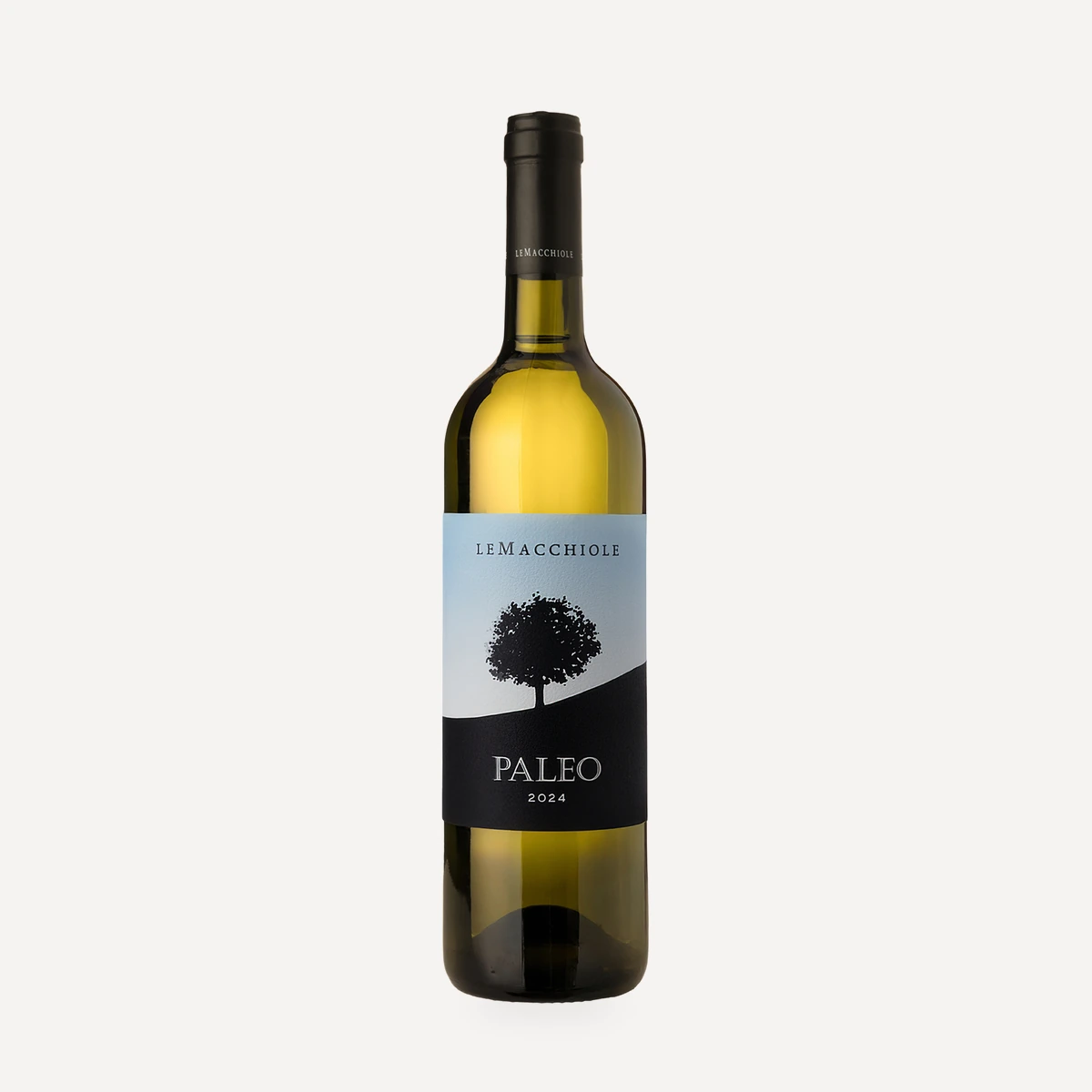
Paleo Bianco
