Storia
Origins to the 1970s
The Tuscan estate of Villa di Bagnolo, west of Florence, was founded in 1500. For centuries the property made wine for its own use.
The 1970s: the planting
In the 1970s the villa's owner decided to renew part of its small vineyard and ordered Sangiovese plants from a nursery. Through an oversight, 330 Pinot Noir vines were delivered and planted instead. The mistake went unnoticed for many years. Guests occasionally remarked on the unusual character of the wine made from the young vines.
1989: the discovery
The mix-up came to light in 1989, when the oenologist Nicolò d'Afflitto, a friend of Marquis Pancrazi, visited the villa. Vittorio Pancrazi first wanted to replant the vines, but d'Afflitto persuaded him to keep them and explore the potential of the variety. The marquis agreed, hoping Pinot Nero would give worthwhile wines, since the estate's Sangiovese had never given good results in its soils. The first wine made under d'Afflitto's guidance exceeded every expectation. Vittorio Pancrazi described the change as an ugly duckling becoming a beautiful swan.
Today
The estate now produces around 25,000 bottles a year across several wines and is known for its Pinot Nero.
Terroir
The estate lies west of Florence in Tuscany. Its soils are iron-rich clay and slate of volcanic origin. Sangiovese never gave good results in them, while the estate regards its terroir as distinctive and naturally well suited to Pinot Nero.
Vinificazione
The estate produces around 25,000 bottles a year across several wines. The first Pinot Nero was made under the guidance of Nicolò d'Afflitto.
Filosofia
The estate attributes its success to its aim of making wine at the highest level and to a distinctive terroir that it holds to be naturally well suited to Pinot Nero. Its wines are made for drinkers who enjoy the elegance and complexity of what the estate considers Tuscany's finest Pinot Nero.
Vini
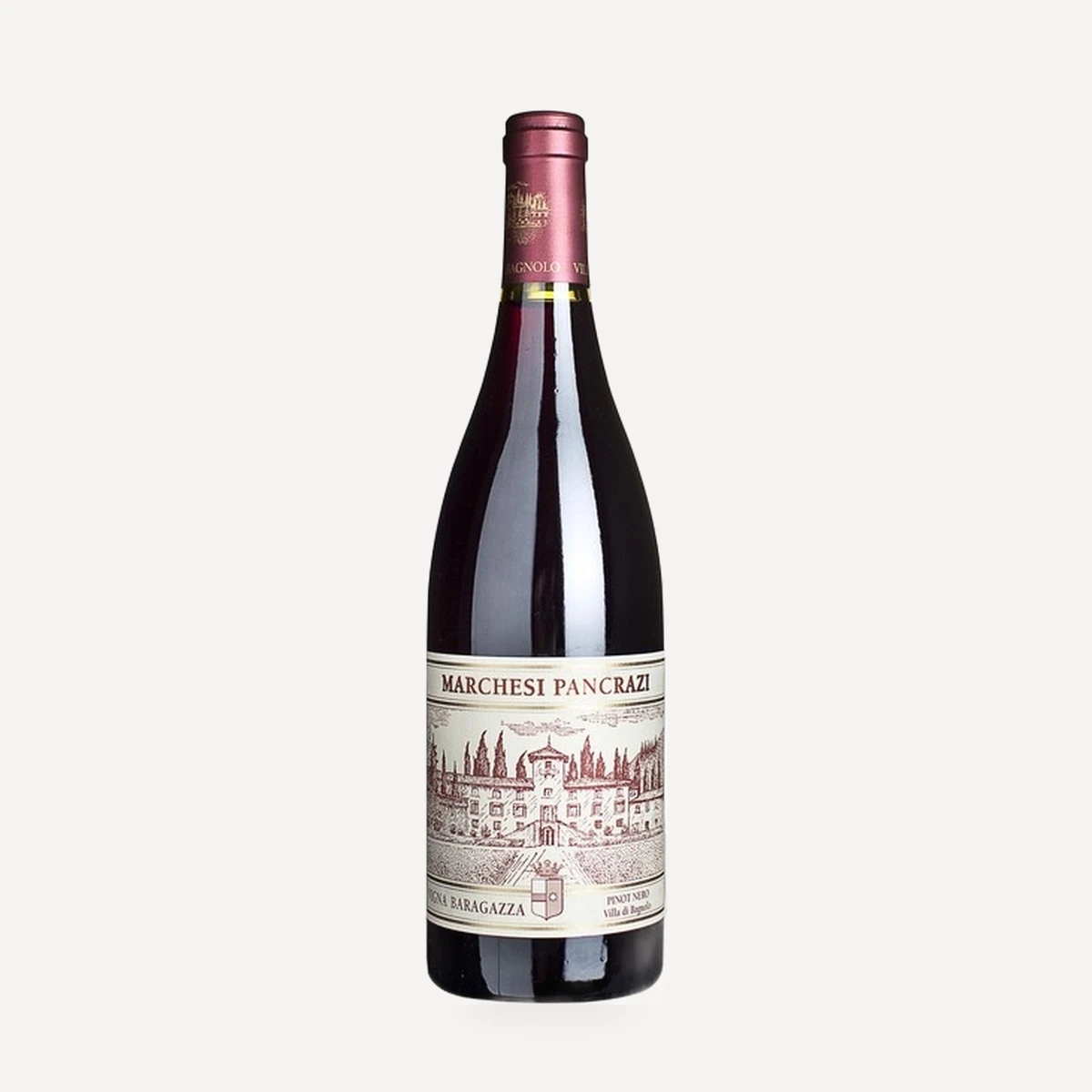
Pinot Nero Vigna Baragazza Villa di Bagnolo Toscana IGT