Storia
Beginnings in the 1930s
Serracavallo's winegrowing history began in Bisignano during the 1930s through Demetrio Bugliari, a physician whose interest in vineyards and wine established the family's connection to the estate.
The property itself carries an older historical association. It had served as a place where the princes of Sanseverino bred horses, including the local Chinea Bianca breed. This former use gave Serracavallo its name.
Renewal under Demetrio Stancati
Bugliari's maternal grandson, Demetrio Stancati, continued the family's work. He undertook a broad renewal of the vineyards, whose reported extent reached approximately 50 hectares. The programme combined clonal selection of local varieties—Magliocco Dolce, Pecorello, Brettio and Greco Nero—with plantings of Cabernet Sauvignon, Chardonnay, Riesling, Merlot and Sangiovese.
The rural complex also underwent restoration. An existing country house, farmworkers' dwellings and agricultural workshops were recovered and renovated rather than abandoned.
The 2008 winery
A new winery was constructed in 2008. Its equipment included stainless-steel tanks connected to a refrigeration system, allowing temperature control throughout the tank cellar. A completely underground barrel room was also created for wines matured in barriques and tonneaux, predominantly made from French oak.
The restored estate subsequently developed an hospitality component alongside wine production, with a five-room guesthouse, cellar and vineyard visits, and guided tastings.
Terroir
Serracavallo is located in the countryside of Bisignano, in the Province of Cosenza, Calabria. The estate works within the Calabria IGP and Terre di Cosenza DOP geographical frameworks. Serracavallo and Pietramola are both recorded as Bisignano toponyms associated with the producer in the official documentation for Terre di Cosenza.
Vinificazione
The vineyards are planted at a density of 3,300 vines per hectare and use both cordone speronato and Guyot training systems. Farming is described as exclusively organic, although the certification body and the date of conversion or certification are not specified.
Harvesting is carried out manually. The planting strategy combines clonal selection of local varieties—Magliocco Dolce, Pecorello, Brettio and Greco Nero—with international cultivars including Cabernet Sauvignon, Chardonnay, Riesling, Merlot and Sangiovese. Greco Bianco also appears in the current production portfolio.
Serracavallo's new winery was completed in 2008 with equipment selected to preserve and enhance the condition of fruit arriving from the vineyards. Every stainless-steel tank is connected to the winery's refrigeration system, providing temperature control throughout the tank cellar.
A fully underground barrel room accommodates wines selected for maturation in barriques and tonneaux. These vessels are predominantly made from French oak. The estate reports annual production of approximately 120,000 bottles, including wines under the Terre di Cosenza DOP designation.
The available material does not specify crushing, destemming, pressing, fermentation organisms, maceration regimes, malolactic fermentation, detailed maturation periods, fining, filtration, sulphur management or bottling procedures.
Filosofia
Serracavallo frames its identity around three stated pillars: territory, culture and respect. Its approach joins the recovery of the estate's rural heritage with investment in modern cellar technology.
In the vineyards, this translates into organic farming, manual harvesting and attention to clonal selections of local grapes. Indigenous varieties remain central, while selected international cultivars broaden the planting programme. In the cellar, refrigerated stainless-steel tanks and an underground barrel room are intended to protect and develop the character of the fruit arriving from the vineyards.
Vini
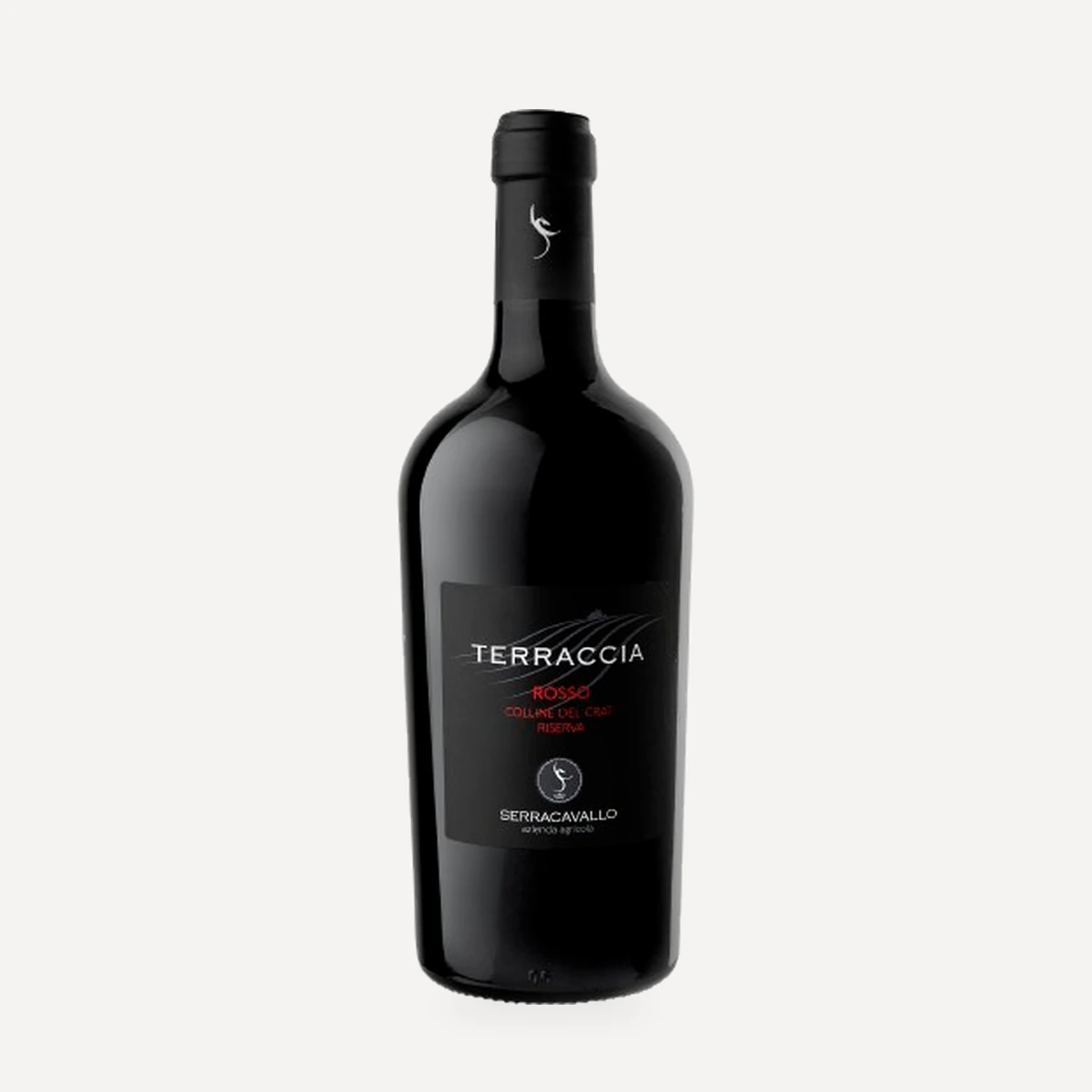
Terraccia
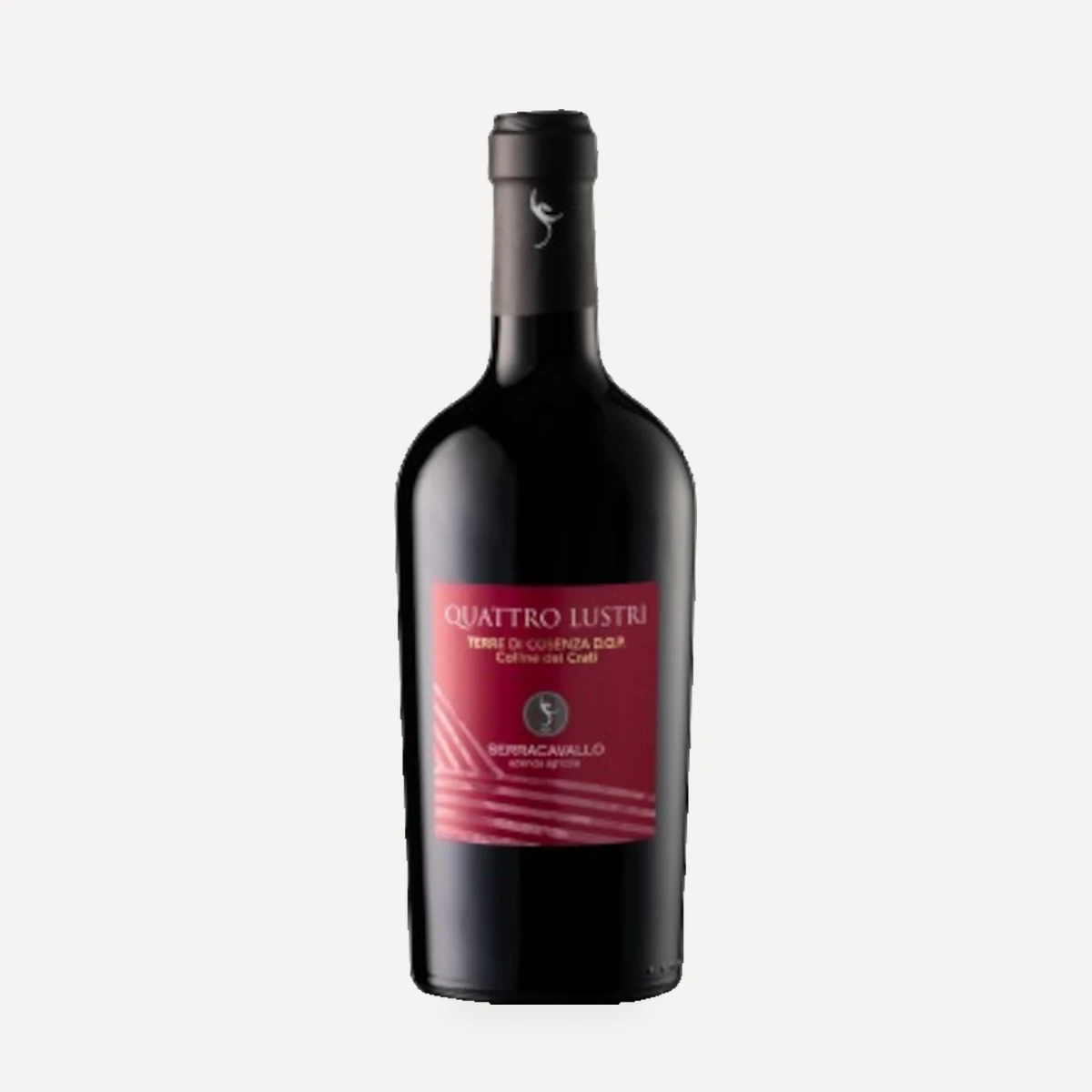
Quattro Lustri
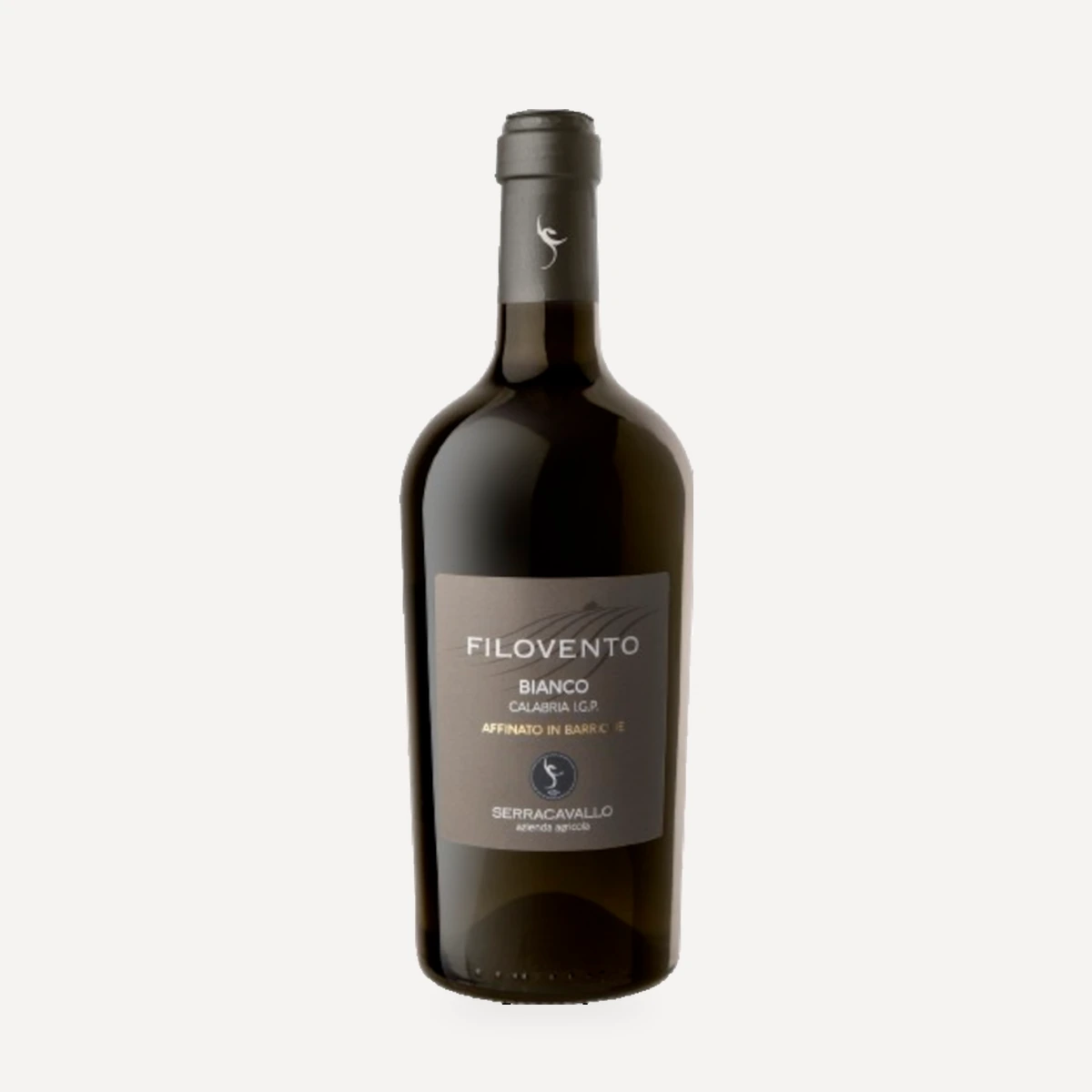
Filovento
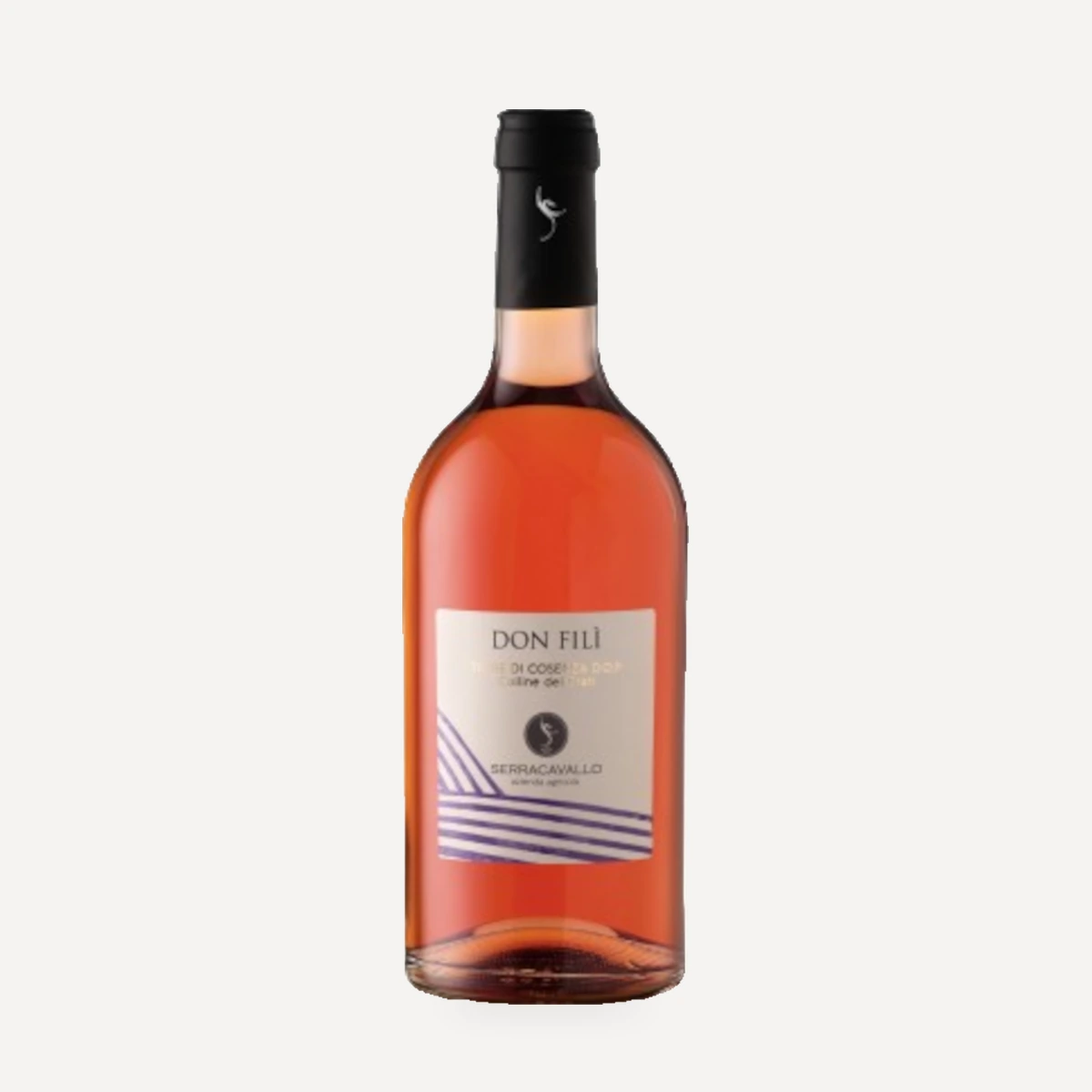
Don Filì