Storia
2001 — Foundation
The Terenzi family founded the estate in Scansano in 2001. Its purpose was to develop the potential of Maremma, a territory the family considered to have been undervalued for too long, and to pursue wines combining regional identity with an elegant, contemporary style.
2004 — Completion of the winery
The estate completed its 3,000 m² winery in 2004. The building became the production centre of a 150-hectare property comprising 60 hectares of vineyards and 14 hectares of centuries-old olive trees. Wine tourism and hospitality were developed alongside production.
2012 — Emerging Winery recognition
In 2012, Gambero Rosso named Terenzi its Emerging Winery. This was the first estate-level distinction identified in the documented chronology.
Subsequent development
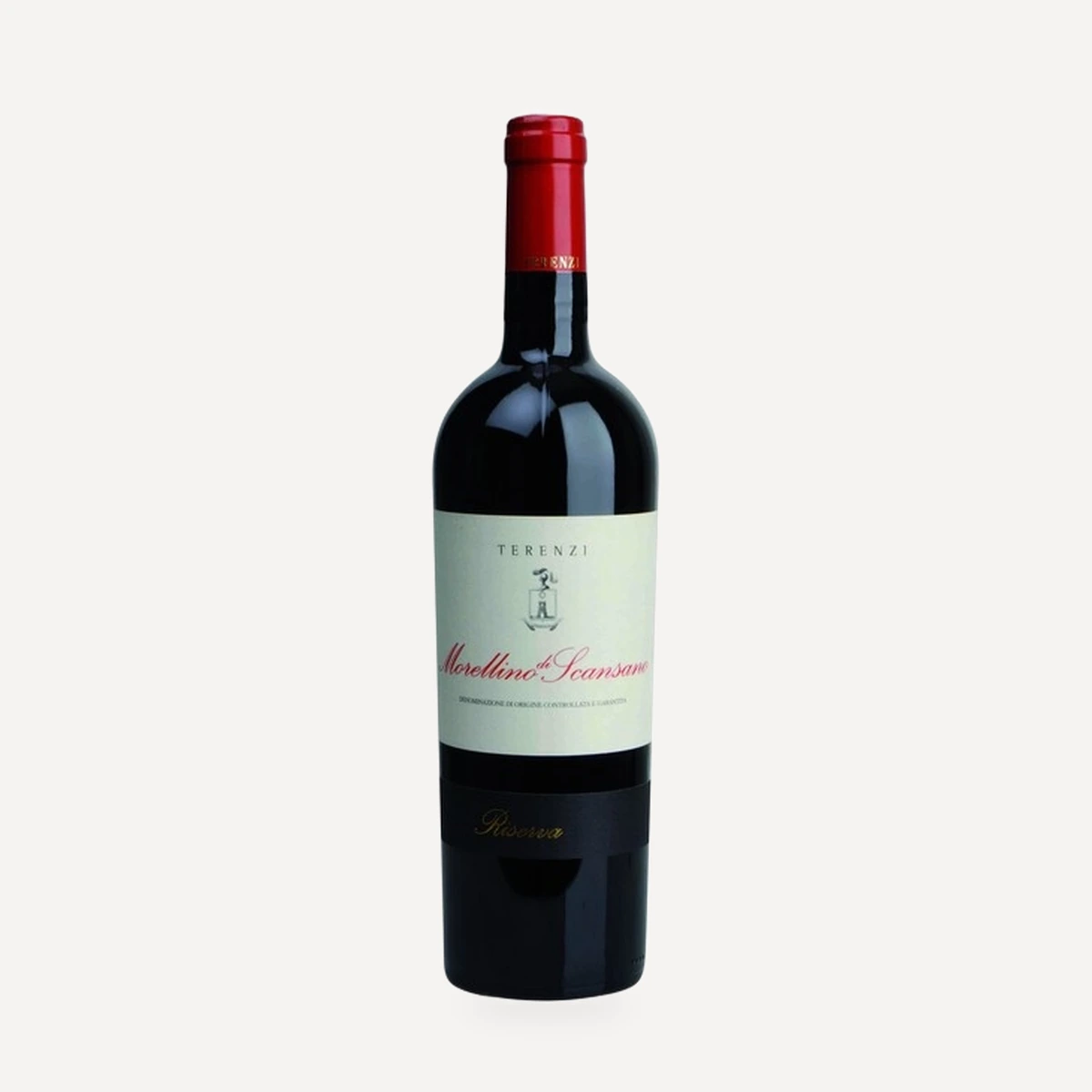
The range came to encompass Morellino di Scansano and other red, white and sweet wines, including Balbinus, Purosangue, Madrechiesa, Francesca Romana and Petit Manseng. Madrechiesa, a pure Sangiovese from a single vineyard, accumulated eleven Tre Bicchieri awards. Terenzi also became the first producer in the Grosseto area of Maremma to plant and vinify Petit Manseng.
The estate is currently led jointly by Balbino Terenzi, Federico Terenzi and Francesca Romana Terenzi. Its activities extend beyond wine to olive oil, grappa, tastings and accommodation.
Terroir
Terenzi is located at Località Montedonico in Scansano, in the heart of Maremma and the southernmost part of Tuscany. It lies near the Terme di Saturnia and the Argentario coast, approximately two hours by car from both Florence and Rome.
The surrounding landscape consists of vine-covered hills that become gentler toward the sea. Olive groves, rows of cypresses and coastal pine woods form part of the setting, and the estate manages five principal vineyards with distinct characteristics.
The vineyard soils described across the estate include limestone-rich ground used for Vermentino, Viognier and Petit Manseng; calcareous, sandy, lean and freely draining terrain; deep profiles containing coarse sand and deeper clay, with abundant stones and good drainage; and lean, rocky, stony soils. Exposure is specifically emphasized for the sandy, calcareous sites associated with Cabernet-based wines.
Vinificazione
The documented estate vineyards are planted at 5,000 vines per hectare. Guyot is used for Vermentino, Viognier and Petit Manseng, while the described red vineyards use spur-pruned cordon.
Harvest timing follows the variety and intended wine. Viognier is collected at the beginning of September; Vermentino from mid-September through the third week; Cabernet Franc, Cabernet Sauvignon, Merlot and the estate Morellino toward the end of September; and Sangiovese for Purosangue and the Sangiovese–Syrah blend at the beginning of October. Petit Manseng is expressly harvested by hand.
Documented yields range from 5 t/ha for Petit Manseng through 6–6.5 t/ha for Cabernet-based selections, 7 t/ha for Purosangue and 9 t/ha for several estate white and red wines. The Balbinus specification records 700 ql/ha. No estate-wide organic, biodynamic or other certified farming regime is identified.
The 3,000 m² winery was completed in 2004 and serves as the estate's production and visitor centre.
White-wine production
Vermentino and Viognier are generally soft-pressed as whole grapes in a pneumatic press. Fermentation takes place without skins in temperature-controlled stainless-steel tanks at 18°C, ordinarily for 12 days; the selected Vermentino used for Balbinus is fermented for 12–15 days. Malolactic fermentation is not carried out. Most white wines mature in stainless steel, while Balbinus uses both stainless-steel and ceramic vessels.
Red-wine production
The described red grapes are destemmed and partially crushed before pneumatic pressing. Alcoholic fermentation takes place in temperature-controlled stainless steel with skin contact. Temperatures range from 27°C to 30°C, and fermentation lasts either seven or fifteen days according to the wine. Malolactic fermentation completes spontaneously in stainless steel.
Maturation ranges from stainless steel for the unoaked reds to oak regimes including at least 12 months in oak, 12 months in tonneaux and large Slavonian-oak casks, or 18 months in French-oak barriques. Documented bottle ageing ranges from three months to six or eight months. For Bramaluce, part of the harvest rests on drying racks for approximately 15 days before vinification.
Sweet-wine production
Petit Manseng is harvested by hand and dried on racks for one month. Whole grapes are gently pressed, and fermentation occurs in temperature-controlled stainless steel at 18°C. The wine then matures for 18 months in French-oak barriques and receives 12 months of bottle ageing.
Grappa
Grappa is distilled exclusively from selected fresh estate pomace within 24 hours of pressing. Production uses small boilers and a low-strength, discontinuous steam-distillation method. The heads and tails are separated manually during every batch, and no artificial aroma is added. Madrechiesa grappa is aged for 18 months in certified 225-litre, medium-toast French-oak barriques held in a sealed bonded warehouse.
Filosofia
Terenzi's founding objective was to demonstrate the potential of Maremma, which the family regarded as an undervalued wine territory. The estate presents territorial expression, complexity, finesse and elegance as the central aims of its production.
Its approach to Morellino di Scansano is framed as an effort to return the denomination to a high qualitative level through an elegant style. Across the range, Terenzi favours an explicitly contemporary stylistic identity while retaining the recognisable character of the estate's varieties and land.
The family also treats hospitality as part of the estate's identity. Tastings, guided visits and accommodation are intended to connect the wines with their landscape, rather than presenting production in isolation. Awards are described as encouragement to continue this work rather than as an end in themselves.
Vini
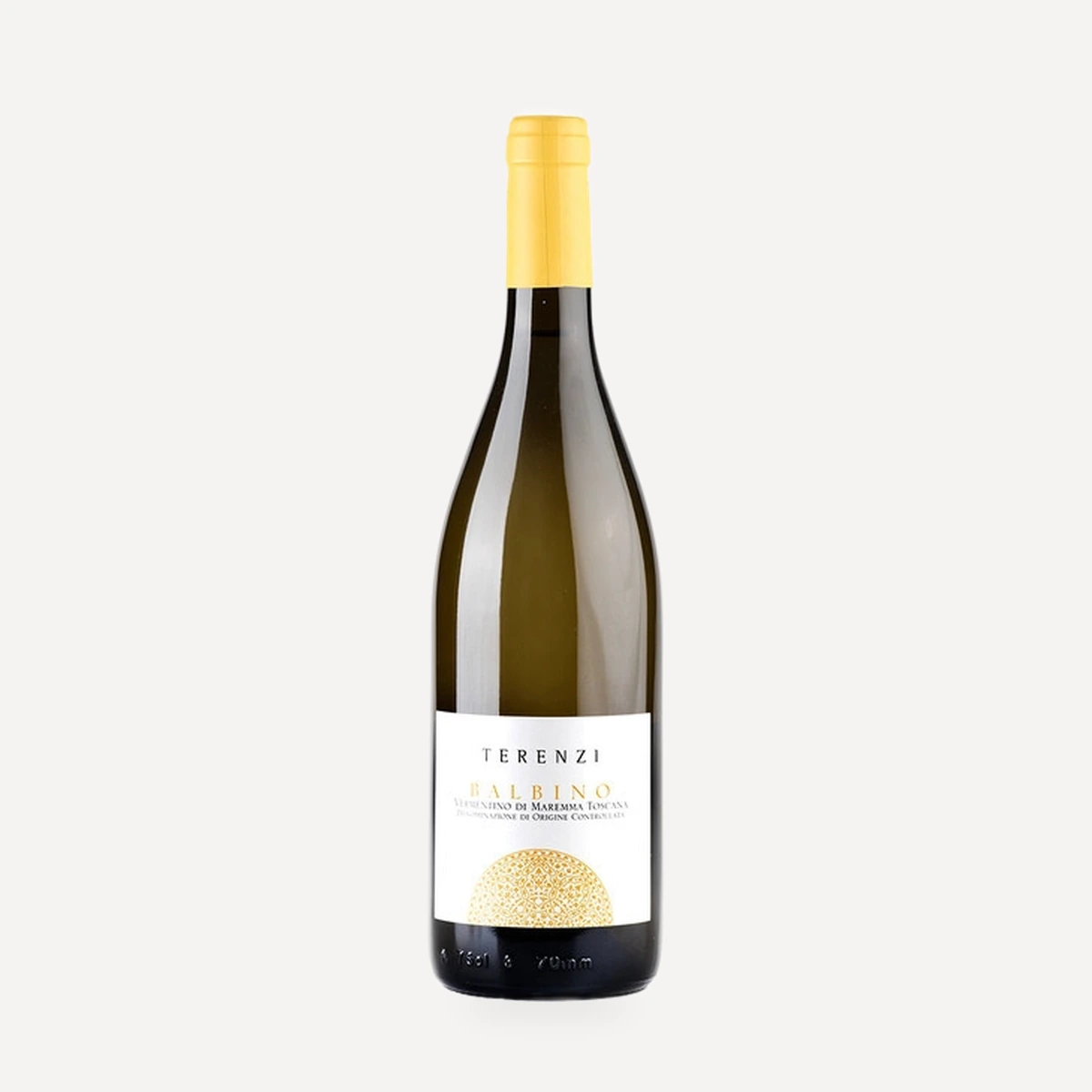
Balbino Vermentino di Maremma Toscana DOC