Storia
Acquisition and vineyard establishment
Poggio La Mozza is the younger of the Moris family’s two estates. Gualtier Luigi Moris acquired the property in 1971 and immediately began planting more than 30 hectares of vines. During the estate’s first years, its grapes were transported to Tenuta Poggetti for vinification.
Adolfo Parentini and the first Morellino
Adolfo Parentini married Gualtier Luigi Moris’s daughter Caterina Moris in 1977. He recognised the potential of the family’s land for quality viticulture and promoted a change from agriculture and grape-growing focused on volume toward wine production centred on quality. This required the introduction of unfamiliar practices, including green harvesting. A surviving family letter records Gualtier Luigi’s concern about the quantity of fruit being discarded; within four or five years, however, vineyard workers themselves were identifying seasons in which a second green-harvest pass was required.
Morellino di Scansano received DOC status in 1978. As a young oenologist working with a newly established property, Adolfo had considerable freedom to experiment at Poggio La Mozza. He became one of the denomination’s pioneers, working with a small group of producers to codify local winegrowing traditions and define standards based on Sangiovese from the Scansano area. He was also a supporter and founding member of the Consorzio di Tutela del Morellino di Scansano.
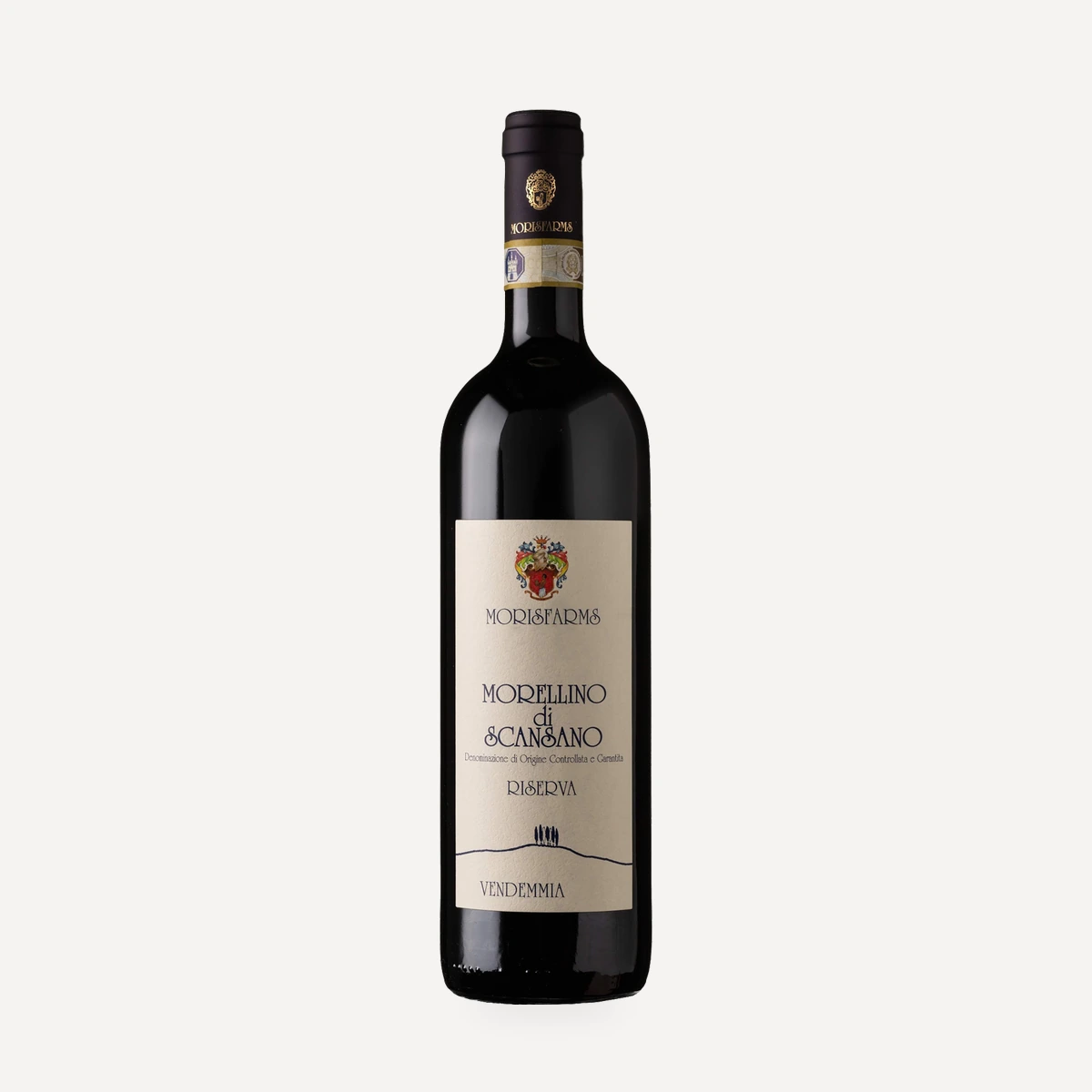
Work on a dedicated winery began under Adolfo’s direction in 1981. That year he produced the first bottle of Moris Morellino di Scansano, and Poggio La Mozza progressively specialised in the denomination. The estate’s Morellino di Scansano Riserva followed in 1988.
Expansion of the winery
The winery continued to expand after its initial construction. In 1999, a devoted Moris family employee built the estate’s small statue of the Virgin Mary, known as the “Madonnina Moris.” The cellar complex reached another important stage in 2002 with construction of a large barrel room. Located at the centre of Poggio La Mozza, it became the maturation facility for the leading wines made from both Moris family estates, using hundreds of French-oak barrels.
DOCG recognition and the present generation
Morellino di Scansano advanced from its 1978 DOC status to DOCG beginning with the 2007 harvest. Poggio La Mozza lies entirely within the denomination and remains focused on its two Morellino expressions, Classico and Riserva.
Giulio Parentini began working full-time for the family business in 2001, collaborating closely with his father Adolfo on team management, new vineyard plantings, winery projects and international commercial relationships. Ranieri Moris began assisting his uncle Adolfo with management in 2008 and later held senior roles in Confagricoltura and the Consorzio del Morellino di Scansano. The two cousins now manage Morisfarms together, combining the inherited traditions of Adolfo Parentini with long-term vineyard and winery development.
The 2021 vintage marked both the fiftieth anniversary of Poggio La Mozza and twenty years since Gualtier Luigi Moris’s death. From that vintage, the estate’s representative Morellino di Scansano Riserva adopted the name Gualtiero, commemorating the man who acquired and planted the property.
Terroir
Poggio La Mozza occupies 55 hectares of rolling Maremman hills within the Comune of Grosseto, between the city and the Tyrrhenian Sea. The property lies entirely inside the Morellino di Scansano DOCG production area, with its vineyards at approximately 100 metres above sea level.
The vineyard soils are sandy and alluvial, with marine-origin sandstone reflecting an ancient seabed. They are described as slightly acidic. The sites used for the estate’s Morellino wines have a north-western exposure. These sandy soils are associated with the soft, elegant tannic profile sought in Poggio La Mozza’s red wines.
Vinificazione
The first vineyard development followed immediately after the property’s acquisition in 1971, when more than 30 hectares were planted. The present vineyard area is 35 hectares, dedicated exclusively to red varieties for Morellino di Scansano DOCG.
Adolfo Parentini led the move from volume-oriented grape production toward quality-focused viticulture. Green harvesting initially represented a major cultural change for the family and its workers: fruit was deliberately removed to control the crop, and within four or five years the vineyard team had adopted the practice sufficiently to request a second pass when vines carried excessive fruit.
Harvesting for the estate’s Morellino wines takes place during the final two weeks of September and the first week of October. The Classico vineyards are associated with a yield of 9,000 kg/ha, while fruit selected for the Riserva is associated with 7,000 kg/ha. The Moris family characterises its multigenerational agricultural approach as sustainable, based on techniques developed and passed down over successive generations.
Winery and maturation cellar
Poggio La Mozza’s grapes were initially transported to Tenuta Poggetti for vinification. Construction of a dedicated winery began under Adolfo Parentini in 1981 and continued through successive enlargements. In 2002, the complex gained a large barrel room at the centre of the estate. It contains hundreds of French-oak barrels and serves as the maturation facility for the leading wines produced from both Moris family estates.
Morellino Classico process
The harvest occurs from the final two weeks of September into the first week of October. Vinification takes place in temperature-controlled stainless-steel tanks. Two pump-overs are carried out daily during a 15-day maceration. The wine is bottled after four months without wood ageing, followed by at least two months of bottle refinement before release.
Morellino Riserva process
Riserva grapes are harvested over the same late-September to early-October period. Vinification takes place in temperature-controlled, vitrified cement tanks, with two pump-overs per day and a 20-day maceration. The wine then spends one year in second- and third-use barriques, with an intermediate racking. It receives at least six additional months of bottle refinement before release.
Filosofia
Poggio La Mozza developed as the Moris family’s experimental estate, giving the young Adolfo Parentini room to test methods and refine his understanding of quality wine production. His central objective was to replace a culture of maximum agricultural volume with disciplined viticulture capable of expressing the character of Sangiovese grown around Scansano.
That approach joined experimentation with respect for local tradition. Parentini worked to codify established practices of the Morellino di Scansano area rather than detach the wines from their geographic identity. Green harvesting, lower yields and differentiated cellar regimes for Classico and Riserva became practical expressions of this quality-first philosophy.
Current managers Giulio Parentini and Ranieri Moris describe their work as a continuation of Adolfo’s legacy: producing wines that reflect both their terroir and inherited production traditions while continuing long-term vineyard and winery development. The broader family philosophy emphasises care for the land, techniques passed between generations and maintaining the relationship between Maremman agriculture and local identity.
Vini
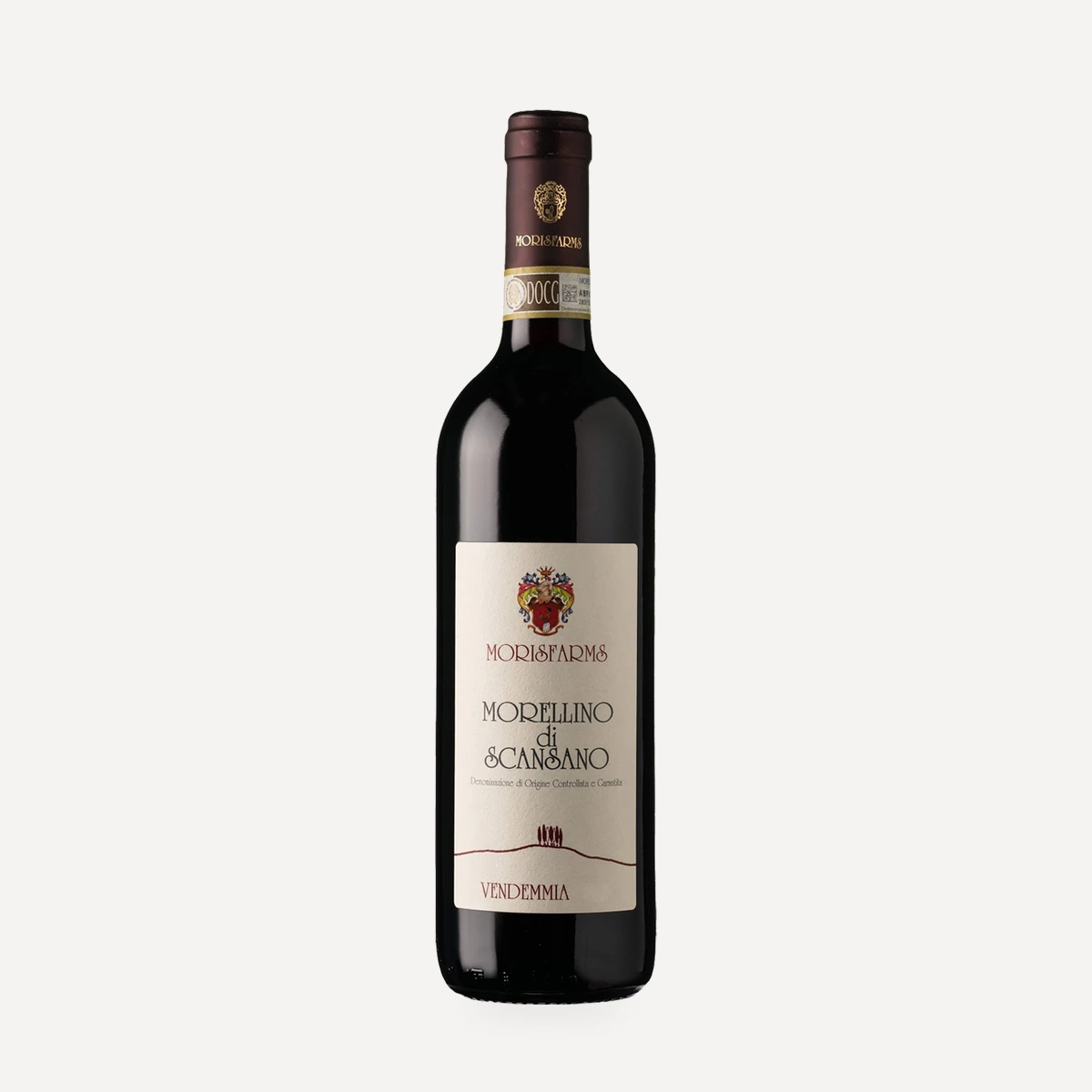
Morellino Classico Moris | Morellino di Scansano DOCG