Storia
More than a century of Gallo family viticulture
The Gallo family’s involvement with vines and wine began more than a century ago. The family history identifies Basilio, Stelio and Gianfranco, together with their relatives, as successive contributors to the estate’s development.
1978: Gianfranco Gallo takes charge
Gianfranco assumed management in 1978. He combined rigorous, sometimes bold viticultural decisions with close attention to winemaking, establishing the stylistic direction that has defined Vie di Romans over the ensuing decades.
The same year marked both the estate’s first bottling and the appearance of its first commercial label, shifting Vie di Romans toward an estate-bottled identity.
1982: vineyard modernisation
A comprehensive vineyard-renewal programme began in 1982 with quality as its objective. The vineyards were progressively brought into line with criteria including higher planting density, low production per vine and an appropriate exposed leaf area. The programme was not treated as a fixed technical formula: vineyard balance, assessed through experience and observation, remained the central measure of quality.
1989: a new three-level winery
In 1989 Vie di Romans completed a new winery arranged over three floors. The estate’s media archive also documents a further new-winery development in 2023.
1990–1992: cru separation and delayed release
Beginning with the 1990 harvest, grapes were vinified separately according to their cru of origin. This decision formalised the estate’s belief that individual vineyards should retain their distinct pedoclimatic identities in the finished wines.
The 1990 vintage entered the market in 1992. From that release onward, the white wines were consistently commercialised two years after harvest, allowing a longer maturation period than was customary when the policy was introduced.
Collezione Millesimi
After years of planning, Vie di Romans developed Collezione Millesimi to explore bottle evolution and vintage character. Its original mini-vertical format brought together Vie di Romans Chardonnay and Vieris Sauvignon from 2007, 2008 and 2009, with two bottles of each wine in a six-bottle solid-oak case with a beechwood insert. A bilingual parchment sheet described the environmental conditions of the three harvests. The collection also encompasses a list of selected vintages from other wines.
I Climat
After several years of research into the soil, climate, biology and winemaking variables of smaller sites, Vie di Romans began producing I Climat with the 2015 vintage. Six Chardonnay sites were delimited within the Vie di Romans and Ciampagnis crus. Each bears the name of a family that cultivated the corresponding land in an earlier era, when local ownership was highly fragmented and the same families often worked individual holdings for generations.
Viticulture and winemaking were standardised across all six sites so that technical differences would not obscure their natural variation. The inaugural wines received 18 months of maturation on the lees followed by two years in bottle before release.
2023 and recent investment
The visual archive records a new winery in 2023. A subsequent PNRR-supported mechanisation project added a Gregoire ISO Ultima sprayer equipped with ISOBUS and telemetry. The investment improved operating efficiency while reducing environmental impact, water consumption and phytosanitary inputs.
Terroir
Location
The estate’s 67 ha of vineyards lie entirely in Mariano del Friuli, within Friuli Isonzo. This is the eastern edge of northern Italy, close to the Slovenian border. The Adriatic Sea is no more than 20 km to the south, while the first Alpine foothills begin about 30 km to the north.
The vineyards occupy part of a broad terrace on the right bank of the Isonzo known as Rive alte. Its faint reddish cast reflects a high concentration of iron oxides. Individual vineyards nevertheless differ in microclimate and soil profile, and these variations underpin the practice of identifying vineyard origin on labels and vinifying crus separately.
Climate
The area is a convergence zone for maritime and continental air masses: dry and humid, cold and temperate conditions repeatedly alternate. Cold continental Bora winds arrive from the east through the broad valley opening in the Slovenian mountains, while warmer and more humid Mediterranean scirocco winds affect the area at other times.
During the vine’s growing cycle, the long-term pattern combines wet, rainy springs; temperate, dry summers; and cool, dry autumns alternating with rainy ones. Autumn can consequently resemble either a European-continental or a northern-Mediterranean regime.
The cool, dry Bora contributes to diurnal temperature variation and, indirectly, increased sunlight. It also slows grape ripening.
Soil origins and differentiation
Two broad soil families occur in the surrounding area. Autochthonous soils form through alteration of the underlying rock in place and support the estate’s most important vineyard sites. Allochthonous soils derive from recent stream-borne alluvium: clay transported from morainic hills settles into deep, uniform profiles without stony skeleton or stratification. Their high fertility and abundant water supply encourage more vigorous viticulture suited to different oenological objectives. Similar colluvial clays, eroded from morainic slopes, accumulate at the foot of hills and cover Eocene terraces along a narrow band.
Pedogenesis
The in-situ soils developed through a very slow combination of physical, chemical and biological processes. Large temperature changes fractured the parent rock, permitting rainwater to enter. Carbonic acid in the water dissolved calcium carbonate, decalcifying and weakening the rock and releasing mineral elements. Mosses and lichens then colonised the material, using enzymes to break down minerals; their biological cycles created the first organic layer and allowed more demanding vegetation to establish.
Over millennia, downward movement of materials differentiated the profile into three horizons. The upper eluvial horizon is darker, richer in humified organic matter and more microbiologically active; rainwater leaches its calcium carbonate downward, while clay formed from silicate decomposition mixes with a stony skeleton that can account for 50% of its volume. The illuvial horizon accumulates carbonates and cations including iron and aluminium. Beneath it, the pedogenetic substrate consists of undecomposed parent rock.
This evolution continues through ferrettizzazione: soils gradually become deeper, darker and more clay-rich through organic accumulation, while the remaining skeleton becomes increasingly dominated by resistant minerals such as granite and quartz.
Vineyard-scale soil variation
Current and recent technical profiles show significant local differences. Vie di Romans Chardonnay grows at 31 m on moderately deep red clay soils with a moderate stony fraction. Ciampagnis is shallower, more gravelly, lower in clay and well drained. Dessimis is likewise shallow and generously gravelly, with red clay and good drainage. Piere is moderately deep, with a moderate stony fraction and silica-rich clay mixed with conglomerate. Vieris is shallow and generously gravelly, with red-tinged sand and silt, strong drainage and low water-retention capacity. Fratta has a deep, two-layer profile: slightly acidic, decalcified, stone-free clay above calcareous sandy silt rich in dolomite and other calcareous minerals.
Vinificazione
The estate’s vineyard-modernisation programme began in 1982. Across the planted area, its quality parameters include relatively high vine density, low production per plant and sufficient exposed leaf area. Vineyard balance, rather than compliance with isolated numerical targets, is treated as the decisive objective; observation and accumulated field experience guide continuing adjustments.
Current and recent technical profiles show planting densities generally between 6,000 and 7,800 vines/ha. Simple Guyot is widespread, with spur-pruned cordon also present in several white-wine vineyards. Reported rows run north–south, east–west or in both directions, depending on the site.
Grapes are kept separate by cru so that vineyard-scale soil and microclimate differences can be carried through vinification. For the six I Climat sites, viticulture is deliberately standardised to prevent differences in technique from masking differences among the pedoclimatic units.
A recent mechanisation project introduced a Gregoire ISO Ultima sprayer with ISOBUS and telemetry. The equipment improved operational efficiency, reduced environmental impact, saved water and lowered phytosanitary inputs.
Winery development
A purpose-built winery completed in 1989 was arranged across three levels. A new winery was documented in 2023.
Separation by origin
Since the 1990 harvest, grapes have been vinified separately according to cru. This practice preserves the identities of sites whose microclimates and soil profiles differ even within the same broader terrace. The vineyard’s name accompanies the grape variety on estate labels.
White-wine protocol
Current technical sheets show a consistent general protocol for the principal white wines. Grapes are destemmed and crushed, followed by cold skin maceration at 8 °C and cold static settling. Fermentation proceeds at 16–19 °C with selected yeast strains. Depending on the lot and vintage, fermentation commonly lasts about 18–23 days. Malolactic fermentation is not carried out.
The wines mature on their lees, generally for eight or nine months, and clarify naturally in steel without a fining agent. Current releases commonly receive a further nine or ten months in bottle. The broader estate policy, established with the 1990 vintage released in 1992, is to commercialise the white wines in the second year after harvest.
Dessimis Pinot Grigio is processed in an oxygen-free environment. This protects aromatic compounds during grape and must handling and also preserves the variety’s natural anthocyanin-derived copper colour. The colour is treated as a consequence of protection from oxidation rather than as a stylistic goal.
Red-wine protocol
Recent Merlot and Pinot Nero technical sheets describe destemming and crushing, followed by skin maceration with punch-downs and délestage in stainless-steel fermenters. Fermentation uses selected yeasts, with temperatures reported between 18 and 30 °C, and malolactic fermentation is completed.
The wines then mature in barriques before transferring to stainless steel for natural clarification. Recent examples range from 14 months in barrel for Pinot Nero to 18 months for the Fratta-derived Merlot, followed by additional time in steel and extended bottle ageing.
I Climat
Viticultural and cellar methods are kept uniform across all six Chardonnay sites to isolate natural site variation. The inaugural 2015 wines matured for 18 months on the lees and then for two years in bottle before presentation.
Filosofia
Vie di Romans frames wine quality as the result of many interacting variables rather than a single factor such as soil or cellar technique. Its philosophy groups the decisive influences into three spheres: environment, encompassing climate and soil; viticulture, encompassing the agronomic choices required for an efficient vineyard system; and people, the central element that interprets the environment and directs cultivation toward a purpose.
Human action is understood as both creative and subordinate to a larger natural system. The winegrower studies the environment, orchestrates cultural choices and enters into a dialogue with the territory rather than treating technique as an end in itself.
Each vineyard and its wine are regarded as an inseparable unit with the place that generated them. Because even limited pedoclimatic changes can alter vine physiology, grapes are vinified separately by site and vineyard names are retained on labels. The same logic reaches a finer scale in I Climat, where homogeneous micro-environments are isolated and all technical practices are standardised so that natural variation remains legible.
Longevity is integral to this view of terroir. Extended maturation is intended to allow a wine to find balance, stability and a clearer identity. This principle underlies both the two-year release cycle for white wines and the longer élevage of I Climat and Collezione Millesimi.
Vini
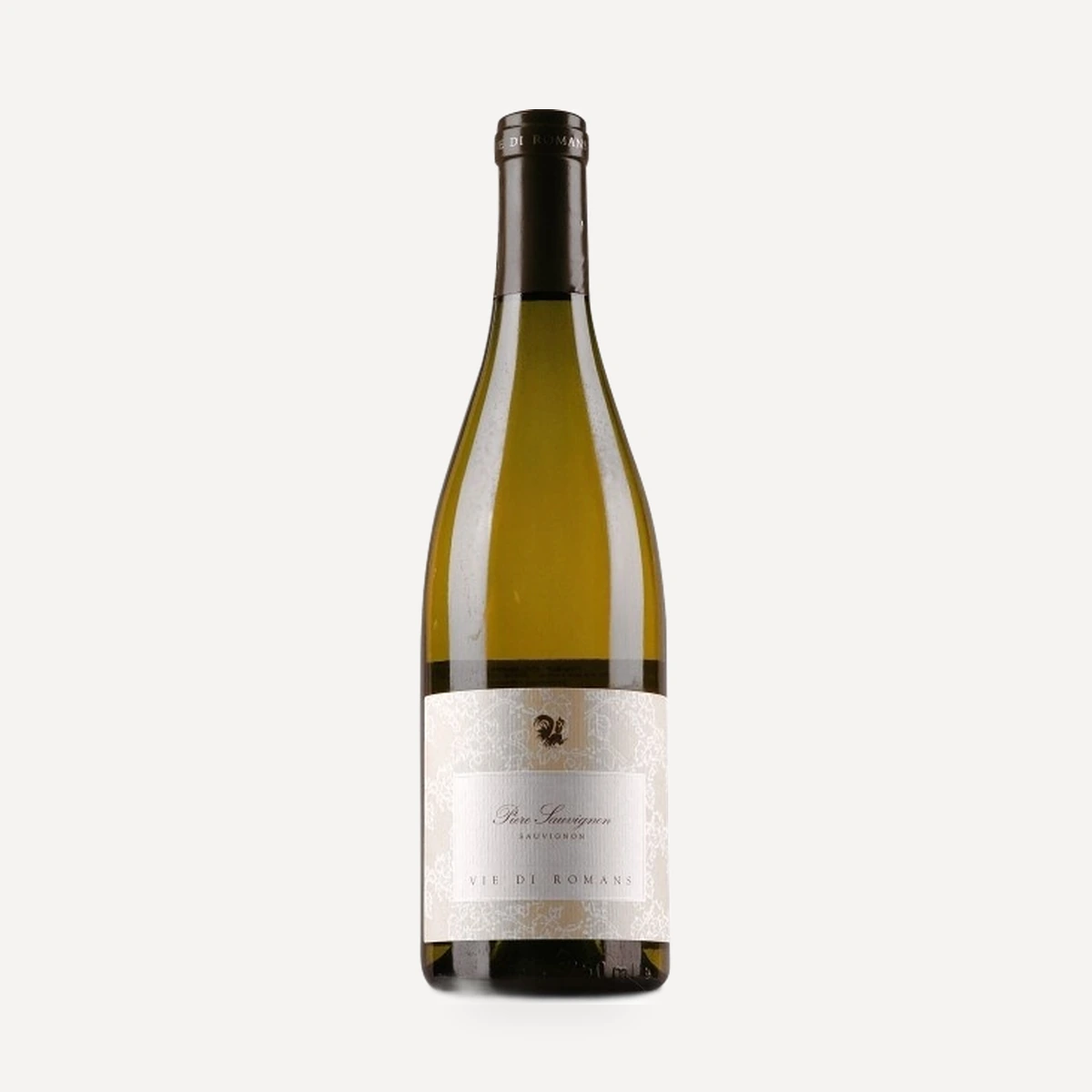
Piere Sauvignon
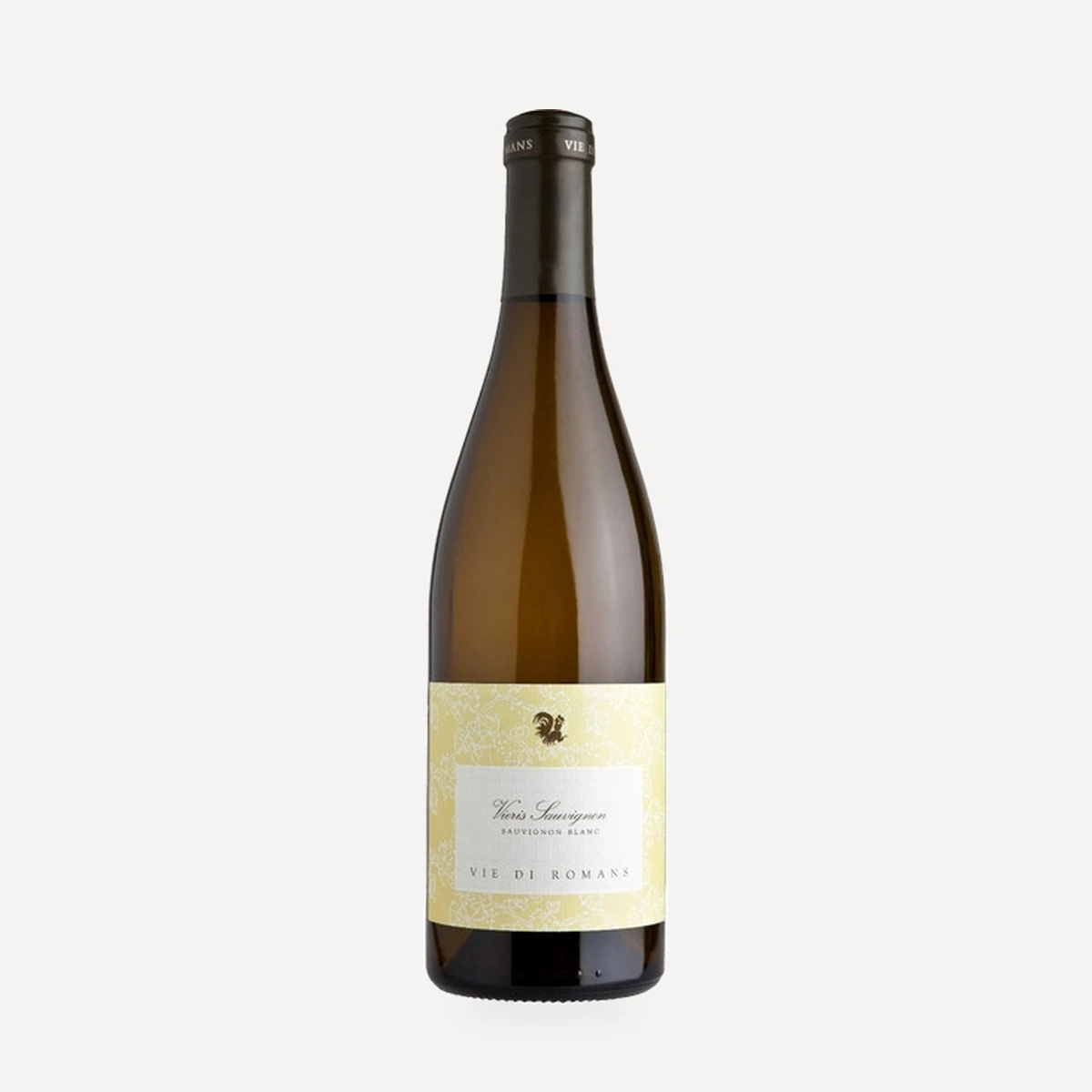
Vieris Sauvignon
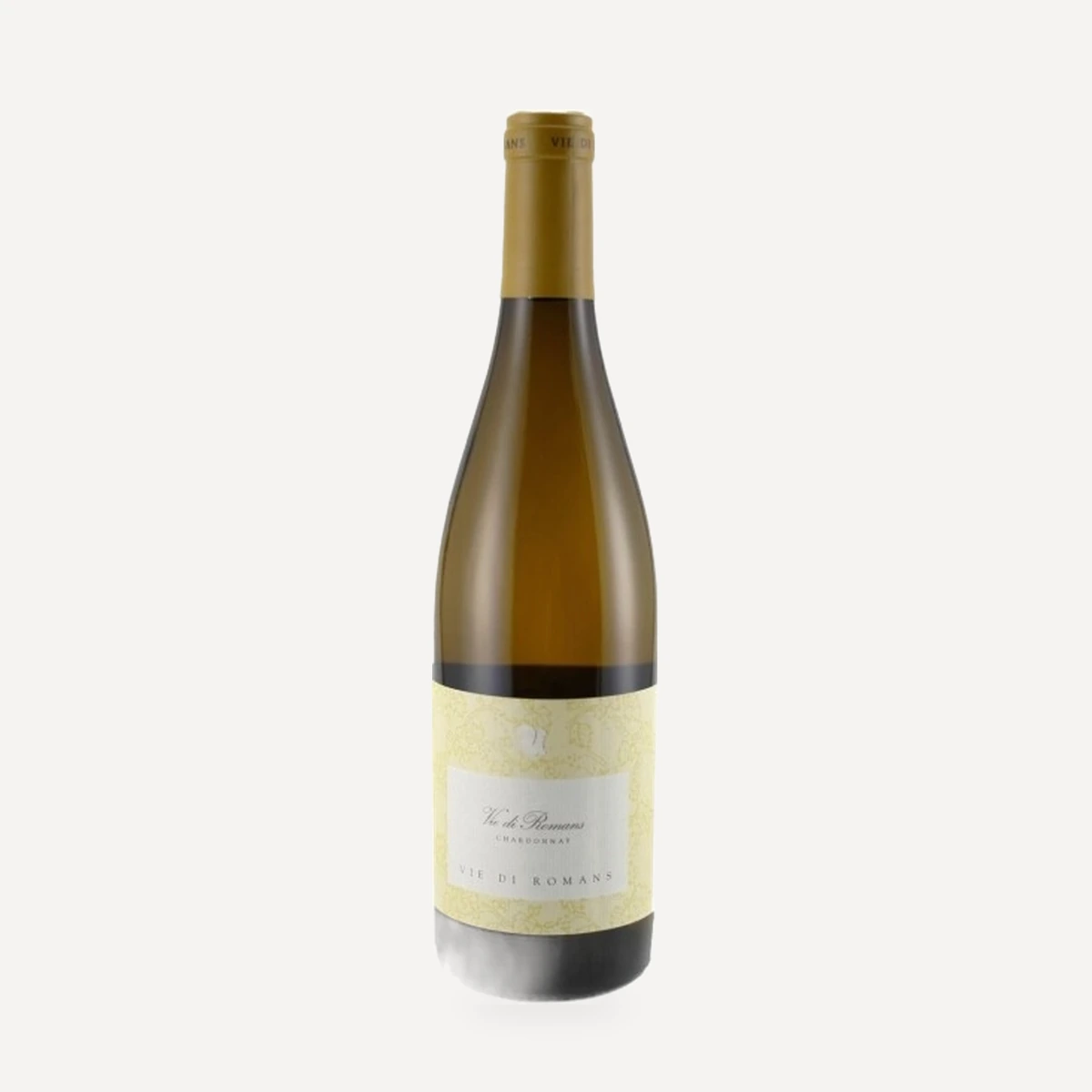
Vie di Romans Chardonnay
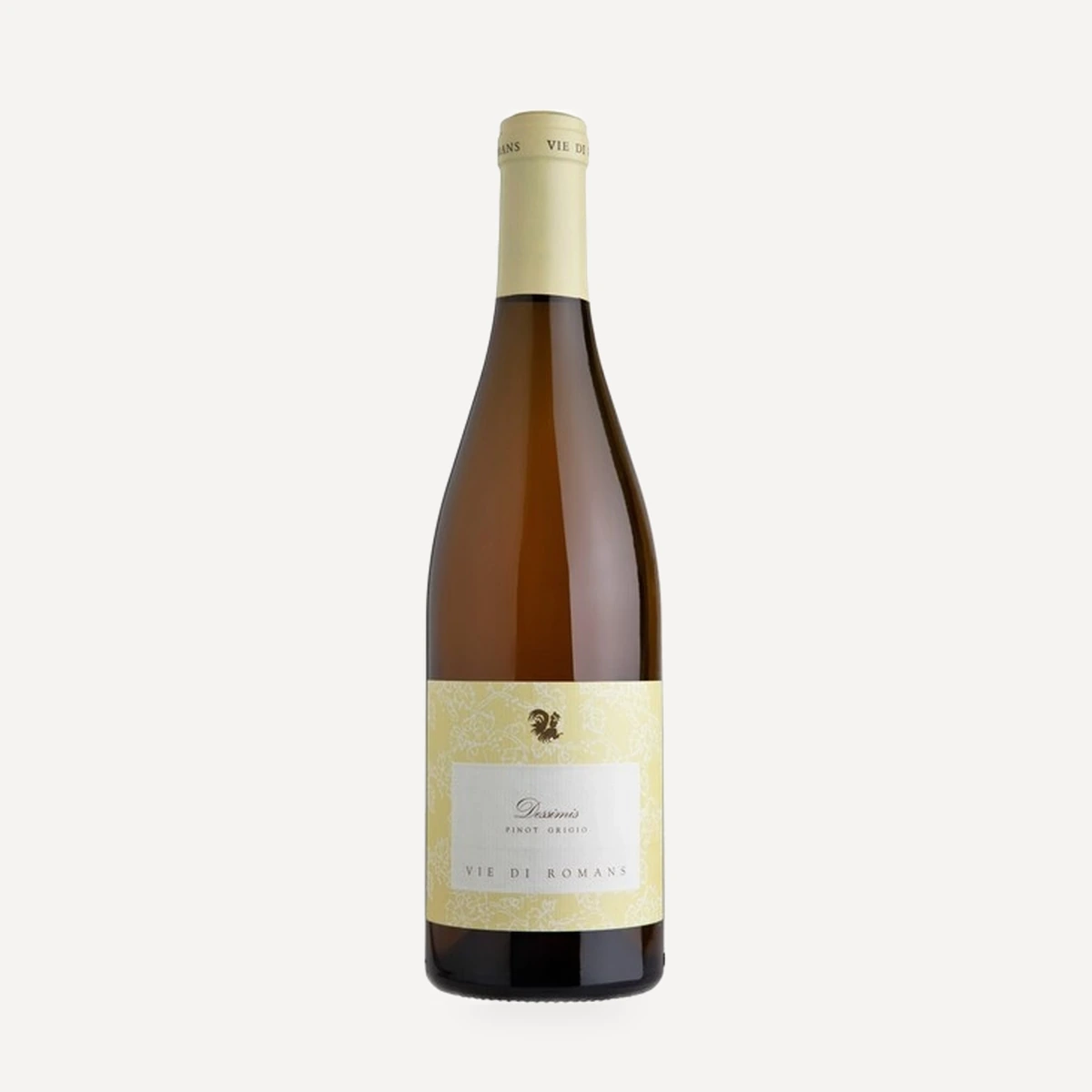
Dessimis Pinot Grigio