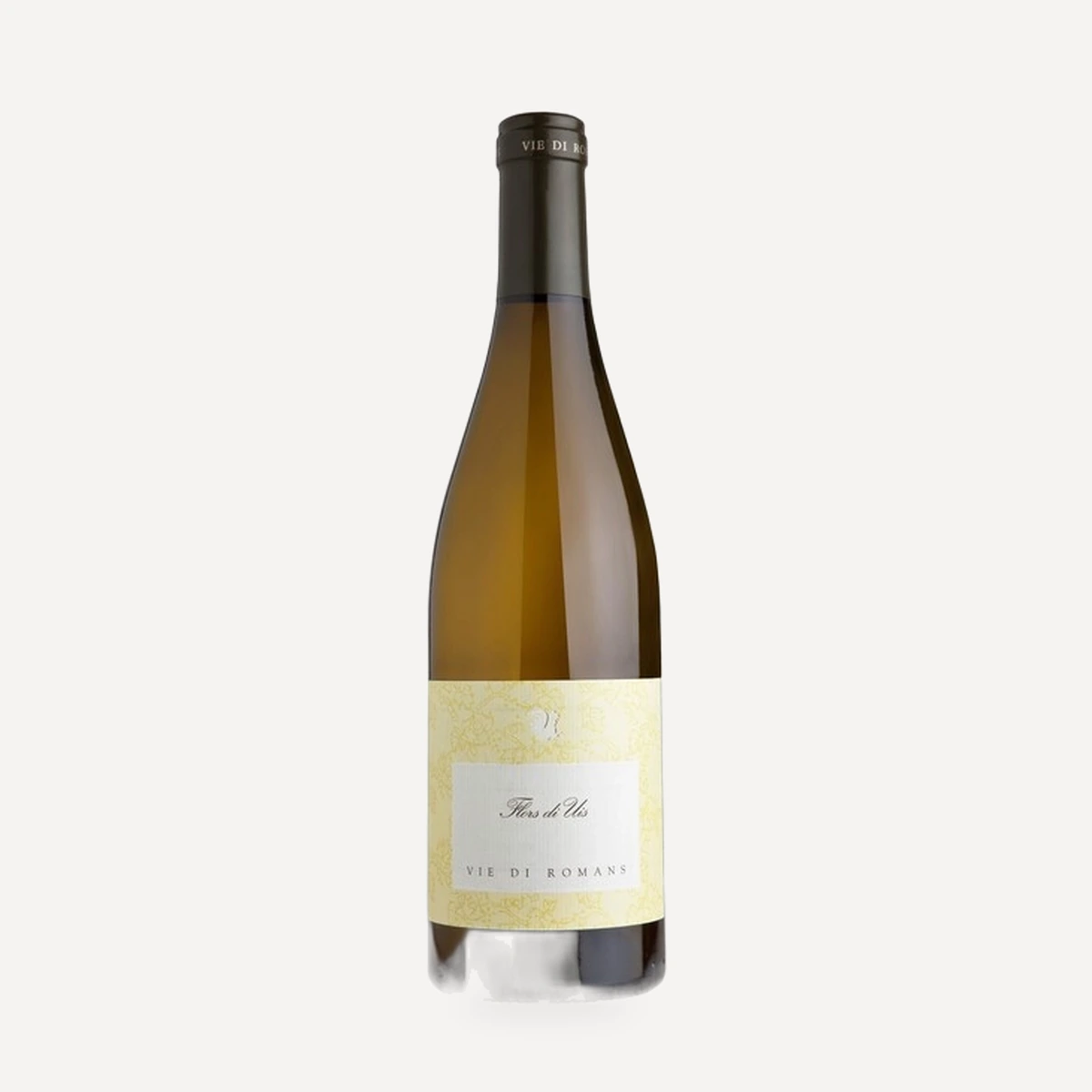
Questo vino
Vineyard and terroir
The fruit comes from the estate vineyards Boghis, Ciampagnis and Vie di Romans in Mariano del Friuli, in the upper Isonzo River valley. The soils contain gravel, limestone and sandy alluvial deposits. The vines average 17 years old and grow at 29–34 m above sea level, at a planting density of 6,000 vines/ha.
Grapes
The blend specifically combines Malvasia Istriana, Rhine Riesling and Friulano. Gianfranco Gallo created it to unite the fruitiness of Malvasia and Tocai with the spicy character of Malvasia and Riesling.
Vinification
The grapes are harvested at optimal ripeness, fully destemmed and cold-macerated at 8 °C. Fermentation takes place in stainless-steel tanks at 16–19 °C and lasts 16–25 days.
Ageing
The wine remains on its lees in stainless-steel tanks for seven months, followed by 11 months in bottle.
Tasting profile
Fruitiness from Malvasia and Tocai is complemented by the spicy character of Malvasia and Riesling.
Label / history
Flors di Uis means “Flower of the Grape” in the local dialect. The blend was created by Gianfranco Gallo and reflects the history of the three varieties’ arrival in Friuli and their influence on the region.
The estate has a century-long winemaking history spanning Gianfranco Gallo’s grandfather and father. Gianfranco inherited the family’s 4 ha vineyard in 1978. The estate originally bore his name, but legal action by Californian winery owners Ernesto and Julio Gallo led US customs authorities to stop accepting wines bearing the Gallo name in 1986. Three vintages subsequently appeared under the name Masut before the estate adopted the name Vie di Romans in 1990. The name means “Ways of the Romans” and refers to a local road used by Roman legionaries to connect Rome with an Adriatic port city at the beginning of the first millennium.
Vie di Romans now owns 50 ha of vineyards and makes 14 wines, with a stated total annual production of 20,000 bottles.