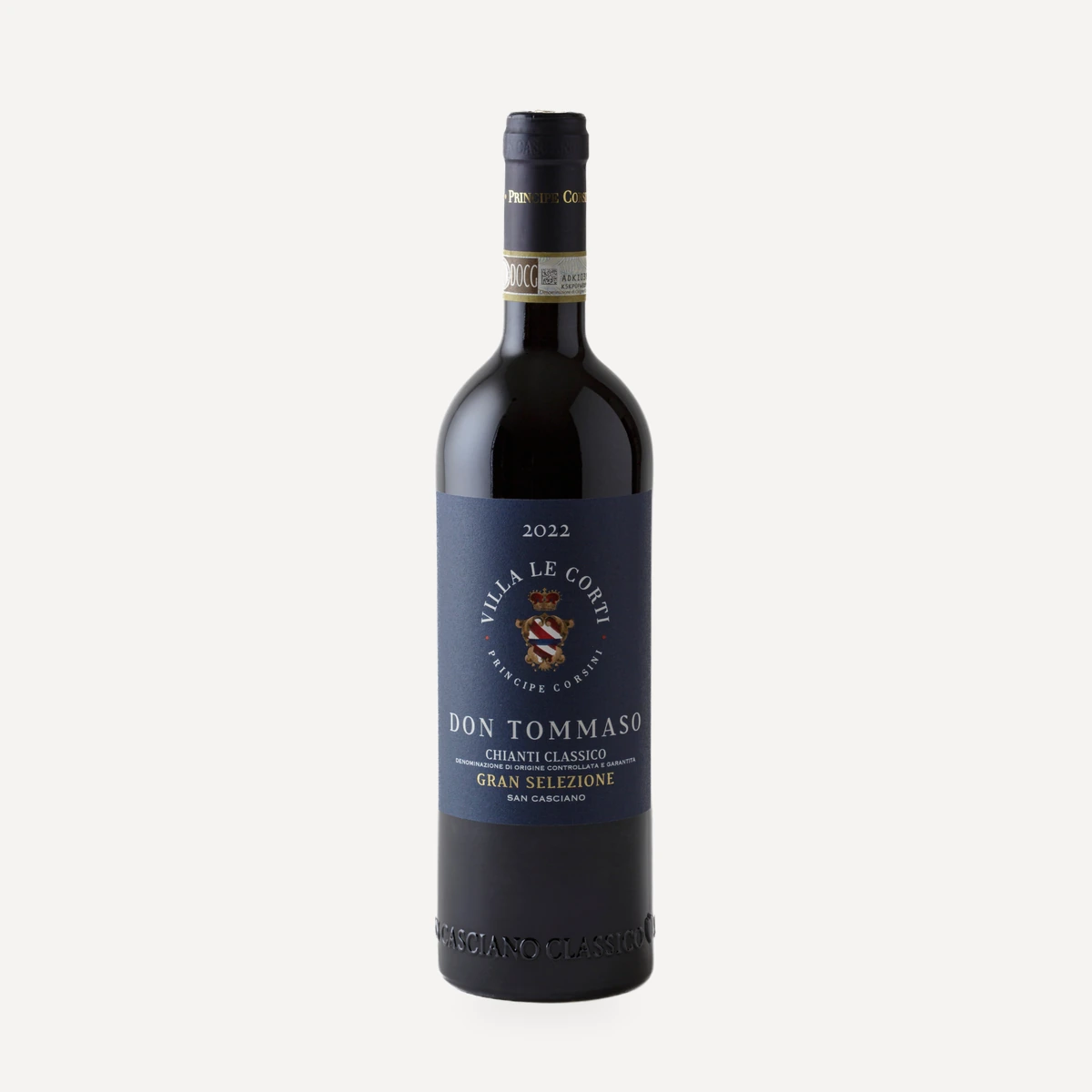
Storia
Origins and the Corsini acquisition
The agricultural history of Villa Le Corti officially begins in 1363, when the Corsini family purchased three farms with vineyards and olive trees, an oil mill and a manor house in San Casciano in Val di Pesa. The family selected the property for its proximity to Florence, the agricultural potential of its land and, especially, the existing mill for olive-oil production. Olive oil and wine have consequently remained part of the estate's activity for more than six centuries.
Construction of the villa and cellars
At the beginning of the 17th century, Bartolomeo Corsini (1545–1613) commissioned painter and architect Santi di Tito (1536–1603) to design Villa Le Corti and its cellars. It was the first major building commissioned by the family as an architectural expression of its growing social and political standing. The villa was constructed as a new complex together with agricultural premises and immense underground cellars extending through three levels beneath the residence and surrounding lawn.
The historic cellars date to 1616 and have remained in continuous use. Their architecture was designed for practical production as well as scale: the floor has a pronounced inclination relative to the ceiling, creating natural ventilation and limiting the accumulation of carbon dioxide. The villa and winery were conceived as a unified complex. Villa Le Corti is now legally protected as a national monument.
Twentieth-century agriculture and renewal
A severe frost in 1985 destroyed 96% of the estate's centuries-old olive trees, prompting the renewal of the olive groves. In 1991, a vineyard was planted on land later used for the Cortevecchia 2023 project.
Duccio Corsini, son of Filippo IX Prince of Sismano, assumed direct management in 1992, together with his wife Clotilde Trentinaglia de Daverio. The 1993 harvest inaugurated the Principe Corsini wine brand at Villa Le Corti. Four large oak vessels purchased that year were used for Cortevecchia until their replacement three decades later.
The Gugliaie vineyard was planted in 1997. Its age and site characteristics later made it the source of three limited-production, single-vineyard expressions of Sangiovese. The estate's olive oil received Chianti Classico DOP status in 2003, followed by organic certification for the olive production in 2007.
Organic conversion and diversification
Conversion of the estate's crops to organic farming began in 2012. All vineyards were being cultivated under organic rules by 2013, and the 2015 harvest was the first officially certified-organic wine harvest. The old 1991 vineyard was grubbed up in the same year; before replanting, the field was rested and cultivated with alfalfa and emmer to build humus.
In 2014, Villa Le Corti became the home of the Corsini Archive. Ten rooms were allocated to eight centuries of family documentation, bringing a major historical collection from Palazzo Corsini al Parione in Florence to the family's San Casciano residence.
The Terzona vineyard, the youngest vineyard identified before the Cortevecchia 2023 planting, was established in 2017 over 3 ha. In 2018, Villa Le Corti became one of the founding estates of the San Casciano Classico association, created to protect and communicate the identity of the municipality's wine-and-olive-growing landscape.
Beginning with the 2019 harvest, intact, uncrushed berries became the basis of fermentation across the wine production. The historic winery was adapted with a custom 50 m conveyor and two stages of manual selection so that grapes could reach the fermentation vessels without crushing or mechanical stress.
In 2020, the estate introduced organic emmer cultivation as part of its biodiversity and agricultural-diversification program. Some of the crop is processed into pearled emmer and flour. In 2022, Principe Corsini joined the Ministry of Environment and Energy Security's VIVA sustainability program. Raw-concrete tanks were also introduced for the final phase of maturation of selected wines.
Cortevecchia 2023 and cellar investment
In May 2023, the estate planted the 2.9 ha Cortevecchia 2023 vineyard with Sangiovese. It occupies the site of the vineyard established in 1991 and removed in 2015. Management is both organic and biodynamic, with work scheduled around lunar phases and planetary movements. The vineyard was projected to enter production in 2027 or 2028.
The 2023 cellar investment included four 50 hl Nico Velo concrete tanks, one 15 hl concrete tank, four 25 hl French-oak casks from Tonnellerie Nadalié and two 750 L Tava terracotta amphorae. The new concrete vessels and casks support an ongoing reduction in the aromatic influence and duration of wood maturation.
The estate today
Villa Le Corti covers 230 ha, including 50 ha of vineyards and 63 ha of olive groves. Much of the remaining land is retained as woodland to preserve ecological balance and biodiversity. The estate remains the Corsini family's home as well as an operating farm, winery, olive mill, hospitality destination and repository of the family archive.
Terroir
Villa Le Corti lies in San Casciano in Val di Pesa, approximately 20 km south of Florence, in the northernmost part of the Chianti Classico denomination. The landscape is hilly, forming a natural amphitheatre between approximately 250 and 350 m above sea level. Another vineyard account gives a wider estate-specific span of roughly 150–300 m, reflecting differences among individual sites. Vineyards used for the core Chianti Classico production are also described at 220–300 m and predominantly south-facing.
The soils are principally clay with limestone and sand, with abundant coarse mineral material. Their skeleton includes rounded white pebbles of fluvial or lacustrine origin together with galestro and alberese stones. Sediments and river pebbles contribute useful water availability, helping vines withstand hot and dry seasons. Differences in soil, slope, exposure, planting date and vine age create distinct conditions among the estate vineyards.
San Casciano has a relatively mild, ventilated microclimate. Only Monte Serra stands between the area and the Tyrrhenian Sea, allowing consistent coastal airflow and meaningful day-to-night temperature variation. The Pesa River and Terzona stream, together with the sea's moderating influence, help limit frost risk. Winters are cold without generally being severe, while summers are hot but not normally torrid. These conditions support even grape ripening and can bring the beginning of harvest roughly ten days ahead of other parts of Chianti Classico.
The estate associates its Sangiovese with fine, mature tannins, freshness, minerality and a vertical profile. The combination of ventilation, diurnal variation and water-retentive stony soils is considered particularly important during increasingly hot or drought-affected seasons.
Vinificazione
All 50 ha of vines are pruned manually in February, allowing workers to treat each plant individually. Pruning traditionally follows the waning moon, when sap activity is considered lower. The estate associates this timing with directing plant energy toward roots and structural strengthening rather than premature shoot growth.
The vineyards are divided between 20 ha of Guyot and 30 ha of cordon spur training. In the latter system, winter pruning leaves spurs with two or three buds. Merlot is trained to cordon spur, while Sangiovese is divided between the two systems. Some Sangiovese parcels have been converted to Guyot because its annual renewal of the fruiting cane gives more homogeneous production, resembles the traditional Tuscan arch and can extend vine longevity. Gugliaie uses Guyot, while Donniccioli and Colombaio were also selected for conversion.
Conversion of the crops to organic management began in 2012. The vineyards followed organic rules from 2013, and the 2015 harvest was the first certified-organic crop. Plant protection relies on contact products that are not absorbed by the vines rather than systemic synthetic products. Fertilizers are selected for low nitrite and nitrate input, and copper and sulfur treatments are kept limited.
Green manure is sown in the vineyards to improve fertility, organic-matter content, soil structure and porosity. It also slows erosion and brings micro-elements toward the surface. Woodland, vines and olive groves are maintained as an interconnected agricultural ecosystem rather than a continuous monoculture.
Cortevecchia 2023 is managed under both organic and biodynamic principles, with vineyard work scheduled around lunar phases and planetary movements. Before its planting, five years of alfalfa and emmer cultivation rebuilt humus in the previously vineyarded soil.
During the 2025 season, careful canopy management protected clusters from sunburn during two summer heat waves. Organic integrated pest management successfully controlled downy and powdery mildew through flowering and fruit set; Lobesia botrana required more difficult intervention but was also managed with organic integrated methods.
The 2025 harvest began on 24 August with grapes for sparkling rosé. Merlot picking for the red wines began on 5 September, while Colorino and Sangiovese were harvested from mid-September through the first week of October. Grapes were received healthy, fully ripe, loosely clustered and with thicker skins than in preceding years.
Historic cellar and grape reception
Wine is made in the three-level underground cellar constructed with the villa in 1616. Its inclined architectural geometry creates natural ventilation, helping prevent carbon-dioxide accumulation while reducing the energy required for mechanical ventilation. The cellar's basic structure has remained substantially intact, requiring modern production techniques to be adapted to the historical spaces.
Since the 2019 harvest, intact, uncrushed berries have been used for fermentation throughout the production. A custom 50 m conveyor belt runs along the winery. Fruit undergoes two manual selections: first as whole bunches and then as individual berries. The selected berries travel to the fermentation tanks without crushing or mechanical stress.
Fermentation of intact berries proceeds more slowly and naturally maintains a lower temperature in both the fermenting wine and the cap. The lower temperature is used to preserve aromas and protect tannins, anthocyanins and other natural antioxidants from premature oxidation. After fermentation, the wine is separated from the skins by racking.
Maturation vessels
The maturation cellar uses French oak, concrete and terracotta. Large, untoasted 25 hl French-oak casks are used for the Riserva program. The Gran Selezione based on Sangiovese and Merlot matures in second- or third-use 5.6 or 7 hl tonneaux, while the single-variety Gran Selezione uses second- or third-use barriques. Previously used vessels are deliberately favoured to limit overt oak character and retain varietal and site expression.
Fibreglass-lined concrete tanks of 150 hl are used for the estate's vintage Chianti Classico. Since 2022, raw-concrete tanks have completed the maturation of the two Gran Selezione wines after their longer period in wood; the wines spend several final months in concrete before bottling.
The 2023 investment added four 50 hl and one 15 hl Nico Velo concrete tanks, four 25 hl French-oak casks from Tonnellerie Nadalié and two 750 L terracotta amphorae from Tava. The new 25 hl casks replaced vessels bought in 1993. Concrete is being used to shorten the wines' time in wood, continuing an intentional reduction in oak influence. The Tava amphorae provide micro-oxygenation without adding wood-derived aromas and are used for the final months of selected biodynamic Sangiovese maturation.
Cellar sustainability and hygiene
Barrels are washed exclusively with hot water to avoid polluting chemical detergents and the risk of affecting wine composition. Olive-processing residue is converted in the estate mill into crushed pomace pits used as fuel for heating the cellar, offices and villa, as well as water used during olive-paste malaxation. Natural cellar ventilation further reduces energy demand.
Finished wines are packaged in 450 g bottles made with recycled glass. Wine packaging has moved from polystyrene to PEFC-certified cardboard from sustainably managed forests; interlocking construction removes the need for adhesive tape. Retired barriques, casks and vats are repurposed as furniture and other objects.
Filosofia
Villa Le Corti's guiding aim is to produce Chianti Classico that expresses the character of San Casciano in Val di Pesa while respecting the environment, seasonality, natural rhythms and the individuality of its vines.
Duccio Corsini defines territorial distinctiveness as the principle that has shaped the estate's modern production. Agriculture and conservation are treated as interdependent activities: vineyards and olive groves are balanced by substantial woodland, while organic farming, green manure and crop diversification are intended to maintain soil fertility and biodiversity for future generations.
Tradition is not treated as resistance to technical change. Modern selection equipment, whole-berry fermentation and new maturation vessels have been adapted to a cellar in continuous use since 1616. The objective is to use technology carefully, reducing energy consumption and external aromatic influence while allowing the historical architecture to remain an active part of production.
The continuing reduction of time in wood, preference for used or large-format oak, and introduction of concrete and terracotta reflect a low-imposition approach to maturation. Sustainability extends beyond farming to energy reuse, hot-water sanitation, recycled glass, lighter bottles, recyclable packaging and the repurposing of retired cellar equipment.
The family presents continuity as a responsibility: agricultural knowledge, the estate landscape, the historic buildings and the Corsini Archive are maintained as a connected inheritance intended to pass from one generation to the next.
Vini
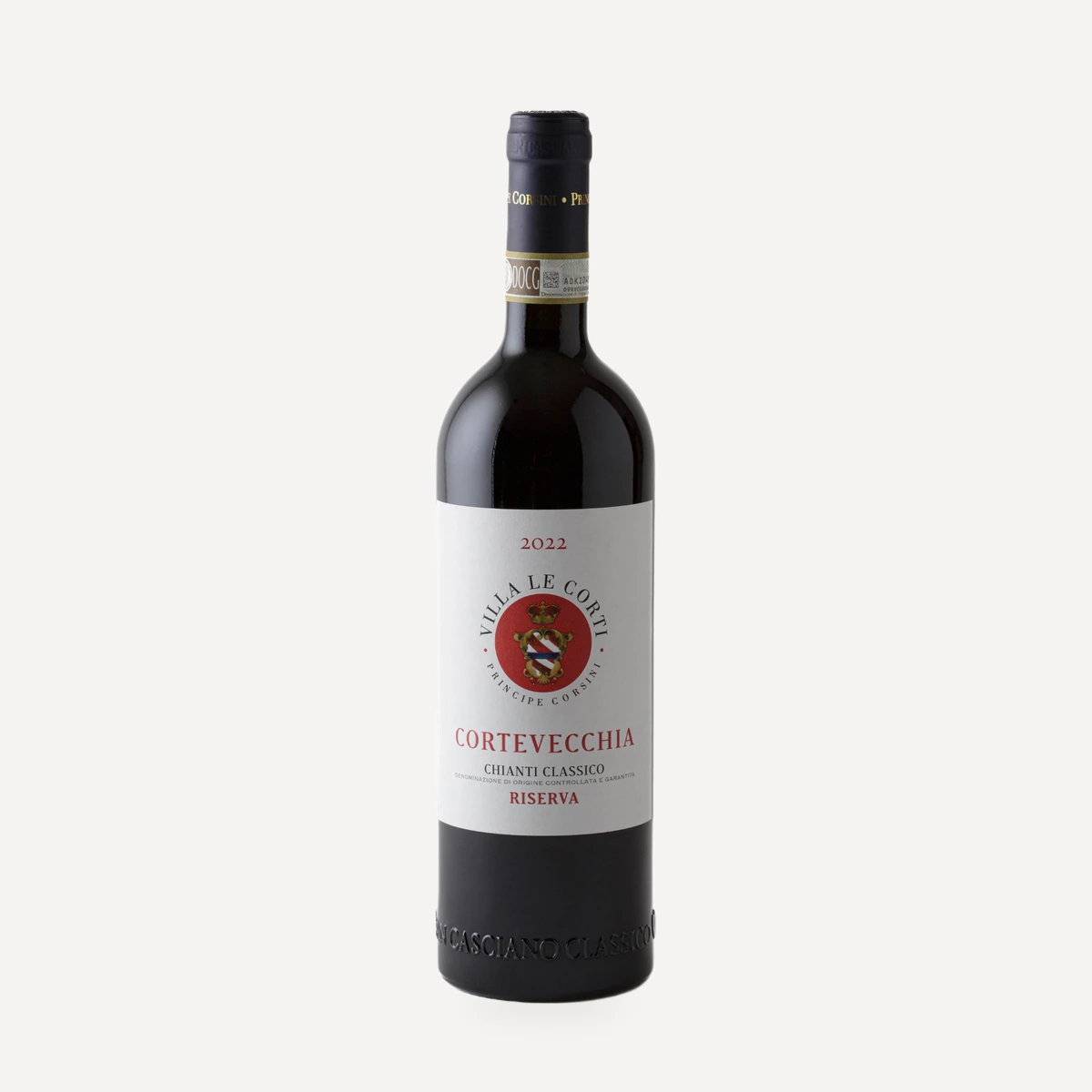
Cortevecchia Chianti Classico Riserva DOCG