Storia
Family origins and the acquisition of Le Corti
The Corsini lineage arrived in Florence from Poggibonsi in the late 12th century and became active in commerce, finance, politics, the Church and agriculture. The family’s fortunes expanded markedly in the mid-16th century through the European commercial companies operated by the brothers Filippo, Bartolomeo and Lorenzo Corsini. Their earnings financed substantial purchases of buildings and agricultural land in Tuscany, Umbria and Lazio.
The agricultural history behind Principe Corsini’s Chianti Classico production formally begins in 1363. That year the Corsini family acquired three farms with vineyards and olive trees, an oil mill and a manor house at San Casciano in Val di Pesa. Proximity to Florence, the agricultural aptitude of the land and the presence of an oil mill shaped the decision.
The villa and underground cellars
At the beginning of the 17th century Bartolomeo Corsini (1545–1613) commissioned painter and architect Santi di Tito (1536–1603) to design Villa Le Corti and its cellars. The project was the family’s first major building intended to express its growing social and political standing. The villa was rebuilt from its foundations, while new agricultural premises and extensive underground cellars were created on three levels beneath the residence and surrounding lawn.
The cellar’s historic design remains part of production. Its floor has a pronounced inclination relative to the ceiling, devised to promote natural ventilation and prevent carbon-dioxide accumulation. This passive system continues to reduce the need for mechanical ventilation.
Papal and political prominence
In 1730, at the age of 78, Lorenzo Corsini became Pope Clement XII and held the papacy for ten years. His projects included the foundation of the Capitoline Museums and commissions connected with the Trevi Fountain, the façades of San Giovanni in Laterano and Santa Maria Maggiore, Palazzo della Consulta and several Italian ports.
The family’s Maremma history began in 1759, when the Grand Duke of Tuscany recognized the Marsiliana estate and its fortified village to Prince Corsini. The family promptly began modernizing and reclaiming a landscape then characterized by marshes, woodland and cultivated fields.
Tommaso Corsini (1835–1919), seventh Prince of Sismano, was a deputy in the Kingdom of Italy from 1865 to 1882 and later a senator for life. He also founded Fondiaria Assicurazioni, presided over Cassa di Risparmio di Firenze and pursued archaeology, bringing the Etruscan Fibula Corsini to light. Around the turn of the 20th century, he reorganized Marsiliana as a highly innovative agricultural operation. Mechanization was widespread and the estate relied mainly on paid employees rather than the sharecropping then prevalent in Tuscany.
Institutional role in Chianti Classico
On 14 May 1924, 33 producers founded the Black Rooster consortium to protect Chianti and its name. Dr Emanuele dei Principi Corsini and Guido dei Principi Corsini were among its founding members, placing the family within the denomination’s early collective defense.
After the Second World War, expropriations by the Maremma Authority disrupted Marsiliana’s mechanized, skilled-labor model. Its arable land contracted from more than 3,000 hectares to 200 hectares, while 2,680 hectares of forest remained unchanged. Agriculture subsequently became secondary to forestry and wildlife management for a period.
Duccio Corsini and the creation of the brand
Duccio Corsini, son of Filippo IX Prince of Sismano, assumed management in 1992. His first season coincided with one of the most difficult harvests in recent memory and convinced him that the historic operation required substantial renewal. The 1993 vintage became the first harvest under the new Principe Corsini brand.
In 1996 Duccio and his sister Sabina became involved in managing Marsiliana, intending to restore its agricultural vocation while preserving its historic buildings and landscape. Extensive ampelographic trials preceded the planting of 20 hectares to Cabernet Sauvignon, Merlot and Petit Verdot—non-indigenous varieties with an established history on the Tuscan coast.
Duccio and his wife, Clotilde Trentinaglia de Daverio, have directly managed the activities of the family estates, supported by specialist teams in the vineyards, cellar and commercial departments.
Organic conversion and technical development
Conversion to organic cultivation began in 2012. All vineyards were being cultivated under organic rules from 2013, and the 2015 harvest was the first officially certified-organic vintage. The company also adopted vegan production protocols. Vineyard biodiversity measures included green manure, restrained use of copper and sulfur and the addition of organic spelt to the farm’s crops in 2020.
A 3-hectare vineyard named Terzona was planted in 2017. Beginning with the 2019 harvest, the Villa Le Corti cellar introduced uncrushed whole-berry fermentation across its Principe Corsini wines, supported by a purpose-built, 50-metre conveyor and two stages of manual selection.
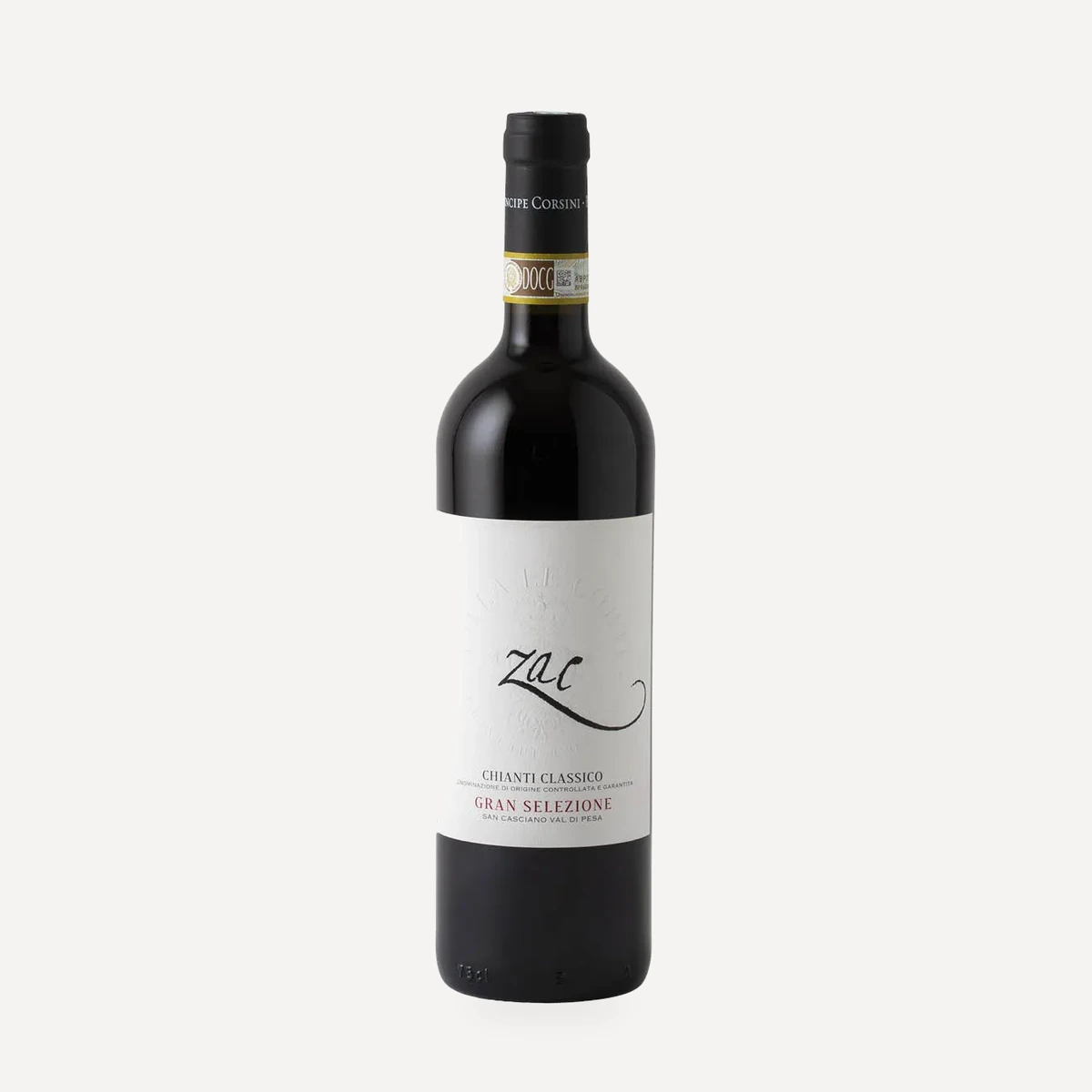
Work among local producers began in 2018 to define the shared identity of San Casciano. After a year of comparative tastings and discussion, 25 producers formed the San Casciano Classico association; Villa Le Corti was a founding member. San Casciano was subsequently recognized as one of the eleven Additional Geographic Units of Chianti Classico for Gran Selezione wines.
Principe Corsini joined the Italian Ministry of Environment and Energy Security’s VIVA sustainability program in 2022. That year the cellar also began using raw-concrete vats to complete the maturation of selected Gran Selezione wines after their period in wood.
Cortevecchia 2023 and recent cellar investment
In May 2023, the 2.9-hectare Cortevecchia 2023 vineyard was planted to Sangiovese on the site of a 1991 vineyard removed in 2015. Five intervening years of alfalfa and emmer cultivation were used to rebuild humus. The new vineyard is intended for organic and biodynamic management and is expected to enter production in 2027 or 2028.
The 2023 cellar program added four 50-hectolitre and one 15-hectolitre Nico Velo concrete vats, four 25-hectolitre French-oak casks from Tonnellerie Nadalié and two 750-litre Tava amphorae. The large casks replaced vessels purchased in 1993. Concrete was introduced partly to shorten the wines’ time in wood and preserve a more direct expression of fruit and origin.
The 2025 harvest marked the return of Sant’Andrea Corsini Vinsanto after several years without production because weather conditions had been unsuitable. Grapes were dried in the naturally ventilated fruttaio until mid-December before pressing and the beginning of a ten-year fermentation and maturation cycle in small wooden casks.
Terroir
San Casciano in Val di Pesa and Villa Le Corti
Villa Le Corti lies about 20 km south of Florence in San Casciano in Val di Pesa, the northernmost municipality of the Chianti Classico denomination. Its hills form a natural amphitheatre at approximately 250–350 metres above sea level, although individual vineyard elevations across the property have also been described as ranging from about 150 to 300 metres.
Mount Serra stands between San Casciano and the Tyrrhenian Sea. The resulting coastal ventilation and marked day–night temperature shifts support healthy, balanced ripening and commonly bring harvest approximately ten days earlier than in other parts of Chianti Classico. Winters are cold without generally being severe; summers are warm but not normally torrid.
The soils combine clay, limestone and sand, with abundant coarse material. Rounded river pebbles and gravel occur alongside galestro and alberese. These sediments help retain useful water reserves during hot, dry seasons. Vineyard expression varies further with elevation, slope, exposure, planting date and vine age.
Tenuta Marsiliana and the Maremma coast
Marsiliana is located at Manciano in the Maremma. Its vineyards are influenced by proximity to the sea and grow on lean soils rich in minerals. The family selected Cabernet Sauvignon, Merlot and Petit Verdot after broad ampelographic experimentation intended to identify varieties suited to the site. Vermentino is also cultivated for the estate’s white wine production.
Vinificazione
Organic conversion began in 2012, all vineyards were cultivated under organic rules from 2013, and the 2015 harvest was the first officially certified-organic vintage. Contact products that remain on the plant surface replace systemic synthetic treatments. Fertilization is selected for low nitrite and nitrate inputs, while copper and sulfur are used in limited quantities.
Green manure is sown in the Villa Le Corti vineyards to increase fertility and organic matter, improve soil structure and porosity, slow erosion and return trace elements toward the surface. The estate also introduced organic spelt in 2020: a resilient, low-impact cereal capable of surviving hot summers on rainfall and adapting to less productive ground.
All 50 hectares at Villa Le Corti are pruned manually in February. Twenty hectares are trained to Guyot and 30 hectares to spurred cordon. Merlot uses spurred cordon, while Sangiovese is divided between the two systems. Recently converted Sangiovese parcels use Guyot because annual renewal of the fruiting cane supports more homogeneous production and resembles the traditional Tuscan arch. Winter pruning is timed to the waning moon, when the estate considers sap activity lower.
Canopy management is adjusted to protect clusters against sunburn. In 2025, organic integrated pest management was used against Lobesia botrana, while protection against downy and powdery mildew was maintained through flowering and fruit set. Harvest dates are determined through technical analysis and grape tasting. Picking is manual, and whole bunches and individual berries undergo separate manual selections before vinification.
Cortevecchia 2023 adds biodynamic management to its organic program. Work is scheduled with reference to lunar phases and planetary movements. The wider property retains substantial woodland around the vineyards and olive groves to preserve landscape balance and biodiversity. Materials are preferentially sourced from local suppliers, with biodegradable or recyclable packaging favored and waste disposal monitored particularly closely during harvest.
Historic cellar and energy management
The Villa Le Corti cellars occupy three underground levels beneath the villa and surrounding lawn. Their sloping floor and ceiling geometry creates natural ventilation and helps prevent carbon-dioxide accumulation, reducing mechanical energy demand. Technology is adapted to the historic spaces rather than replacing their basic structure.
Reception, sorting and fermentation
Since the 2019 harvest, the Villa Le Corti cellar has used uncrushed whole-berry fermentation for Principe Corsini wines. A custom 50-metre conveyor traverses the cellar. Grapes undergo two manual selections—first as bunches and then as individual berries—before the intact berries travel to the fermentation vessels without crushing or unnecessary mechanical stress.
Because seeds remain enclosed within the skins, extraction centers on mature tannins and anthocyanins from the skins rather than greener seed tannins. Must is released gradually, extending even contact with the skins in an infusion-like process. Alcoholic fermentation proceeds more slowly and at naturally lower temperatures, helping protect aroma, tannins and anthocyanins from premature oxidation. The wine is separated from the skins after fermentation.
Maturation vessels
The cellar uses large oak casks, tonneaux, barriques, coated and uncoated concrete and terracotta. Large, untoasted 25-hl French-oak casks are used for Chianti Classico Riserva. Second- or third-use tonneaux of 5.6 or 7 hl are used for one Gran Selezione, while another matures in second- or third-use barriques. Reused vessels limit overt oak influence.
Fiberglass-lined concrete vats of 150 hl provide a relatively inert environment for the estate’s young Chianti Classico. Since 2022, raw-concrete vats have been used for several final months of maturation for Gran Selezione wines after their longer period in wood. The porous concrete permits measured oxygen exchange without adding wood-derived aromas.
The 2023 investment added four 50-hl and one 15-hl Nico Velo concrete vats and four 25-hl French-oak casks from Tonnellerie Nadalié. The new casks replaced vessels purchased in 1993. The use of concrete after wood is intended to reduce the duration and sensory weight of oak.
Vin Santo and sparkling production
For Sant’Andrea Corsini Vinsanto, selected grapes dry in a loft with natural rather than forced ventilation until approximately mid-December. They are then pressed, and the must ferments and matures in small sealed wooden casks. The program comprises an initial five-year period followed by a further five years in selected barrels before bottling.
The rosé sparkling wine is made from Sangiovese by the Charmat method and remains for an extended period on its lees. Vermentino from Marsiliana is matured in steel.
Cellar hygiene and packaging
Barrels are washed using hot water without polluting chemical detergents. Wine is bottled in recycled-glass bottles weighing 450 g to reduce glass use and transport-related emissions. Polystyrene has been replaced by PEFC-certified cardboard packaging from sustainably managed forests, and interlocking boxes eliminate adhesive tape. Old casks, vats and barriques are repurposed as crafted objects.
Filosofia
Principe Corsini defines quality through the precise expression of each place and grape variety, with respect for seasonality, natural rhythms and the individuality of the vines. Its cellar approach seeks elegance, freshness and fruit rather than heavy extraction or dominant oak.
Tradition and technical change are treated as complementary. The historic cellar continues to function through its original passive ventilation, while conveyors, careful selection, concrete vats and gentler fermentation have been adapted to the old building. Duccio Corsini describes the goal as moving an ancient estate forward without losing the character accumulated through centuries of cultivation.
Environmental responsibility extends from farming to packaging. Organic cultivation, biodiversity, lower-input treatments, green manure, woodland preservation, recycled glass, lighter bottles, reusable production materials and certified cardboard form part of a production model intended to remain viable for future generations. VIVA certification adds measurement of air emissions, water, vineyard management and the company’s relationship with its territory and community.
Vini
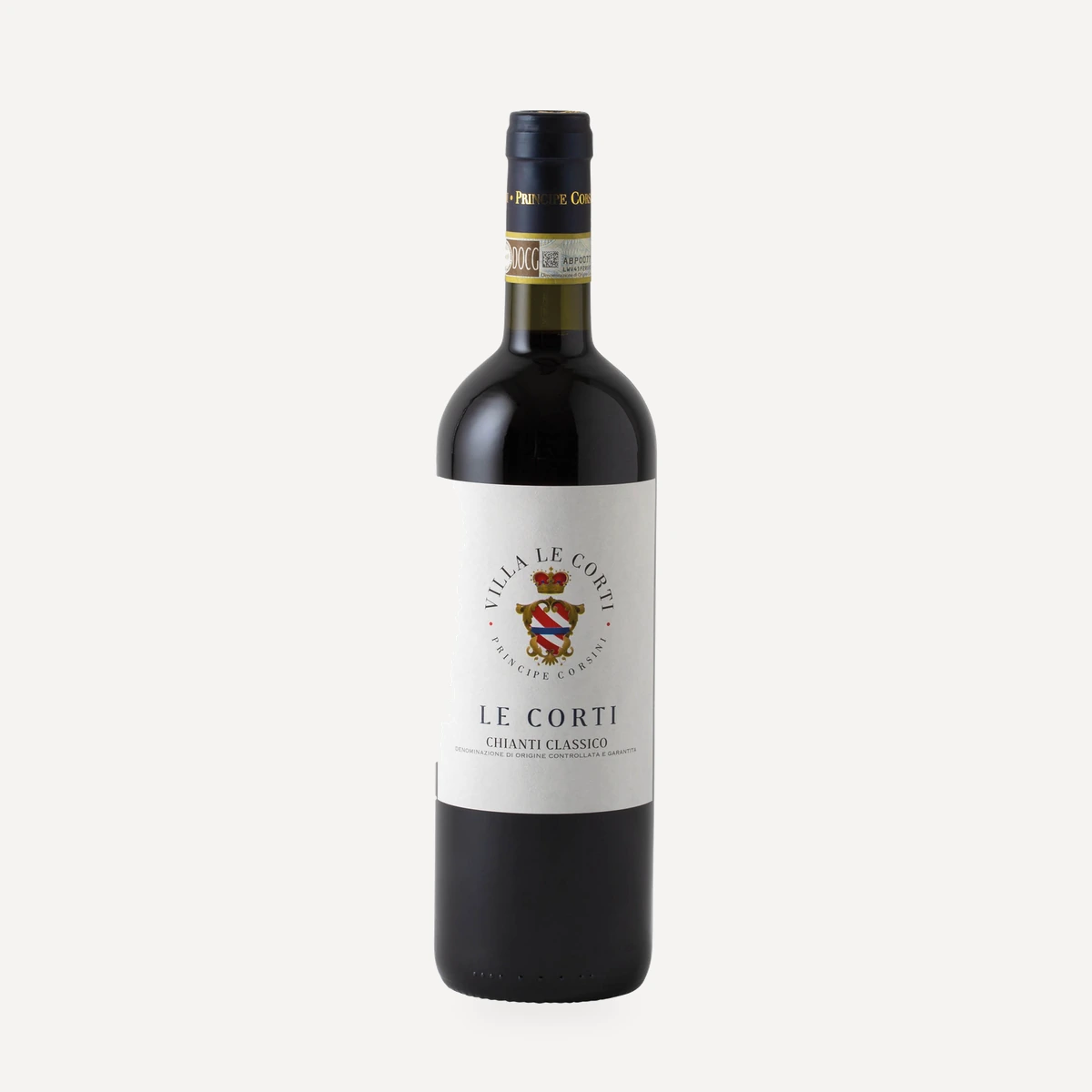
Le Corti Chianti Classico DOCG
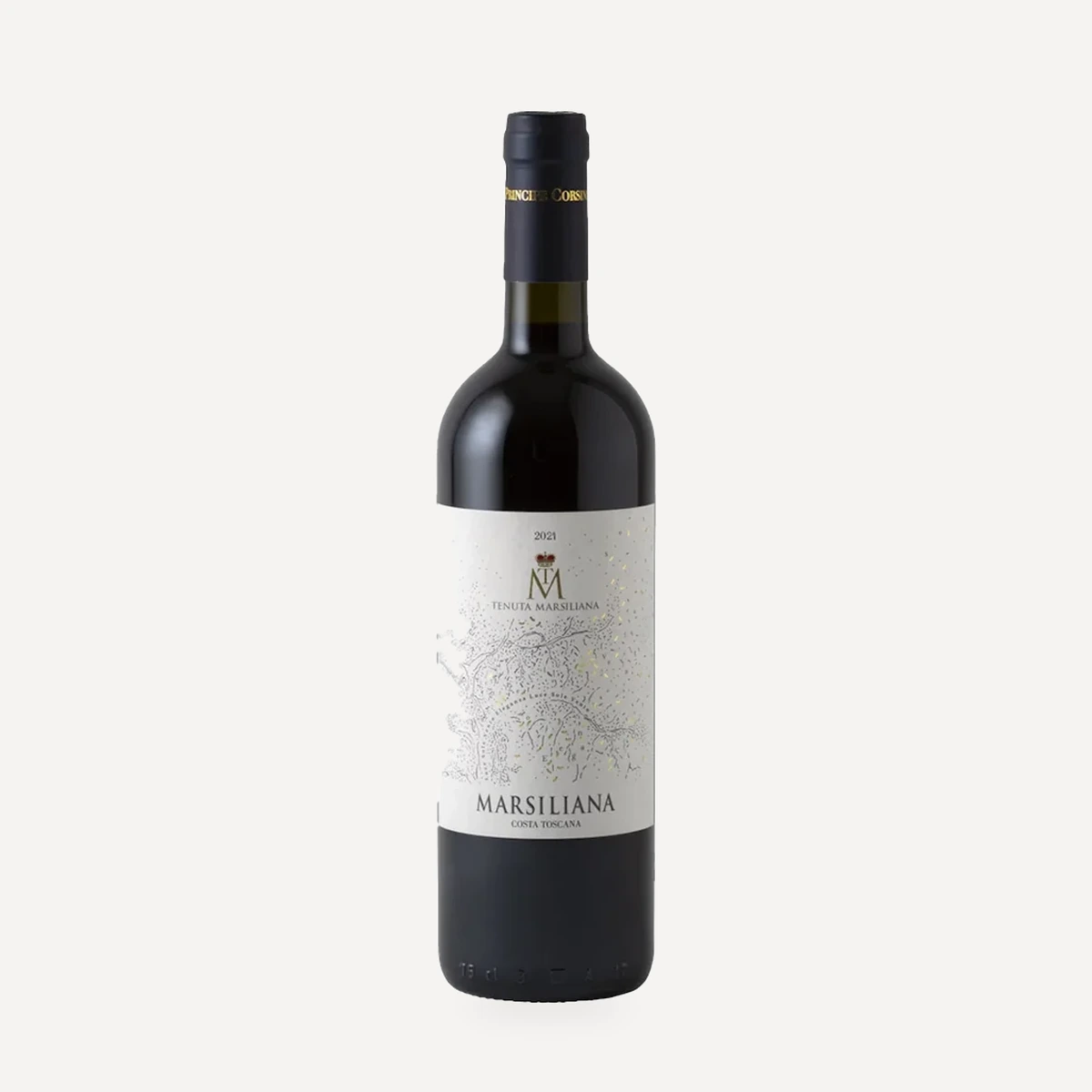
Marsiliana IGT Costa Toscana
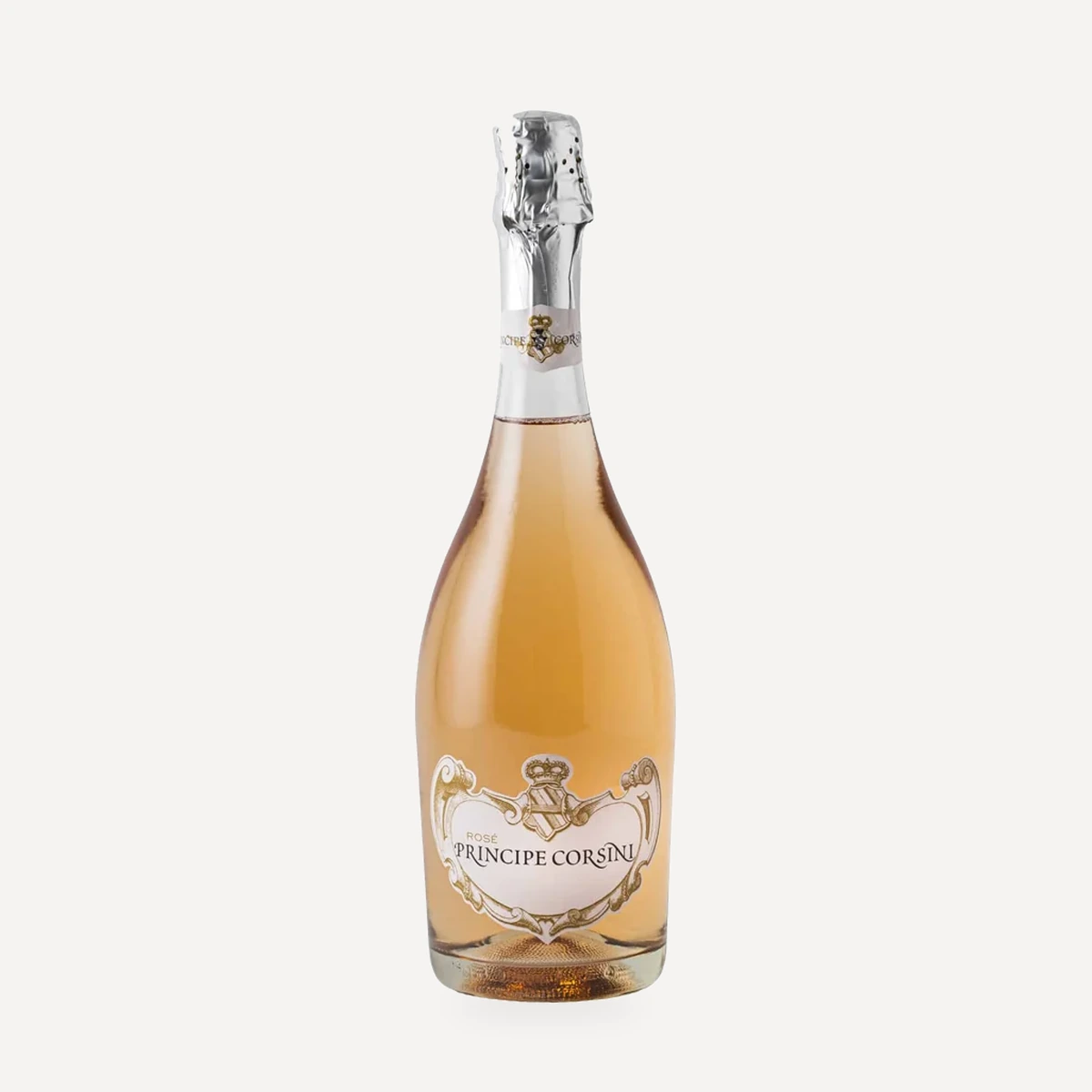
Spumante Rosé Principe Corsini
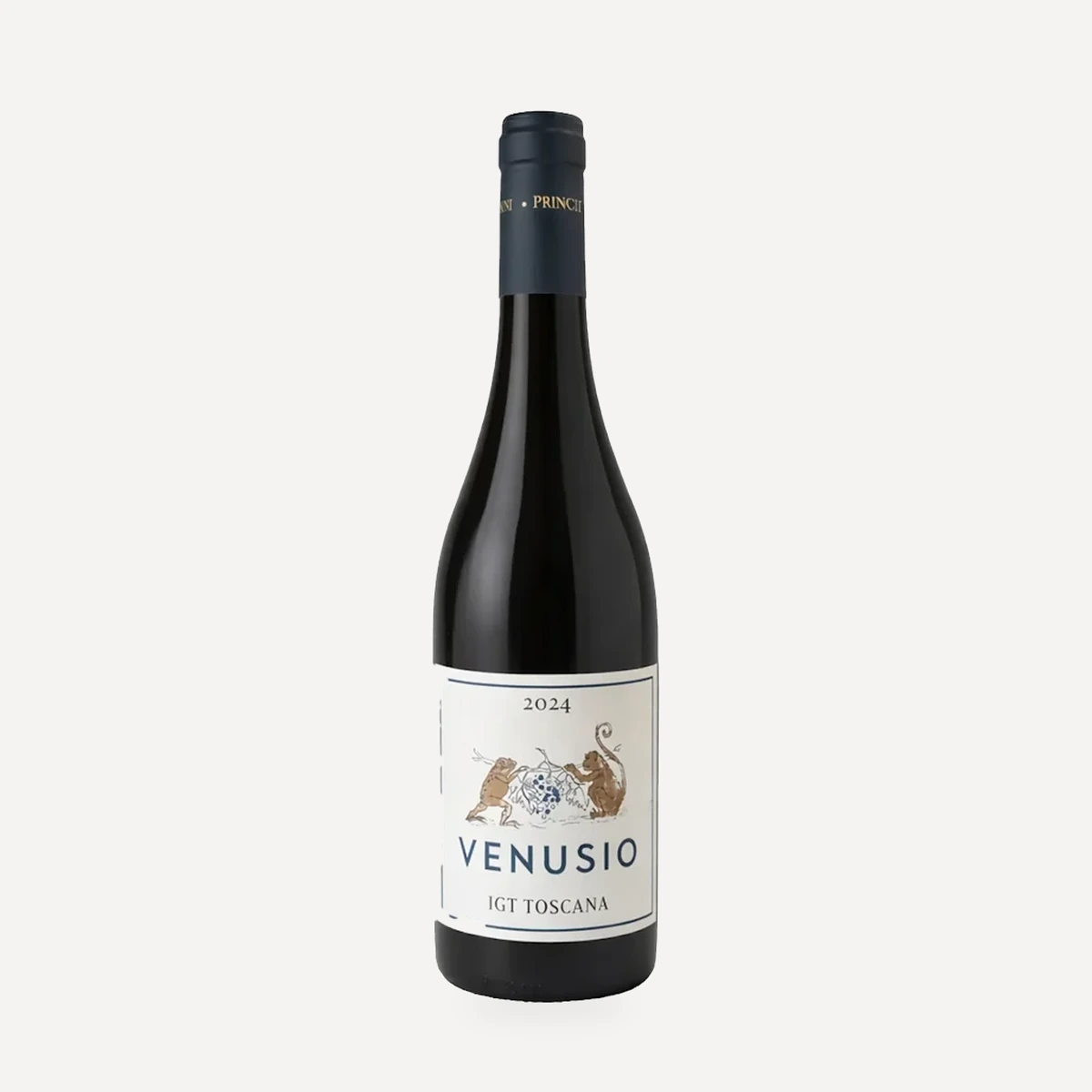
Venusio IGT Toscana
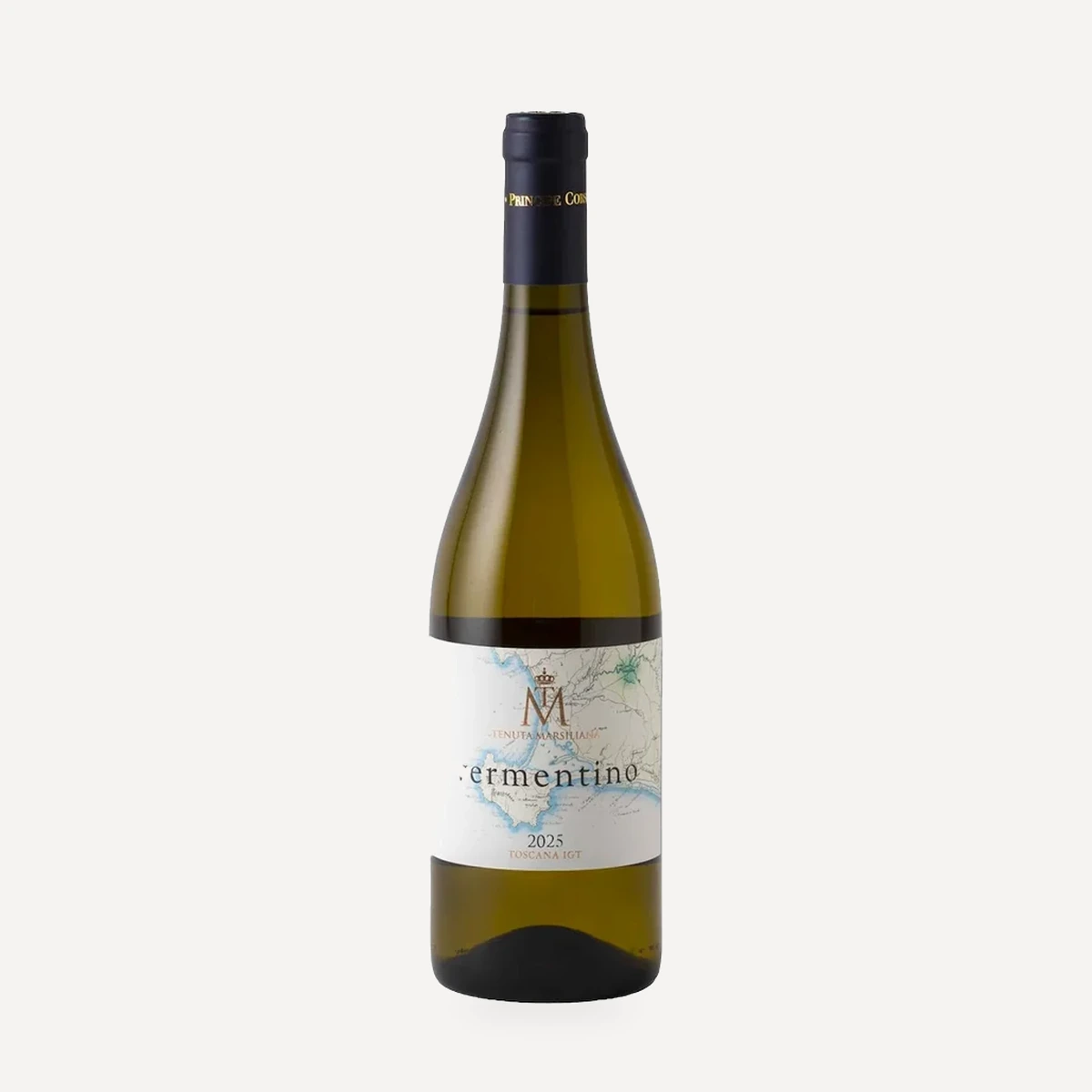
Vermentino IGT Toscana
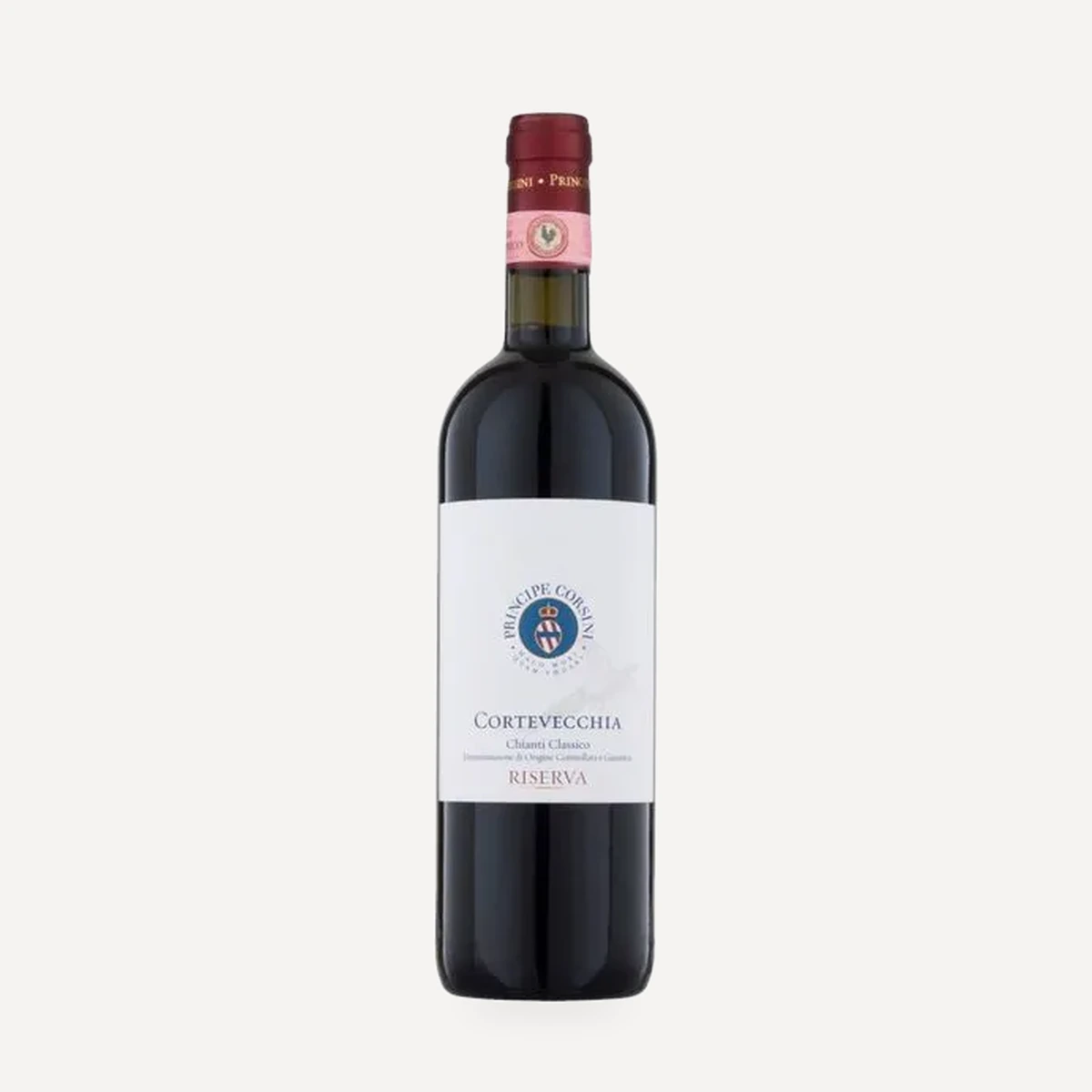
Cortevecchia Chianti Classico Riserva DOCG