Storia
The vineyard before Fico Wine
Vigna di Gugliaie was planted to Sangiovese in 1997. It would later become the home of the Fico Wine project, with Fico drawn from eight particularly stony rows and Per Filo from a nearby section containing less rocky material.
Filippo Corsini’s formative journey
Filippo Corsini, the eldest son of Clotilde and Duccio Corsini, developed his idea for an environmentally harmonious wine during more than a year of work and travel. His itinerary began in Buenos Aires at Distilleria Fratelli Branca, continued in Patagonia at Bodega Chacra, the winery of his cousin Piero Incisa della Rochetta, and concluded in New York at Mario Batali’s Restaurant Enoteca Babbo.
On returning to Villa Le Corti, his family home and the historic location of its cellars, Filippo presented the idea to his father. Duccio Corsini, who had led Principe Corsini since 1992, encouraged him. Together they shaped a project intended to mark a new direction: winegrowing and production aligned with the biological rhythms of the vine and its natural environment. For Filippo, this was both a contemporary interpretation of inherited family tradition and a philosophy of life.
2015: the first Fico harvest
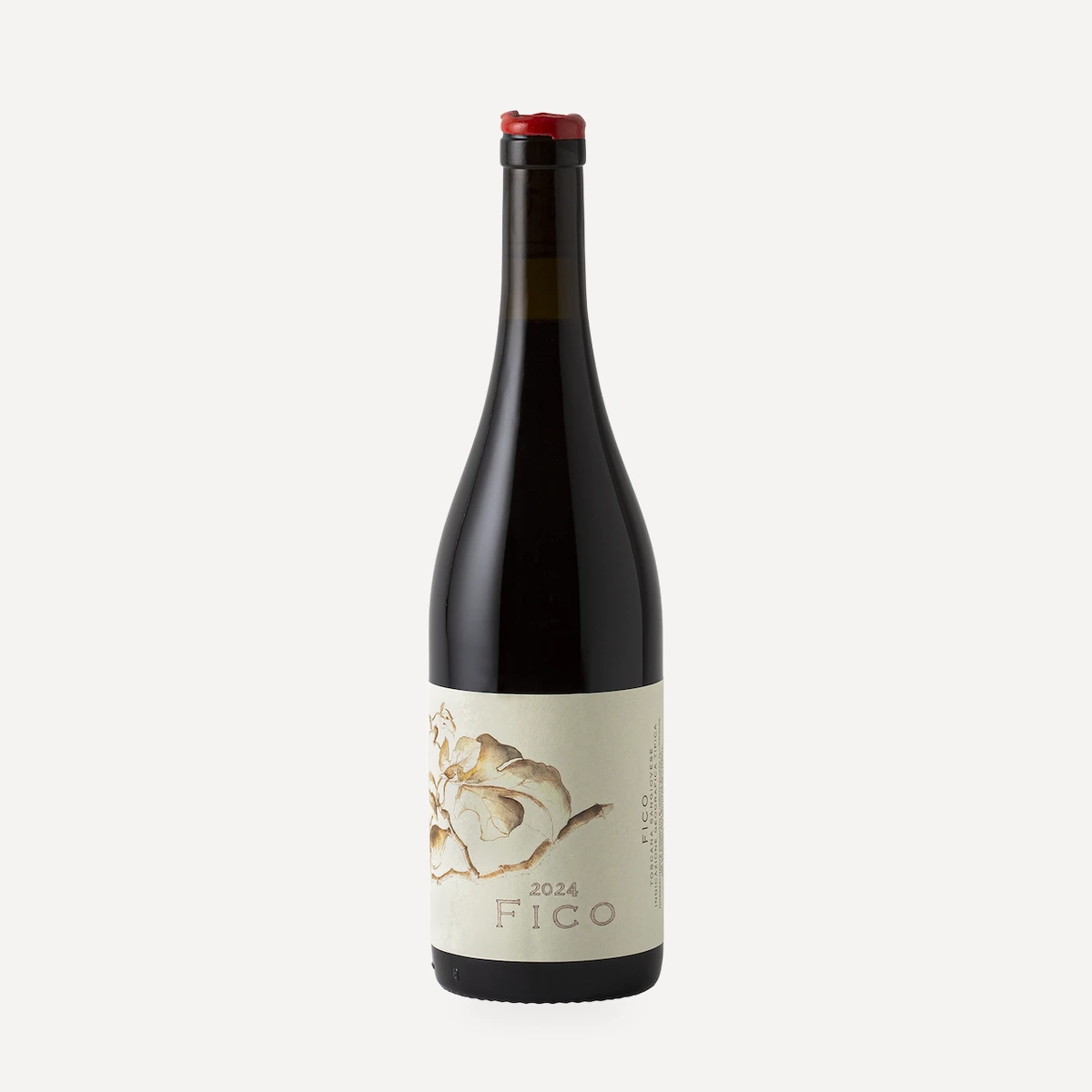
The first Fico harvest took place in 2015. Filippo selected eight rows of Sangiovese in Vigna di Gugliaie and managed them through a holistic biodynamic approach. The inaugural vintage yielded 280 numbered, certified-organic bottles.
The name carries two meanings. “Fico” forms an acronym from Filippo Corsini’s name, while also referring to the fig tree marking the boundary of the vineyard. The first wine established the core principles of the project: pure Sangiovese, biodynamic cultivation, natural fermentation, small-scale artisanal production and low-impact packaging.
2016: Filippo’s death and legacy
Filippo Corsini died in London on 31 October 2016, aged 21, while studying there. His family chose to continue the project as his legacy. Duccio Corsini described the young creator’s approach as a further step beyond the family company’s organic conversion and as a production philosophy for its future. The family also expressed an intention to support young people capable of bringing new ideas to agriculture, art, beauty and life.
2017: Per Filo continues the project
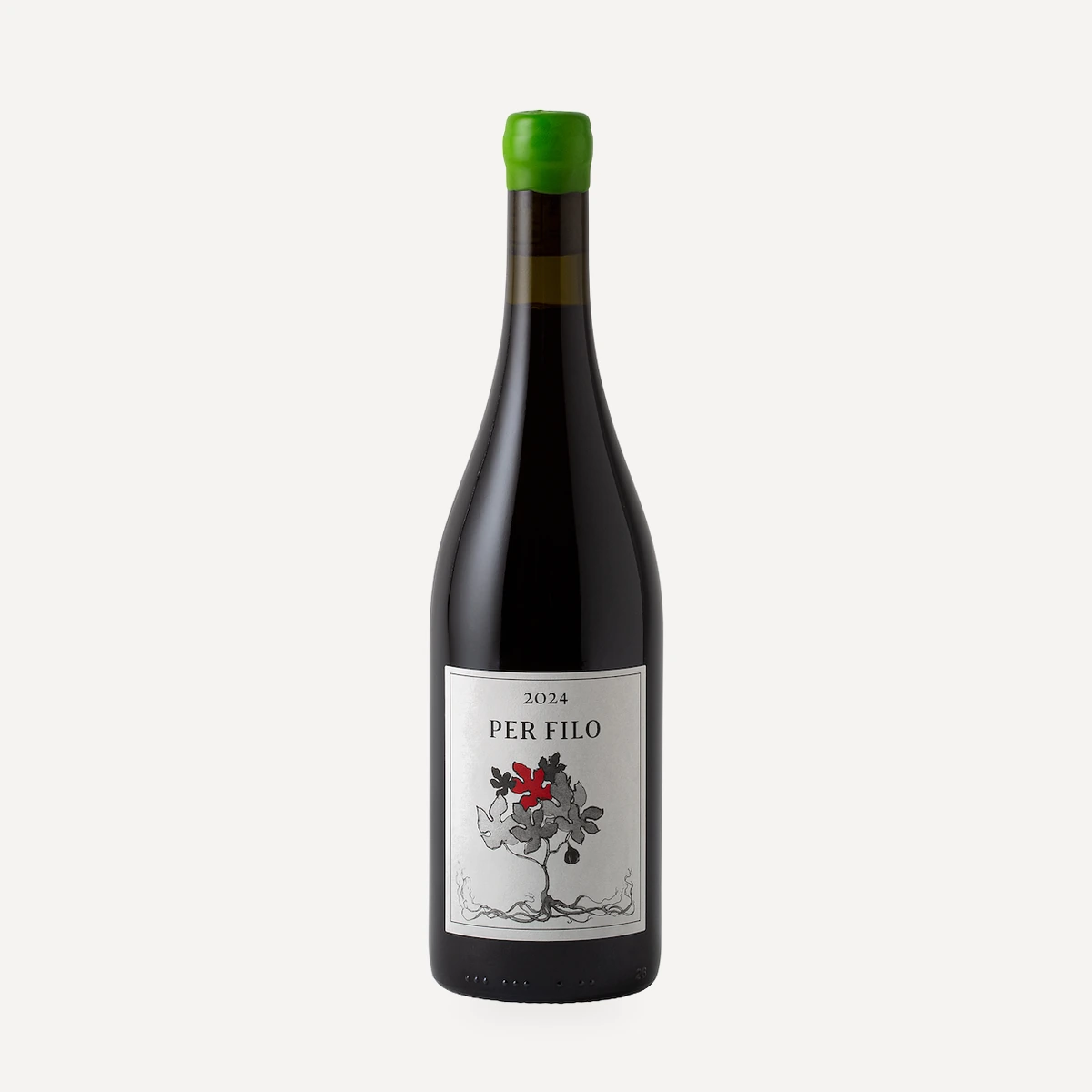
Following the 2017 harvest, Clotilde and Duccio Corsini continued their son’s work with Laura Lenzi and Claudio Giglioni. They produced Per Filo, the second wine Filippo had imagined, from a less rocky section of Vigna di Gugliaie. It remained a 100% Sangiovese interpretation of the same biodynamic vision and was dedicated to Filippo. The first release comprised 1,976 certified-organic bottles.
2019: wider family participation
On 29 September 2019, Per Filo 2017 received 97 points from Doctor Wine and entered the Essential Guide to Italian Wine 2020. Elena Corsini accepted the recognition in Milan. She was involved in every stage of production as well as communication and promotion, extending her brother’s biodynamic vision within the family project.
2020–2021: recurring harvest ritual and vineyard conversion
By 2020, the Fico Wine harvest had become a recurring gathering of the Corsini family and Filippo’s friends. The same commemorative harvest continued in 2021, when Sangiovese was picked in mid-September.
In 2021, Gugliaie’s former spur-pruned cordon system was converted to Guyot. The change was intended to respect the vine’s natural sap flow from roots to leaves and bunches. That year, fermentation continued in open barriques for Fico and open tonneaux for Per Filo, with racking scheduled through the Maria Thun biodynamic calendar and maturation conducted in the same vessels used for fermentation.
2025: ten harvests of Fico Wine
Fico and Per Filo Sangiovese was harvested on 19 and 20 September 2025. The gathering marked exactly ten years of the annual celebration that brings together the Corsini family and Filippo’s friends around the project he created.
Terroir
Fico Wine is based at Villa Le Corti in San Casciano in Val di Pesa, approximately 20 km south of Florence. Its Sangiovese comes from Vigna di Gugliaie, on the hills surrounding Villa Le Corti. Per Filo’s origin is identified at approximately 270 metres above sea level, while the wider estate’s vineyards and olive groves lie between 250 and 350 metres.
The zone has a cool climate, meaningful day-to-night temperature changes and ventilation arriving from the coast. Winters are cold without being severe, and summers are warm without being torrid. These conditions support healthy grape development and permit harvest to begin roughly ten days earlier than in other parts of Chianti Classico.
The wider setting is predominantly clay with limestone and sand. The soil contains abundant coarse mineral material, including rounded fluvial pebbles as well as galestro and alberese stones. River sediments and pebbles provide useful water availability during hot, dry years. Vigna di Gugliaie is particularly associated with river pebbles: Fico occupies its most skeletal, stone-rich part, while Per Filo comes from an adjacent area with a lower proportion of stones. The project associates these pebbled soils with a balance of flavour and structure in the grapes.
Both selections have a southern exposure. Gugliaie is planted at 5,000 vines per hectare and trained to Guyot.
Vinificazione
Gugliaie is certified organic and has been managed biodynamically since 2015. All field and cellar operations for Fico Wine follow the Maria Thun biodynamic calendar. The project avoids synthetic chemical substances in the vineyard, relying on non-aggressive contact materials that are not absorbed by the plants.
Vineyard health is monitored continuously so that disease or infection can be addressed promptly. Green manure is used to protect the soil and improve fertility. Fertilizers are selected for low nitrite and nitrate input, while copper and sulfur are used only in limited quantities. The wider organic approach maintains biodiversity through a landscape alternating vineyards, olive groves and woodland.
In 2021, Gugliaie was converted from spur-pruned cordon to Guyot so that the training system would better accommodate the natural movement of sap through the Sangiovese vine. During the 2025 season, careful canopy management protected bunches from sunburn. Downy mildew and powdery mildew were controlled without major difficulty through flowering and fruit set, while grape berry moth pressure required organic integrated-control techniques.
Harvest is manual. Fico undergoes three selections: first in the vineyard, then a bunch selection before destemming, and finally a berry selection on the sorting table. Per Filo is also selected in the vineyard and again manually before fermentation. The small quantities result from retaining only the best fruit.
Harvest has a commemorative dimension. Relatives and friends from different countries and age groups gather to pick the Fico fruit in memory of Filippo Corsini; by 2025, this had become a ten-year annual tradition.
Fico
Fico is produced from manually harvested Sangiovese, normally picked during the first half of September. Fruit passes through three stages of selection: in the vineyard, as bunches before manual destemming, and as berries on the sorting table. The berries are kept whole rather than crushed before fermentation, allowing a slower process with less heat generation and greater development of varietal and aromatic compounds.
The selected berries fill open French-oak barriques prepared by the estate carpenter. Alcoholic fermentation begins spontaneously through yeasts present on the Sangiovese berries and in the historic cellar. Fermentation lasts approximately 16 days. The cap is immersed and mixed manually every day.
Racking is determined by the completion of fermentation and the condition of the pomace, which contributes colour and aroma during contact. The wine is then returned to the same barrique used for fermentation and remains there until the following autumn before bottling. Maturation varies by vintage; the 2018 Fico spent nine months in its fermentation barriques. Used rather than new barriques are employed. No cultured yeast or sulfur dioxide is added during the subsequent stages.
Per Filo
Per Filo follows the same small-scale principles but ferments in open tonneaux, which are slightly larger than barriques. Grapes are selected in the field, destemmed and subjected to further manual selection before mechanical transfer to the open vessels. Fermentation lasts approximately 16 days, with daily manual immersion of the cap.
Racking is scheduled through the Maria Thun biodynamic calendar. The wine matures in the same tonneaux used for fermentation, with duration adjusted to the vintage. Per Filo 2017 matured for 18 months in its fermentation tonneaux. No cultured yeast or sulfur dioxide is added during the later stages.
Both wines are estate-bottled by Le Corti S.p.A. Società Agricola in San Casciano in Val di Pesa. Fico bottles are individually numbered. Lightweight glass and recycled-paper labels reduce the environmental impact of packaging.
Filosofia
Fico Wine began as Filippo Corsini’s attempt to create a wine in respectful harmony with its environment. He understood organic and biodynamic cultivation not as a risky gesture but as a natural choice concerned with the planet and human health.
The project treats the vine and its surroundings as a self-sufficient biological system whose rhythms should guide both vineyard and cellar work. Filippo wanted the land and grapes to speak through the finished wine, combining a backward look toward artisanal practice with a forward-looking environmental perspective. Genuineness, essentiality, close attention to detail and minimal additions are central to that vision.
For Filippo, this approach was more than a production method: it was a philosophy of life and a personal contribution to his family’s wine history. After his death, the Corsini family continued Fico and created Per Filo from his second idea. Duccio Corsini regards this work as a legacy that extends the family’s organic path and offers a direction for future production.
Environmental responsibility also extends to presentation. The wines use lightweight glass and recycled-paper labels. The family further connected Filippo’s legacy with a commitment to encourage young people whose ideas can renew agriculture, art and beauty.
Vini
Per Filo Toscana Sangiovese IGT