History
The viticultural background of Bolgheri
In 1600, the Counts Della Gherardesca initiated the first forms of rational viticulture in the territories of Bolgheri and Castagneto Carducci. They favoured native vines, selected the most suitable growing areas and helped raise the general quality of local viticulture.
In 1816, experimental vineyards were established at the Capanne of Castiglioncello and on the Castelluccio holdings. Their plantings included the French varieties Gamay, Cabernet and Syrah.
Around 1900, phylloxera substantially reduced the planted vineyard area. A form of viticulture increasingly directed toward quality gradually replaced quantity-oriented production associated with sharecropping.
In 1944, Marquis Mario Incisa della Rocchetta planted one hectare of Cabernet Sauvignon at Castiglioncello di Bolgheri. The vineyard occupied sheltered hillside terrain and demonstrated the suitability of Bolgheri for Bordeaux varieties.
The growing reputation of Bolgheri's wines received formal recognition in 1983, when Bolgheri DOC was created. The production rules were revised in 1994, admitting Cabernet Sauvignon and Merlot to Bolgheri Rosso DOC. On 14 December 1995, the consortium protecting Bolgheri DOC wines was established; it adopted the cypress avenue of San Guido, celebrated by Giosuè Carducci, as its emblem.
Selection of the site and foundation
In 1997, the Knauf family—German entrepreneurs already established in Tuscany—began a detailed classification of Bolgheri land based on geological and pedoclimatic criteria. The purpose was to identify plots with the strongest potential for high-quality winegrowing.
Campo alla Sughera was founded in 1998 beside the Fossa di Bolgheri, where hills rising to the east form a barrier against cold air from the interior. The family selected a position between the sea and the hills, at the meeting point of sands and marls. Rigorous zoning of the estate's diverse sites began with the foundation and became a defining element of the project.
Establishment of the wine range
In 2001, Campo alla Sughera produced its first label, Arnione, a Bolgheri DOC Superiore that became the estate's flagship wine.
The first harvest of Adèo followed in 2003, based on Cabernet Sauvignon and Merlot. In 2004, the estate introduced Arioso, its first white wine, made from Vermentino under the Toscana IGT designation.
In 2006, years of experimental vinification and soil study culminated in the first Campo alla Sughera Toscana IGT Rosso. The estate's namesake Super Tuscan united Petit Verdot with Cabernet Franc and was reserved for the best vintages.
Petit Verdot and technical development
In 2012, soil-texture analysis and sampling confirmed the particular suitability of the estate for Petit Verdot. The variety emerged as a defining element of Campo alla Sughera, valued for full ripeness, tannic finesse, balance, character and harmonious complexity.
In 2017, the estate began working with winemaker Stéphane Derenoncourt. The collaboration was intended to bring greater elegance, finesse and length to the Mediterranean character of the wines while preserving patient élevage and close attention to the vineyards.
Parcel selection and expansion
In 2021, the release of the 2019 vintage inaugurated the Anima di Arnione project. Produced only in exceptional years, it was conceived as a concentrated expression of Arnione Bolgheri DOC Superiore. The project grew out of detailed zoning: grapes from individual microterroirs and plots are harvested at their optimum maturity and their distinctive components are vinified separately.
In early 2022, the estate acquired a further 2 ha with the aim of increasing Arnione production. Of this new land, 1.5 ha were planted with Cabernet Sauvignon in 2023.
In April 2024, Campo alla Sughera acquired another 3.3 ha on the Via Bolgherese, close to Castagneto Carducci. The parcel faces southwest. One hectare, planted in the early 2000s with Merlot, Cabernet Sauvignon and a small amount of Vermentino, was already qualified for Bolgheri DOC production. The planted sector combines clay with pebbles and gravel, while the wider property contains alluvial deposits, pebbles and fine sands. The remaining uncultivated land was scheduled for preparation, fertilisation and levelling ahead of planting in 2025. The acquisition was intended to increase production while improving quality.
The estate now combines scientific analysis, precision viticulture and manual vineyard work. Its vineyards are managed as a collection of differentiated microterroirs rather than as a uniform holding, with separate vinification preserving the character of each component before blending.
Terroir
Position and landscape
Campo alla Sughera lies between Bolgheri and Castagneto Carducci on Tuscany's Etruscan Coast, midway between the sea and the hills. Its land is bounded by the Fosso di Bolgheri and Borro delle Macine. The vineyards occupy an ancient alluvial amphitheatre surrounded by wooded hills that rise to approximately 400 m above sea level.
The eastern hills shelter the estate from cold inland currents. At the same time, the amphitheatre retains maritime influence. The Libeccio and Mistral winds regularly pass across the bunches, helping maintain healthy fruit.
Maritime light and climate
The sea has a decisive influence on the microclimate. Light reflected from its surface produces diffuse, constant and gentle exposure across the vines, supporting vegetative development and even bunch ripening. The site's protected, comparatively warm conditions and maritime breezes are especially important to the complete maturation and tannic finesse achieved by Petit Verdot.
Geological composition
The soils record the meeting of coast and hills. Ancient marine beds, fossil-rich ancestral sands and marly layers meet rocks transported and transformed over millennia by water and weather. These materials have developed into pebbles, gravel and mineral-rich clays. The resulting soils are alluvial, complex, deep and fine in texture, with local variations governed by exposure, microclimate, soil composition and row position.
The southwest-facing parcel acquired on the Via Bolgherese in 2024 lies close to the hills near Castagneto Carducci. Its alluvial soils contain abundant pebbles and fine sands. The existing Merlot sector also includes significant clay, gravel and pebbles.
Winemaking
Precision zoning
Zoning began at the estate's foundation and treats the vineyard as a mosaic of sites rather than a single homogeneous unit. The 42 plots are assessed through ripening behaviour, exposure and observation of vine growth, while 18 microterroirs bring together areas with similar soil and climatic characteristics. Harvest decisions are made plot by plot so that each component reaches the cellar at its optimum expression.
Vineyard management and ecosystem
Operations are planned in detail around the requirements of each vine and its ecosystem. Vineyard health is checked through constant, regular field presence by the agronomy team. Older vines receive restorative work on their permanent wood, intended to preserve healthy tissue and regenerate their productive potential.
Pest management includes sexual-confusion techniques. Vineyard-floor practices include grassing between the rows and row-specific green manures, designed with mixtures of companion species and legumes.
Médocaine method
Campo alla Sughera uses the médocaine method, combining high planting density with intensive manual work and precise timing of vineyard operations. Greater competition between neighbouring vines encourages roots to explore deeper, microelement-rich soil layers. The vines consequently direct more energy toward fruit rather than excessive foliage, producing smaller berries with thicker skins and concentrating aromatic and polyphenolic material.
The system requires sustained labour, dedicated equipment and timely intervention. Its intended results are higher-quality harvests and wines with greater structure, depth and longevity.
Harvest and selection
Grapes are harvested according to the maturity of each parcel. Manual harvesting into 15 kg crates is documented for the estate's principal red wines. Selection occurs three times: first in the vineyard, again on the sorting table at the cellar entrance, and finally during destemming with dedicated equipment that removes insufficiently ripe berries. The objective is to deliver intact, healthy fruit to the fermentation tanks.
The estate has also reduced bottle weight to lower the environmental impact associated with production and transport.
Parcel-by-parcel vinification
Each parcel is harvested and vinified separately according to grape maturity. This microvinification approach preserves the distinct character of individual plots and microterroirs before their components are assembled into the final wines. Regular tasting guides decisions throughout vinification and maturation.
Reception and triple selection
The grapes undergo three selections: in the vineyard, on the sorting table at the cellar entrance and during destemming. Dedicated destemming technology removes less-ripe berries. Intact, healthy fruit reaches the tanks without unnecessary mechanical stress.
Gravity cellar
Vinification and ageing areas are underground and distributed across different levels. Grapes, must and wine move between tanks and floors by gravity, limiting pumping, forcing and mechanical handling.
Fermentation and maturation
Vinification is deliberately gentle and avoids rigid intervention. The general red-wine protocol documented for the principal estate wines uses stainless-steel tanks for 20–25 days at a controlled 28–30°C. Individual parcels remain separate through vinification.
Wood ageing follows no fixed universal timetable. The vintage and the character of each wine determine the length of maturation, while the wood is selected to preserve and emphasise varietal expression. French-oak barriques and tonneaux are used within the range, followed by bottle maturation. The estate favours patient ageing without predetermined time pressure rather than forcing wines into a standard schedule.
The white wine is vinified in stainless steel at 16°C, with stainless-steel maturation used to retain aromatic delicacy, followed by bottle refinement.
Philosophy
Campo alla Sughera's philosophy begins with close observation of the land. Geological and pedoclimatic analysis, continuous vineyard monitoring and separate treatment of microterroirs are intended to reveal rather than standardise the estate's natural differences.
The estate presents quality as inherently selective: each plant, row and parcel is expected to achieve its own optimum expression before blending. This approach requires rigorous grape selection, gentle gravity-based handling, repeated tasting and enough time for each wine to mature without a predetermined deadline.
Science and manual work are treated as complementary. Precision viticulture supplies analytical knowledge, while regular human presence in the rows responds to the needs of individual vines. Sustainability is expressed through respect for the vineyard ecosystem, sexual-confusion pest control, grassed rows, tailored green manures, restorative work on older vines and lighter bottles.
The pursuit of perfection is framed as a continuing direction rather than a claim of having reached a flawless result. The practical objective is continual improvement, with wines that combine the maritime light and breezes of Bolgheri, its ancient soils and the structure derived from the surrounding hills. The Knauf family and Stéphane Derenoncourt place particular emphasis on elegance, finesse, length, patient maturation and harmony with nature.
Wines

Adèo
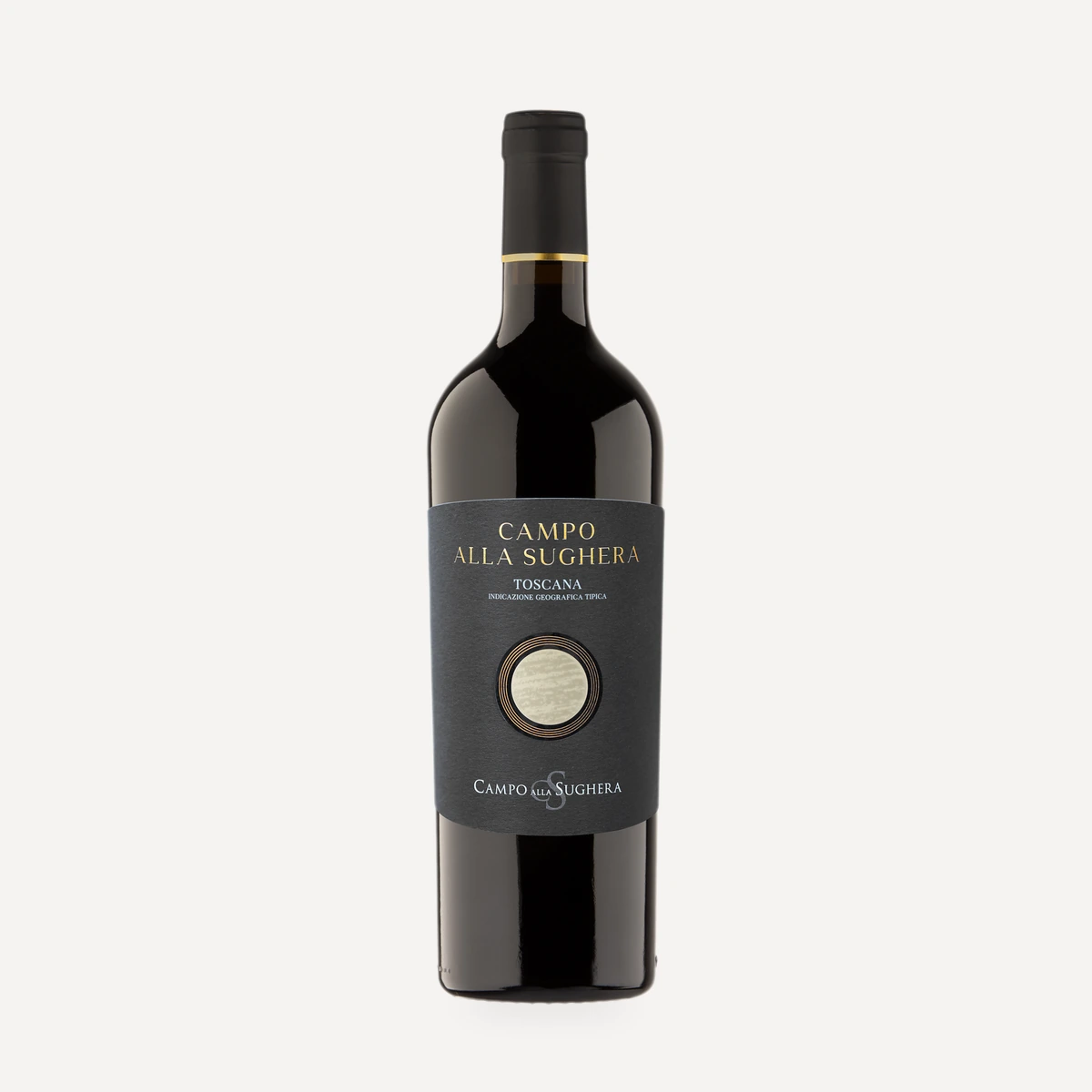
Campo alla Sughera

Arnione
