History
Clemente Santi and the nineteenth-century origins
The origins of Brunello di Montalcino are linked to Clemente Santi and his nephew Ferruccio Biondi Santi. During the nineteenth century, they pursued the quality potential of Sangiovese Grosso in Montalcino, vinifying it as a single variety and combining it with extended maturation in wooden casks. Clemente introduced the underlying idea; Ferruccio developed it and became the first person to label a wine officially as Brunello di Montalcino.
1888 and 1891: the first Brunello vintages
Ferruccio produced the 1888 Riserva, identified as the first Brunello di Montalcino in history. Its grapes probably included fruit from Scarnacuoia. Two bottles of this vintage remain in the estate collection. The wine was topped up and recorked in 1927, 1970 and 1985.
The 1891 Riserva was the second Brunello. It was probably sourced from vines at Tenuta Greppo and Scarnacuoia, material that would ultimately contribute to the estate’s selection of Sangiovese Grosso and the development of the BBS11 clone. Five bottles of the 1891 remained in the cellar when its historical entry was prepared. It underwent topping-up and recorking in 1927, 1970 and 1985.
Tancredi Biondi Santi: continuity through two world wars
Ferruccio died in 1917. In the aftermath of the First World War, his son Tancredi Biondi Santi assumed responsibility for the tradition. The 1925 Riserva was Tancredi’s first Riserva; three bottles remained in the cellar when its historical entry was prepared. It was topped up and recorked in 1970 and 1985.
Tancredi’s 1945 Riserva, made in the aftermath of the Second World War, was his second Riserva after 1925. Further Riservas followed in 1946 and 1951. The historical wines of this period were probably sourced from Tenuta Greppo and Scarnacuoia and were matured for four years in Slavonian oak before long bottle ageing.
Franco Biondi Santi and the BBS11 selection
Franco Biondi Santi took the helm of Tenuta Greppo in 1970. The 1971 was the first Riserva produced under his direction. During the 1970s, Biondi-Santi identified and selected its proprietary Sangiovese Grosso clone at Tenuta Greppo. Named BBS11—Brunello Biondi Santi 11—the clone was formally recognized in 1978.
The 1982 Riserva was released in 1988 with a commemorative label marking one hundred years since the first Brunello, the 1888 Riserva. The 1985 Riserva was released in 1991 with another special label, this time commemorating the centenary of the 1891 Riserva.
Rosso di Montalcino and the centennial tasting
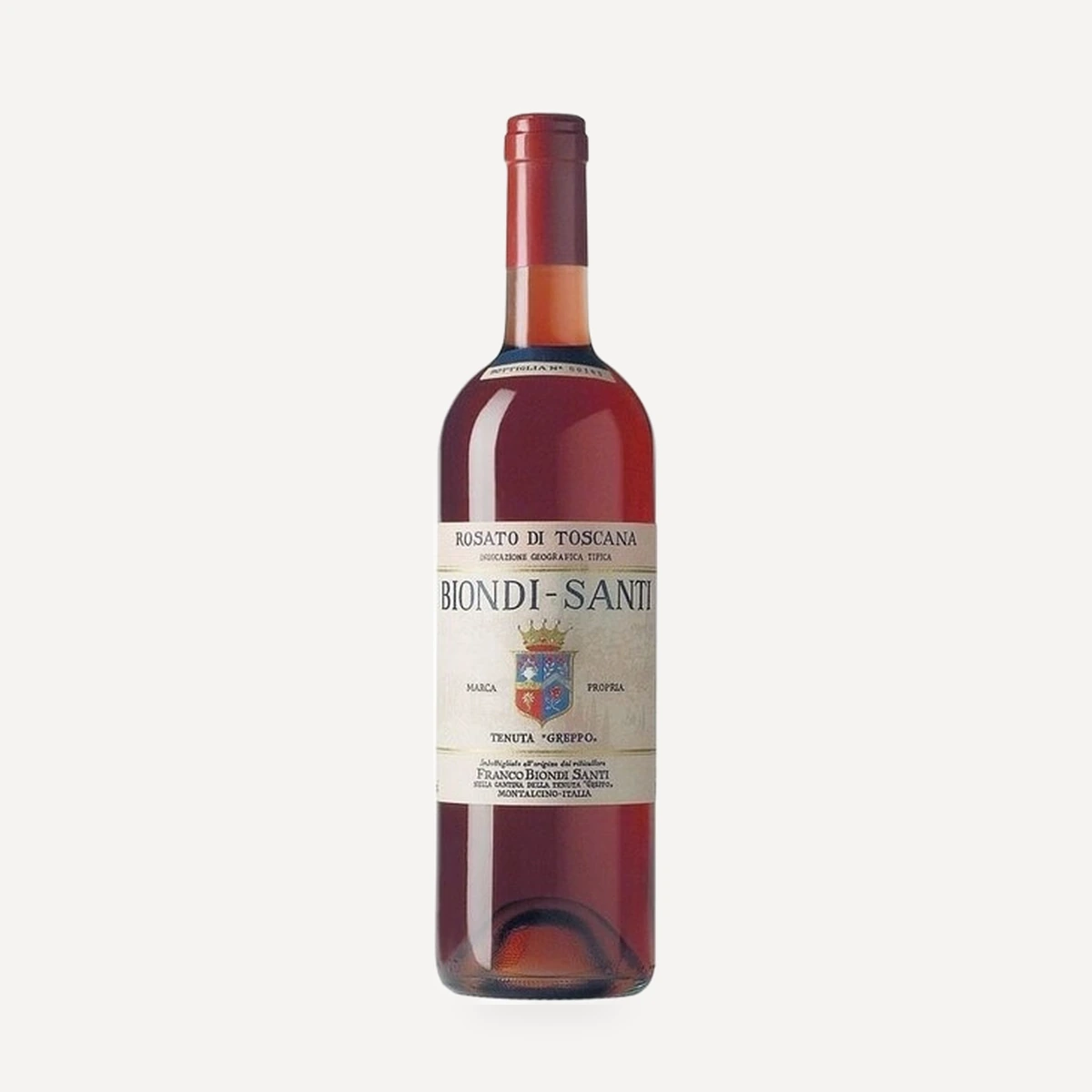
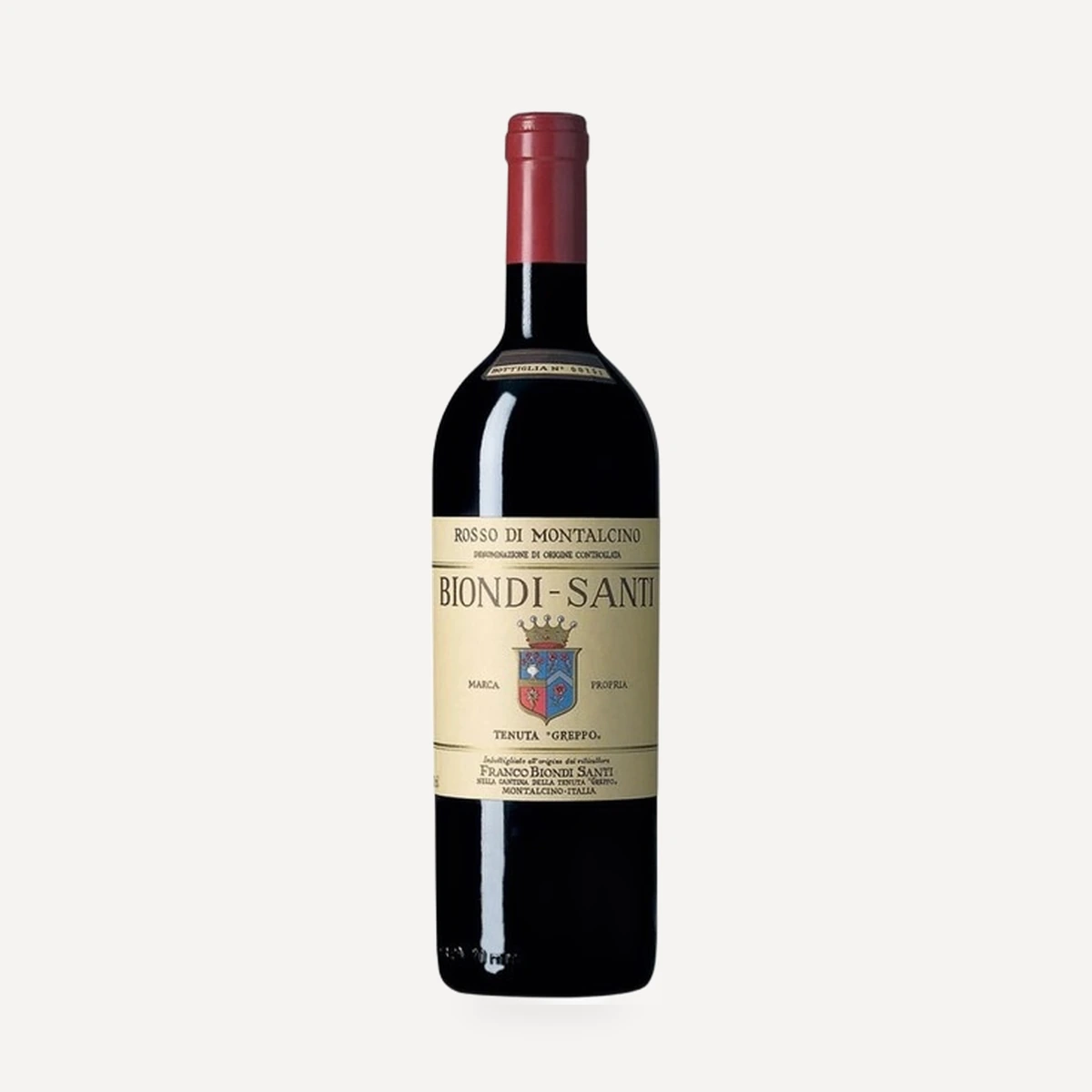
The estate’s younger red was originally known as Biondi-Santi Brunello “White Label.” It became Rosso di Montalcino in 1983, when the Rosso di Montalcino DOC was established.
In 1994, Franco organized the Centennial Tasting, opening Riservas spanning the 1888–1988 vintages. He regarded the 1891 as the benchmark against which subsequent Riservas should be measured. The tasting was also the last recorded occasion on which an estate bottle of the 1888 Riserva was opened. In 2009, a bottle of the 1891 was opened for the sixtieth wedding anniversary of Franco and Maria Floria Biondi Santi.
The modern era
The 2013 vintage was identified as the fortieth Riserva produced between 1888 and 2013. It was also the first Riserva offered in Magnum, Jéroboam and Mathusalem in addition to 750 ml. For the 2015 Brunello, 750 ml and Magnum were produced together for the first time.
Federico Radi became Technical Director at Greppo in 2019, with responsibility for preserving and applying the estate’s inherited principles. Contemporary vinification retains indigenous yeasts and Slavonian oak while employing oak, concrete and stainless-steel vessels according to the vintage. Giampiero Bertolini serves as CEO, and the two present themselves as custodians of the Biondi-Santi legacy.
Terroir
Biondi-Santi is based at Villa Greppo in Montalcino, in the province of Siena, Italy. Tenuta Greppo lies southeast of Montalcino. Ribusuoli is immediately below it, while Pievecchia is north of the town. The historical Scarnacuoia vineyard is associated with the earliest Riservas and with the vine material that preceded selection of BBS11.
The vineyards are consistently characterized as high-altitude sites. Marked day–night temperature variation supports slow, balanced ripening and aromatic development. Northern winds are another recurring influence: in 2015, the tramontana refreshed the vines before final ripening, while in 2018 a week of healthy wind from the north dried vines and bunches before harvest.
Seasonal conditions vary materially. Recent documented growing seasons range from the cool, rain-rich 2018 season to the dry, hot 2022 season and the irregular, mildew-pressured 2023 season. Rainfall near harvest and substantial diurnal variation can restore balance after hot, dry summers.
Winemaking
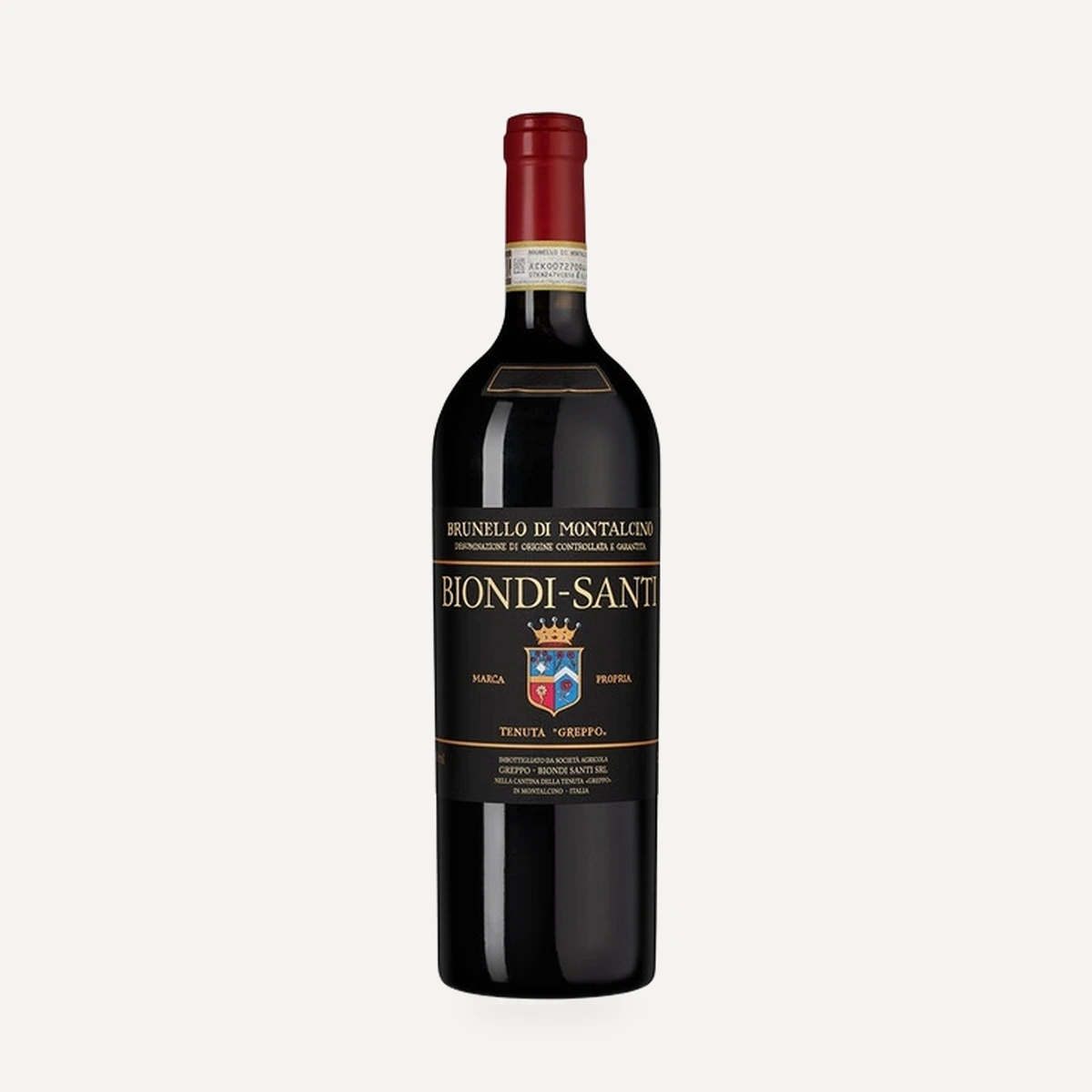
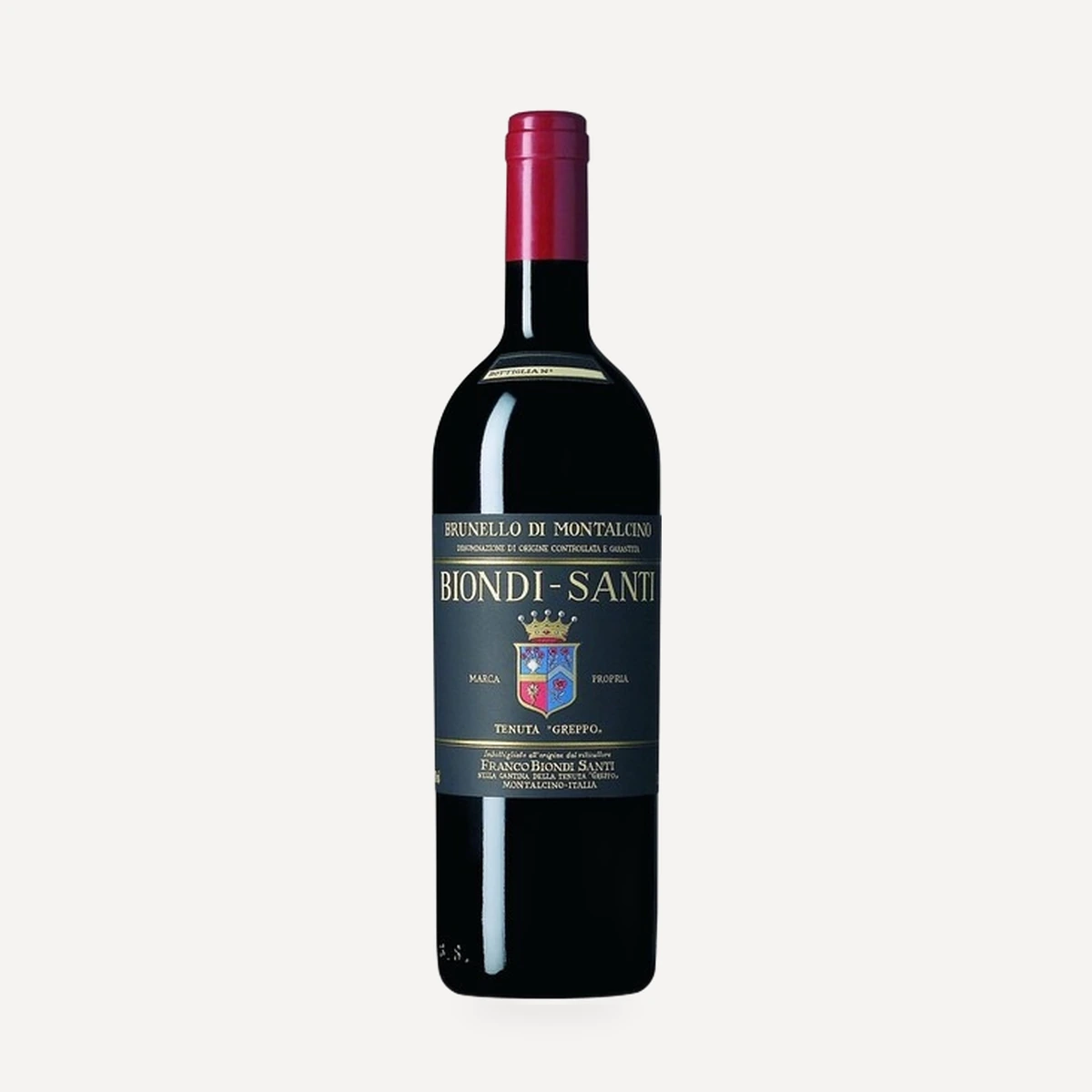
The wines are produced from estate-grown grapes. Selection begins in the vineyards: Brunello is assembled from selected Sangiovese grown in identified proprietary parcels, while Riserva draws from selections that include the oldest parcels. Historically, Riserva fruit came from vines more than 25 years old. Rosso was traditionally associated with the youngest vines and with parcels that emphasize fruit; historical technical entries variously define these vines as under ten years old or between four and ten years old.
Harvesting and selection respond to each season. The fruit for Brunello is described as hand-selected. In 2018, harvest lasted eight days and focused on careful selection of the best bunches. The difficult 2023 season brought downy mildew pressure and required particularly rigorous sorting to retain sound, high-quality grapes.
The proprietary BBS11 clone—Brunello Biondi Santi 11—was identified and selected at Tenuta Greppo during the 1970s and formally recognized in 1978. Earlier vine material from Tenuta Greppo and Scarnacuoia formed part of the selection history that led to it.
Fermentation and vessels
The traditional Brunello method combines fermentation in cement vats with indigenous yeasts originating in the estate vineyards. Contemporary vinifications broaden the available vessel palette without abandoning indigenous fermentations. The 2019 Brunello and Riserva were vinified across oak, concrete and stainless steel; the 2020 Brunello used the same three materials. The 2018 Brunello employed vessels of different sizes in stainless steel, wood and concrete, while the 2018 Riserva used Slavonian oak and concrete. In 2015, Riserva was vinified in upright Slavonian oak casks with estate-selected indigenous yeasts.
Maturation
Slavonian oak remains the defining maturation material. Historical Brunello and Riserva entries generally record three years in Slavonian oak, while several early Tancredi-era Riservas record four years. Contemporary élevage is adjusted by vintage: the 2019 Brunello spent 30 months in Slavonian oak, the 2019 Riserva 28 months, and the 2020 Brunello 24 months. Rosso di Montalcino receives a shorter maturation, consistently documented as 12 months in Slavonian oak.
La Storica and bottle conservation
At the centre of the old cellar at Tenuta Greppo is La Storica, the library devoted to every Riserva vintage. Bottles mature in small, vintage-specific cells, without labels and with only a drop of beeswax over the cork to limit oxidation. A bottle is dressed only when it leaves the cellar: the original vintage label is applied, the numbered neck label or lunetta is added, and the departure date is written by hand on the back label.
Historic bottles can undergo topping-up and recorking. When such reconditioning has occurred, a certificate is placed around the bottle’s neck identifying the intervention. Documented topping-up dates extend from 1927 for the 1888 and 1891 vintages to 2020 for the 1995 Riserva.
Philosophy
Biondi-Santi defines its work through uncompromising attention to detail, artisanal execution and fidelity to the long-lived, elegant character associated with Tenuta Greppo. Tradition is treated as a living discipline rather than a fixed recipe: indigenous yeasts and Slavonian oak remain central, while concrete, stainless steel and different oak vessels may be deployed in response to the vintage.
Time is a governing principle. Franco Biondi Santi’s idea that Riserva is measured through the passage of time informs vineyard decisions, cellar maturation, long bottle ageing and the preservation of historic vintages in La Storica. Federico Radi’s technical role is explicitly connected with conserving and applying this inherited philosophy.
The estate’s contemporary cultural language centres on equilibrium among people, nature and time. Close observation of the vineyard, respect for seasonal variation and rigorous selection are presented as the means of preserving identity across vintages. Giampiero Bertolini and Federico Radi describe their roles in terms of custodianship of the Biondi-Santi legacy.
Wines
Brunello di Montalcino DOCG
Brunello di Montalcino Riserva DOCG
Rosso di Montalcino DOC