History
The medieval settlement
The earliest surviving record of Castell’in Villa dates to August 1176. In the cloister of the local parish church, then dedicated to Santi Cristoforo e Jacopo, Ugo di Valcortese signed a document on behalf of the inhabitants that formally placed the community under the authority of the Comune di Siena.
In January 1263, the Sienese furrier Palmiero di Bruno was appointed mayor of Castell’in Villa. The settlement’s position on the frontier facing Florentine territory probably prompted Siena to build its tall stone tower as a lookout over the border. Castell’in Villa was repeatedly besieged by Florence and suffered serious damage in 1453.
The large square tower continues to dominate the village. The buildings gathered around it include a private chapel, the Foresteria and spaces now used for hospitality, alongside works by contemporary artists. At the edge of the settlement stands the parish church of San Cristoforo. Its roadside location once allowed it to serve as a xenodochium, a small institution providing free shelter to pilgrims and other travellers.
Gazzara
The medieval settlement of Gazzara, on the road from Castelnuovo Berardenga towards the Crete Senesi, entered the Sienese domain at the beginning of the 13th century. By the middle of the 15th century it belonged to the Poor Clare nuns of the Sienese monastery of Santa Petronilla.
A detailed inventory dated May 1783 describes Gazzara as a working rural complex. It included a peasant’s house with a kitchen, four rooms, a granary reserved for the proprietor and a dovecote. Beneath the house were separate stables for oxen, horses, sheep and pigs, two smaller stalls for young animals and a room used to make cheese. The property also contained a hut, cloister, parata, oven and a cellar excavated in solid tuff that also served as a vat room. A church dedicated to San Martino was connected with the nearby church of San Salvatore.
In 1810, a Napoleonic edict suppressed the Sienese convent, abolished religious orders and congregations, and expropriated Church property. Gazzara subsequently became part of the Castell’in Villa estate. Conservative restoration adapted the former monastic complex for contemporary hospitality while retaining its historical character.
The modern estate
Riccardo and Coralia Pignatelli della Leonessa purchased the approximately 300-hectare estate in 1968. They undertook a careful conservative restoration of the medieval complex. The restored estate remains centred on the fortified village and is surrounded by vineyards, olive groves and old woodland.
During the 1990s, Coralia Pignatelli met the artist Carlo Pizzichini and developed an appreciation for his work, particularly its relationship with land and nature. Their association continued over the following years. After the restoration of the light-filled Granaio in the centre of the medieval village, the building was inaugurated as an exhibition space with a presentation of Pizzichini’s work.
Terroir
Castell’in Villa lies in Castelnuovo Berardenga, near Siena, at the southern end of the Chianti Classico zone. The estate occupies the last reaches of the Chianti hills, where vineyards, olive groves, old woodland and green valleys approach the Crete Senesi. Its elevated medieval village overlooks the surrounding hills and woods, with views extending to the towers and palaces of Siena.
The vineyards are distributed among eight sites, providing different exposures, soil types and microclimates. Across the estate, vineyard elevations range from approximately 230 to 360 metres above sea level. The principal Chianti Classico source vineyards include alluvial soils containing pebbles and sand. The southeast-facing source vineyard identified for La Gazzara lies at 250–300 metres and has Pliocene sand.
Vineyards supplying the estate’s principal Chianti Classico are situated at approximately 250–320 metres. The Riserva sources include northwest- and southeast-facing vines within the same elevation band. Santacroce comes from south- and southeast-facing vineyards at 250–320 metres, while the Poggio delle Rose cru is situated at approximately 350 metres with southern and southeastern exposures.
Winemaking
The viticultural objective is high-quality fruit from low-yielding vineyards. Sangiovese sources documented across the estate range from approximately 10 to 25 years old. Both spurred-cordon and Guyot training are used, while the La Gazzara source is specifically trained to spurred cordon.
Grapes are harvested by hand. Timing varies by site and intended production: the La Gazzara rosato source is picked at the beginning of September, while the principal Chianti Classico source is harvested at the end of September. Recorded average yields are 60 quintals per hectare for the rosato source and 50 quintals per hectare for the principal Chianti Classico source.
The Poggio delle Rose cru preserves estate plant material through the grafting of old Sangiovese cuttings. Castell’in Villa also presents sustainability as part of its winegrowing commitment, though no named vineyard certification or detailed estate-wide protocol is specified.
Indigenous yeasts initiate alcoholic fermentation for the principal red wines. Fermentation takes place in stainless-steel tanks at a controlled 28–30 °C. The technical specification for the principal Chianti Classico gives a fermentation period of 25–28 days.
Ageing regimes vary by selection. Chianti Classico rests in large oak casks for two to three years; its technical specification identifies large Slavonian and French oak casks and a 24–30-month maturation, followed by bottling without filtration and at least six further months in bottle. Chianti Classico Riserva matures in large oak casks for 36–48 months and then receives 12 months of bottle ageing.
Poggio delle Rose matures in wood for 24–36 months, first in Alliers barriques and then in large oak casks. It is bottled without filtration and remains in the cellar for another 12 months. Santacroce follows a similar sequence—Alliers barriques followed by large oak casks—for a total wood maturation of 12–24 months; it is bottled without filtration and aged for another eight months before release.
La Gazzara follows a separate rosato process. The Sangiovese is softly pressed and undergoes natural fermentation in temperature-controlled stainless steel for 15–20 days. Malolactic fermentation is prevented. Protein and tartrate stabilization precede filtered bottling, followed by at least three months of bottle refinement.
Vin Santo is made in very limited quantities from carefully selected, hand-harvested Trebbiano and Malvasia. The bunches dry naturally, either hanging or laid out in places with pronounced temperature variation. Water evaporates from the berries over three to four months before vinification begins.
Philosophy
Castell’in Villa places high-quality production from low-yielding vineyards at the centre of its approach. The main wines emphasize Sangiovese, indigenous-yeast fermentation, long maturation and extended bottle ageing. Riserva ‘IN is reserved for exceptional harvests and is conceived as a concentrated expression of Sangiovese.
The estate combines respect for Tuscan wine traditions with selected contemporary production methods. Its hospitality and ambassador programme articulate the same values in broader terms: respect for time and place, artisanal care, authenticity, restrained elegance, uncompromising quality and close attention to detail. Mature vintages are treated as a means of showing both the evolution of Sangiovese and the value created by time.
Territorial stewardship, sustainability, cultural activity and hospitality are presented as connected parts of the estate’s identity. The ‘IN Castell’in Villa initiative extends this outlook to art, music and nature.
Wines
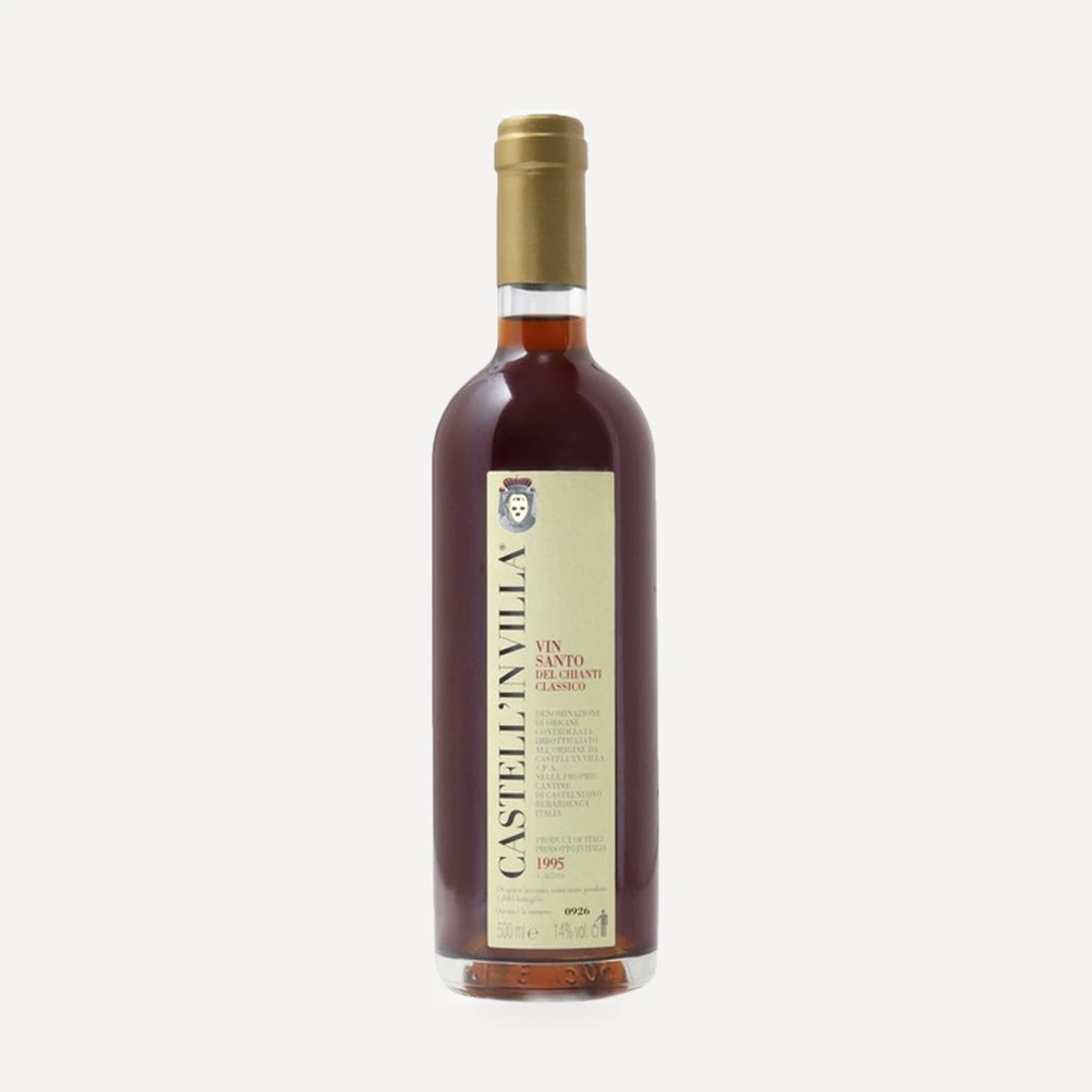
Vin Santo del Chianti Classico DOC
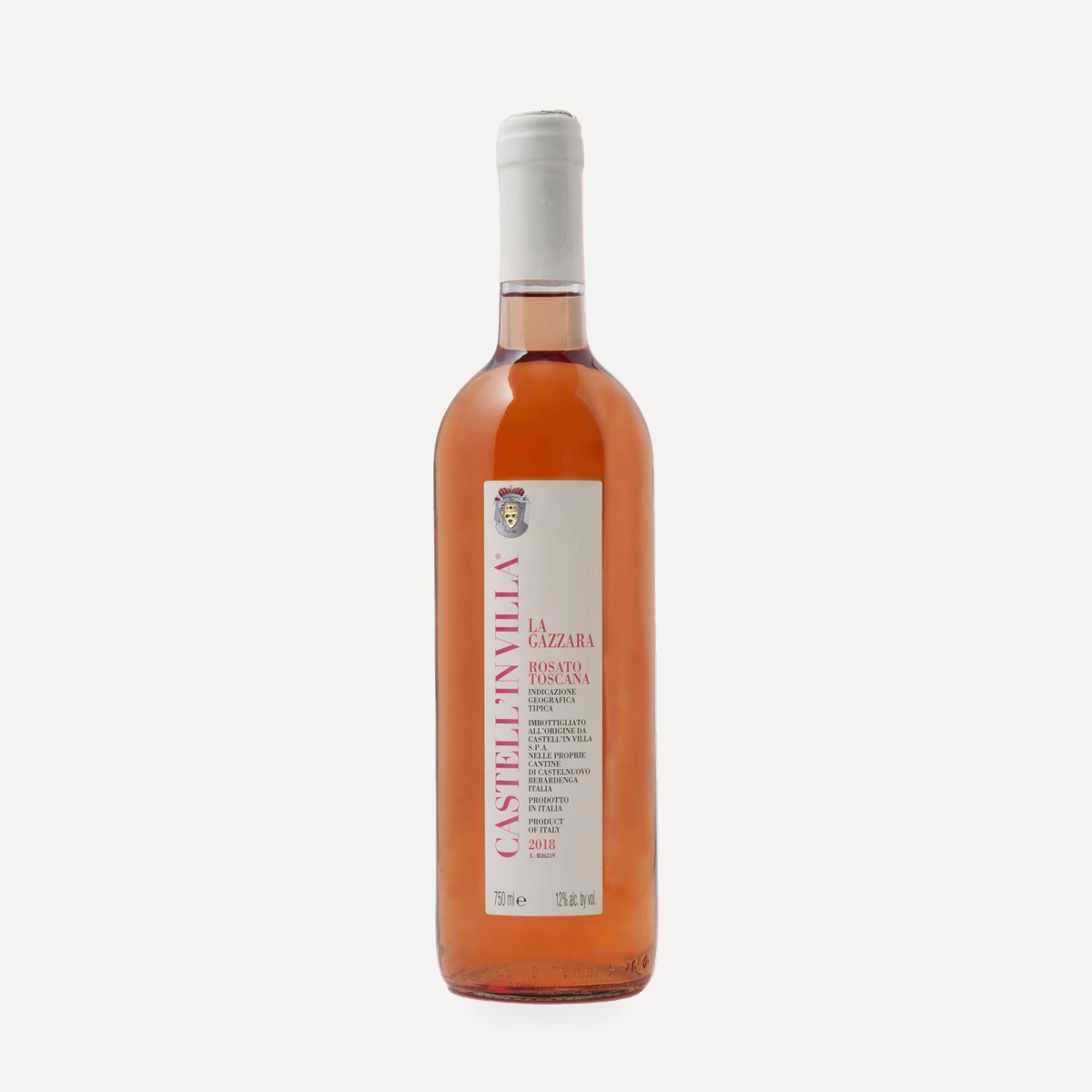
La Gazzara Rosato Toscana IGT
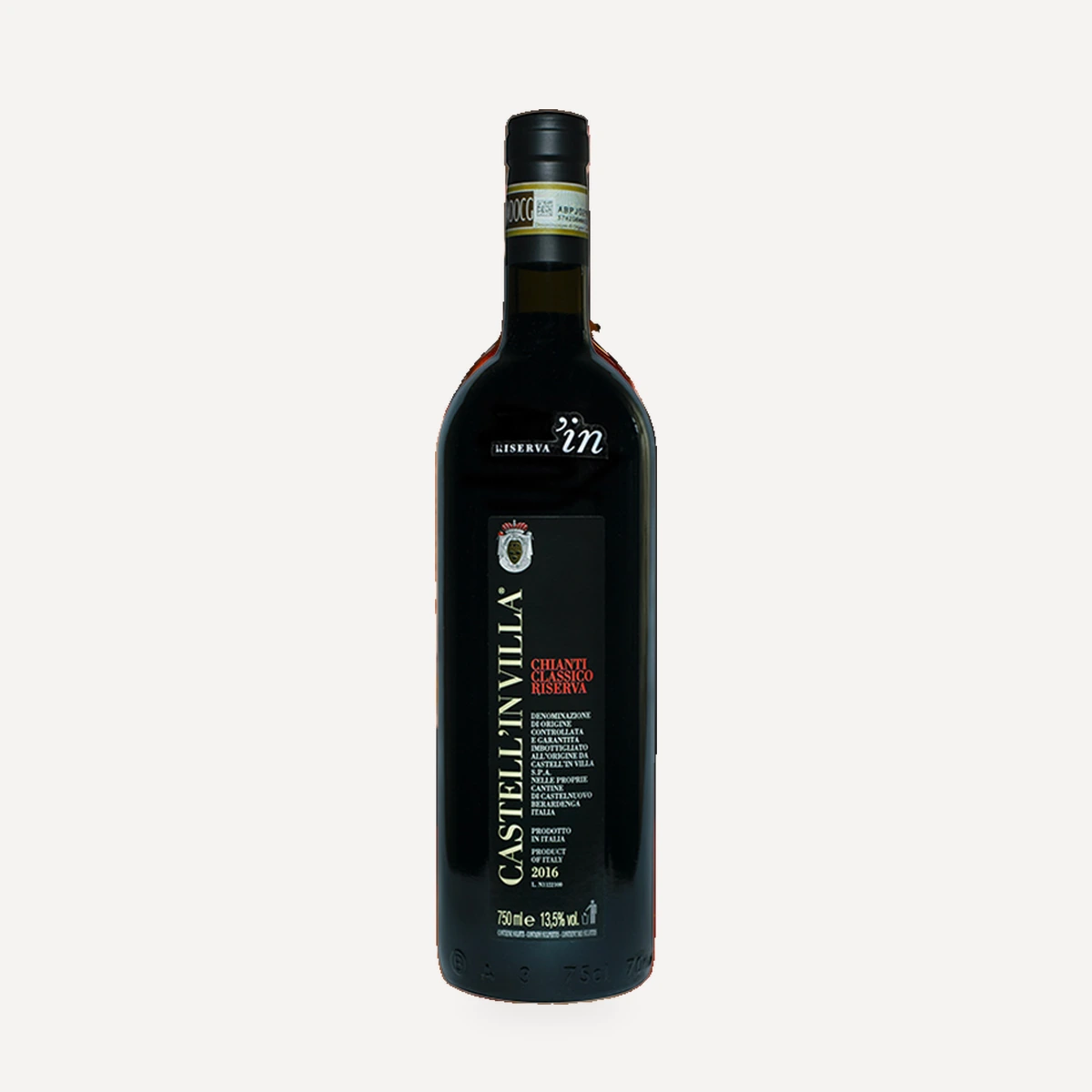
Riserva ‘IN
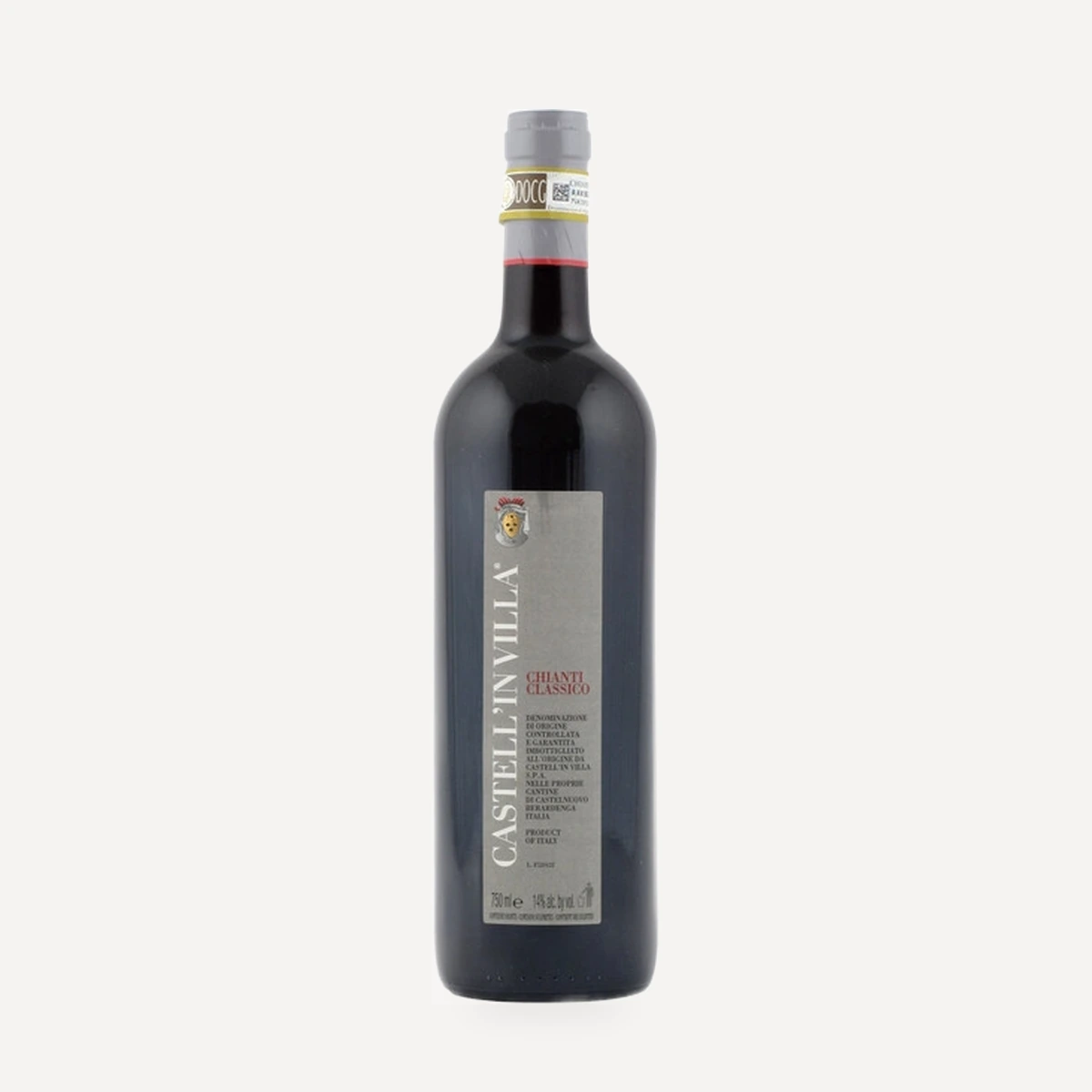
Chianti Classico DOCG
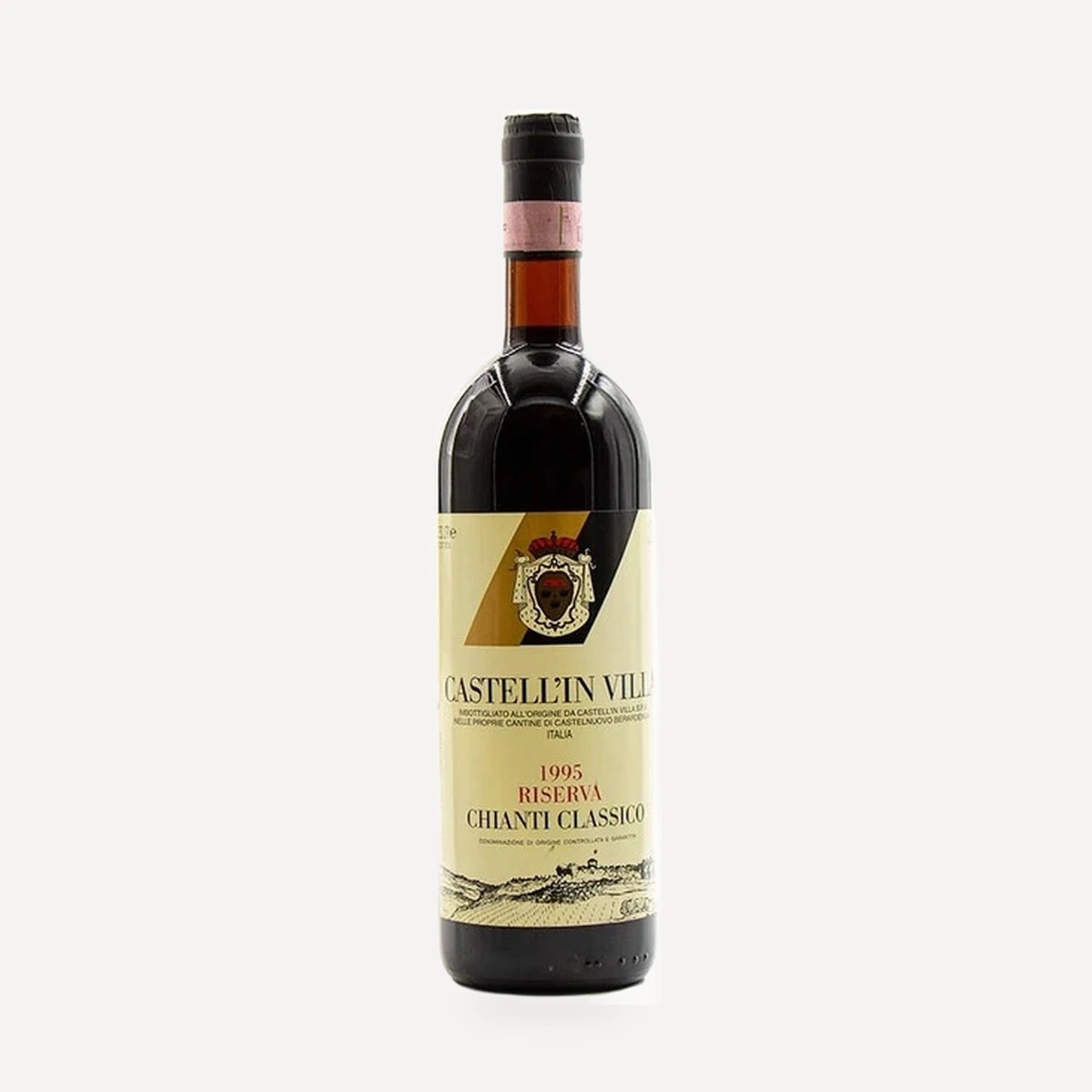
Chianti Classico Riserva DOCG
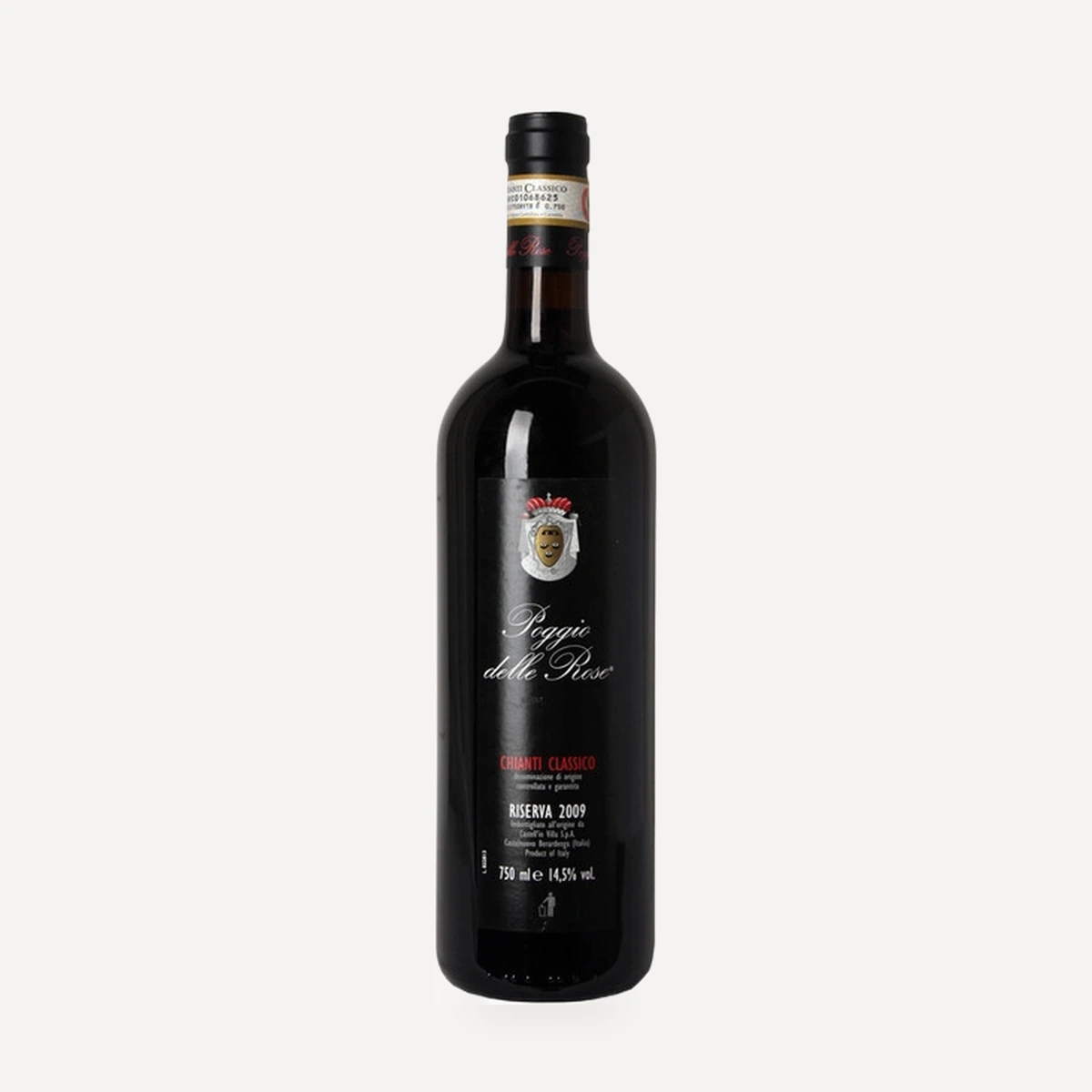
Chianti Classico Riserva Poggio delle Rose DOCG
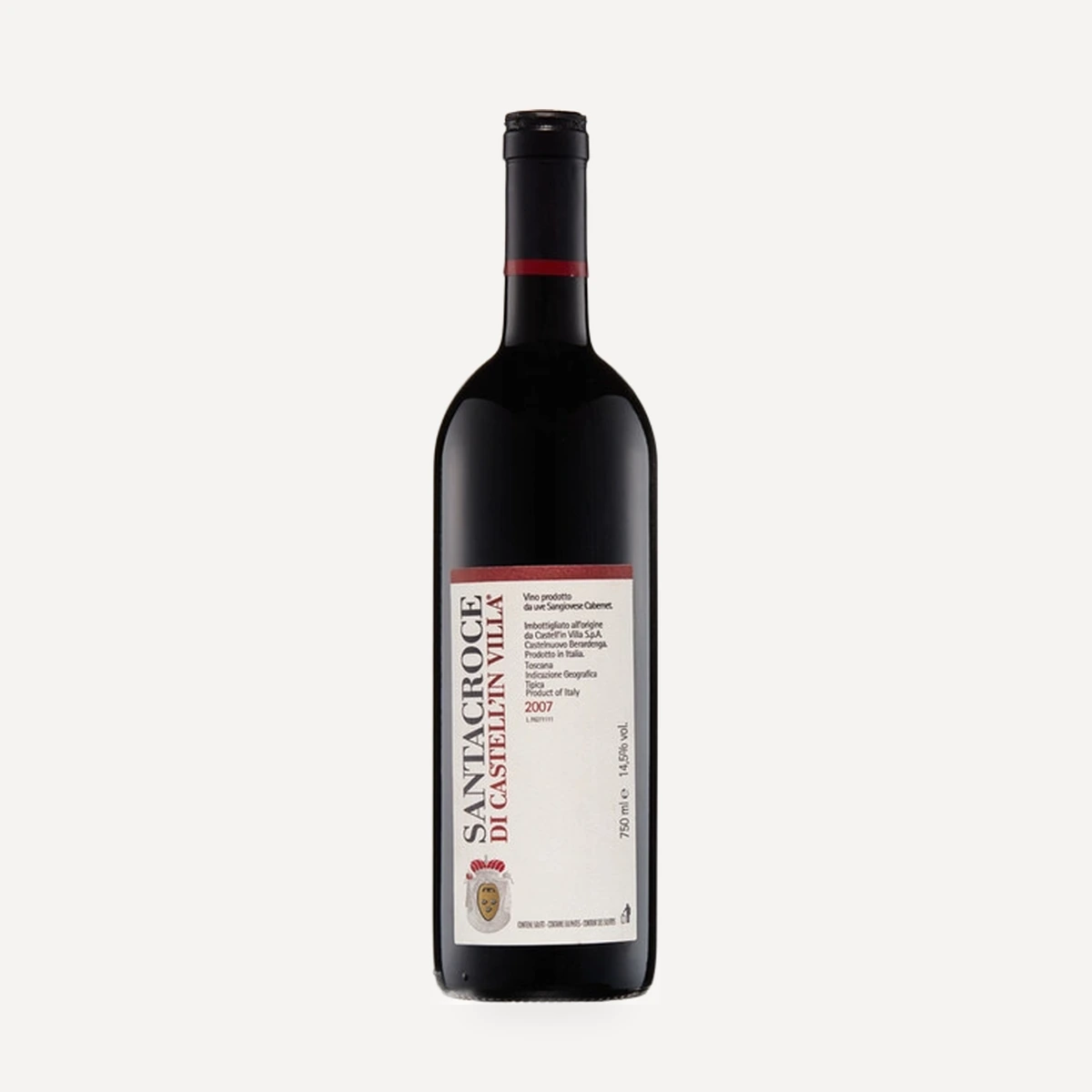
Toscana Rosso Santacroce IGT