History
Vineyard chronology
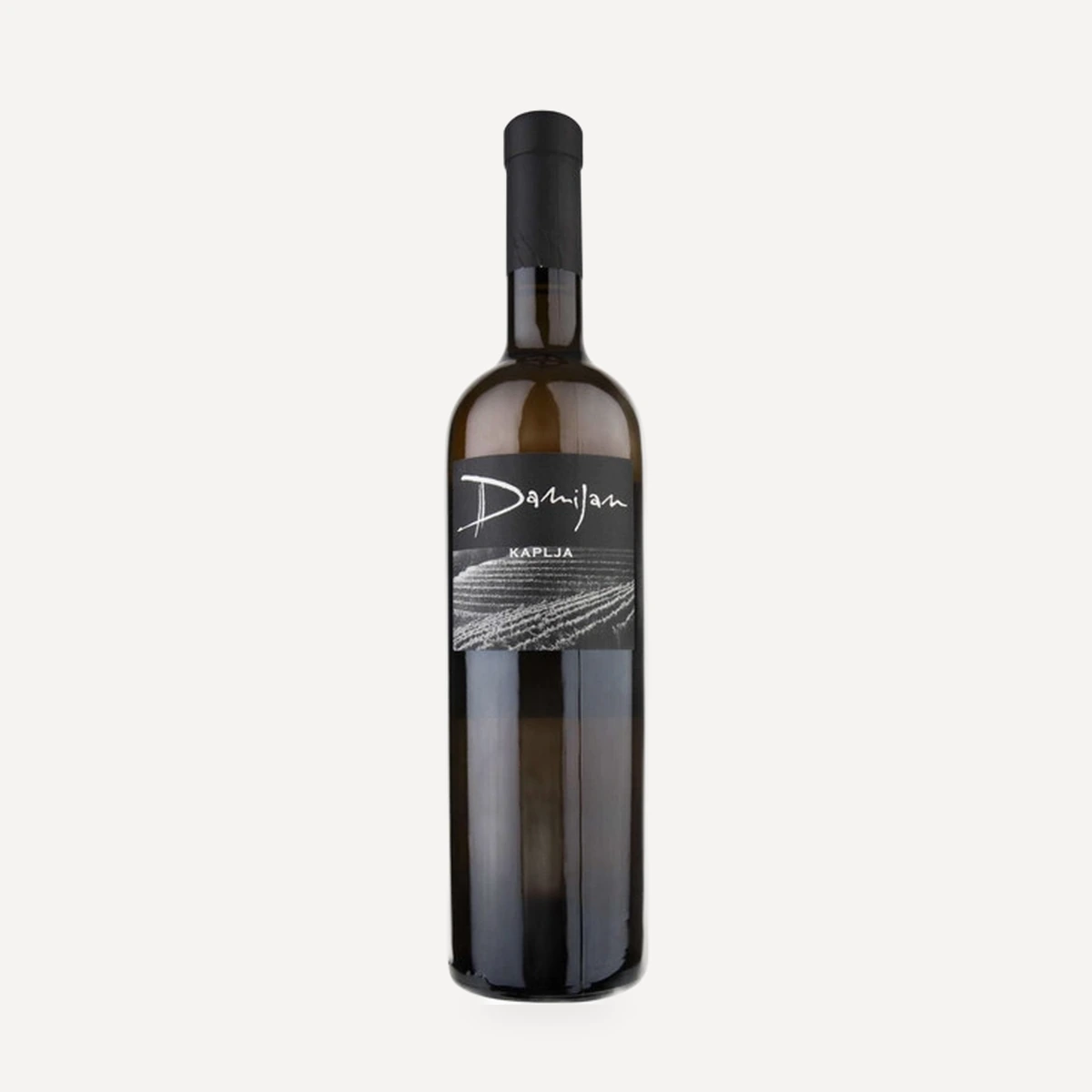
The earliest dated element concerns Piedimonte, which has supplied Merlot and Cabernet Sauvignon since 1967. Gradiscutta has been a source since 1991, followed by San Floriano in 1993. Monte Calvario has supplied Ribolla Gialla and the red varieties since 1994. Further Monte Calvario sources entered the Ribolla Gialla program in 2002 and 2004, while the site has supplied Malvasia, Friulano and Pinot Grigio since 2003. Piedimonte was incorporated into the Kaplja blend from 2008.
Monte Calvario also carries a longer history of interrupted cultivation. Land suitable for viticulture there had been abandoned since 1940. Damijan Podversic initiated the process of recovering this ground, work later cited as a central reason for the Premio Nonino Risit d’Aur—Barbatella d’Oro.
Development of the cellar approach
The production model is built around extended contact with the skins and long maturation. Maceration shapes the wines during their first months, after which the principal maturation sequence is three years in wooden barrels and one year in bottle. The stated objective is to conserve in the cellar the qualities achieved in the vineyards.
Recognition and cultural projects
In 2017, the first dated edition of the Arte, Amore e Aiuto project paired three wines with an artwork by Corrado Zeni. Giorgio Valvassori created the 2018 edition, followed by Shinji Ogawa in 2019. Two editions are dated 2020, with Karl Viktor Schüßler and Michel Tolmer. Each edition comprised 15 three-litre bottles carrying an artist-designed label and raising funds for a beneficiary chosen by the artist.
In 2019, the Premio Nonino Risit d’Aur—Barbatella d’Oro recognized Damijan Podversic’s contribution to Ribolla Gialla cultivation and his effort to recover abandoned viticultural land on Monte Calvario. The award citation also presented the work as an opportunity for research within Friuli Venezia Giulia. The AIS Tastevin associated with the 2020 edition of Vitae likewise recognized a producer credited with changing the direction of production in his territory, serving as a local reference and returning attention to overlooked varieties.
Slow Wine awarded the estate its Chiocciola recognition in both the 2023 and 2024 annual summaries. The 2023 summary also recorded L’Espresso’s Miglior Macerato recognition. The 2024 summary added Veronelli’s Sole and Vitae’s Gemma among the published distinctions.
Terroir
The vineyards are associated with four named origins around Gorizia: Gradiscutta, Monte Calvario, Piedimonte and San Floriano. Their documented elevations span approximately 110–180 metres above sea level. Most exposures are south-facing; some sources extend toward the southwest, while the Pinot Grigio source on Monte Calvario faces east.
The defining soil is Ponca, also called Opoka, composed of marl and sandstone. Its capacity to retain water during dry summer periods supports fruit cultivation, while the estate associates the soil with the mineral character carried into the wines.
Variety is understood in relation to latitude. Ribolla Gialla, Malvasia and Friulano are presented as the principal varieties of the territory. The wider vineyard record also includes Chardonnay, Pinot Grigio, Merlot and Cabernet Sauvignon.
Winemaking
The estate treats the vineyard as the decisive place in the production of wine. Its model rests on three elements: suitable land, a suitable variety and a mature seed.
Harvest timing is decided among the rows. The process involves walking through the vineyards, observing the changing colours of the vines, bunches and seeds, and tasting the grapes and seeds to assess maturity and the character of the vintage. The seed is regarded as carrying both the vintage’s defining traits and the signal for the beginning of harvest. Wine is consequently understood as a mirror of the vineyard.
The current vineyard specifications repeatedly record a yield of 40 q/ha, equivalent to 4 metric tonnes per hectare. Special botrytized selections are recorded at 20 q/ha. In the 2010 selection, individual berries were picked on the final harvest day, 20 October, after early-October rain and falling temperatures allowed the cycle to finish with the development of Botrytis cinerea.
Time governs the cellar. Maceration marks the wines during their first months, drawing together fruit texture, the mineral expression associated with the territory and the rhythm of the vintage. The principal maturation sequence is three years in wood followed by one year in bottle, with the cellar work intended to conserve what was achieved in the vineyard.
For Ribolla Gialla, Malvasia, Friulano/Nekaj and Kaplja, fermentation and maceration take place with the skins in large oak vessels for 60–90 days. After fermentation and maceration, the wines mature for three years in 20- or 30-hectolitre wooden barrels and rest for one year in bottle.
Pinot Grigio follows a shorter 30-day skin maceration, then matures for two years in 5-hectolitre barrels and one year in bottle. The Merlot–Cabernet Sauvignon red undergoes approximately 40 days of maceration in large oak vessels, followed by three years in 20- or 30-hectolitre barrels and one year in bottle.
Longer cellar regimes are used for the botrytized 2005 and 2010 selections: 60–90 days of maceration, six years in 20- or 30-hectolitre barrels—20 hectolitres for the 2010 Ribolla Gialla selection—and four years in bottle.
Natural sediment is deliberately retained in the bottle and is regarded as a means of keeping the wine alive and protecting it during maturation.
Philosophy
Nature is treated as something to be read through its colours, aromas and cycles. The winegrower’s most important work therefore takes place in the vineyard, where land, variety and seed maturity converge.
The estate regards wine as a mirror of the vineyard. Vintage character is read in the seed, and the decision to harvest is made through observation and tasting rather than separated from the place where the fruit grows.
In the cellar, restraint takes the form of preservation. Maceration and long maturation are intended to retain the fruit, mineral expression and seasonal rhythm already established in the vineyard. Time, rather than speed, is given the governing role.
Wine is also understood as culture, identity and a narrative of tradition and territory. Through the A3 project, that outlook expands to art and social responsibility: an artist interprets the wine and the number three, and the resulting work raises funds for a charitable cause.
Wines
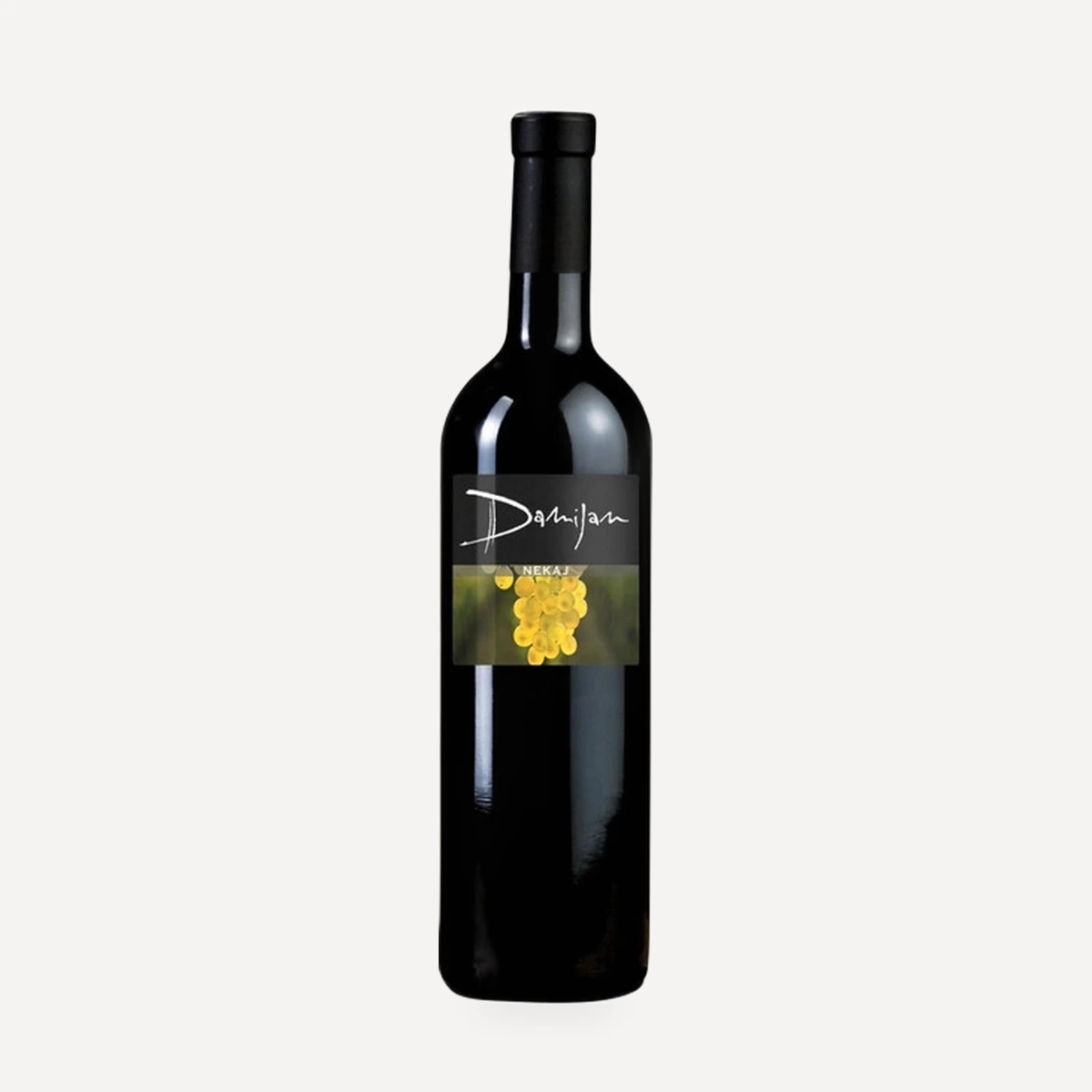
Nekaj
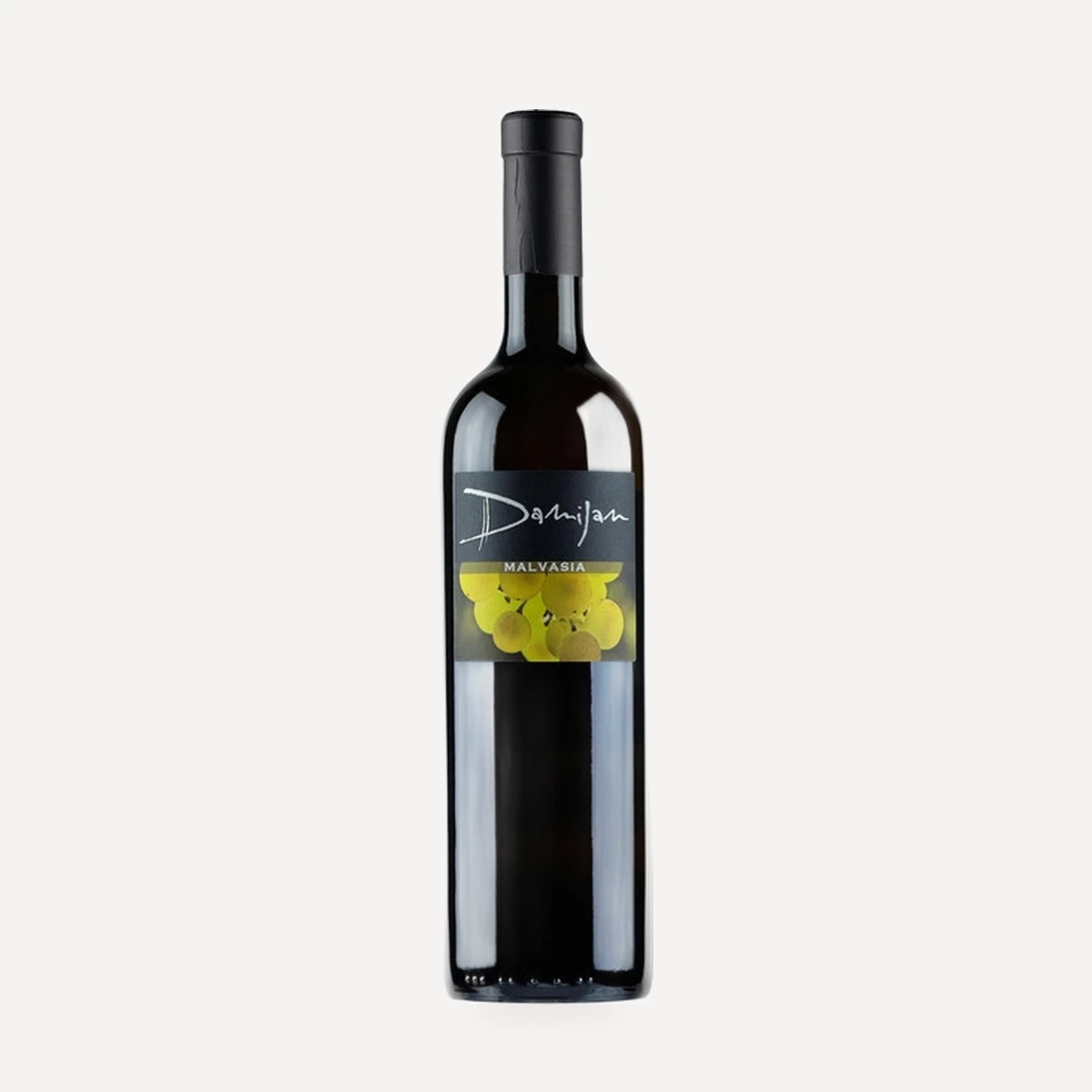
Malvasia
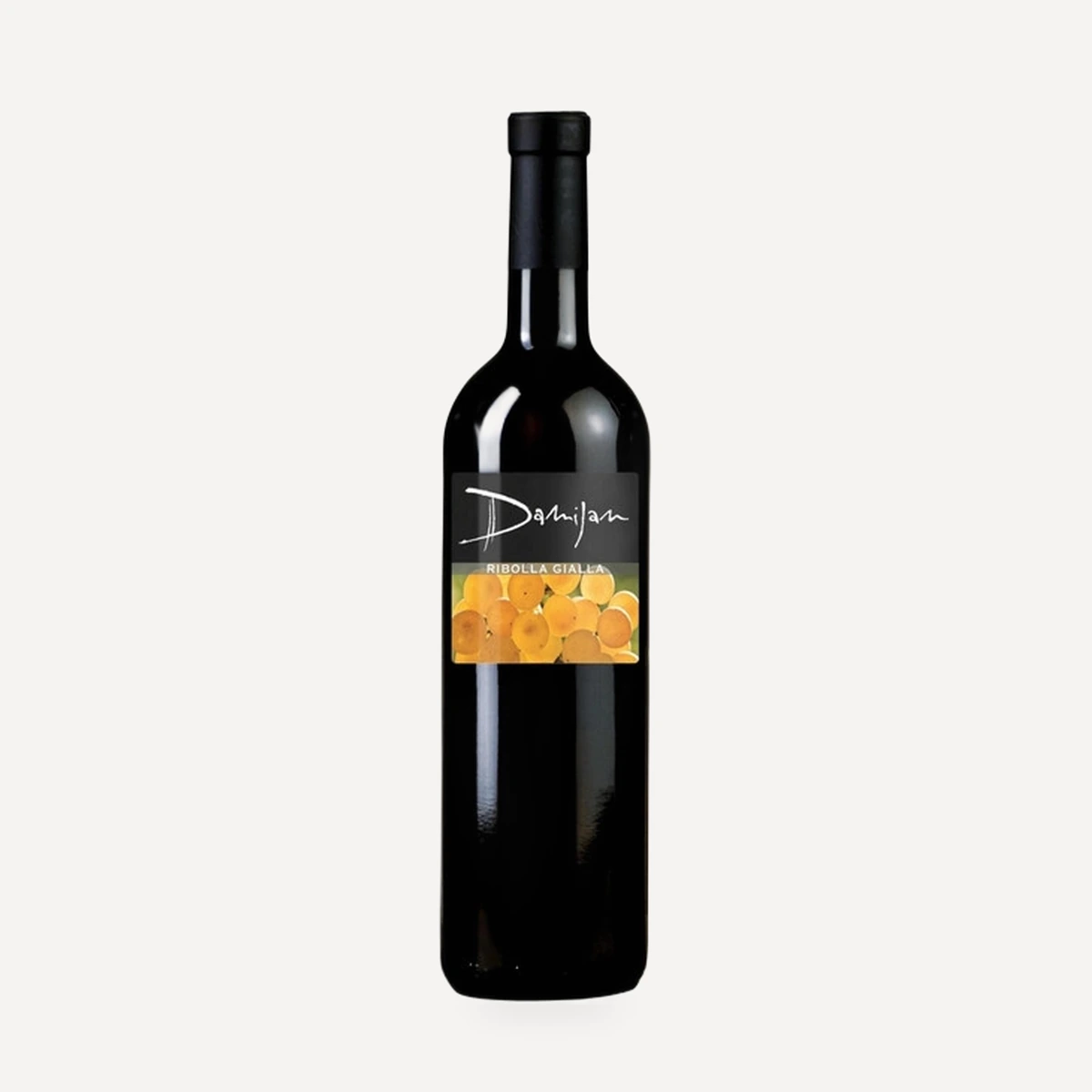
Ribolla Gialla
Kaplja