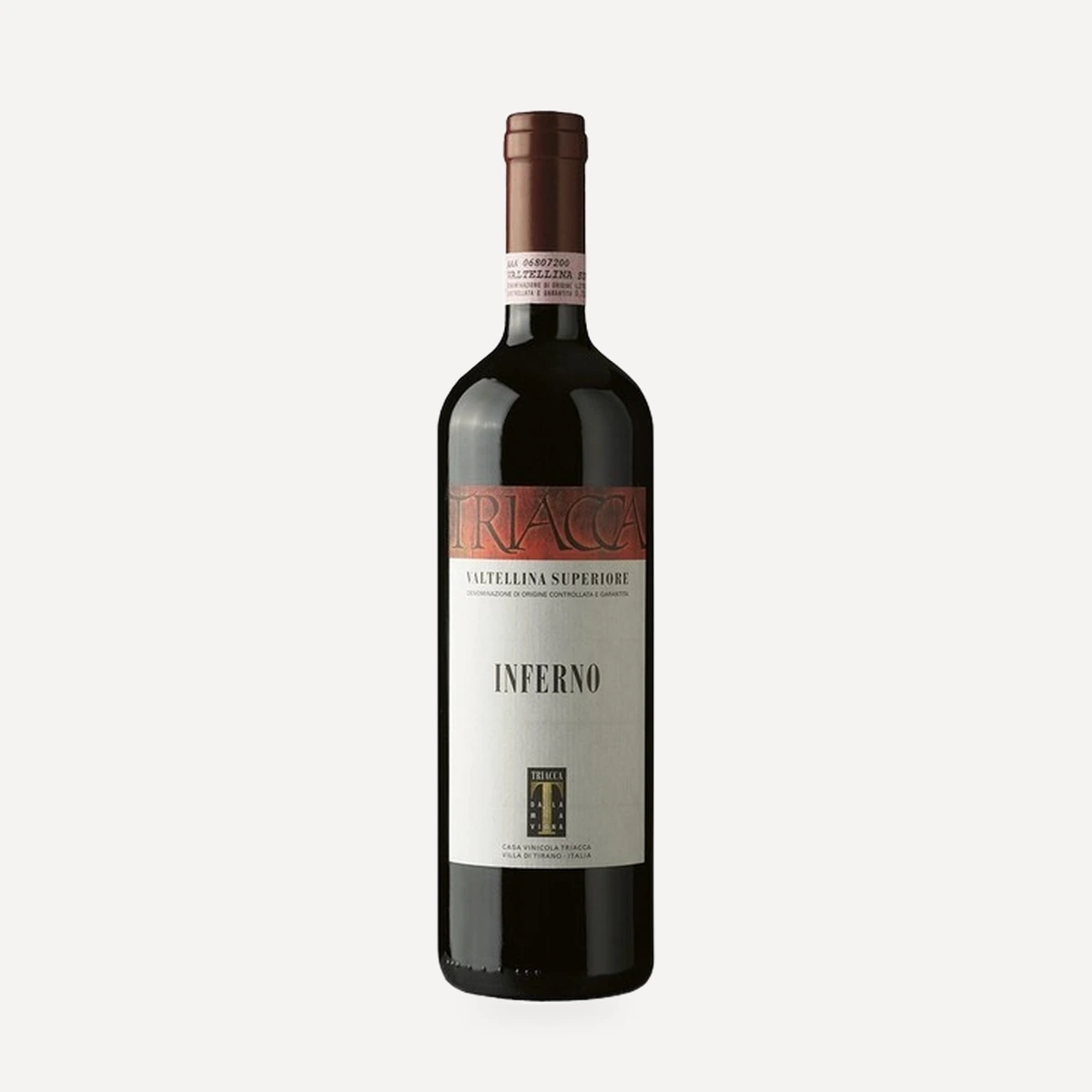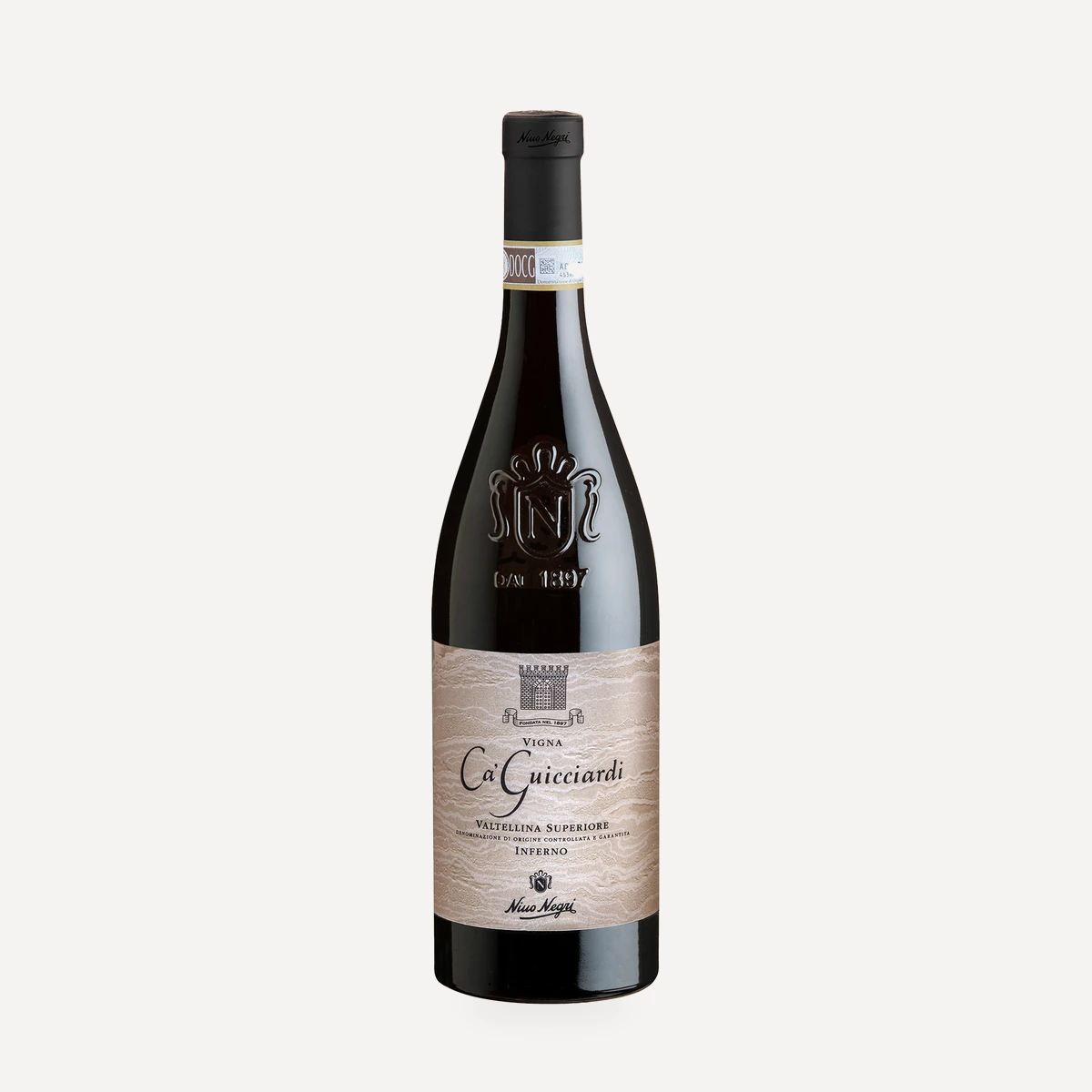
About this wine
Vineyard and terroir
Vigna Ca’ Guicciardi is a 10-hectare terraced vineyard in Inferno, the smallest of the five Valtellina Superiore subzones. The vineyard takes its name from the farmhouse at its centre. Small, very steep valleys and exposed rock faces alternate with terraces supported by some of Valtellina’s highest dry-stone walls.
The vines grow at 370–480 m above sea level on slopes of 60–85%, facing south-east, south and south-west. The light-coloured schist contains white quartz intrusions. Over the centuries, the high terraces were backfilled with soils containing small quantities of clay, sand and loam. The pale, quartz-rich rock intensifies solar energy, producing greater heat and light than in other parts of the valley and accentuating the wine’s fruit character.
The vines were 10–50 years old in the 2020 technical sheet and were trained using Guyot and the traditional Valtellina arched-cane system.
Grapes
100% Nebbiolo, locally known as Chiavennasca.
Vinification
For the 2020 vintage, the grapes were harvested by hand from 14 to 18 October, then destemmed and crushed. Traditional red vinification involved pump-overs and rack-and-return, with fermentation at 25–28°C.
Ageing
After malolactic fermentation, the wine matured for at least 12 months in medium-sized oak barrels, followed by at least six months in bottle.
Technical data
Blend proportions vary by vintage. Latest published composition: 100% Nebbiolo (Chiavennasca).
Tasting profile
Intense, bright ruby red. The nose combines ripe red fruit—particularly black cherry and currant—with liquorice, cloves, cinnamon and dried violet. Warm, luminous growing conditions give the palate rich, rounded and enveloping tannins.
Serving and pairing
Pair with roast red meat, lamb, kid, game and mature cheeses.
Vintage notes
The 2021 season began with a cold, dry spring that severely delayed the vines’ phenological development. Summer alternated between hot, dry intervals and cooler, wetter periods. A steady water supply and favourable temperature variation allowed the Nebbiolo to reach harvest in excellent condition.
In 2020, a snowy, wet winter was followed by a dry, warm spring and an early summer with limited rainfall and above-average temperatures. Veraison began early, at the start of July. Above-average temperatures and intense rainfall continued until the second half of September; a sharp temperature drop at the end of that month created favourable conditions for Nebbiolo ripening.
Label / history
The vineyard and wine take their name from the farmhouse situated at the heart of the property.