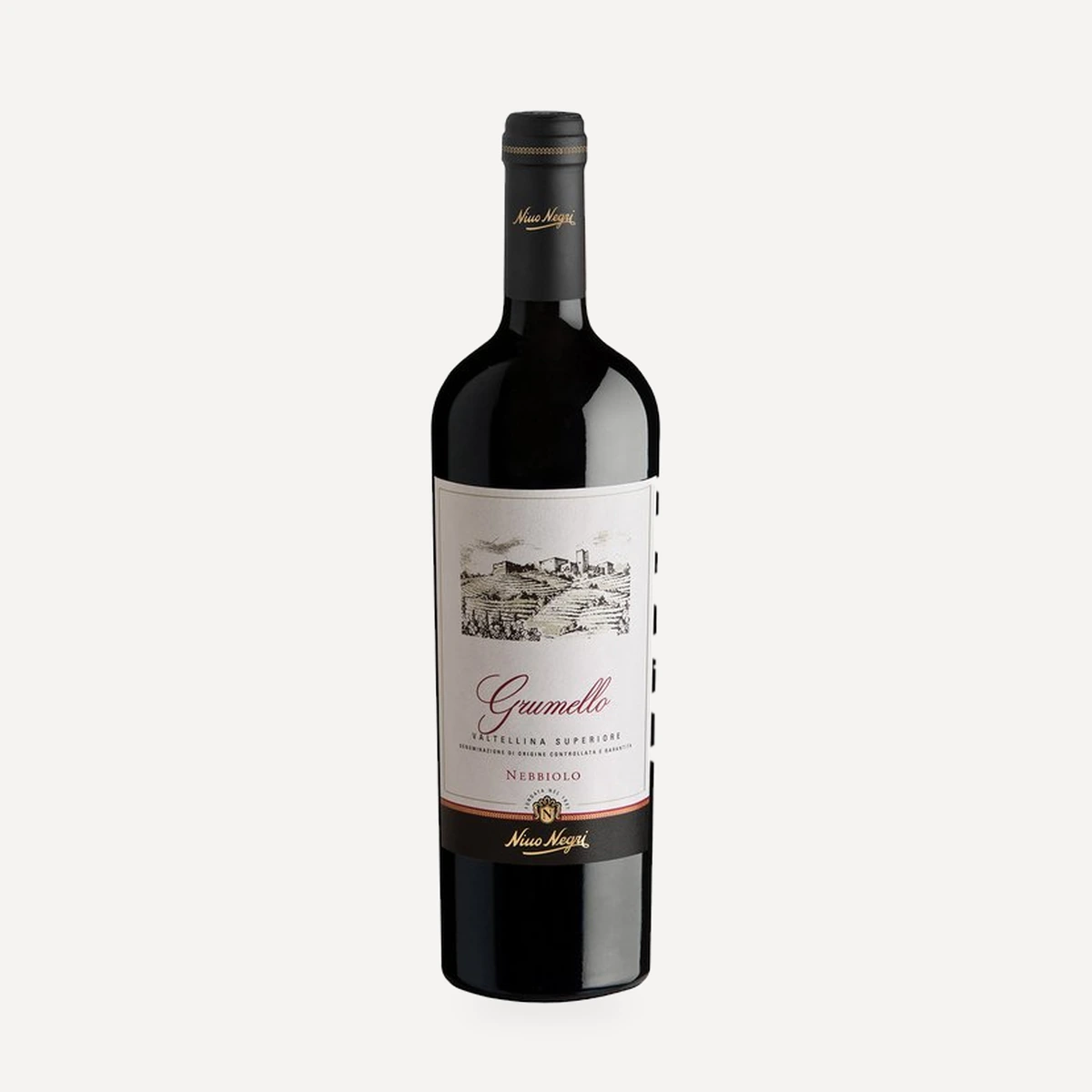
About this wine
Vineyard and terroir
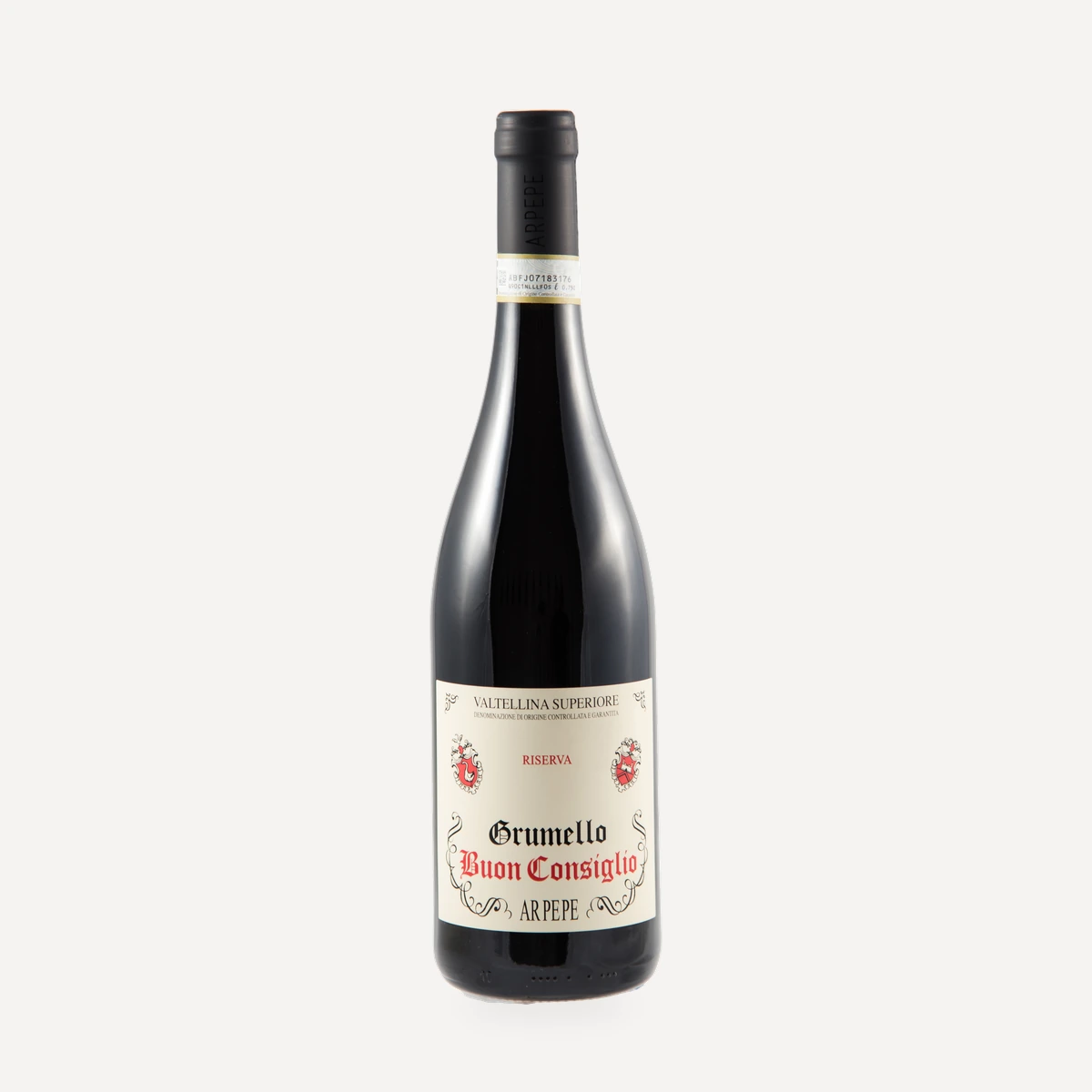
The grapes come from terraced vineyards in the Grumello zone of Valtellina Superiore DOCG, facing south at 300–450 metres above sea level. The soils are sandy-loam and stony, with clay in some places.
Grumello comprises two geologically distinct sectors. The southern sector is a promontory deeply eroded by glaciers during the last ice age. Farther north, the vineyards occupy the right side of the valley, where soils developed from glacial moraine and sediments descending from the mountain slopes. The southern area gives more elegant, delicate wines, while the northern area produces richer, more mineral expressions. The finished wine is a cuvée of wines from both sectors.
The vines are trained using Guyot and the traditional Valtellina arched-cane system.
Grapes
Nebbiolo, locally known as Chiavennasca.
Vinification
The grapes are harvested manually in October. Red-wine vinification takes place at controlled temperature, followed by post-fermentation maceration.
Ageing
The wine matures for two years in total, including one year in French and Slavonian oak vats.
Technical data
- Alcohol: 14% vol.
- Recommended cellaring: 5 years
- Contains sulphites
Tasting profile
Ruby red tending towards garnet. The aroma is delicate yet clearly defined, combining cloves and cinnamon with red berries and a balsamic nuance. The palate is dry, savoury, austere and elegant, with considerable finesse and soft tannins.
Serving and pairing
Pair with lamb, game, roasted red meats and mature cheeses such as Bitto.
Label / history
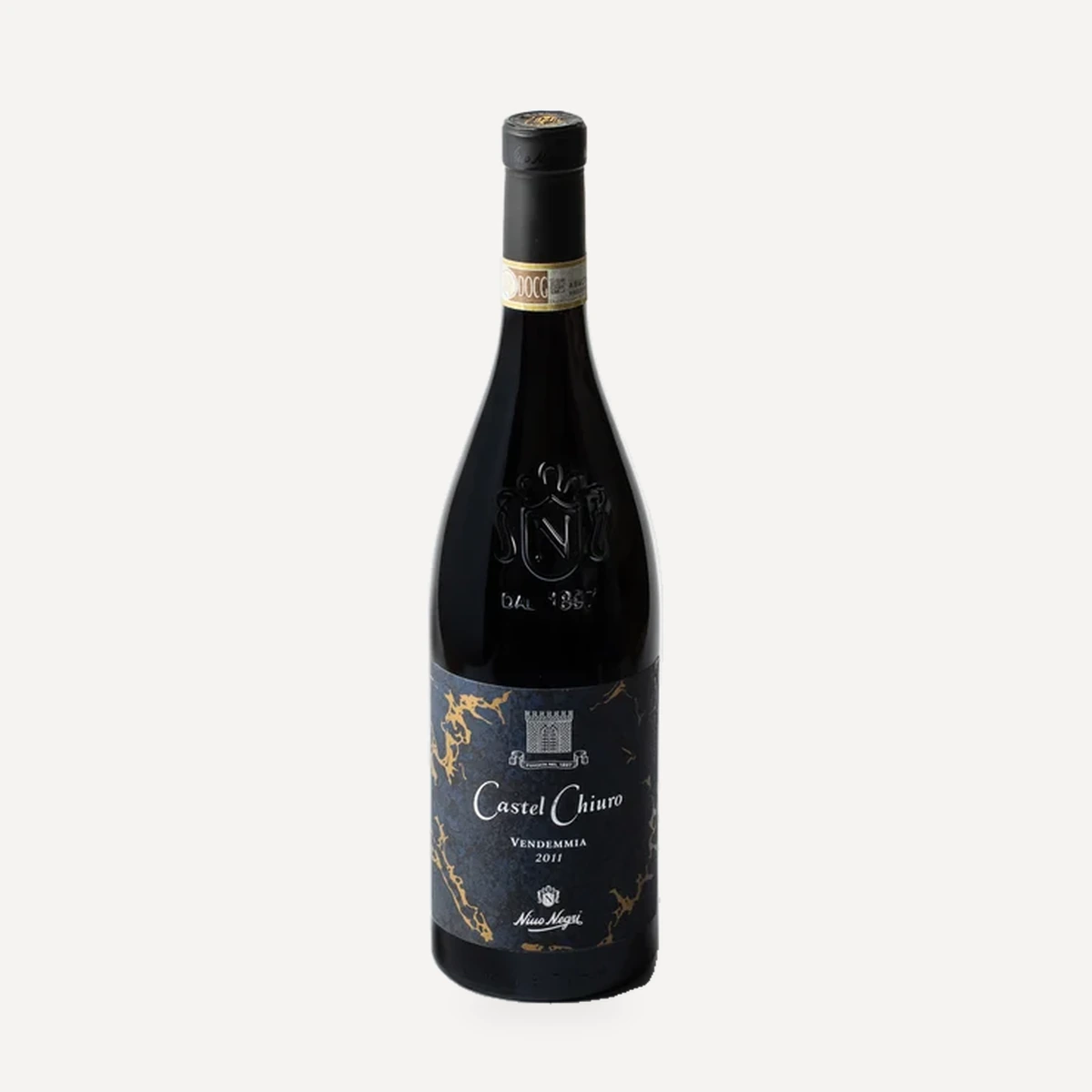
The Grumello area takes its name from Castel Grumello, built in the early fourteenth century by the De Piro family, lords of Sondrio during the thirteenth and fourteenth centuries. Its name derives from the Latin grumus, meaning a mound, hillock or elevated place.