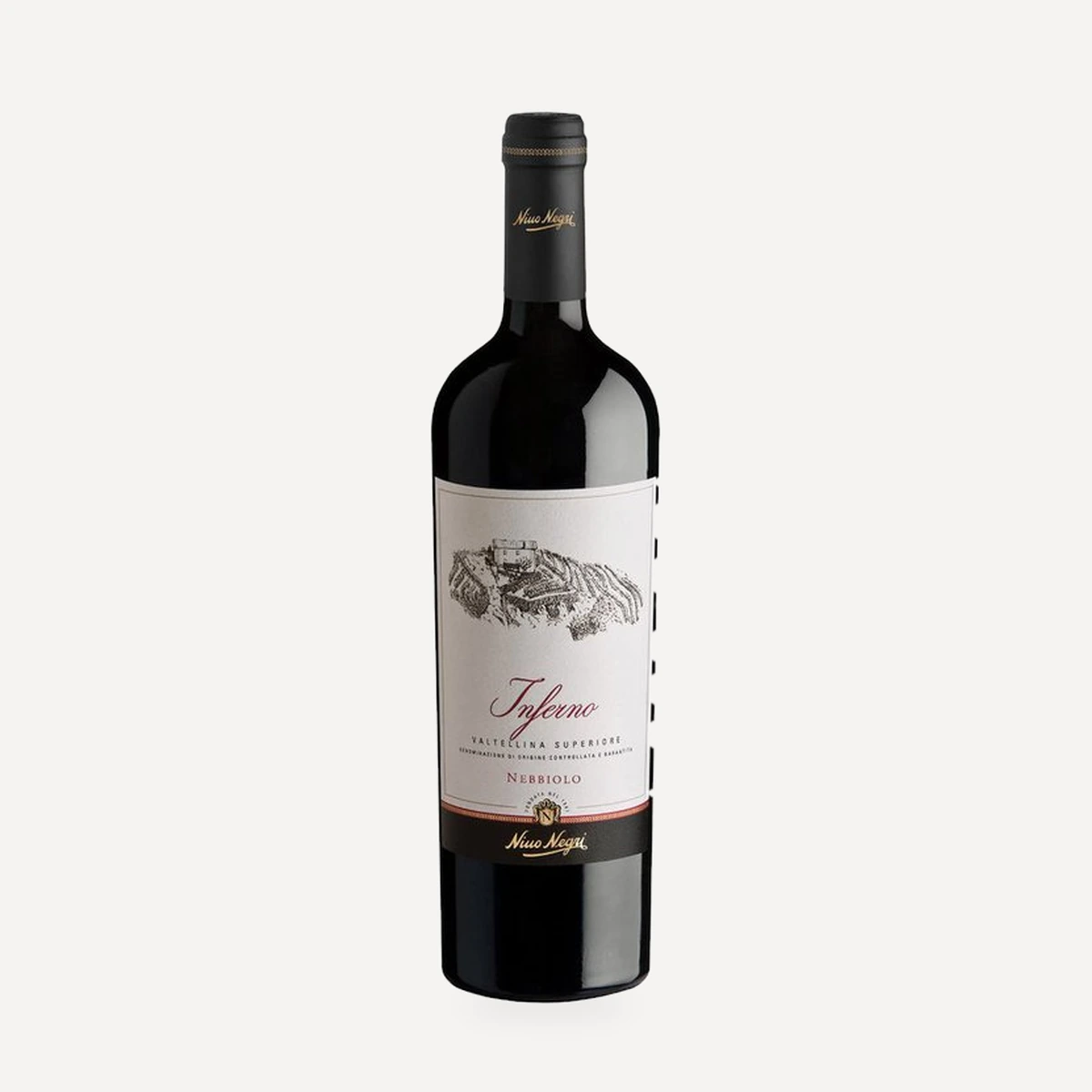
About this wine
Vineyard and terroir
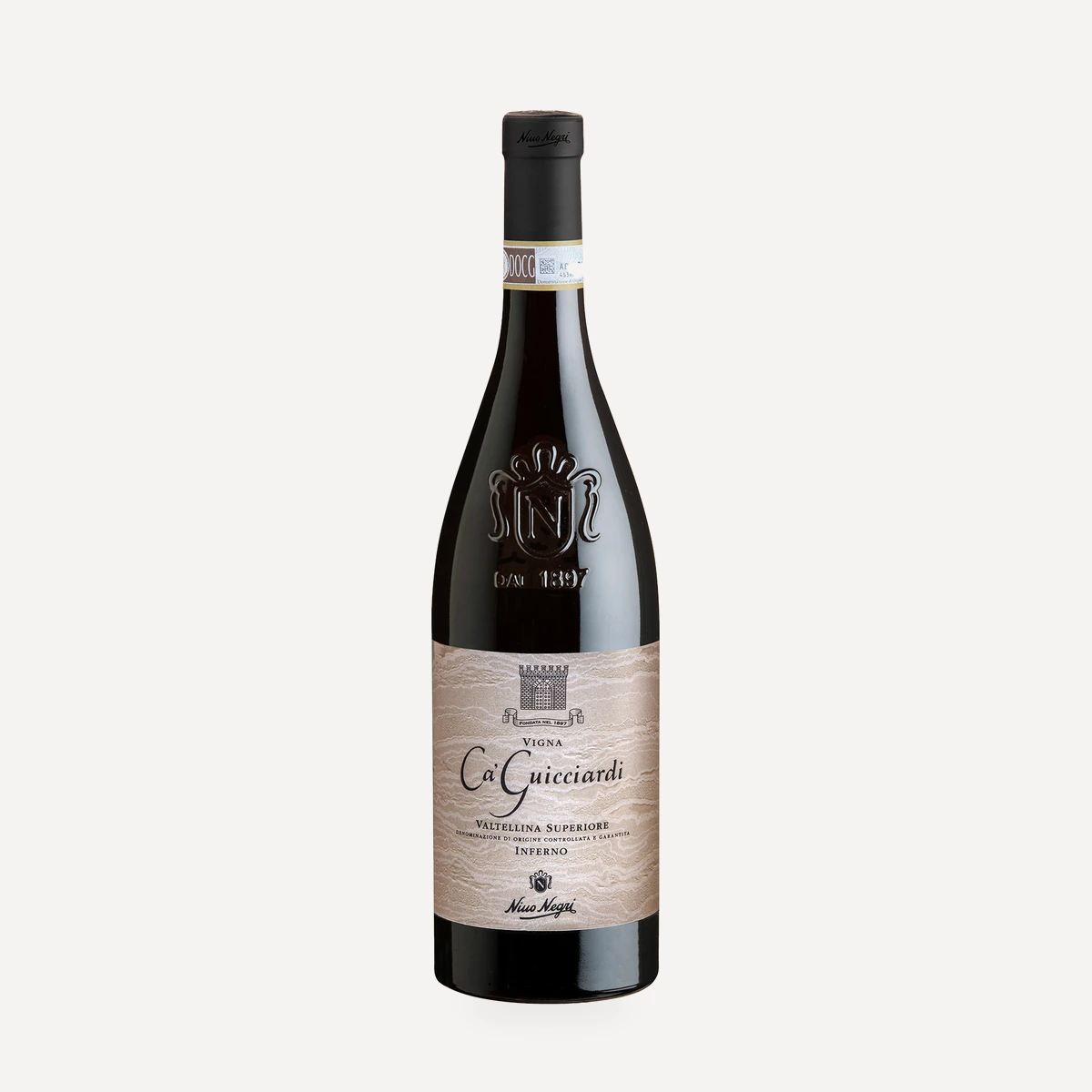
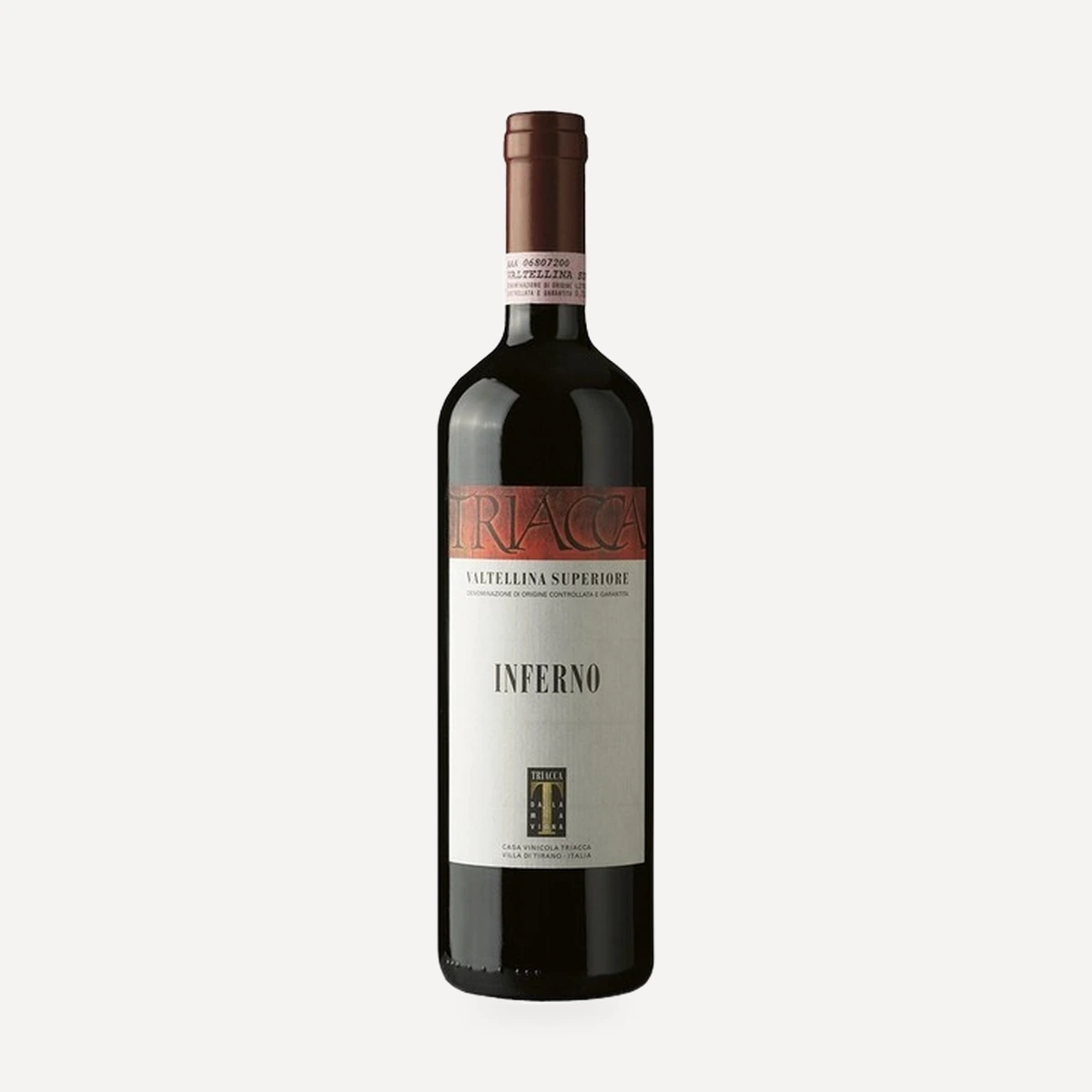
The grapes come from vineyards in the historic Inferno subzone, planted on south-facing terraces at 350–550 metres above sea level. The shallow, low-fertility sandy-loam soil is retained by dry-stone walls.
The subzone’s name evokes its defining warmth. Exposed rocks reflect solar radiation during the day and release accumulated heat at night, while the steep slopes allow sunlight to strike the ground more directly. These conditions support the ripening of Nebbiolo in both sugar and polyphenolic terms. The vines are trained using Guyot and the traditional archetto valtellinese system.
Grapes
Nebbiolo, locally called Chiavennasca.
Vinification
The grapes are harvested by hand in October. Red-wine vinification employs short maceration at temperatures close to 30°C, promoting the extraction of tannins and ripe-fruit aromas.
Ageing
The wine matures for two years, including at least one year in wood. The use of younger oak casks accentuates its aromatic character and tannin structure.
Technical data
- Alcohol: 13.5% vol.
- Bottle formats: 375 ml, 750 ml and 1,500 ml Magnum
- Contains sulphites
- Optimal storage: 5 years
Tasting profile
Ruby red tending towards garnet. The pronounced, layered aroma combines cherry and ripe plum with sweet spices—particularly cinnamon and cloves—and a subtle struck-match nuance. The palate is dry, savoury, mineral and austere yet harmonious, framed by elegant tannins and a slightly bitter roasted-hazelnut finish.
Serving and pairing
Pair with roast red meats, lamb, kid, game and mature cheeses.
Label / history
The name Inferno refers to the subzone’s intense heat: exposed rocks collect and reflect sunlight, while its steep inclination increases solar exposure.