History
Tito Costanti and the beginnings of Pinino
Pinino traces its history to 1874, when lawyer Tito Costanti took possession of the estate. Costanti was an early advocate for the development and recognition of Brunello, and Pinino subsequently became one of the historic estates associated with the denomination.
An early Brunello producer
In 1950, Pinino became one of the first wineries entered in the official register of Brunello producers. It also contributed to the creation of the body that became the Consorzio del Brunello di Montalcino. The estate later passed through several owners, with the continuity of its Montalcino winegrowing identity maintained through those transitions.
The vineyard patrimony also developed over several distinct planting phases. The historic Pinino vineyard includes 1.5 ha planted in 1980. Canchi was planted between 1997 and 2007, another 1 ha at Pinino was planted in 2000, and a further 1 ha followed in 2014.
The Ferragamo family and Il Borro
The Ferragamo family acquired Pinino through Il Borro in 2024, extending its wine activities into Montalcino and Brunello di Montalcino. Ferruccio Ferragamo’s family carries the estate forward, while Salvatore Ferragamo directs its style and strategy.
The acquisition brought Pinino into Il Borro’s research-led and sustainability-oriented approach. The new direction combines the estate’s Brunello heritage with stricter vineyard selection, detailed cellar management and an emphasis on the character of Sangiovese Grosso.
The 2020 release and new identity
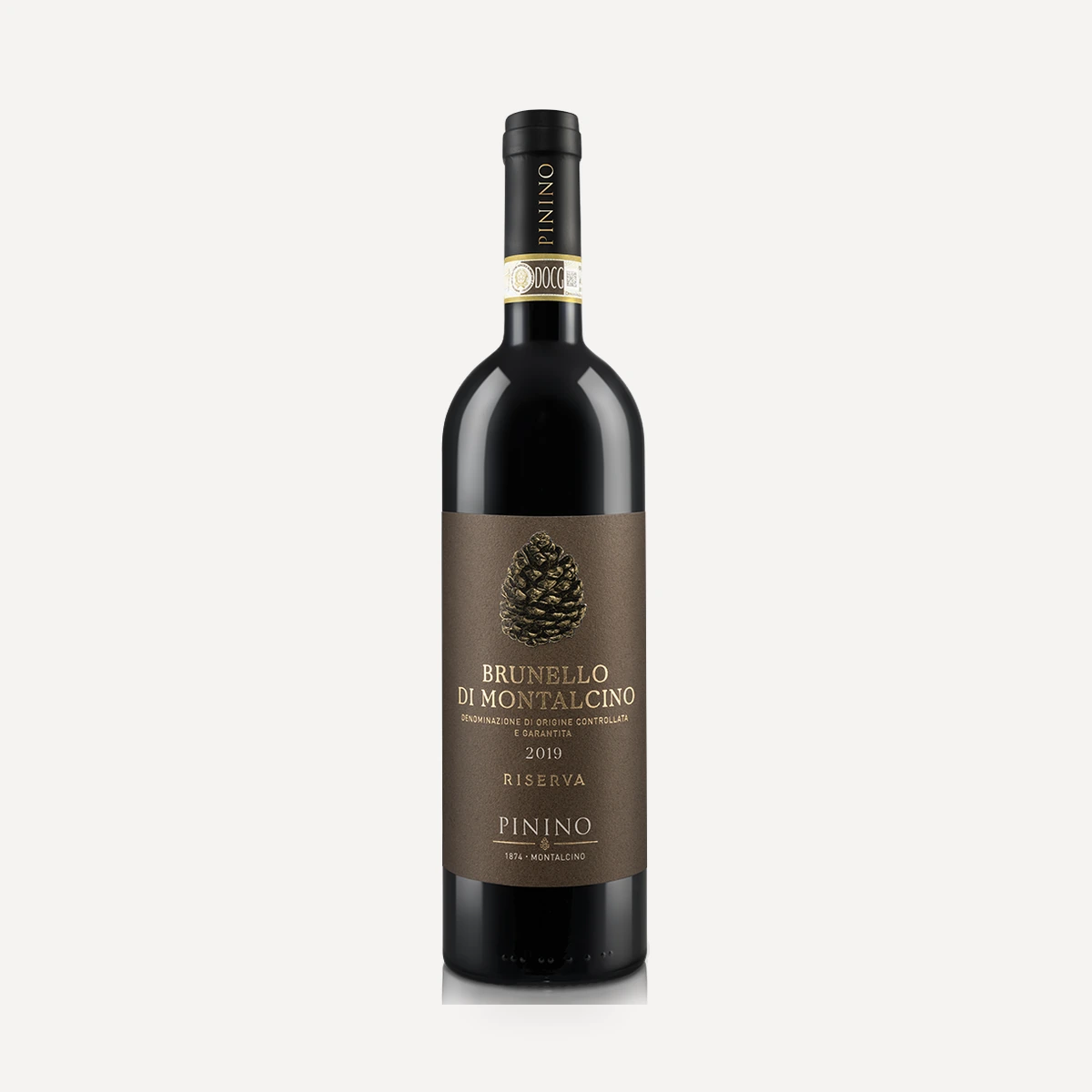
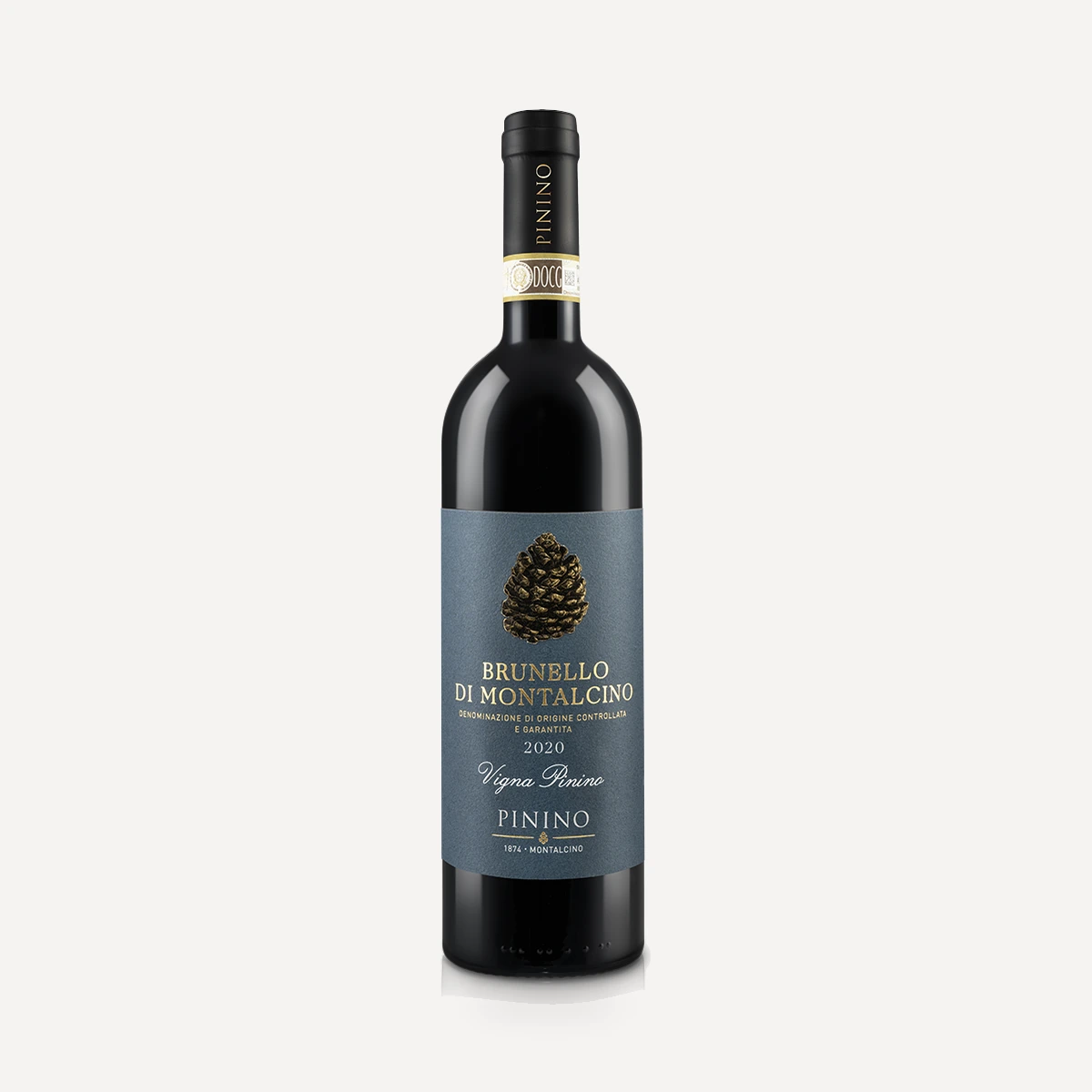
The release of the 2020 Brunello di Montalcino marked the first major expression of the new direction. Grapes were selected rigorously in the vineyard, and the final blend drew only on the strongest lots matured in oak casks and barriques.
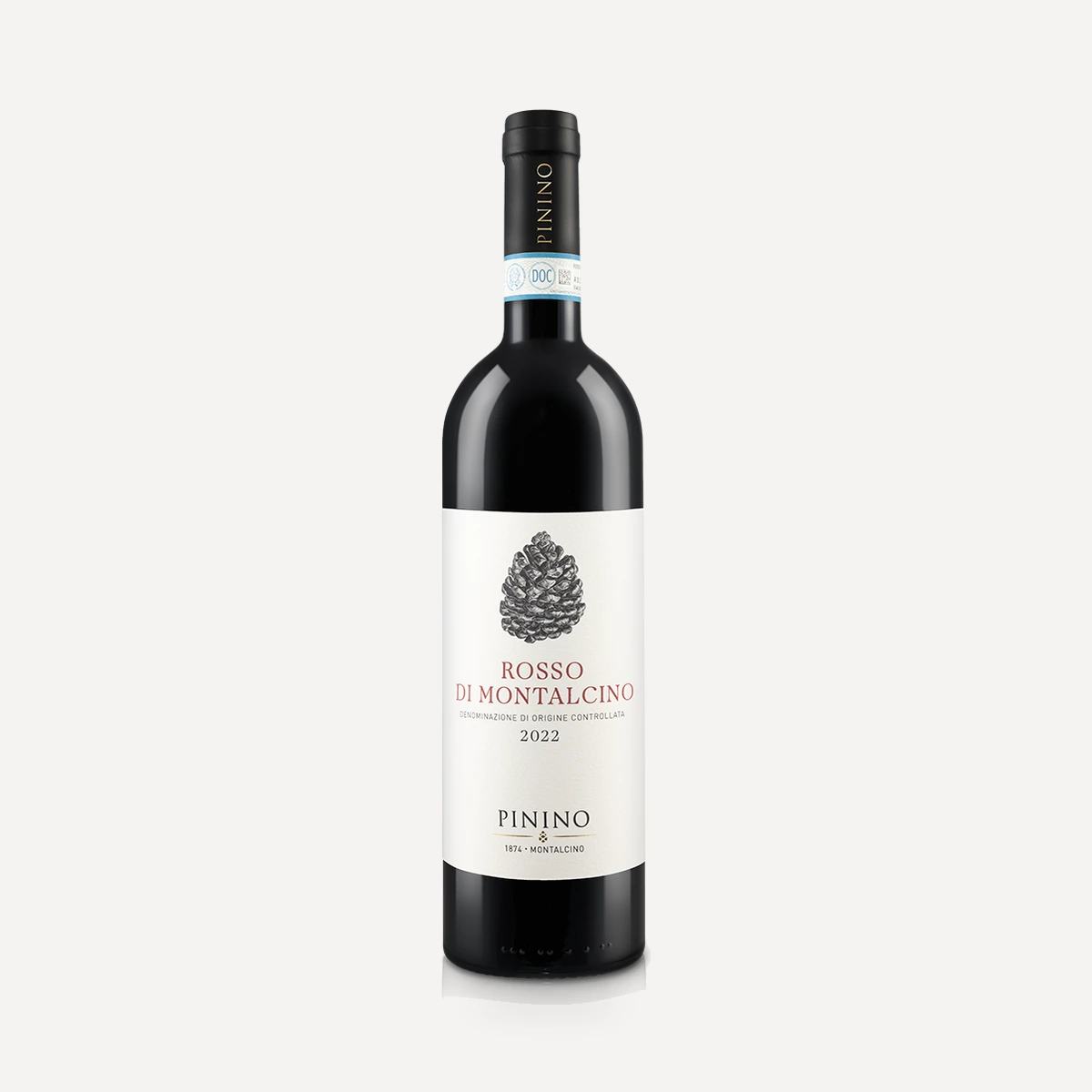
The change was accompanied by a redesign of the labels around a prominent pine cone. The emblem represents fertility, growth, prosperity, resilience and a connection with nature, while giving the estate a consistent and recognizable visual identity.
Terroir
Pinino’s 16.24 ha of vineyards occupy two distinct pedoclimatic areas, both with southeast-facing slopes but different elevations, soils and microclimates.
Pinino
The Pinino vineyards lie north of Montalcino, close to the Montosoli area, at 284.2 m above sea level. Their southeast exposure combines with a continental microclimate and a stony soil rich in galestro, alberese and tuff. These conditions support fruit with structure, lively acidity, balance and an elegant fruit profile.
Canchi
Canchi lies northeast of Montalcino at 318.2 m above sea level, also facing southeast. The upper slopes are predominantly clay, transitioning toward silt and tuff lower down. A broader description of this area also identifies alternating Eocene-origin skeletal soils containing galestro and alberese alongside looser sandy and clay-rich soils. Its milder climate permits slow, progressive ripening of Sangiovese Grosso and contributes structure and intensity.
The contrast between Pinino’s stony, calcareous-marly terrain and Canchi’s largely clay-and-silt profile gives the estate two complementary sources of Sangiovese Grosso.
Winemaking
Vineyard management is intended to protect biodiversity, improve soil health, maintain fertility and restore a balanced relationship between cultivation and the surrounding ecosystem.
Green manure and cover crops
Grasses, crucifers and legumes are sown between the vine rows as green manure. These crops add organic matter, help the soil retain water, reduce erosion and improve its physical structure. They also attract beneficial insects and bring micronutrients such as iron and manganese toward the surface, supporting vine and root development.
Insect control
Synthetic pheromones are used for mating disruption. By interrupting the reproductive cycle of damaging insects, this biocontrol technique reduces reliance on conventional chemical treatments and supports beneficial-insect populations.
Weed management
Chemical herbicides are not used. Vegetation beneath the rows is controlled mechanically with implements designed to work around the vines, preserving the soil ecosystem and habitats for plant and animal species.
Organic nutrition
Organic fertilizers are used to enrich the soil microbiome. They encourage the formation of macro- and micro-aggregates, improve soil structure and nutrient exchange between soil and roots, and are intended to support vine longevity and fruit quality.
Harvest and selection
Harvest normally takes place during the first ten days of October and is conducted entirely by hand. Grapes are carried to the winery in small 10 kg crates to protect the fruit. Selection begins on the vine: bunches are picked only after reaching the desired maturity, and imperfect or damaged berries are removed during the manual selection process.
Pinino’s production approach rests on two connected disciplines: close vineyard management with rigorous selection on the vine, followed by precise cellar management.
Harvested fruit reaches the cellar in 10 kg crates after manual selection in the vineyard. Fermentation takes place in stainless-steel vats at controlled temperature. Skin maceration can continue for as long as 25 days, with the objective of developing aromatic expression and structure.
Maturation takes place in oak casks and barriques. Depending on the wine category, élevage lasts approximately 30–36 months. For the 2020 Brunello di Montalcino blend, selection was restricted to the strongest lots matured in these oak vessels, establishing a more exacting direction for the estate’s cellar work.
Philosophy
Pinino defines its production through meticulous work in both vineyard and cellar. Fruit quality begins with attentive vineyard management and strict bunch selection on the vine; cellar work then focuses on controlled vinification, careful élevage and selection among individual lots.
Under Salvatore Ferragamo’s direction, the intended style emphasizes the elegance and complexity of Sangiovese while respecting the variety’s essential character. Purity and transparency are central aims: the wine should communicate its place of origin without losing the identity of the grape.
Sustainability is treated as a practical relationship with the land. The objective is to help soils regenerate, preserve fertility, protect biodiversity and restore equilibrium between human intervention and nature. Tradition is therefore paired with research, precise technical management and regenerative principles rather than treated as a static model.
The 2020 Brunello release represents this renewed standard: uncompromising selection, close attention to Montalcino’s terroirs and a visual identity built around the pine cone as a sign of fertility, growth, resilience and connection with nature.
Wines
Brunello Vigna Pinino
Rosso di Montalcino
Brunello di Montalcino DOCG