History
Pierluigi Talenti’s formation
Pierluigi Talenti, universally known as Piero, was born in Santa Sofia, in the province of Forlì, on 19 April 1925. He was the third child of Pietro Talenti and Ida Micheletti, after Maria and Francesco. He trained in agriculture, initially attending the Istituto Tecnico Agrario in Florence and later completing his studies at the Istituto Tecnico Agrario Giuseppe Garibaldi in Cesena. His education was interrupted by the Second World War: after a brief period of military service, he joined the VIII Brigata Garibaldi Romagna under the nom de guerre Piron in January 1944, served as a partisan courier and participated in the liberation of Santa Sofia on 27 September 1944. He obtained his agricultural-technician diploma and began working as a farm manager in 1947.
Piero married Carla Ceccacci in 1950. Their only son, Roberto, was born on 19 May 1951.
Arrival in Montalcino and work with Sangiovese
On 10 September 1958, Piero travelled from Romagna to Sant’Angelo in Colle to value the Franceschi family’s 1,210-hectare Fattoria di Sant’Angelo in Colle before its division between brothers Leopoldo and Stefano Franceschi. The division created Il Poggione and Col d’Orcia. On 31 January 1959, Il Poggione was assigned to Leopoldo Franceschi and Piero became its manager; Carla and Roberto joined him in Sant’Angelo a few months later.
Piero began restoring the old cellars, planting vineyards and converting an estate still organized around mixed farming and sharecropping toward specialized viticulture. The original equipment was rudimentary, so he replaced deteriorated wooden vats with concrete vessels and created a press, cellars and housing within a converted farm building. He also retained skilled former sharecroppers as agricultural employees, preserving local practical knowledge during the rural exodus.
In autumn 1959 he began massal selection of Sangiovese in Montalcino. He extended this work to red Canaiolo and Colorino in 1963–1964 and supervised new plantings at Paganelli and Capannacce. From 1968 he collaborated with Vivai Cooperativi di Rauscedo, supplying propagation material derived from his selections. Rauscedo subsequently selected the VCR 5 and VCR 6 Sangiovese clones from this material and propagated vines for markets including Australia and California.
Piero was also an active participant in Montalcino’s institutional development. He helped establish the Consorzio del Vino Brunello di Montalcino in 1967, joined its board as statutory auditor in 1974, became a director in 1977 and later presided over its technical committee. His work combined vineyard selection, practical experimentation, cellar development and strict attention to the identity of Sangiovese.
Pian di Conte becomes the family estate
Piero’s long-held ambition was to own an estate of his own. In 1980, in recognition of his work, loyalty and contribution to the Franceschi properties, the family transferred Podere Pian di Conte to him in place of retirement compensation. He retired from day-to-day management at Il Poggione but remained a consultant there. He enlarged Pian di Conte with adjoining land, renovated the farmhouse, established a compact winery and created a home for Roberto.
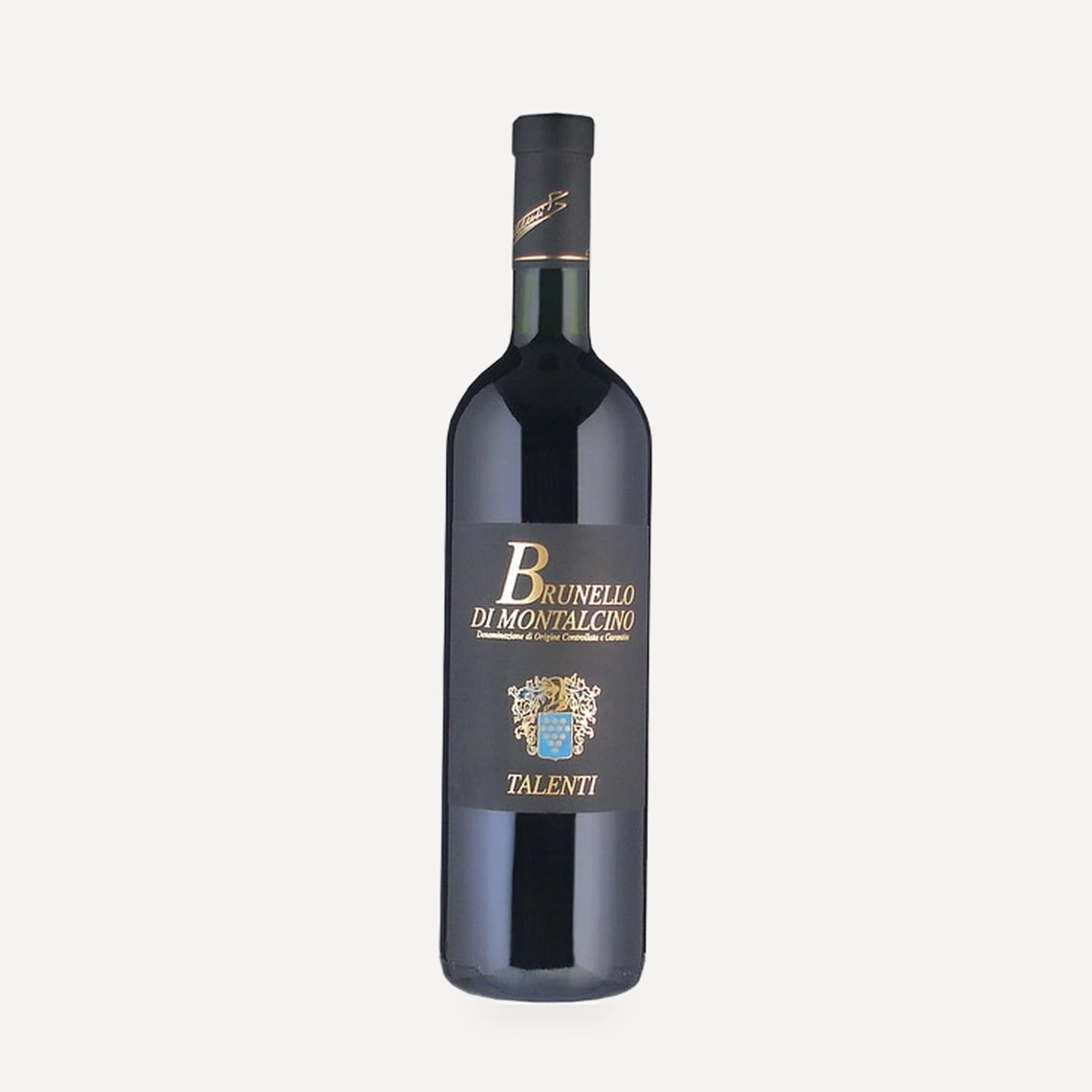
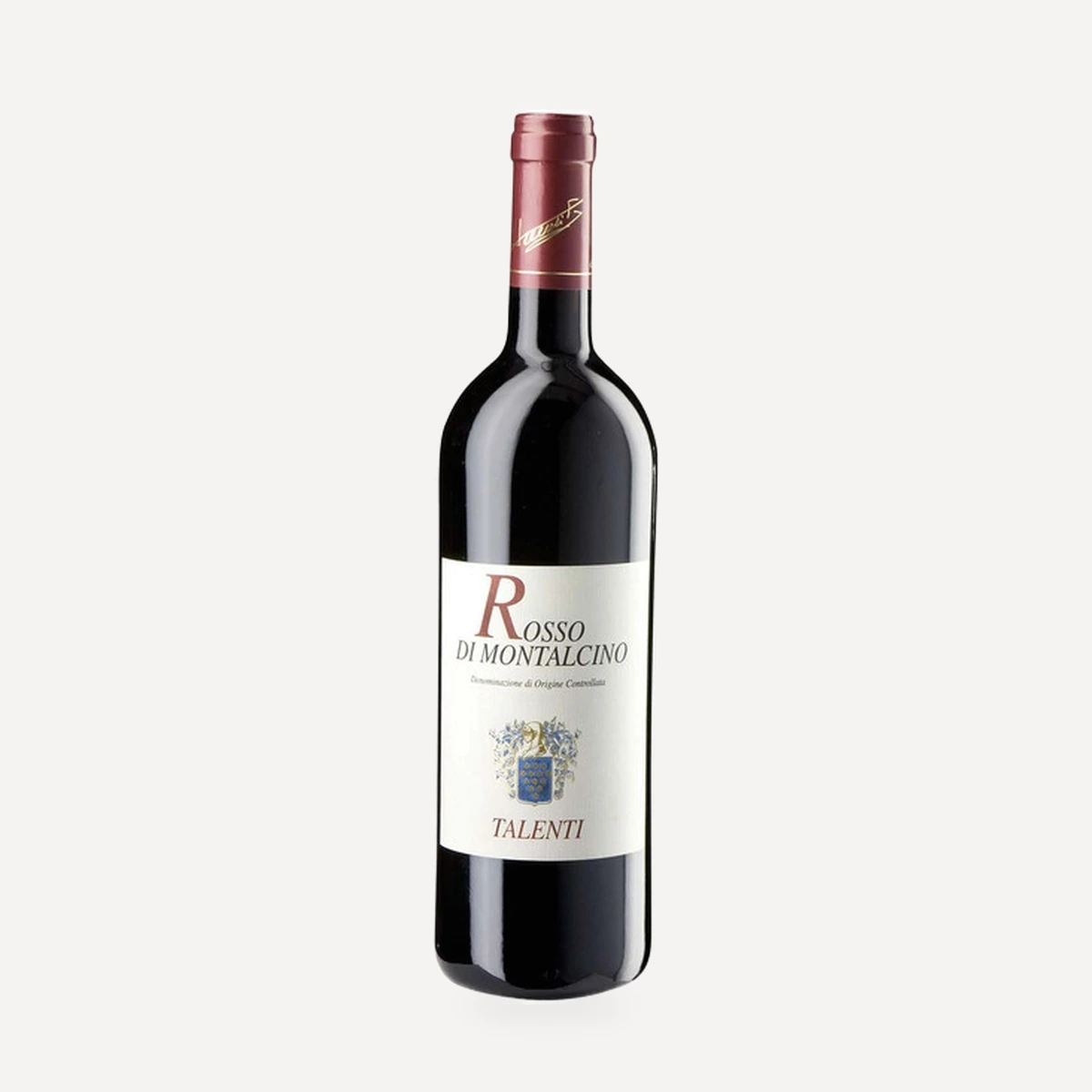
The estate’s first recorded harvest was Brunello di Montalcino 1981. The first three hectares of vineyards were planted at Pian di Conte in 1984. In 1985 the estate presented its first bottles: Brunello di Montalcino 1981 and Rosso di Montalcino 1985. A further three hectares were planted in 1987, when renovation of the estate buildings also began. In 1989 Piero planted Vigna del Paretaio, whose name was used for a Brunello conceived simultaneously as a cru and riserva.
A serious heart attack in the summer of 1993 forced Piero to resign his Consortium board position. The new Pian di Conte cellars opened in 1994. In 1996 he acquired land at Castelnuovo dell’Abate and planted another three hectares at Pian di Conte; the vineyard area was enlarged again in 1998.
Expansion and generational transition
Piero intended the estate to pass to his grandson Riccardo, born to Roberto and Antonella Talenti on 19 June 1979. On 9 September 1999, shortly before harvest, Piero suffered a fatal heart attack after visiting the Pian di Conte vineyards. That same year he had acquired 11 hectares at Cinigliano, beyond the Orcia valley, establishing the basis for the family’s later experimental vineyards outside Montalcino.
Roberto Talenti, a physician, assumed responsibility for the estate while Riccardo completed his agricultural studies. Roberto combined his medical work with the management and winemaking responsibilities required to preserve Pian di Conte for the next generation. Carlo Ferrini was brought to Pian di Conte as an agronomist-oenologist during this transitional period.
In 2001 Riccardo completed his studies at the Istituto Tecnico Agrario, enrolled at the University of Florence to study oenology and began working full-time at Pian di Conte, taking over from his father. He subsequently continued his grandfather’s research and the family’s focus on Sangiovese. The estate is now presented as a three-generation Montalcino family winery led by Riccardo.
The contemporary estate
The property now covers 40 hectares and combines vineyards, olive groves, orchards and arable land. Its 22 hectares of vines are divided between 16 hectares devoted to Sangiovese in Montalcino and an experimental holding outside Montalcino, where Sangiovese, Petit Verdot and white varieties are cultivated. The latter vineyards underpin the Poggio Farnese project and continue the family practice of testing varieties and winemaking approaches while maintaining its historical connection to Montalcino.
Terroir
The estate covers 40 hectares of vineyards, olive groves, orchards and arable land surrounded by centuries-old holm-oak woods. Its vineyards occupy markedly different settings in and beyond Montalcino, with elevations ranging from 220 to 410 metres and exposures between south-east and south-west.
The nine named Sangiovese parcels associated with Montalcino range from the higher vineyards around Pian di Conte and Vigna di Piero at 350–410 metres to Fonte Lattaia at 250 metres. Their soils include iron- and magnesium-bearing clays, organic matter and deep rock; mineral-rich clay loam and silt; galestro-rich clay; sand, silt and tuff; calcareous marl; and pale clay containing river pebbles.
The Poggio Farnese vineyards lie at 220 metres outside Montalcino, in the Cinigiano area. Poggio Farnese Vecchia has dark clay without a significant stony fraction, while Poggio Farnese Nuova combines grey clay with river pebbles. The broader Poggio Farnese descriptions also identify brown clay-loam soils with limestone plates and rounded stones. This lower-altitude site is treated as an experimental area for varieties and winemaking techniques.
Differences in altitude, exposure and soil composition across the eleven parcels form the basis of the estate’s parcel-by-parcel approach.
Winemaking
The estate cultivates 22 hectares of vineyards distributed among eleven parcels. Sixteen hectares are devoted to Sangiovese, including material selected in Montalcino by Pierluigi Talenti. The vineyards outside Montalcino are used for Sangiovese, Petit Verdot and white varieties and serve as a testing ground for different grapes and vinification techniques.
Harvesting has always been manual. Selected grapes are collected in small containers to protect their integrity. Selection continues at the winery through examination of both whole clusters and individual berries. The approach emphasizes continuity with local agricultural tradition, detailed knowledge of each parcel and the preservation of fruit quality from harvest onward.
Grapes are picked by hand into small containers to preserve their condition. Both clusters and individual berries are selected before vinification.
Fermentation takes place in temperature-controlled stainless-steel tanks. The cellar team personally oversees the principal extraction operations, including punch-downs and pump-overs. The production philosophy combines traditional practices with continuing investigation of new cellar technology.
The principal red wines mature for more than two years in selected Allier and Slavonian oak. Aging continues in bottle for the time required to develop aroma, character and balance. The estate has separate spaces for fermentation and barrel aging, and the production sequence continues through bottling on the property.
Philosophy
The estate presents tradition and innovation as complementary rather than opposing principles. Hand harvesting, close attention to the integrity of the grapes, Sangiovese selection and long maturation in wood preserve the working methods developed by Pierluigi Talenti. At the same time, the family pursues new technology in the cellar and uses Poggio Farnese as a laboratory for varieties and vinification techniques.
Riccardo Talenti’s work is framed as a continuation of his grandfather’s research, determination and respect for the land. The eleven parcels are treated as distinct combinations of altitude, exposure and soil, while cellar decisions are supervised directly from fermentation through aging. Hospitality, private visits and the Coesioni charity initiative extend the family’s stated values of sharing, personal contact and responsibility toward the local community.
Wines

Brunello di Montalcino Riserva Pian di Conte
Brunello di Montalcino

Brunello di Montalcino Piero

Poggio Farnese Rosso

Poggio Farnese Rosato

Poggio Farnese Bianco
Rosso di Montalcino