Storia
More than three decades in Tasmania
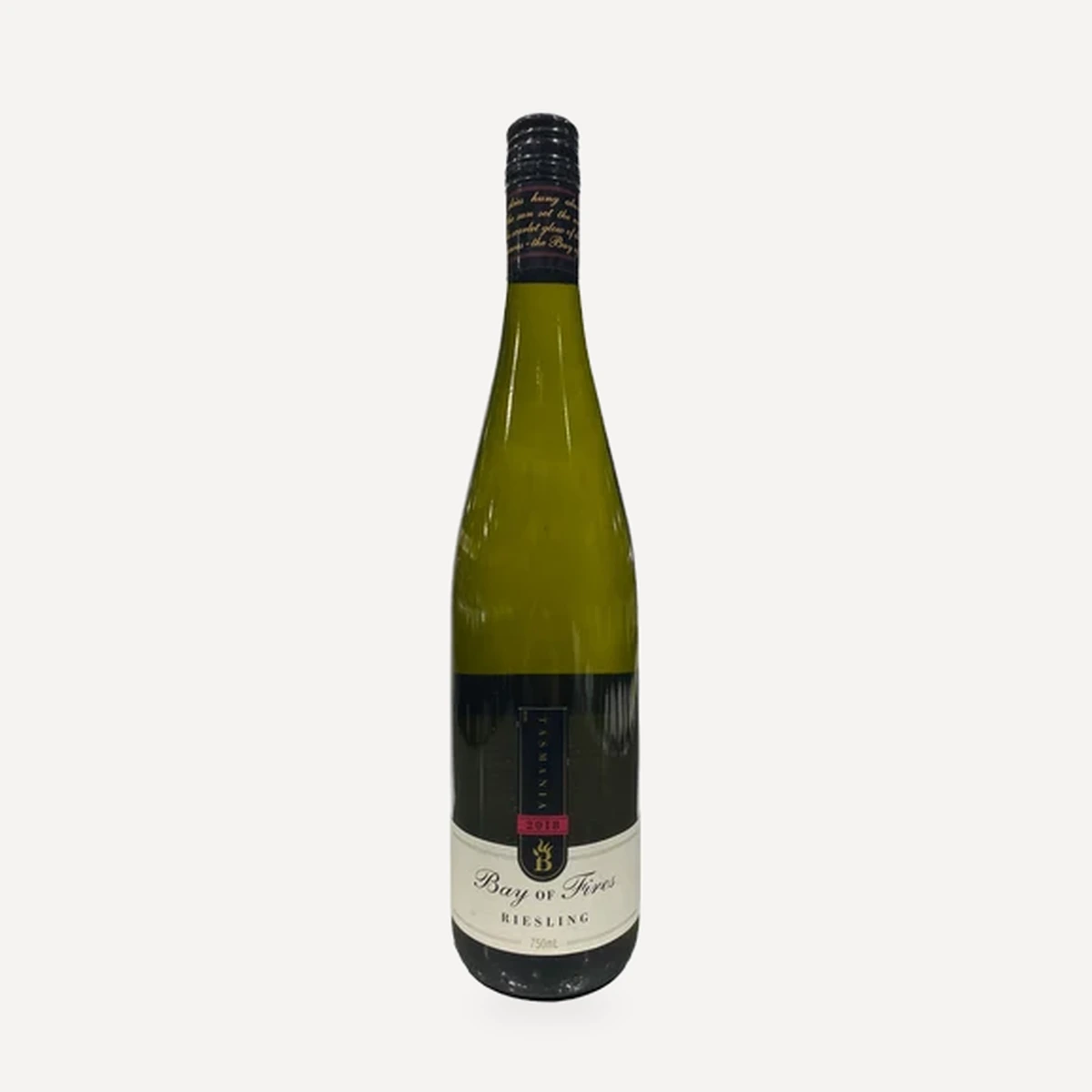
Bay of Fires has made classic Tasmanian wines for more than 30 years. The range originated from a desire to produce cool-climate varietal wines with classical structure, bringing together fruit intensity, refinement, complexity and persistent flavour.
The business developed around fruit sourced from multiple Tasmanian subregions rather than a single contiguous estate. Long-term relationships with growers gave the winemaking team access to vineyards in Tamar Valley, Pipers River, Coal River Valley, the East Coast, Huon Valley and the Upper and Lower Derwent. Several Chardonnay vineyards were planted specifically for Bay of Fires at carefully selected sites; by 2021, their increasing maturity was contributing greater balance and depth of flavour.
The winery’s name refers to the Bay of Fires on Tasmania’s far northeast coast, approximately 150 km from the winery. The bay’s Indigenous name is Iarapuna. Its English name dates to 1773, when Captain Tobias Furneaux, sailing on HMS Adventure, saw fires lit by Aboriginal people along the beaches.
Winemaking team
Tasmanian-born Stewart Byrne began his career with an Earth Science background and work as a Vineyard and Winery Assistant at Stefano Lubiana Wines. His subsequent experience included vintages in Margaret River and Oregon, an earlier period with Eddystone Point and Bay of Fires, a substantial tenure at Stella Bella Wines focused particularly on Chardonnay, and seven years as a winemaker at Josef Chromy Wines. He rejoined Eddystone Point and Bay of Fires in 2018 and now leads Bay of Fires as Senior Winemaker.
Penny Jones was credited as winemaker for Bay of Fires Chardonnay in 2021 and Riesling in 2022. The current team also includes regional viticulturist Craig Callec, who guides the grower network supplying Bay of Fires.
Wine-club evolution
In 2018, the Spotfire Wine Club was structured as a limited-membership program capped at 350 people, with quarterly selections of twelve 750 ml bottles, advance access to limited and back-vintage releases, promotional offers and invitations to events. A later incarnation restricted the club to fewer than 300 members so that it could offer intimate access to vertical tastings, museum wines, limited editions, large formats and consistent contact with club managers. House of Arras wines ceased to be available through that club operation on 25 October 2023.
Bay of Fires subsequently became part of Distinction Wines, a wider collective and loyalty program encompassing a group of Australian cellar doors and wineries.
Cellar-door transition
The former Tasmanian cellar door operated at 40 Baxters Road, Pipers River, about 45 minutes northeast of Launceston. It served as the Tasmanian visitor base for Bay of Fires and other separately branded wines, offering seated tastings, Pinot Noir verticals and educational masterclasses. That cellar door has since closed. Bay of Fires wines are now presented for tasting at the Petaluma cellar door at 254 Pfeiffer Road, Woodside, in the Adelaide Hills.
Terroir
Island-wide sourcing
Bay of Fires works with fruit from vineyards distributed across Tasmania. The broad setting is cool and maritime, giving the vines steady ripening conditions but also relatively low sunlight and marked differences among subregions. Soil, local climate and vineyard management combine to give each source a distinct character.
Northern Tasmania
Tamar Valley lies in northern Tasmania. It is among the island’s warmer and wetter subregions and is regarded as a dependable source of high-quality Pinot Noir and Chardonnay. Its fruit tends toward ripe, fruit-forward character and moderate intensity.
Pipers River, the winery’s home territory in northeastern Tasmania, is one of the coolest subregions. Moderating winds limit the difference between daytime and nighttime temperatures. It receives the highest winter rainfall among Tasmania’s wine-growing areas, and its vineyards are associated with rich red ferrosol soils.
Southern and eastern Tasmania
Coal River Valley is a sheltered southern valley with moderate temperatures and low rainfall. Its range of soil types supports slowly ripening, cool-climate fruit across numerous varieties and styles, with softness and perfume among the resulting characteristics.
The East Coast, centred around Swansea, is relatively warm and dry. Maritime influence reduces temperature variation while maintaining high relative humidity. Pinot Noir and Chardonnay from the area are described as robust and muscular, with substantial flavour depth.
Huon Valley, at Tasmania’s southern end, is the coolest and wettest of the listed subregions.
Derwent River Valley
The Derwent River Valley divides into two contrasting sectors. The Lower Derwent is warm and sheltered and gives rich, ripe fruit, including Pinot Noir. The Upper Derwent has much colder nights and is the driest grape-growing source in the network, favouring fruit with elegance, finesse and complexity.
Relbia also contributes selected parcels, including Riesling, and is presented as a distinct source alongside Tamar Valley.
Vinificazione
Bay of Fires relies on a distributed network of professional growers across Tasmania rather than presenting its wines as the output of one contiguous estate. Regional viticulturist Craig Callec guides these relationships, while the growers’ management of their individual soils and climates is treated as central to vineyard character.
Fruit is hand-picked and selected for quality, character and winemaking potential. Different vineyards and varieties are chosen for their individual personalities, and small, high-quality selections are drawn from the state’s viticultural regions. Several Chardonnay vineyards were planted for Bay of Fires at carefully chosen sites and have progressively gained maturity.
The cool maritime environment provides steady ripening but brings low sunlight and pronounced variation between sites. Successful growing is framed around sustained attention, experience, commitment and careful vineyard management. Bay of Fires also holds an annual tasting day for its growers, allowing them to follow their fruit through to the finished wines.
Bay of Fires works parcel by parcel. Hand-picked fruit is assessed for quality and character, then each parcel is kept separate so that the team can evaluate its individual flavour and determine the appropriate moment and role for it. Small parcels from different Tasmanian subregions are subsequently blended in pursuit of grace, power, complexity and consistency.
The process is collaborative: ideas are exchanged across the winemaking team, accumulated knowledge is applied to each parcel and ongoing experimentation is used to identify the fruit’s strongest expression. Oak is an established part of maturation, with batches allowed to develop in carefully selected barrels.
The intended balance varies by variety. Riesling is shaped around the relationship between acidity and sweetness; Chardonnay around the integration of texture and fruit flavour; and Pinot Noir around the expression of site through complexity and structure. The overarching objective is to retain the recognizable varietal qualities of Tasmanian fruit while allowing regional differences to remain perceptible.
Filosofia
Bay of Fires defines its purpose as revealing, preserving and celebrating the varietal character of Tasmanian fruit in both vineyard and winery. Vineyard and variety selection is guided by the search for distinctive personalities rather than uniformity, while consistent quality remains a central goal.
The team seeks wines that reflect Tasmania’s cool maritime conditions and the differences among its subregions. Its stated focus is top-quality fruit from across the state, assembled from small parcels to achieve grace, power and complexity. Balance is the guiding winemaking principle: fruit, acidity, sweetness, texture, structure and oak should support rather than obscure one another.
For Chardonnay in particular, the approach emphasises preserving vineyard character, building the strongest possible blend from subregional Tasmania, handling fruit and wine gently, and using restrained winemaking to develop complexity. The progressive maturity of purpose-planted source vineyards forms part of that continuing work.
Curiosity and shared knowledge are treated as practical tools. Vintage and site differences are not presented as problems to erase; they are the raw material through which the team seeks to express Tasmania’s character.
Vini